The honest answer is yes. Nepal is safe to travel in 2026. The slightly longer honest answer is: yes, with the same situational awareness you would apply in any unfamiliar city, plus specific preparation for the altitude risks and natural disaster context that are unique to Nepal.
Is Nepal Safe to Travel in 2026
Most safety concerns travelers read about before visiting Nepal the 2025 protests, the Level 2 US advisory, the 2015 earthquake legacy are either resolved, stabilised, or manageable with basic preparation. The concerns that actually affect travelers most petty theft, traffic accidents, altitude sickness, trekking weather are not dramatic but they are real, and this guide covers them all honestly.
We are based in Kathmandu. We watch this city daily. Here is what you actually need to know.
The Current Advisory Level: What It Means and What It Doesn’t Is Nepal Safe to Travel in 2026
As of April 2026, Nepal sits at US State Department Level 2 Exercise Increased Caution. This is a positive development: Nepal was previously at Level 3 (Reconsider Travel) during the height of the 2025 civil unrest. The downgrade to Level 2 reflects a substantially improved situation on the ground.
The move to Level 2 reflects several improvements including reduced frequency and intensity of nationwide disruptions. Nepal falls into one of the lower-risk subcategories within Level 2 the primary concern is occasional and localized civil unrest, such as protests or strikes, which is fundamentally different from countries where Level 2 is driven by systemic violence or security threats.
To put this in plain context: France, the UK, Germany, India, and the Philippines are all also Level 2. The category is broad. Nepal’s specific risks within Level 2 are concentrated in urban political demonstrations not crime, not terrorism, not armed conflict. Trekking regions are not mentioned in any embassy advisory as areas of concern.
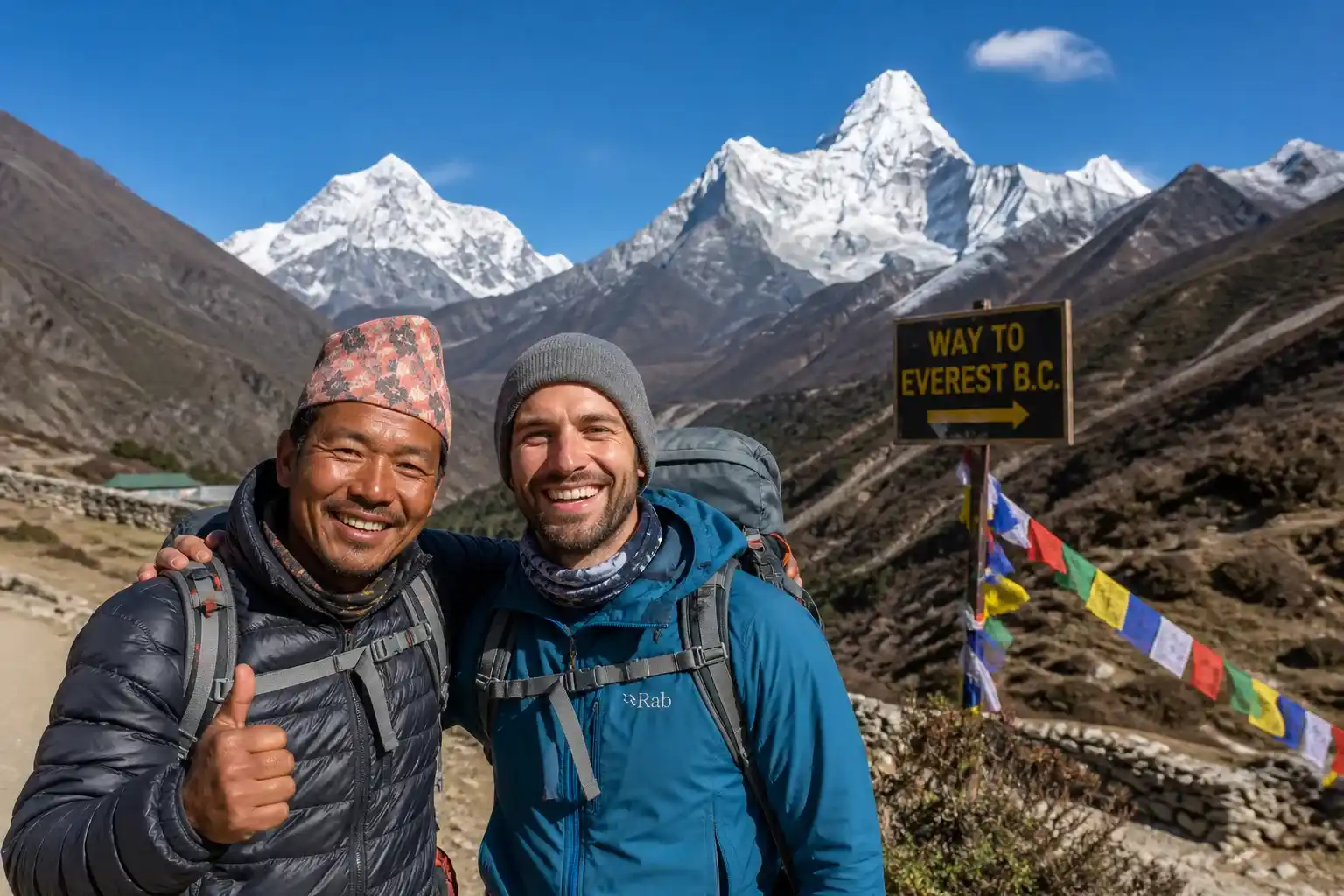
Foreign governments do not list trekking regions or tourist hotspots as dangerous. By March 2026, the political situation has largely stabilised and tourism continues. The trekking regions like Everest and Annapurna remain peaceful.
Crime: What the Numbers Actually Say
Nepal is not a high-crime country. Violent crime against foreign visitors is rare by any regional or global measure. The risks that do exist are specific and manageable.
Petty theft: The real risk. Petty crime targeting tourists has increased by approximately 23% since the 2025 protests ended, according to Nepal Police statistics from early April 2026. Pickpocketing and bag-snatching incidents are concentrated in crowded areas of Kathmandu and Pokhara. Violent crime against foreigners remains rare.
Take particular care when walking around Kupandol, Sanepa and Thamel in Kathmandu, where pickpocketing is common. Theft also occurs from hotel rooms. There has been a significant increase in crime during the festival season from September to November.
The practical response to this is simple: use a crossbody bag with a zip rather than a backpack, do not carry more cash than you need for the day, keep your phone in a front pocket, and be aware at ATMs and crowded bus stations. These precautions eliminate most petty theft risk.
Armed robbery on trekking routes: Rare but not unheard of. The most recent serious incident involving international visitors occurred in November 2025 when two German trekkers were robbed at knifepoint near Ghandruk, though no injuries resulted. The mandatory guide policy requiring a licensed guide on all major trekking routes from 2023 has meaningfully reduced solo trekker vulnerability. A guide who knows the trail, knows the communities, and has emergency contacts changes the risk profile significantly.
Road safety: Road safety presents the highest statistical risk to travellers. Nepal’s road traffic fatality rate of 15.1 per 100,000 population significantly exceeds regional averages. The mountain highway network suffered maintenance delays during the protest period, increasing hazards on key routes including the Prithvi Highway connecting Kathmandu to Pokhara. Use reputable bus operators. Do not travel mountain roads at night if avoidable. On the Prithvi Highway, the safest options are the established tourist bus services from the Sorhakhutte Tourist Bus Park not random local minibuses.
Common Tourist Scams in Thamel: The Specific Ones to Know
Thamel is Kathmandu’s tourist district the place every visitor passes through and where the majority of traveler-targeted scams concentrate. None of them are violent. All of them are annoying and avoidable with advance knowledge.
The gem investment scam. A well-dressed, English-speaking local engages you in friendly conversation and eventually invites you to see a relative’s gem or jewellery shop. The gems are real but grossly overvalued. The investment pitch “you can sell these at triple the price back home” is the lie. This scam has operated in Thamel for decades and continues to find new victims each season.
The fake monk scam. A person in saffron robes approaches you, blesses you with a bracelet or prayer beads, then demands payment. Actual monks do not solicit donations from strangers on the street. If someone in robes approaches you proactively, decline politely and keep walking.
The guided tour scam. A friendly local offers to show you a temple or local market “for free.” The tour ends at a shop owned by their commission-paying relative, where you are expected to buy. The solution: book any guided activity through your hotel or a reputable agency, not through someone who approached you unprompted.
The inflated taxi fare. Taxis in Kathmandu are common but rarely use meters, so agree on a price before getting in. Ask your hotel what a fair fare to your destination should be before you leave knowing the correct price (typically NPR 300–500 for most Thamel-area journeys) eliminates the negotiation problem entirely.
The counterfeit currency exchange. Some informal money changers in Thamel use sleight of hand to shortchange during the counting process. Always use a bank or official licensed money changer the slightly lower rate is worth the certainty.
The trekking permit scam. Independent-looking “agents” on Thamel streets offer to sell trekking permits cheaper than official offices. The permits are either fake, incorrectly issued, or simply stolen fees that your guide will have to pay again at the checkpoint. All permits must be obtained from NTB offices or through your registered trekking agency. There is no legitimate cheaper alternative.
Trekking Safety in 2026: The Honest Picture
Trekking is where most Nepal safety questions genuinely matter, and where the honest answer requires more nuance than “it’s fine.”
Altitude sickness is the primary danger on major treks. It is not a rare edge case over 57% of Everest Base Camp trekkers develop some form of Acute Mountain Sickness. It does not discriminate by fitness level. It kills people who ignore it. Read our dedicated altitude sickness guide before any trek above 3,500m. Follow the acclimatisation schedule your guide provides. When your guide says descend, descend.
The mandatory guide requirement makes trekking safer. Under Nepal’s 2023 mandatory guide policy, fully enforced in 2026, every trekker on a permitted route must be accompanied by a licensed guide from a TAAN-registered agency. A guide who monitors your symptoms, can initiate helicopter evacuation through agency channels, and knows the route in bad weather is not a commercial transaction it is a safety system.
Trail conditions change rapidly. What was a clear trail at 9am can be a snow-covered slope by 2pm above 4,000m. Weather on Nepal’s high passes Cho La, Kongma La, Thorong La can close routes without warning. Your guide’s assessment of conditions takes priority over your itinerary.
The teahouse circuit is safe. Solo camping is not recommended. On the major commercial routes (EBC, Annapurna Circuit, Langtang), the infrastructure of teahouses, permit checkpoints, and guide presence creates a genuinely safe trekking environment for most of the year. Off-trail or independent camping above 4,000m without a guide, in monsoon season, or in winter on high passes these are the conditions where safety margins genuinely narrow.
Solo Female Travel: What Is Actually True
Nepal is consistently rated among Asia’s safer countries for solo female travelers safer than India, broadly comparable to Thailand, and significantly safer than Pakistan or Bangladesh for female-specific risks.
Nepal is one of the safest countries in the world for solo female travelers. Unlike in neighbouring India, female travelers can expect a safe and hassle-free travel experience. Nepali people are generally respectful and helpful towards women travelers.
The honest caveats:
Women travelling alone are at higher risk of verbal harassment. Sexual assaults have occurred, including against foreign women. Dress conservatively, particularly in remote areas.
Verbal harassment in Thamel comments from shop owners or street touts is a reality that many solo female travelers report. It is rarely threatening but it is genuinely tiring. The practical response is confident, direct non-engagement: do not smile apologetically, do not explain yourself, walk purposefully. The harassment is driven by opportunism rather than malice and stops when it is not rewarded with attention.
At night in Kathmandu: Use a licensed taxi or ride-hailing app (Pathao or InDrive work well in Kathmandu) rather than walking alone after dark in unfamiliar neighbourhoods. Thamel itself is well-lit and reasonably safe until around 10pm. Beyond that, the same judgment you would apply in any unfamiliar city applies here.
On trekking routes: Having a licensed guide now legally mandatory specifically improves the safety profile for solo female trekkers. A guide’s presence changes the dynamic with any potential bad actor on a remote trail. Single women trekkers are routinely allocated private rooms at teahouses by reputable agencies at no additional charge.
In temples and religious sites: Dress modestly shoulders and knees covered. At sites like Pashupatinath and Boudhanath, conservative dress is both a safety and cultural respect consideration.
Political Situation: The 2025 Context and Where Things Stand Now
Nepal experienced significant civil unrest in late 2025 protests initially focused on constitutional reform and economic grievances that at their peak disrupted transport and forced temporary closures of some tourist sites.
Protests in Nepal are almost always political, not anti-tourist, and they are generally well-organised. Various groups take to the streets to demand reforms or voice discontent, but these demonstrations are typically localised to specific urban zones near government offices like Maitighar Mandala in Kathmandu, and rarely spread into rural areas or tourist regions. Locals often escort foreigners safely through demonstrations.
By March 2026, the government lifted the final emergency restrictions. The situation has stabilised. Tourism activities are operating normally. Major trekking routes including the Annapurna Base Camp Trek, Annapurna Circuit, and Everest Base Camp Trek are open and operating with full safety infrastructure in place.
What to watch for: Nepal’s political landscape remains active. Bandhs general strikes can be called with short notice and can affect transport, including domestic flights. The practical response is to monitor local news through your operator or hotel, have a buffer day in your schedule, and avoid any political gatherings you encounter regardless of size or apparent peacefulness. Participation in protests violates your visa conditions and can result in arrest and deportation.
Natural Disaster Risk: The Honest Assessment
Nepal sits on an active seismic zone. The 2015 earthquake killed nearly 9,000 people and caused widespread structural damage, particularly in the Kathmandu Valley and Langtang region. Understanding the ongoing risk context is part of responsible travel preparation.
Nepal regularly experiences earthquakes, floods, and landslides. Earthquakes can happen suddenly with little warning, including in the Kathmandu Valley. During the monsoon season from June to September, heavy rain can cause flash floods and landslides that block roads, damage buildings, and make it hard to get help in an emergency.
Earthquake risk: Kathmandu Valley sits on sediment-filled ancient lake bed that amplifies seismic waves. Building standards have improved significantly since 2015, but the city remains seismically vulnerable. There is no way to predict or prevent earthquakes. The practical response: know the emergency exits of your accommodation, identify open spaces near where you stay, and keep your important documents accessible.
Landslide risk (monsoon season): Some trekking routes can become impassable without warning. Always check current conditions and avoid travel to mountainous areas during heavy rains or immediately after a quake. This is why our Nepal monsoon trekking guide recommends rain-shadow treks (Upper Mustang, Dolpo) for June–August visitors rather than the standard routes.
Glacial lake outburst floods (GLOF): A specific but real risk in the Khumbu region, where retreating glaciers create unstable high-altitude lakes. An outburst event can send a sudden wall of water and debris down valley systems with very limited warning. Your guide will know whether any GLOF alerts have been issued for the Khumbu during your trek.
The practical response to all natural hazard risks: Register with your country’s embassy before you travel (the US STEP programme, UK FCDO traveller registration, etc.). Give your trekking itinerary to someone at home. Carry a basic emergency kit. Have travel insurance that covers natural disasters.
Travel Insurance for Nepal: What to Get, What to Check
This section is not optional reading. Helicopter evacuation from a high-altitude medical emergency in Nepal costs USD 5,000–10,000 or more. Without insurance, you pay this yourself or you don’t get evacuated.
What your policy must cover:
- Emergency helicopter evacuation to a minimum altitude of 5,000m standard policies often cap at 3,000m or 4,500m, which is not sufficient for Everest region trekking
- High-altitude medical treatment including AMS, HACE, and HAPE
- Trip cancellation due to natural disasters, political unrest, or flight cancellations relevant given Nepal’s domestic flight reliability and monsoon disruptions
- Medical repatriation costs of being returned home for ongoing treatment after an emergency
What to check before purchasing:
Read the altitude exclusion clause. This is the clause that voids your claim if you are above the policy’s stated maximum altitude at the time of an incident. Most standard travel policies cap altitude coverage at 3,000m or 4,500m both insufficient for EBC (5,364m), Three Passes, or any trek that crosses a high pass. If you are trekking above 4,500m, confirm in writing that your policy covers the specific maximum altitude of your route.
Also check whether the policy is voided by trekking without a licensed guide since Nepal’s mandatory guide rule has been in effect since 2023, any trekker without a guide is simultaneously breaking Nepali law and potentially voiding their insurance claim.
The 2026 checkpoint requirement: Nepal’s permit checkpoints on major routes increasingly verify proof of travel insurance at entry. Carry your insurance certificate both digital and a printed physical copy alongside your permits.
Reputable insurers for Nepal trekking (check current policy terms before purchasing terms change): World Nomads, Battleface, and Ripcord Rescue Travel Insurance all offer policies with explicit high-altitude coverage. UK travelers should check BUPA, Allianz, or specialist adventure sports policies. Australian travelers: Cover-More and 1Cover both offer Nepal trekking coverage. Wherever you purchase, get the altitude limit confirmed in writing.
The Safety Summary: What This All Adds Up To
Nepal in 2026 is a safe travel destination by any realistic measure. The political situation has stabilised. Violent crime against tourists is rare. The trekking infrastructure mandatory guides, permit checkpoints, rescue systems, HRA medical clinics is more developed than at any previous point in Nepal’s trekking history.
The risks that matter are specific and preparation-responsive:
Petty theft in tourist areas is real manageable with basic precautions. Road traffic is genuinely dangerous use reputable operators. Altitude sickness can kill respect acclimatisation protocol and your guide’s judgment. Natural hazards exist register with your embassy and get proper insurance. Political disruptions can affect transport build buffer days into your schedule.
None of these are reasons to not come. They are reasons to come prepared.
Nepal remains one of the most extraordinary travel destinations on earth. The mountains are not safer anywhere else. The hospitality is not warmer. The cultural density 123 ethnic groups, UNESCO World Heritage cities, living goddess traditions, festivals that turn the country inside out twice a year is not replicated.
Come. Be careful where carefulness is warranted. Trust the mountains and the people who live beneath them to do the rest.
The Explore All About Nepal team is based in Kathmandu and monitors conditions year-round. For specific safety questions about your planned itinerary, leave a comment below or contact us directly.
