
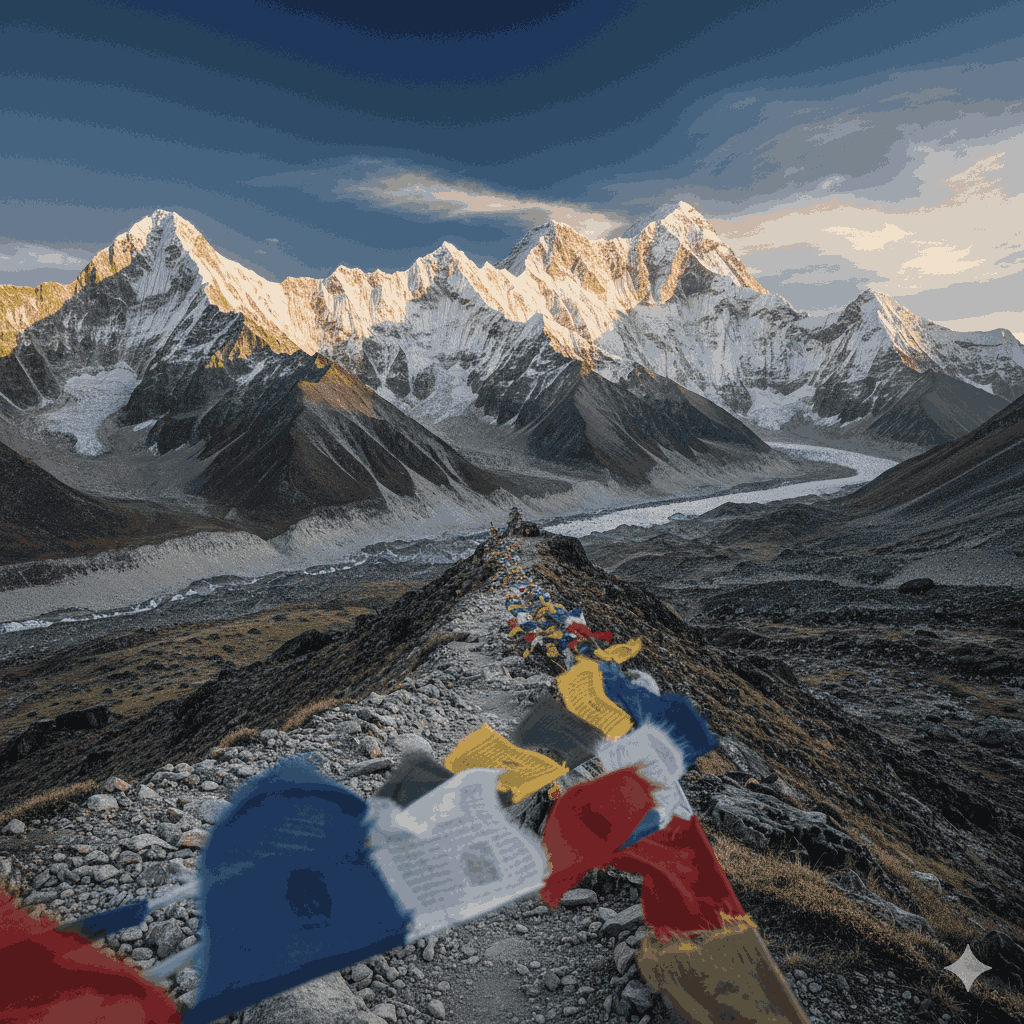
Kanchenjunga Circuit Trek through Nepal’s remote eastern Himalayas
The Kanchenjunga Circuit Trek is widely considered the ultimate frontier for those seeking a raw and extraordinary experience in the Himalayas. While popular routes like Everest and Annapurna see thousands of visitors, the Kanchenjunga Circuit Trek remains a sanctuary of silence and ancestral traditions. This region, tucked away in the far eastern corner of Nepal, offers a landscape that is both brutal and beautiful, stretching from tropical lowlands to the crushing heights of the 8,586m massif.
In 2026, the Kanchenjunga Circuit Trek represents a return to the golden age of exploration. It is a place where the trails are narrow, the forests are ancient, and the hospitality of the Limbu and Rai people is genuinely soulful. Whether you are beginning your journey by enjoying the jazz festivals and live music in Kathmandu or preparing for the physical rigors of high-altitude passes, this guide provides every detail you need for a successful expedition.
The Cultural Heart of the Kanchenjunga Circuit Trek
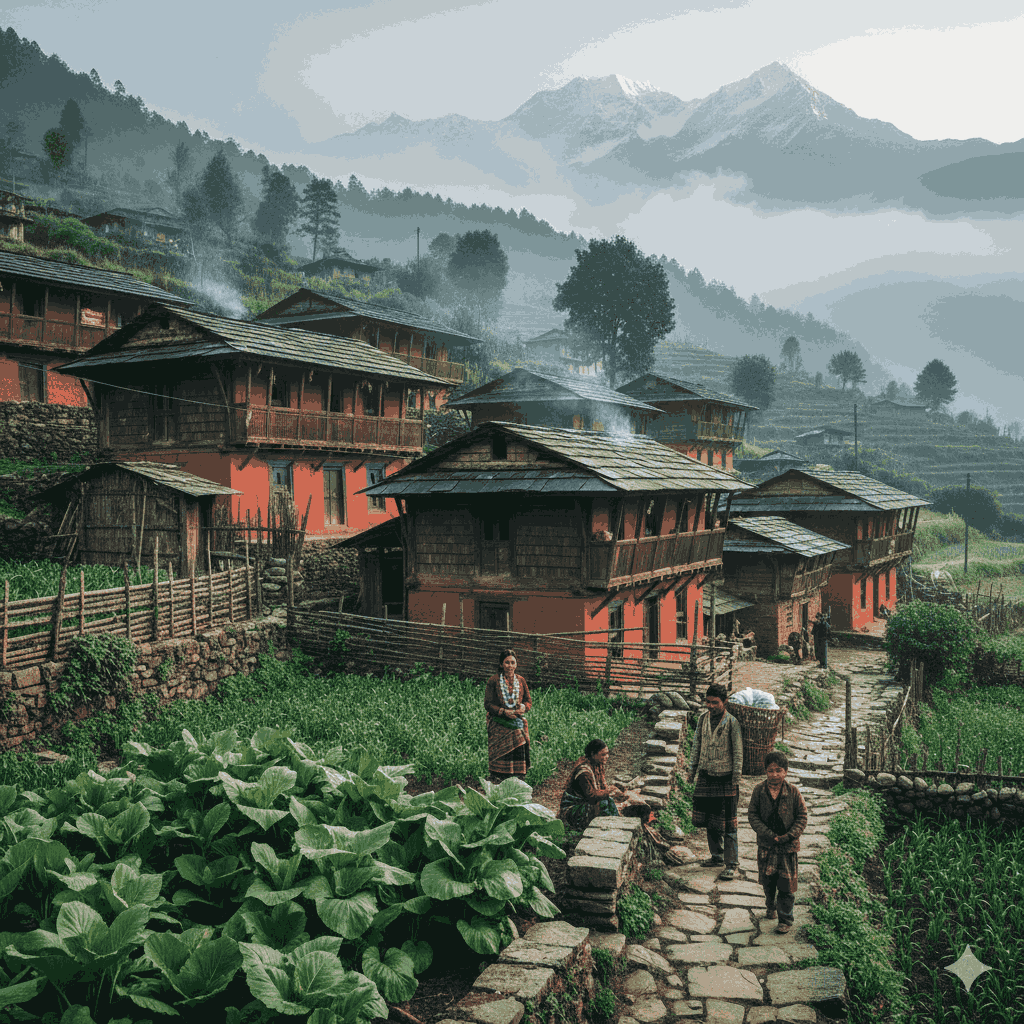
Limbu and Rai cultural villages along the Kanchenjunga Circuit Trek
One of the most extraordinary aspects of the Kanchenjunga Circuit Trek is the deep cultural immersion it provides. As you move through different elevation zones, you witness a shift in the ancestral practices of the local communities.
The Kirat Heritage: The lower valleys of the Kanchenjunga Circuit Trek are the ancestral home of the Limbu and Rai people. Their houses are often handcrafted from wood and stone, painted with red mud, and surrounded by cardamom plantations.
Mundhum Traditions: The spiritual life here is guided by the Mundhum, an oral tradition that emphasizes nature worship. During your Kanchenjunga Circuit Trek, you may see Silam-sakma symbols on houses, meant to ward off negative spirits.
High Altitude Tibetan Culture: As the Kanchenjunga Circuit Trek climbs toward villages like Ghunsa and Phale, the influence shifts to Tibetan Buddhism and the ancient Bon religion. Here, the air is filled with the scent of juniper incense and the sound of creaking prayer wheels.
Hospitality: A soulful part of the experience is tasting Tongba, a traditional fermented millet drink served in wooden pots with hot water, a staple of eastern hospitality.
Detailed 24-Day Kanchenjunga Circuit Trek Itinerary (2026)
The Kanchenjunga Circuit Trek requires careful planning and a generous timeframe to ensure proper acclimatization and safety.
Phase 1: The Tropical Approach
Day 1: Arrival in Kathmandu (1,400m). Use this time to relax and perhaps catch some jazz festivals and live music in Kathmandu before the long journey east.
Day 2: Preparation and Permits. Your guide will handle the extraordinary logistics of restricted area permits.
Day 3: Fly to Bhadrapur and drive to Phidim. A 45-minute flight followed by a 5-6 hour drive through the lush tea gardens of Ilam.
Day 4: Drive to Taplejung and begin the Kanchenjunga Circuit Trek toward Chiruwa (1,270m).
Day 5: Trek from Chiruwa to Sukethum (1,660m). The trail follows the Tamor River through dense subtropical forests.
Phase 2: Into the High Valleys
Day 6: Trek to Amjilosa (2,510m). A steep and breathtaking climb through bamboo and rhododendron groves.
Day 7: Trek to Gyabla (2,730m). Witness the transition from lush forest to cooler, temperate landscapes.
Day 8: Trek to Ghunsa (3,595m). Ghunsa is the largest village in the region and a vital stop on the Kanchenjunga Circuit Trek.
Day 9: Acclimatization Day in Ghunsa. Explore the ancestral monasteries and prepare for the higher altitudes.
Day 10: Trek to Kambachen (4,050m). The Kanchenjunga Circuit Trek trail now offers views of the Jannu (Kumbhakarna) massif.
Phase 3: The North Base Camp
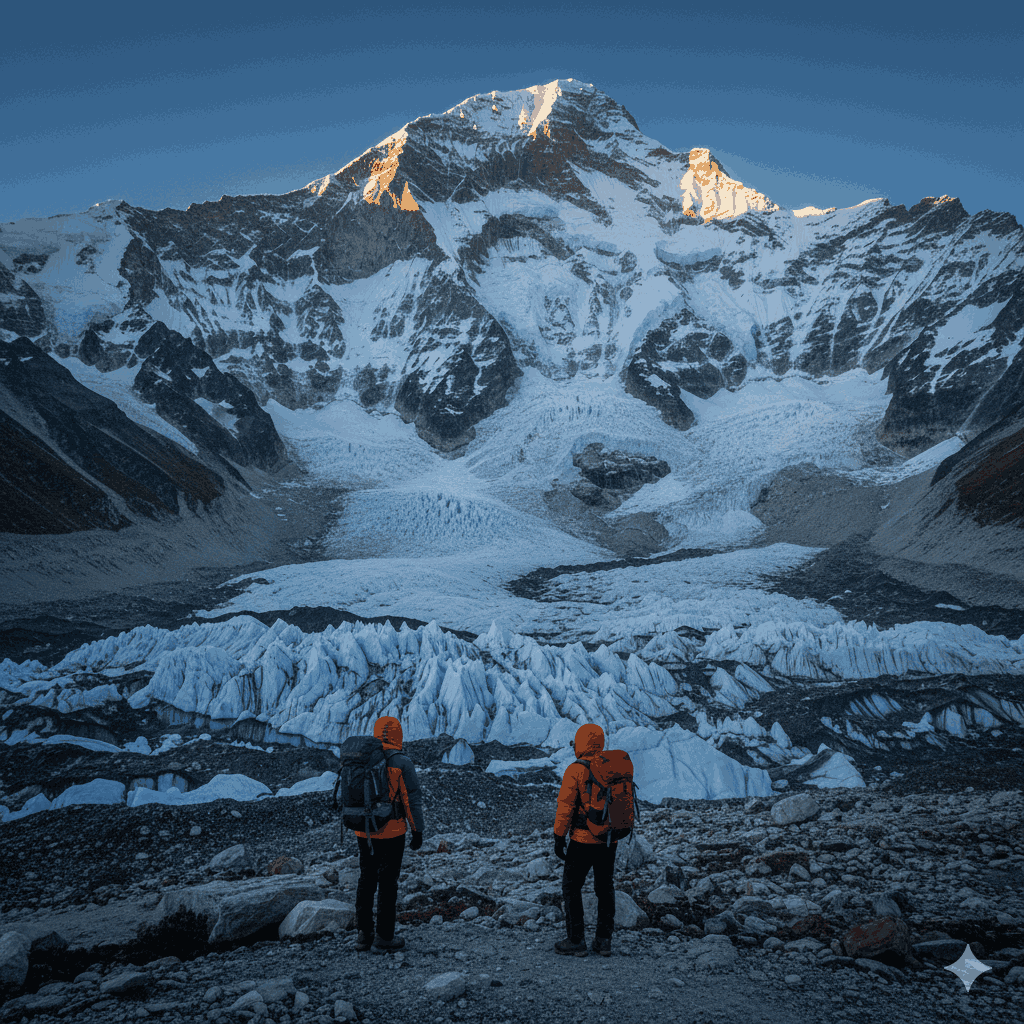
Pangpema viewpoint on the Kanchenjunga Circuit Trek route
Day 11: Trek to Lhonak (4,780m). Walk along the edge of the Kanchenjunga Glacier.
Day 12: Hike to Kanchenjunga North Base Camp (Pangpema, 5,143m). This is one of the most extraordinary viewpoints in the world.
Day 13: Return to Ghunsa. A long descent as you prepare to cross the high passes of the Kanchenjunga Circuit Trek.
Phase 4: The High Passes and South Base Camp
Day 14: Trek to Sele Le High Camp (4,290m).
Day 15: Cross Mirgin La (4,480m) and Sinion La (4,646m) to Tseram. This is the physical crux of the Kanchenjunga Circuit Trek.
Day 16: Trek to Ramche (4,580m) and explore the South Base Camp (Oktang).
Day 17-20: Begin the long descent through Torongten and Yamphudin, finishing the Kanchenjunga Circuit Trek loop.
Day 21-24: Drive back to Bhadrapur and fly to Kathmandu for a well-earned rest at the best post-trek bars Kathmandu.
Permits and Logistics for the Kanchenjunga Circuit Trek
Planning a Kanchenjunga Circuit Trek in 2026 involves navigating several legal and logistical requirements.
Restricted Area Permit (RAP): Because the Kanchenjunga Circuit Trek borders India and China, a special permit is required, costing approximately $20 USD per week for the first four weeks.
Mandatory Guide Policy: Under the Mandatory Guide Policy 2026, you cannot trek solo. You must be accompanied by a licensed guide.
Group Requirement: A minimum of two trekkers is required to issue the permits for the Kanchenjunga Circuit Trek.
Conservation Area Permit (KCAP): This costs about $20 USD and supports the protection of the local flora and fauna.
Gear: High-quality gear is essential. While you might check Trek mountain bike price in Nepal 2026 for other adventures, for the Kanchenjunga Circuit Trek, prioritize a -20°C sleeping bag and sturdy, broken-in boots.
Flora and Fauna of the Kanchenjunga Region
The Kanchenjunga Circuit Trek passes through the Kanchenjunga Conservation Area, a region of extraordinary biodiversity.
The Ghost of the Mountains: This area is a prime habitat for the Snow Leopard. While rare, sightings are possible near the high-altitude glaciers of the Kanchenjunga Circuit Trek.
The Red Panda: In the bamboo forests between 2,500m and 3,500m, keep an eye out for the elusive Red Panda.
Rhododendron Forests: In the spring, the Kanchenjunga Circuit Trek is transformed into a riot of color with over 20 species of rhododendrons in bloom.
Medicinal Herbs: The region is famous for Yarsagumba (Himalayan Viagra) and other ancestral medicinal plants used by the local Amchi doctors.
FAQ: Mastering the Kanchenjunga Circuit Trek
How does the difficulty of the Kanchenjunga Circuit compare to the Everest Base Camp trek?
The Kanchenjunga Circuit is significantly more challenging than Everest. While EBC has paved trails and luxury lodges, the Kanchenjunga Circuit features narrow, rocky paths, unpredictable weather, and basic teahouses. The duration,usually over 20 days, also tests your mental resilience.
Is there any phone signal or internet on the Kanchenjunga Circuit?
Once you leave Taplejung, phone signals become very rare. Some villages like Ghunsa may have limited satellite internet or landlines, but for most of the Kanchenjunga Circuit, you will be completely off-grid. This is what makes it a truly soulful escape.
What kind of food is available on the Kanchenjunga Circuit?
The staple is Dal Bhat (lentils, rice, and vegetable curry). It is the best fuel for the Kanchenjunga Circuit. You will also find Tibetan bread, noodle soups, and occasionally fresh yak cheese. The meals are handcrafted by local lodge owners using ingredients grown in their own gardens.
What are the risks of altitude sickness on the Kanchenjunga Circuit?
Since you spend many days above 4,000m and cross multiple 5,000m points, altitude sickness is a serious risk on the Kanchenjunga Circuit. Proper acclimatization in Ghunsa is non-negotiable.
What is the total cost of the Kanchenjunga Circuit in 2026?
Depending on the level of service, a 24-day Kanchenjunga Circuit typically costs between $2,000 and $3,000 USD per person. This includes permits, flights, guides, porters, and all meals.
Is it better to trek the North or South Base Camp first?
Most operators prefer the anti-clockwise route (North first) for the Kanchenjunga Circuit, as it allows for more gradual acclimatization before crossing the high passes to the South side.
What should I pack for the high passes of the Kanchenjunga Circuit?
Layering is key. You need moisture-wicking base layers, a warm fleece, a heavy down jacket, and waterproof outer shells. For the Sele La pass on the Kanchenjunga Circuit, microspikes for your boots are often necessary if there is ice.
Can I do the Kanchenjunga Circuit Trek in the winter?
It is not recommended. The high passes like Sele La and Mirgin La often become impassable due to deep snow, and most teahouses in the upper villages close during the coldest months.
Why is the Kanchenjunga Circuit Trek called a “restricted area”?
Its proximity to sensitive international borders and the need to protect the ancestral cultures and fragile environment are why the Nepal government regulates the Kanchenjunga Circuit Trek so strictly.
What should I do in Kathmandu after the trek?
After weeks of isolation on the Kanchenjunga Circuit Trek, the best way to reintegrate is to visit the best post-trek bars Kathmandu for a celebratory drink and enjoy the jazz festivals and live music in Kathmandu.
The Kanchenjunga Circuit Trek is more than just a mountain journey; it is a profound exploration of one of the last truly wild places on Earth. In 2026, the Kanchenjunga Circuit Trek remains a symbol of pure adventure, challenging those who dare to step off the beaten path. From the breathtaking views of the world’s third-highest peak to the soulful encounters with the Limbu and Sherpa people, every moment of the Kanchenjunga Circuit Trek is an investment in your own spirit.
Whether you are navigating the high glaciers or resting in a handcrafted teahouse, the Kanchenjunga Circuit Trek leaves an indelible mark on your soul. As you return to civilization—perhaps catching the last notes of the jazz festivals and live music in Kathmandu—you will realize that the Kanchenjunga Circuit Trek was never just about reaching a base camp; it was about the strength you found along the way.
