
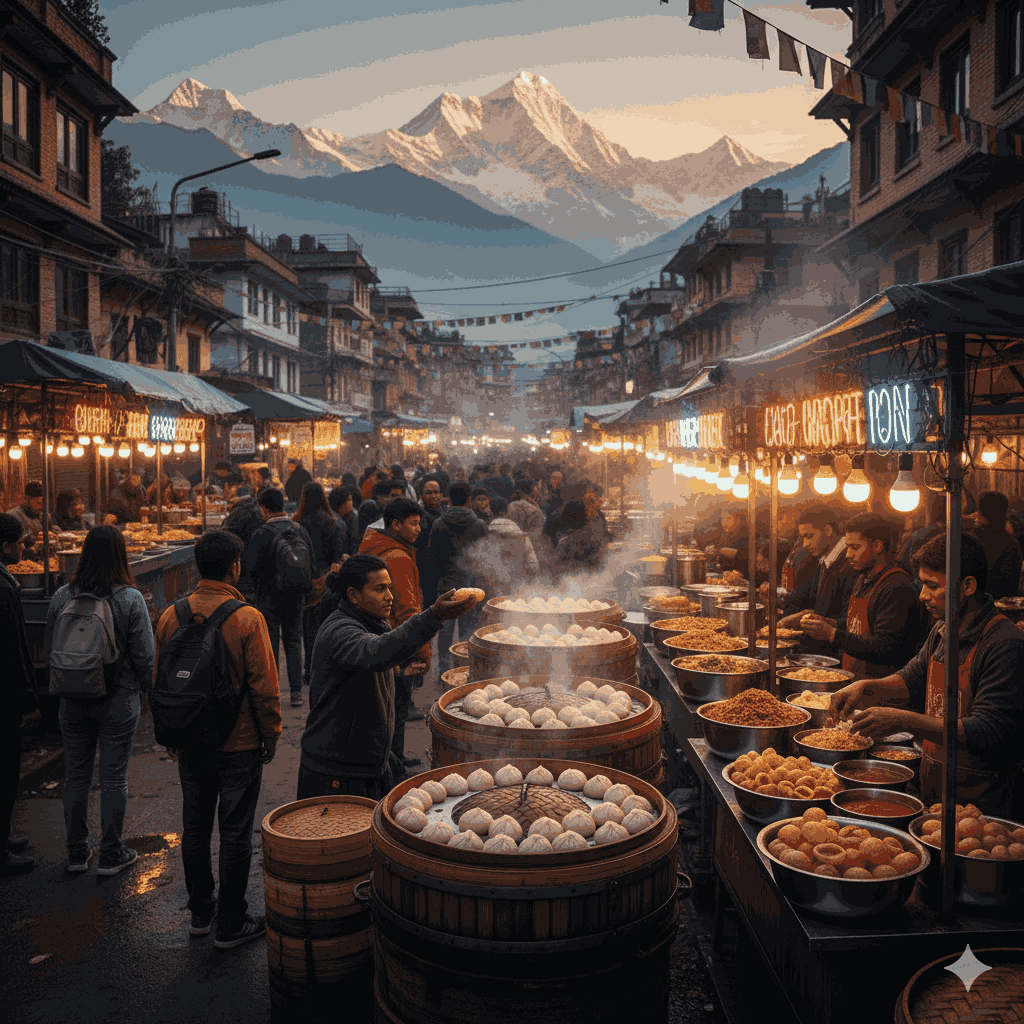
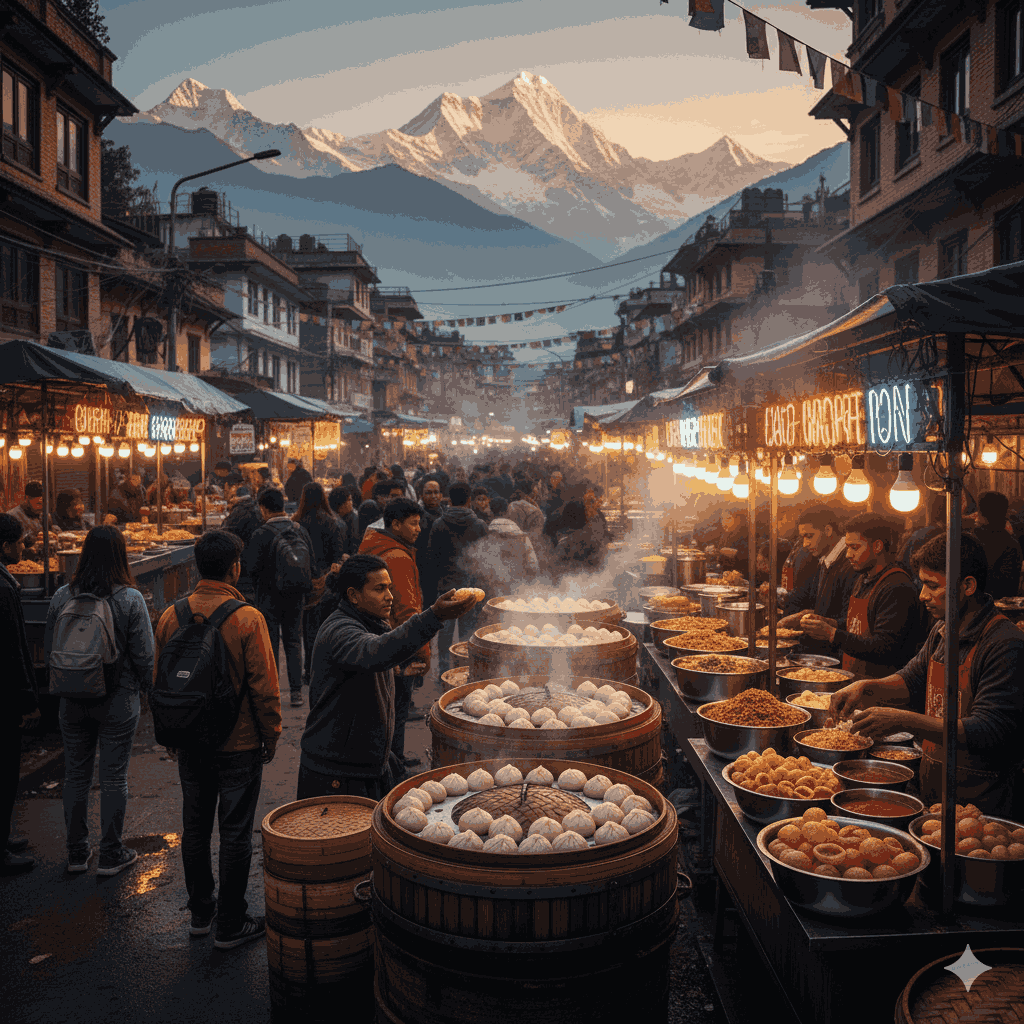
Nepali street food scene in 2026 with stalls and vibrant city life.
In 2026, as the global culinary world pivots toward bold, textures-driven experiences, nepali street food stands as a beacon of sensory delight. To understand Nepal is to taste the rhythm of its cities. This nepali street food is not merely about quick calories; it is a profound expression of communal joy and a testament to the country’s staggering adaptability. From the neon-lit alleys of Thamel to the ancient brick courtyards of Patan, every sizzle and spice-pop tells a story of survival, celebration, and urban grit.
While many travelers visit for the jazz festivals and live music in Kathmandu, they often find that the most rhythmic part of their journey is the rapid-fire chopping of onions at a Chatpate stall. In 2026, nepali street food has gained international acclaim, with mobile vendors being recognized as the true keepers of the national palate. This manual dives into the steam-filled corners where this magic happens, offering an exhaustive look at one of the world’s most vibrant outdoor food systems.
The history of this cuisine is a journey through ancient trade routes. The Newar traders of the Kathmandu Valley once traveled to Tibet, bringing back the concept of the dumpling, which evolved into the legendary Momo. Meanwhile, the southern plains brought the tangy, spicy influence of the Gangetic heartlands. This mix of mountain steaming and lowland frying creates a nepali street food profile that is entirely unique.
The Undisputed King: The Momo Phenomenon
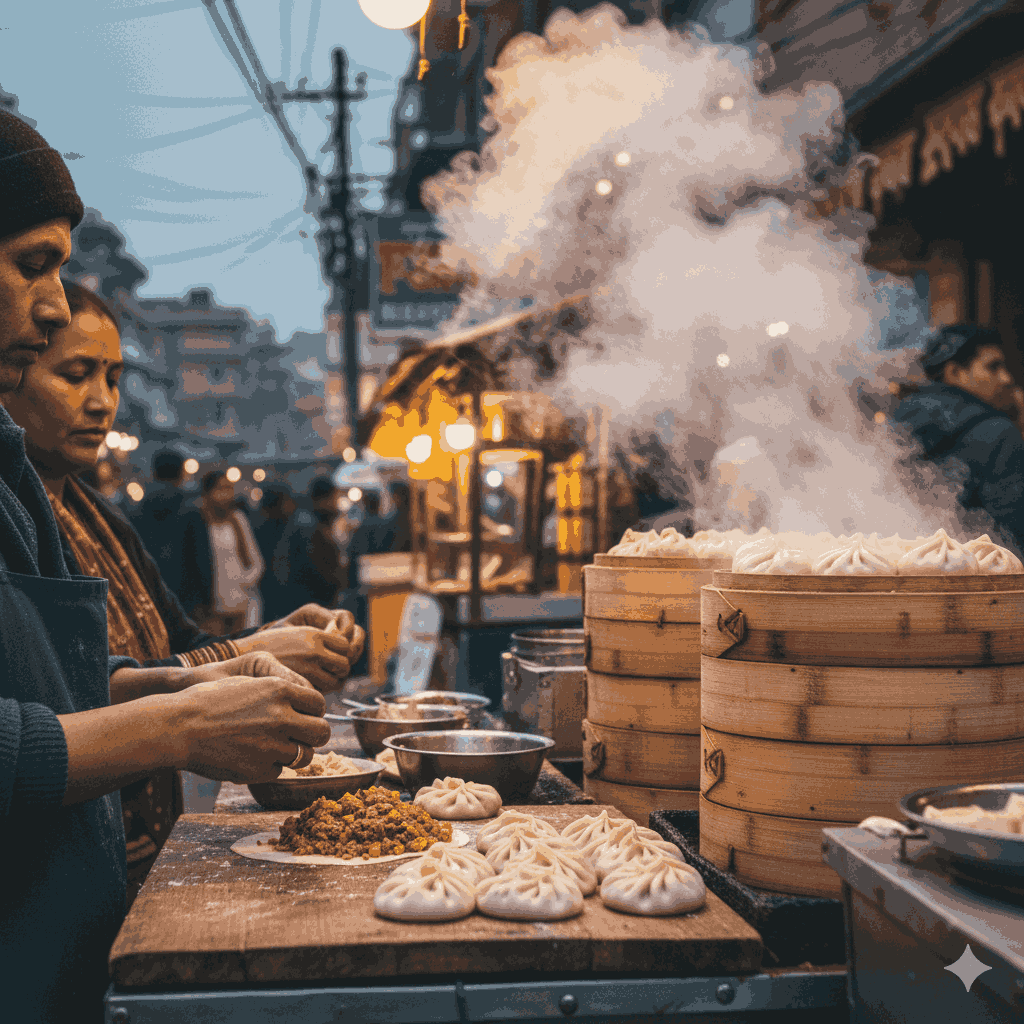
Nepali vendors preparing Momos in a busy street market.
If nepali street food had a heartbeat, it would be the sound of a tiered aluminum steamer being stacked. The Momo, a dumpling that has transcended its Tibetan roots to become the national obsession, is the undisputed king of the sidewalk. It is a dish that bridges the gap between the schoolchild and the corporate executive.
The Varieties: In 2026, the Momo has evolved into a hundred forms. You have the classic Steamed Momo, the half-fried Kothey, the deep-fried C-Momo (tossed in spicy chili sauce), and the soul-warming Jhol Momo.
The Jhol Secret: Jhol Momo is perhaps the most beloved iteration in the nepali street food scene. It features dumplings submerged in a cold or hot soup made from roasted tomatoes, sesame seeds, and a secret blend of mountain spices.
The Filling: While buffalo (buff) remains the traditional favorite, 2026 has seen a surge in chicken, vegetable, paneer, and even “fusion” fillings like cheese and spinach, catering to a globalized nepali street food audience.
The Achar: No Momo is complete without the dipping sauce. A yellow, sesame-heavy chutney or a fiery red tomato paste provides the essential kick that defines nepali street food.
In the bustling evening markets, the preparation of this dish is a performance. The thin dough is folded with lightning speed, a technique passed down through generations. This daily ritual is what makes nepali street food so grounded and reliable. Even in the modern era of 2026, the “Momo-Paisa” (momo money) is the most important part of any local’s daily budget.
Newari Street Specialties: The Pizza and Pancakes of Patan
The Newar community of the Kathmandu Valley has developed what many consider the most sophisticated branch of nepali street food. Deeply tied to the Sankhu heritage town and the medieval courtyards of Bhaktapur, these snacks are a ritualistic explosion of flavors.
Unlike the pan-Asian appeal of the Momo, Newari nepali street food is characterized by its use of rice flour and lentils. Chatamari, often called the “Nepali Pizza,” is a thin rice-flour crepe. In 2026, you can watch vendors top these crepes with minced meat, a cracked egg, and a sprinkle of fresh cilantro right before your eyes. It is the ultimate fresh, made-to-order meal.
Another staple is the Bara (or Wo), a savory lentil pancake that is crispy on the outside and soft on the inside. It is often served with a side of spicy potato curry or a fried egg on top. One of the most fascinating aspects of Newari nepali street food is the philosophy of texture. The crunch of the Bara paired with the soft, spicy “Aloo” (potato) demonstrates a culinary sophistication that has become highly fashionable in 2026. This practice is not just about eating; it is about the sensory balance that defines the nepali street food experience.
The Tangy Revolution: Chatpate and Pani Puri
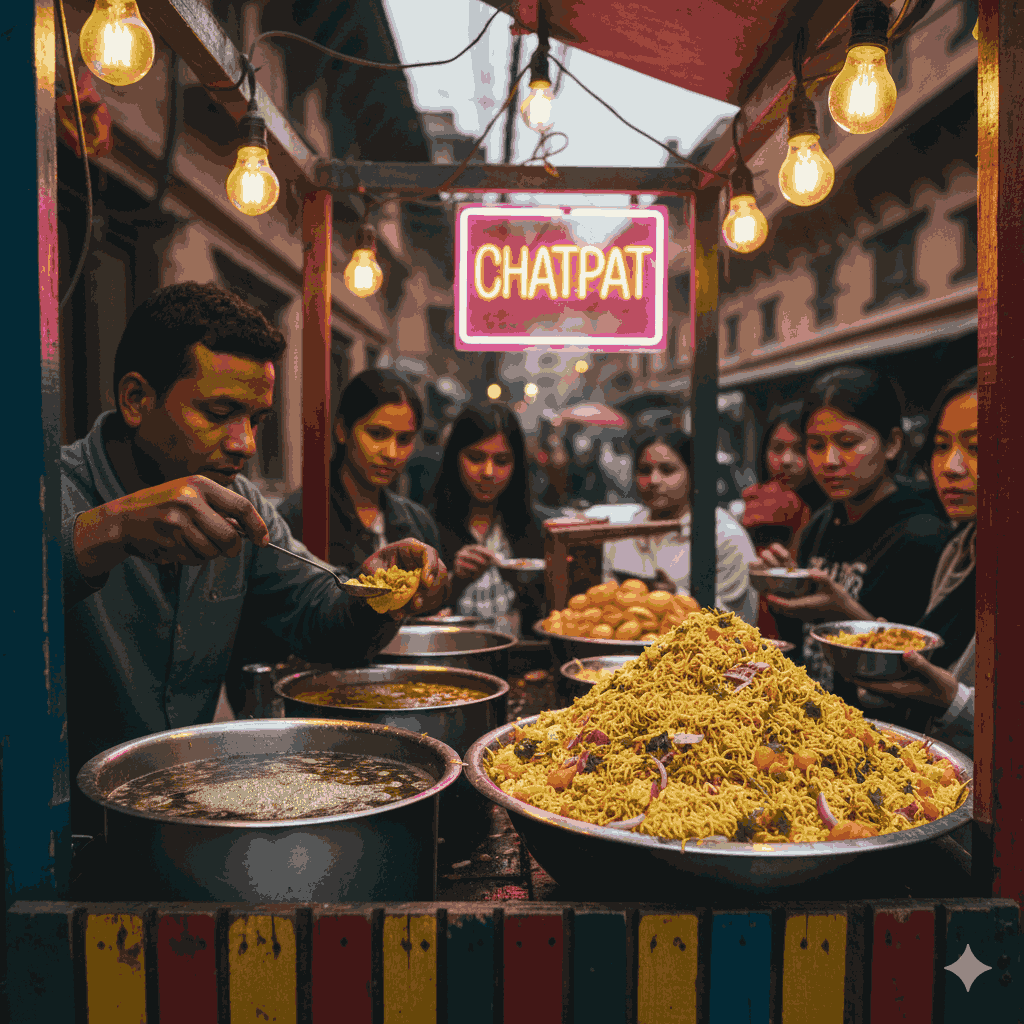
Street vendor serving Pani Puri and Chatpate in Nepal
As you move through the crowded intersections of any Nepali city, you will encounter the “Chatpate-Walla.” This is where the true chemistry of nepali street food happens.
Chatpate: This is a chaotic, beautiful mix of puffed rice, instant noodles (crushed), chickpeas, boiled potatoes, chopped onions, and a generous dousing of lemon and mustard oil. It is the “brain-teaser” of nepali street food, hitting every taste bud—sour, spicy, salty, and sweet—at once.
Pani Puri: These are small, hollow, crispy shells filled with a mixture of spiced mashed potatoes and immersed in a tangy tamarind or mint water. To eat it is to experience a “flavor bomb” that is a cornerstone of the nepali street food tradition.
The Customization: In 2026, the degree of “Piro” (spiciness) is a badge of honor. You can ask the vendor to dial up the green chilies until your eyes water, a true test of a nepali street food veteran.
These snacks are incredibly portable and cheap, making them the fuel for students and shoppers alike. The sound of the metal spoon clinking against the mixing bowl is the urban soundtrack of nepali street food.
Meat and Smoke: Sekuwa and Sukuti
For the carnivores, nepali street food offers an aromatic experience that can be smelled from blocks away. Sekuwa, or traditionally grilled meat, is the king of the Himalayan BBQ.
Originating from the eastern regions but now a staple of Kathmandu’s nightlife, Sekuwa involves marinating meat (lamb, chicken, or buffalo) in a blend of natural herbs and spices before roasting it over a natural wood fire. What sets it apart is the quality of the char and the unique use of “Timmur” (Himalayan pepper) to provide a numbing, citrusy finish. The addition of a side of “Chiura” (beaten rice) adds a crunch that is characteristic of this elite branch of nepali street food.
Sukuti, or dried meat, is another powerhouse of flavor. It is often sautéed with onions and peppers to create a chewy, spicy snack that pairs perfectly with local beverages. In the world of 2026, the artisanal Sukuti boards found in street-side taverns are considered the pinnacle of nepali street food craftsmanship.
Sweet Streets: Sel Roti and Juju Dhau
No exploration of nepali street food would be complete without the sweet side of the sidewalk. While the savory items get most of the attention, the desserts are what bring the sense of festival to the everyday.
Sel Roti: Often called the “Nepali Donut,” this ring-shaped, deep-fried rice bread is a festive staple. In 2026, you can find it year-round at breakfast stalls, crispy on the edges and soft in the middle. It is the ultimate comfort element of nepali street food.
Juju Dhau: Known as the “King of Curds,” this thick, creamy yogurt from Bhaktapur is served in clay pots. The clay absorbs the excess moisture, leaving a yogurt so rich you can cut it with a knife. It is the cooling antidote to the spicy world of nepali street food.
Lakhamari: A crunchy, sugar-glazed bread with complex shapes, often eaten during Newari weddings but sold as a popular street snack for those with a sweet tooth.
The rise of “Dessert Tours” in 2026 has allowed visitors to see the “sweet side” of the nepali street food scene, from the sugar-syrup vats of Jerry (Jalebi) makers to the quiet curd-chilling rooms of Bhaktapur.
The 2026 Safety Guide: Eating Like a Local
One of the most common questions about nepali street food is about safety. In 2026, the street food scene has modernized significantly, with many vendors adopting higher hygiene standards while maintaining authentic flavors.
To enjoy nepali street food safely, follow the “High Turnover” rule. If a stall is crowded with locals, the food is fresh. Look for vendors who use bottled water for their Pani Puri and those who cook their Momos in high-pressure steamers. In 2026, many community tourism Nepal initiatives even provide “Street Food Maps” that certify vendors for hygiene, making it easier than ever for travelers to dive into the nepali street food culture without hesitation.
Frequently Asked Questions About Nepali Street Food
What is the best time to find nepali street food?
The magic happens in the late afternoon and evening. As the sun sets, the “Thelas” (carts) come out, and the streets transform into a glowing outdoor kitchen.
Are there vegetarian options in nepali street food?
Absolutely. Veg Momo, Chatpate, Pani Puri, Sel Roti, and Bara are all traditionally vegetarian. Nepali street food is very inclusive of plant-based diets.
Is nepali street food spicy?
It can be! However, the beauty of the street scene is that everything is made in front of you. You can always say “Napiro” (not spicy) to keep the heat levels manageable.
What is the most iconic nepali street food item?
While many would say the Momo, others argue that Chatpate is the true soul of the street, as it is a dish you can only find in its authentic form on the sidewalk.
How has nepali street food changed in 2026?
We see more sustainable packaging (like leaf plates called Lapte), digital payment options even at small carts, and a revival of ancient grains like millet in street snacks.
As we look toward the future, nepali street food remains the ultimate bridge between the past and the present. In 2026, as industrial food systems face challenges, the resilience of the Nepali vendor—built on local ingredients, community sharing, and seasonal wisdom—offers a blueprint for the entire world. To eat nepali street food is to accept an invitation into a culture that has mastered the art of living well on the move.
Whether you are sipping a local tea at a rainy stall in Pokhara or sharing a plate of hot Momos in a hidden alley of Kathmandu, you are participating in a tradition that has sustained urban souls for centuries. This nepali street food is more than a menu; it is a movement of the heart, a celebration of the city, and a flavor that lingers long after you have left the Himalayas.
The 2026 culinary landscape of Nepal is one of “Democratic Dining.” On the street, everyone is equal. This balance of spice and spirit is the secret to why nepali street food is not just surviving, but thriving in the modern age.
In the end, the most important ingredient in nepali street food is the curiosity of the eater. The willingness to try a new spice, to stand in a crowded line, and to eat with your hands is what truly defines the experience. As you explore the diverse stalls of this nation, you realize that nepali street food is an invitation to belong. It is a reminder that in the shadow of the world’s highest peaks, the most profound experiences are often found in the simplest of plates.
