
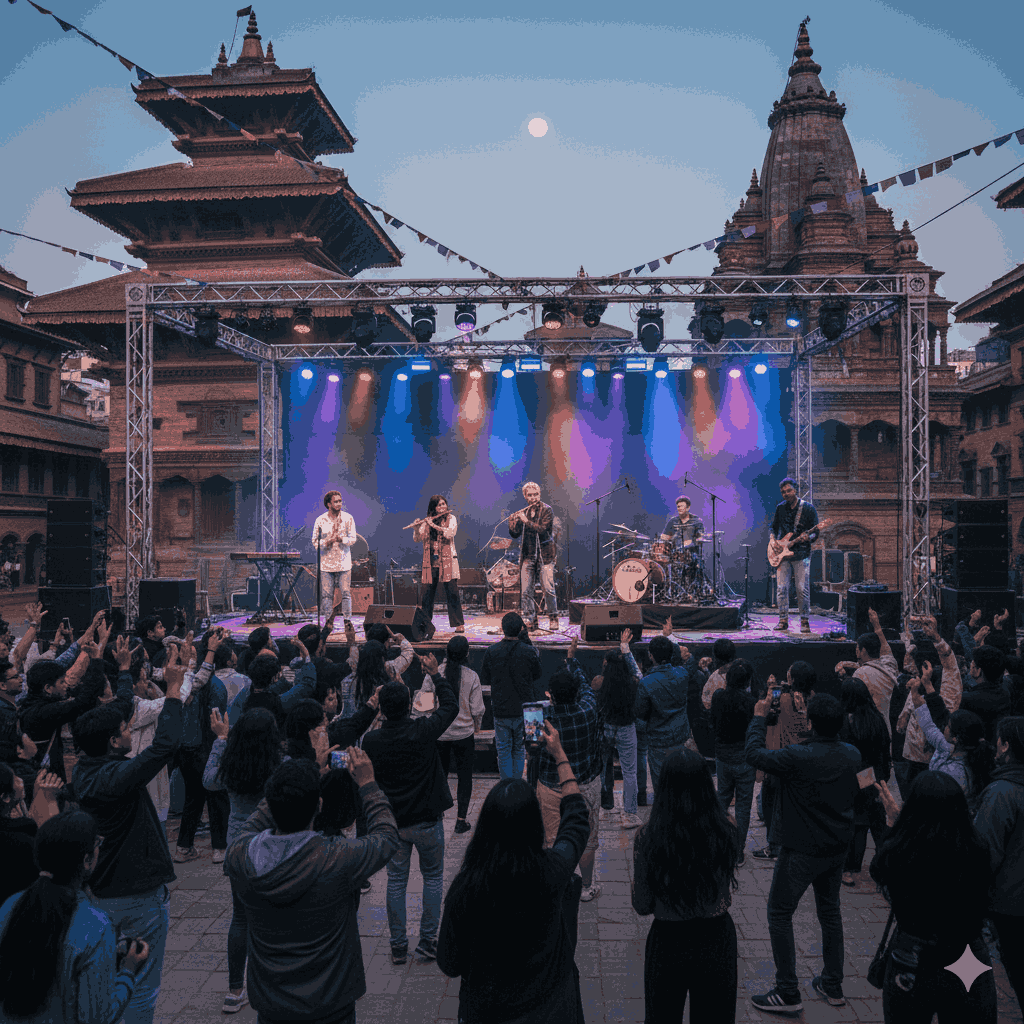
jazz festivals and live music in Kathmandu
Kathmandu is a city of layers. To the casual observer, it is a labyrinth of ancient temples, dusty streets, and the constant hum of prayer wheels. But for those who stay long enough to watch the shadows lengthen over the Himalaya-fringed horizon, a second city emerges. As the temple bells of Basantapur grow quiet, the soulful wail of a saxophone or the distorted crunch of an electric guitar begins to echo through the courtyards.
In 2026, jazz festivals and live music in Kathmandu are not just a peripheral attraction,they are the very heartbeat of the city’s modern identity. This exhaustive guide is a deep dive into that musical soul, designed for the traveler who wants to hear the “real” Nepal.1. The Genesis: Why Kathmandu is a Jazz Sanctuary
It surprises many to learn that Kathmandu has one of the most sophisticated jazz scenes in South Asia. This didn’t happen by accident. The fusion of local Newari musical traditions,which involve incredibly complex time signatures and rhythmic patterns—with the improvisational freedom of jazz created a perfect storm for jazz festivals and live music in Kathmandu.
The Technical Edge: Local musicians, often trained in classical Eastern scales, found a natural kinship with jazz’s “bent” notes and syncopation.
The Expat Influence: In the late 90s, an influx of global travelers and diplomats brought with them rare CDs and instruments, seeding a culture of musical exchange that defined early jazz festivals and live music in Kathmandu.
The Spirit of Freedom: After decades of political shifts, the improvisational nature of jazz became a symbol of creative liberty for the youth of the valley.
This unique blend has made Nepal one of the best destinations for music tourism. If you are planning your trip, be sure to check our guide on how to get a Nepal Tourist Visa to ensure your entry is seamless. Today, traditional heritage meets contemporary global sounds through various jazz festivals and live music in Kathmandu.
2. Jazzmandu 2026: The Biggest Jazz Party in the Himalayas

jazz festivals and live music in Kathmandu
If your 2026 travel plans align with late October, you are in for a treat. Jazzmandu, or the Kathmandu International Jazz Festival, is the crown jewel of jazz festivals and live music in Kathmandu. Founded in 2002, the festival has a singular mission: to bring world-class music to Nepal and take Nepali music to the world.
2026 Event Highlights:
Jazz for the Next Generation: An educational program where international masters visit local schools to inspire the next generation of Nepali prodigies, a staple of jazz festivals and live music in Kathmandu.
Groovin’ at Upstairs (Lazimpat): The festival usually kicks off at the legendary Jazz Upstairs. This is an intimate session where performers first meet local fans, setting the tone for the week’s jazz festivals and live music in Kathmandu.
The Jazz Bazaar (Gokarna Forest Resort): A sprawling, day-long marathon of music held in the ancient royal hunting grounds. Expect lush greenery and a “Woodstock-meets-Himalayas” vibe that is unique to jazz festivals and live music in Kathmandu.
Jazz at Patan (Yalamaya Kendra): Music is performed in a 17th-century Rana-era courtyard. The fusion of the sarangi with a jazz quartet under the moonlight is the peak of jazz festivals and live music in Kathmandu.
3. The Daily Pulse: Iconic Live Music Venues
You don’t need a formal event to find great music. On any given night in 2026, you can find world-class talent performing jazz festivals and live music in Kathmandu.
Jazz Upstairs (Lazimpat)
This is the “holiest” site for jazz in Nepal. Located on a quiet street in Lazimpat, it’s a no-frills room where the music is the only thing that matters. It remains a foundational pillar for jazz festivals and live music in Kathmandu.
Live Nights: Usually Wednesday and Saturday.
The Vibe: Dark, woody, and filled with the scent of momo and local rum.
Moksh (Jhamsikhel)
Situated in the upscale “Jhamel” district, Moksh is a sprawling cultural hub that is essential for anyone seeking jazz festivals and live music in Kathmandu. The space often hosts the Cadenza Collective, a group that has revolutionized the local sound. While in the area, you might want to explore other cultural lndmarks in Kathmandu Valley to round out your trip.
Purple Haze Rock Bar (Thamel)
While it leans toward rock, its contribution to the culture of jazz festivals and live music in Kathmandu is undeniable. It is frequently cited as one of the best bars to visit for high-energy performance. For more on the bustling streets nearby, see our post on exploring Thamel.
4. The Rising Stars: Bands to Watch in 2026

jazz festivals and live music in Kathmandu
When exploring the world of jazz festivals and live music in Kathmandu, keep an eye on these local legends:
Cadenza Collective: The grandfathers of Nepali jazz, driving the spirit of jazz festivals and live music in Kathmandu.
Kutumba: A purely instrumental folk ensemble. Their improvisational skill makes them a recurring favorite at jazz festivals and live music in Kathmandu.
Phosphenes: An indie-pop/rock band with hauntingly beautiful melodies currently dominating the scene for jazz festivals and live music in Kathmandu.
Kta Haru: Known for their experimental sound and high-energy live shows, they are a rising star in the jazz festivals and live music in Kathmandu community.
5. Summary Table: Where to Go and When
| Venue | Primary Genre | Best Night | Area |
| Jazz Upstairs | Pure Jazz / Bebop | Wed / Sat | Lazimpat |
| Purple Haze | Heavy Rock / Metal | Every Night | Thamel |
| Moksh | Jazz Fusion / Blues | Friday | Jhamsikhel |
| House of Music | Acoustic / Folk | Thursday | Thamel |
| Musicology | Funk / Fusion | Friday | Jhamsikhel |
| Eden Sanepa | Indie / Experimental | Various | Sanepa |
6. Deep Dive: The Musical Evolution of the Valley
To truly understand jazz festivals and live music in Kathmandu, one must look at the 20-year journey of the Kathmandu Jazz Conservatory (KJC). By providing formal education in Western musical theory, KJC has ensured that jazz festivals and live music in Kathmandu are sustained by a technically proficient and creatively daring new generation.
In 2026, we see the results: a flourishing “Indie” movement that incorporates jazz’s fluidity into Nepali folk music. This cross-pollination is the signature of jazz festivals and live music in Kathmandu. This evolution is as significant to the city as the history of Kathmandu Valley itself.
7. Beyond the Capital: Music in the Mountains
While the focus remains on jazz festivals and live music in Kathmandu, the rhythm often travels. Many musicians retreat to the lakeside for the Pokhara Street Festival during the winter months. If you are heading that way after enjoying jazz festivals and live music in Kathmandu, make sure to read our guide on traveling from Kathmandu to Pokhara.
8. Logistics for the Music Traveler
Navigating jazz festivals and live music in Kathmandu requires a bit of local knowledge.
Transport: Taxis are plentiful, but Pathao or InDrive apps are more reliable for late-night returns from jazz festivals and live music in Kathmandu.
Safety: The music scene is generally very safe and welcoming to solo travelers interested in jazz festivals and live music in Kathmandu.
Etiquette: In smaller venues like Jazz Upstairs, silence is appreciated during the sets. This respect for the craft is why jazz festivals and live music in Kathmandu have maintained such high quality over decades.
9. Frequently Asked Questions (FAQs)
Q: When is the best time for jazz festivals and live music in Kathmandu?
A: October is the peak due to the Jazzmandu festival, but April also hosts the KatJazz festival. Check our best time to visit Nepal guide for weather details.
Q: Do I need to book tickets in advance for jazz festivals and live music in Kathmandu?
A: For large festivals like Jazzmandu, yes. For club nights at Jazz Upstairs or Moksh, door sales are the norm.
Q: Are there age restrictions for jazz festivals and live music in Kathmandu?
A: Most venues are 18+ after 8:00 PM, but outdoor events like the Jazz Bazaar are family-friendly.
Q: What is the average cost for a night of jazz festivals and live music in Kathmandu?
A: Cover charges range from 500 to 1,500 NPR, making jazz festivals and live music in Kathmandu very affordable.
Q: Can I find traditional music at jazz festivals and live music in Kathmandu?
A: Absolutely. Fusion is a core element, often featuring instruments like the Bansuri (flute) and Sarangi.
Q: Are the venues for jazz festivals and live music in Kathmandu near hotels?
A: Yes, Thamel and Lazimpat host many venues. Check our recommendations for where to stay in Kathmandu for the best proximity to the music.
In 2026, the heartbeat of the valley is undeniably found within the realm of jazz festivals and live music in Kathmandu. From the smoky corners of Lazimpat to the grand, moonlit courtyards of Patan, the city offers a sonic journey that bridges ancient heritage with modern improvisation. By supporting jazz festivals and live music in Kathmandu, you aren’t just watching a performance; you are witnessing the living evolution of a culture that refuses to be static.
This musical movement has transformed Kathmandu from a mere transit point for trekkers into a world-class destination for auditory exploration. The persistence of events like Jazzmandu and the growth of venues like Moksh signify a deep-rooted resilience. In a world that often feels fragmented, jazz festivals and live music in Kathmandu serve as a universal language, bringing together locals, expats, and travelers in a shared moment of harmony.
As the sun sets over the Swayambhunath stupa and the first notes of a double bass begin to thrum through the cool mountain air, you realize that the magic of this city isn’t just in what you see, but in what you hear. Whether it’s the avant-garde experiments at Eden Sanepa or the classic bebop at Jazz Upstairs, the spirit of jazz festivals and live music in Kathmandu invites you to linger, listen, and lose yourself in the rhythm. It is a legacy of peace, creativity, and cross-cultural dialogue that will continue to echo through the Himalayas long after the final encore has ended.