A Traveler’s Guide to Celebrating Losar Festival in Nepal
How Losar Is Celebrated in Mustang is a magnificent display of faith and culture. This vibrant Himalayan festival brings together Sherpa and Tibetan villagers in the ancient, high-altitude monasteries of Upper Mustang to mark the Tibetan New Year with deep-rooted spiritual traditions. As the cold winter winds of the north begin to signal a change, the high-altitude communities of the Sherpas, Gurungs, and Tamangs prepare for their most sacred transition. Losar, derived from the Tibetan words “Lo” (year) and “Sar” (new), is a multifaceted festival of purification, renewal, and hope.
For those planning to visit in 2026, understanding how Losar is celebrated is the key to unlocking an authentic side of Nepal that many tourists never see. This isn’t just a party; it is a spiritual deep-cleaning of the soul and the soil.
To fully grasp how Losar is celebrated, you must first know which “New Year” you are attending. Unlike the Gregorian calendar, the Himalayan New Year follows the lunar cycle, resulting in three distinct celebrations:
Tamu Losar (Gurung New Year): Observed on December 30, 2025. This is the primary celebration in the lower Manang and Annapurna regions.
Sonam Losar (Tamang New Year): Falling on February 18, 2026 (coinciding with the first new moon of Magh). This is vibrant in the central highlands and villages surrounding the Kathmandu Valley.
Gyalpo Losar (Sherpa/Tibetan New Year): Also celebrated around February 18, 2026. This is the “King’s Losar,” predominant in the Everest region and Upper Mustang.
2026 marks the Year of the Fire Horse, a zodiac sign associated with energy, passion, and rapid progress. This makes the question of how Losar is celebrated even more exciting, as the rituals are expected to be particularly dynamic.
How Losar Is Celebrated: The Walled City of Lo Manthang
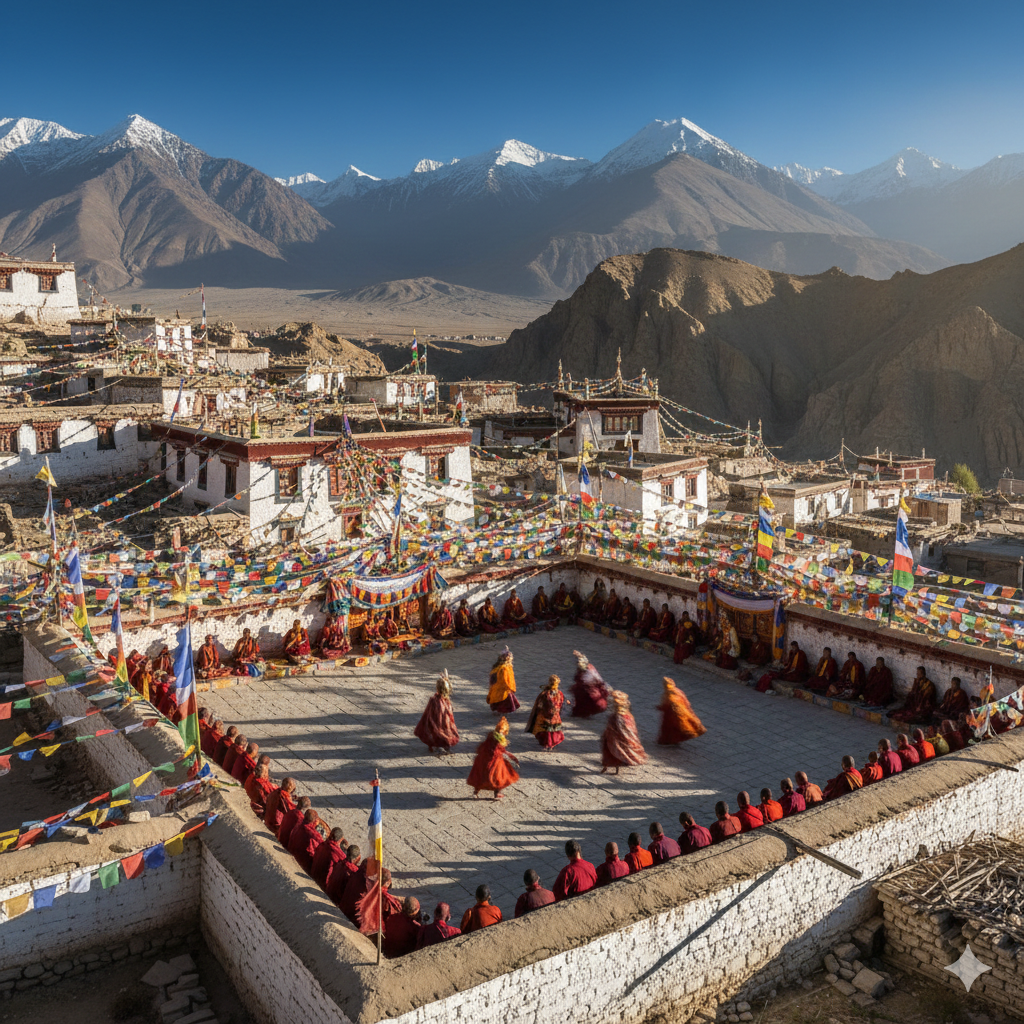
Mustang, often called the “Last Forbidden Kingdom,” offers the most visually stunning answer to how Losar is celebrated. In the high-altitude desert of Upper Mustang, the festival is a battle between the divine and the demonic.
The Ritual of Exorcism
In Lo Manthang, the celebration begins with “Gutor,” a ceremony held two days before the New Year. Monks from the Chhode Monastery perform rituals to drive out evil spirits. This is a crucial phase of how Losar is celebrated, as it ensures the new year begins on a “clean slate.” If you are curious about other sacred sites, check out our guide on the Famous Shiv Temple in Nepal 2026 for more spiritual insights.
The Cham Dances
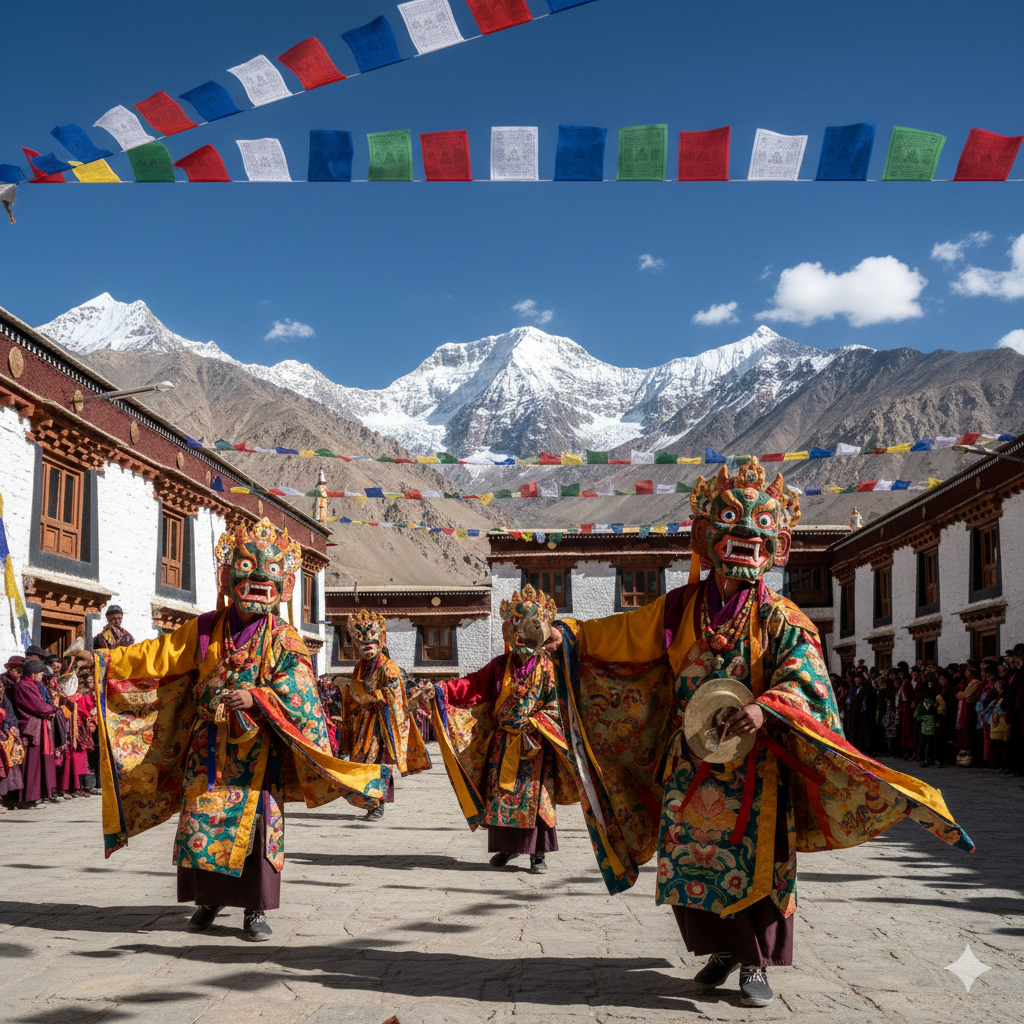
How Losar is celebrated in Mustang, Manang, and Himalayan villages — monks performing Cham dances during Losar in Mustang’s monasteries
The most iconic part of how Losar is celebrated is the masked Cham dance. Monks wear elaborate silk costumes and fearsome masks representing deities like Dorje Jono. These dances aren’t just performances; they are “meditation in motion,” designed to purify the environment and bring rain for the spring planting season.
The White Clay Symbols
Look closely at the stone houses in Mustang during the festival. You will see symbols of the sun, moon, and the swastika painted in white flour or clay. This tradition is a cornerstone of how Losar is celebrated, acting as a protective seal for the household.
How Losar Is Celebrated in Manang: The Valley of the Gurungs
Manang is a rugged valley that acts as a gateway to the Thorong La Pass. Understanding how Losar is celebrated requires visiting the villages of Braga and Upper Pisang.
The Lengthening of Days
For the Manangis, Tamu Losar is a celebration of light. It falls during the winter solstice when the nights are longest. The celebration marks the return of the sun, a vital event in a region where winter can be brutal. This agricultural focus is central to how Losar is celebrated. For those interested in the people behind these traditions, read our feature on the Gurung Village in Nepal.
Horse Racing and Archery
A unique aspect of how Losar is celebrated in the Manang region is the display of traditional skills. In the open fields, young men participate in horse racing and archery competitions. This tradition stems from the region’s history as part of the salt trade route, where horsemanship was a survival skill.
The Community Dhido
While luxury lodges are popping up, the traditional meal of Dhido (buckwheat porridge) remains the staple. Sharing a communal pot of Dhido with local yak ghee is a warm highlight of how Losar is celebrated.
The Sacred Traditions of the Tsum Valley: The Hidden Land
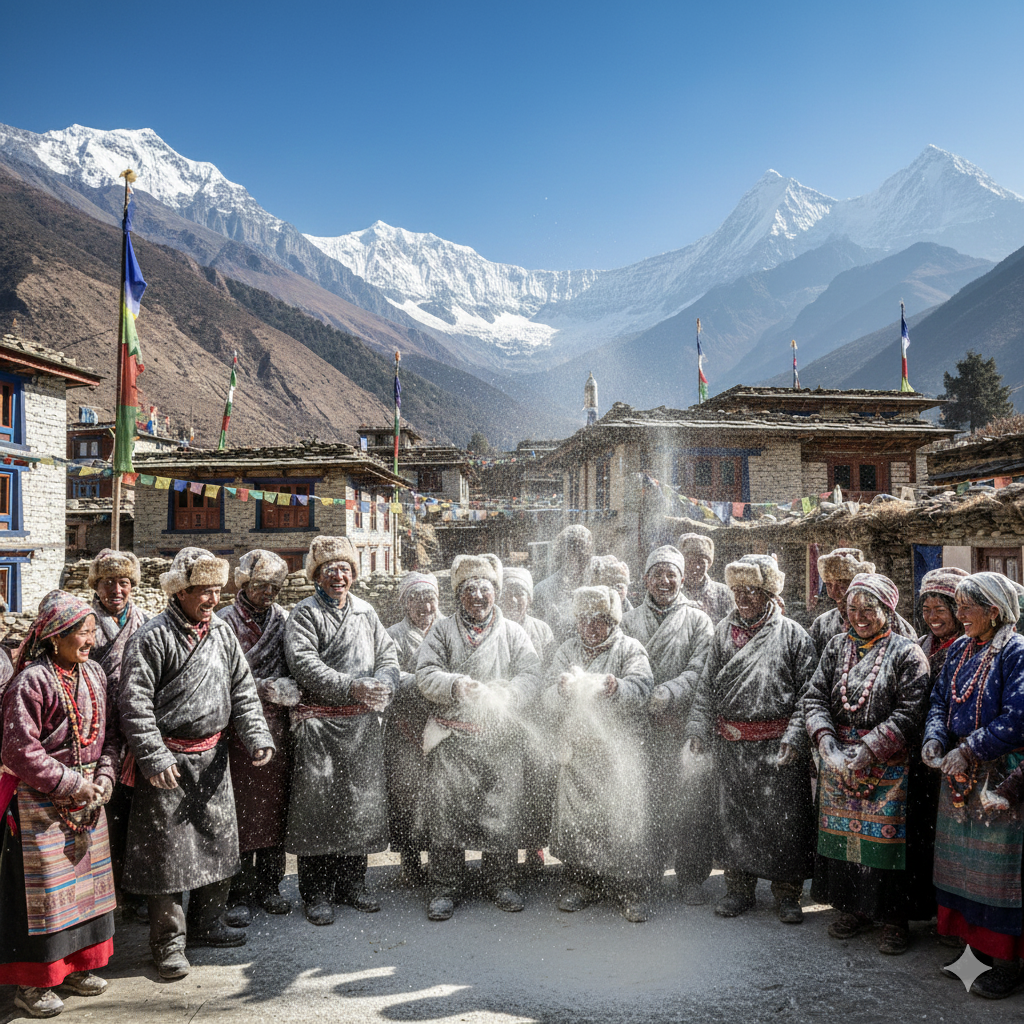
How Losar is celebrated in Mustang, Manang, and Himalayan villages — villagers playfully throwing Tsampa flour during Losar in Tsum Valley
The Tsum Valley is a Beyul,a sacred hidden valley. Here, how Losar is celebrated takes on a deeply non-violent and meditative tone.
The Tsampa Flour Blessing
In Tsum, the festival is often called “Tsampa Losar.” Villagers gather and playfully throw handfuls of roasted barley flour (Tsampa) at one another. This white powder covers everyone, symbolizing a wish for a “white” or pure year ahead. This is perhaps the most joyous part of how Losar is celebrated.
Lighting of 108 Butter Lamps
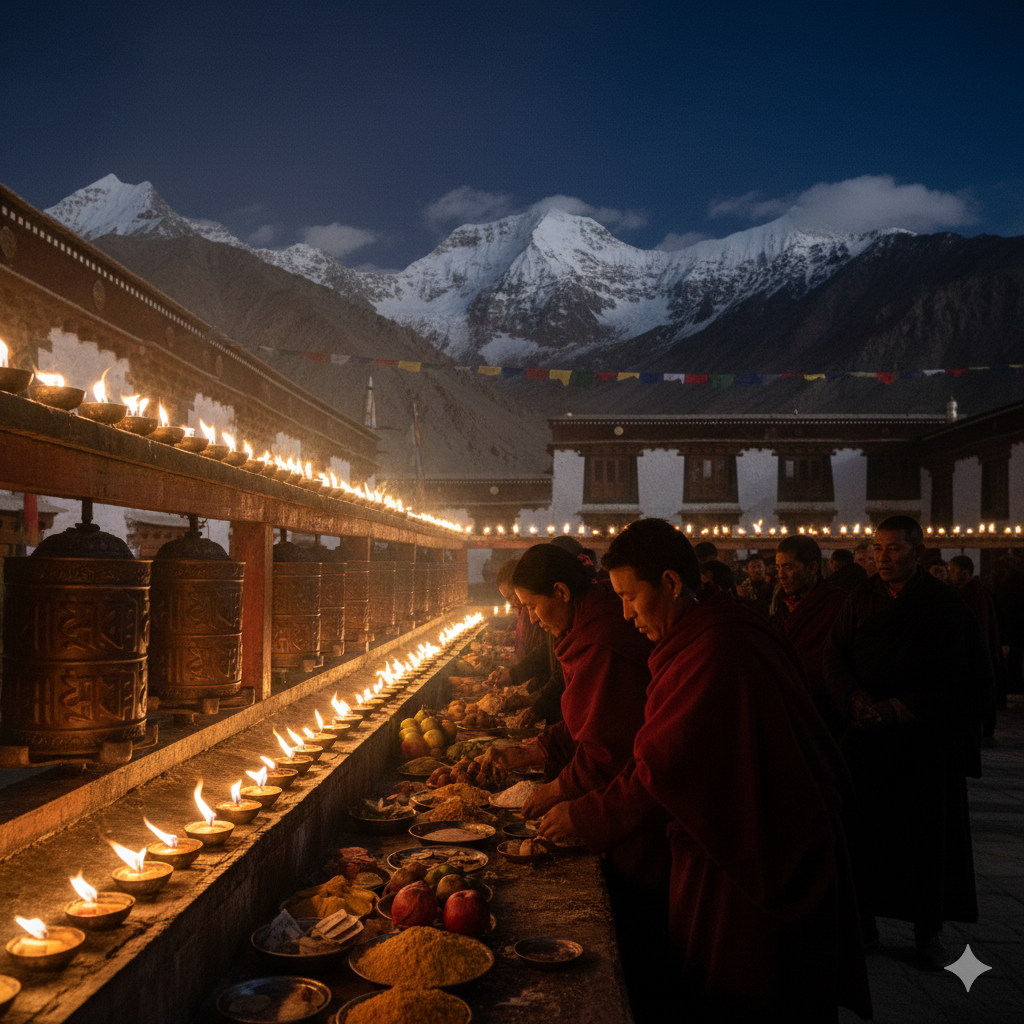
How Losar is celebrated in Mustang, Manang, and Himalayan villages — Sherpa community lighting butter lamps during Gyalpo Losar in Upper Mustang
In the ancient Mu Gumba, the highest monastery in the valley, monks light 108 butter lamps. The flickering flames representing the removal of ignorance are a sight to behold and a core part of how Losar is celebrated.For more on high-altitude adventures, visit the official Nepal Tourism Board website.
Culinary Delights: What to Eat During Losar
The kitchen is the heart of how Losar is celebrated. Each dish has a symbolic meaning.
1. Guthuk: The Soup of Nine Omens
Eaten on the 29th day of the 12th lunar month, Guthuk is a noodle soup with nine ingredients. The most interesting part of how Losar is celebrated is the “dough balls” inside the soup. Each ball contains a hidden item:
Salt: You have a good heart.
Chili: You are talkative.
Coal: You have a “black heart” (meant as a joke).
Wool: You are kind and gentle.
2. Khapse: The Fried Treat
Khapse are deep-fried pastries made of flour, butter, and sugar. They are stacked in elaborate towers in every home. No explanation of how Losar is celebrated in Mustang, Manang, and Himalayan villages is complete without the smell of fresh Khapse frying in the air.
3. Changkol (Hot Beer Soup)
On the first morning of Losar, families drink Changkol, a warm soup made from local barley beer (Chang), butter, and sugar. It is the traditional way to toast the new year and a staple of how Losar is celebrated .
The Monastic Life: Prayers and Protection
Monasteries are the spiritual anchors of these regions. When observing how Losar is celebrated in Mustang, Manang, and Himalayan villages, you will notice the Lamas (priests) are the busiest members of the community.
Reading the Sacred Texts
Monks spend days reciting the Kangyur (the translated words of the Buddha). This collective chanting is believed to generate merit for the entire village. This spiritual insurance is a vital component of how Losar is celebrated.
The Raising of the Lung-Ta
“Lung-Ta” refers to wind-horse prayer flags. During the first three days of Losar, almost every household and monastery replaces their old, faded flags with vibrant new ones. The belief that the wind carries these prayers to the heavens is central to how Losar is celebrated in Mustang, Manang, and Himalayan villages.
Planning Your 2026 Losar Trek
If you want to see how Losar is celebrated in Mustang, Manang, and Himalayan villages in person, you need to plan for the winter conditions.
Permits and Logistics
Upper Mustang requires a Restricted Area Permit (RAP). If your journey to see how Losar is celebrated in Mustang, Manang, and Himalayan villages takes you through the Annapurna Circuit, you will also need an ACAP permit. For safety tips, read our Is it Safe to Visit Nepal? 2025 Guide.
The Weather Factor
February in Mustang and Manang is cold. Temperatures can drop to -15°C at night. However, the reward for enduring the cold is seeing how Losar is celebrated without the usual summer tourist crowds.
Cultural Etiquette for Visitors
When observing how Losar is celebrated in Mustang, Manang, and Himalayan villages, remember you are a guest in a sacred space.
Greeting: Use the phrase “Tashi Delek” (Good Fortune). This is the universal greeting used when seeing how Losar is celebrated.
Clockwise Movement: Always walk clockwise around stupas, prayer wheels, and mani walls.
Photography: Always ask before photographing monks or people in prayer.
Offerings: It is customary to leave a small donation at monasteries when witnessing how Losar is celebrated in Mustang, Manang, and Himalayan villages.
FAQs: How Losar Is Celebrated in Mustang, Manang, and Himalayan Villages
Q1: Which is the most authentic village to see Losar?
Lo Manthang in Mustang is often cited as the best place to see how Losar is celebrated due to its preserved culture and royal history.
Q2: Can I eat Guthuk as a vegetarian?
Yes! While traditional Guthuk uses yak meat, many lodges now prepare vegetarian versions. The dough ball ritual remains a fun part of how Losar is celebrated in Mustang, Manang, and Himalayan villages regardless of the ingredients.
Q3: Is the Tiji Festival the same as Losar?
No. While both involve masked dances, Losar is the New Year (Feb/March), whereas the Tiji Festival in Mustang usually takes place in May. Both are excellent ways to see how Losar is celebrated in Mustang, Manang, and Himalayan villages styles of ritual.
Q4: Do I need a guide to experience Losar? Yes, highly recommended. A local guide can explain the nuances of how Losar is celebrated in Mustang, Manang, and Himalayan villages and help you navigate the language barriers in remote areas.
Q5: What is the significance of the “Fire Horse” in 2026? In the 60-year cycle of the Tibetan calendar, 2026 is the Year of the Fire Horse. This adds a layer of energetic “fire” to the rituals, making the 2026 answer to how Losar is celebrated in Mustang, Manang, and Himalayan villages particularly vibrant.
As we have explored, how Losar is celebrated in Mustang, Manang, and Himalayan villages is a testament to the enduring spirit of the mountain people. From the butter lamps of Tsum to the masked dances of Lo Manthang, the festival is a bridge between the physical world and the spiritual realm.
Visiting Nepal during this time allows you to participate in a cycle of renewal that has sustained these communities for over a thousand years. When you finally stand in a village courtyard, covered in Tsampa flour and surrounded by the echoes of long horns, you will truly understand how Losar is celebrated.
Next Steps: Would you like me to help you draft a specific 14-day trekking itinerary for the February 2026 Gyalpo Losar in Upper Mustang?
