Nepal isn’t just home to the world’s tallest peaks it’s also home to some of the highest walkable passes on Earth. These high mountain passes connect valleys, link major trekking routes, and often mark the toughest, most rewarding day of any trek. Some, like Thorong La, see thousands of trekkers a year. Others, like Phyajang La, see almost none.
This guide breaks down Nepal’s major high passes where they are, how high they go, and what makes each one worth knowing about.
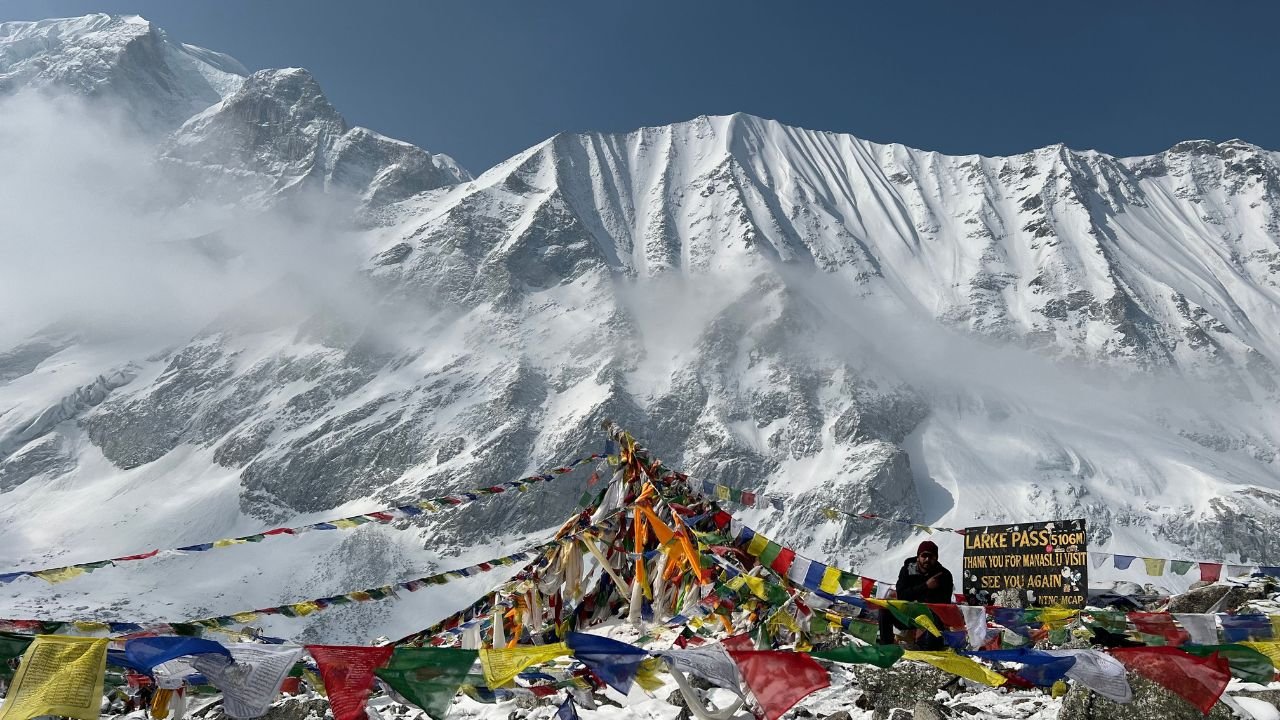
High Mountain Passes in Nepal: Photo by Sanjay Prakash
What Counts as a “High Pass” in Nepal
In trekking terms, a high pass is usually anything above 5,000 meters. At that altitude, the air holds roughly half the oxygen you’d get at sea level, so even a well-graded trail can feel exhausting. Some passes, like Sherpani Col, go further still well past 6,000 meters and into technical mountaineering territory, requiring ropes, crampons, and real climbing skill rather than just fitness.
Most trekking passes fall somewhere in between: strenuous but non-technical, meaning no ropes or ice axes, just a long, hard day of walking at altitude.
Nepal’s Best-Known Trekking Passes
Thorong La (5,416m) — Annapurna Circuit The most famous pass in Nepal, and the highest point of the Annapurna Circuit. It connects Manang village in the east with the sacred Muktinath temple in the west. Thousands of trekkers cross it every season, usually starting before dawn to beat strong winds that pick up later in the day. The descent to Muktinath is often harder on the knees than the climb itself.
Cho La (5,420m) — Everest Region Part of the Everest Three Passes Trek, Cho La links the village of Dzongla with Lobuche, and connects nicely with the turquoise Gokyo Lakes to the west. It’s rocky and can be icy underfoot, so many trekkers use crampons for the final stretch.
Kongma La (5,535m) — Everest Region The toughest of the Everest region’s three passes, and the one most often skipped. Parts of the trail are loose rock and require careful footing. It links the Chhukhung valley with Lobuche and rewards trekkers with views of Everest, Lhotse, Nuptse, and Ama Dablam.
Larkya La (5,106m) — Manaslu Circuit The high point of the Manaslu Circuit Trek, connecting Dharamshala (Larke Phedi) with Bhimtang. It’s not the highest pass on this list, but the terrain is demanding steep sections that are tough on the knees, especially on the descent.
Nepal’s More Remote and Lesser-Known Passes
Teri La (5,577m) — Upper Mustang / Nar Phu A historic salt-trading route connecting two restricted areas of Nepal. Very few trekkers cross it, and the views take in the Annapurna range, Dhaulagiri range, and Tilicho Peak.
Kang La (5,320m) — Nar Phu Valley Connects the Nar Phu Valley with the wider Annapurna region. Moderate trekker traffic more remote than Thorong La, but not as untouched as Nepal’s most obscure passes.
Phyajang La (5,496m) — Upper Humla The high point of the Humla Changla Valley Trek, in Nepal’s far northwest near the Tibetan border. Technically higher than Thorong La and Cho La, but crossed by only a handful of trekkers each year. No teahouses, no crowds just a long camping approach through some of Nepal’s most untouched valleys.
Nangpa La (5,716m) — Solukhumbu An ancient trade route connecting Nepal with Tibet, near Mount Everest and Cho Oyu. Historically significant as a centuries-old trading and migration route rather than a built-for-tourism trail.
Nepal’s Most Extreme, Technical Passes
A step beyond standard trekking passes, these require real climbing experience and equipment — not just fitness and acclimatization.
- Sherpani Col (6,135m) — In the Makalu region, connecting Barun Valley with Hongu Valley. Widely cited as one of the highest mountain passes in the world, with views of Makalu and Everest. Requires technical climbing skill.
- Amphu Labtsa (5,845m) — A glaciated pass at the head of the Honku Valley, near Island Peak, covered in ice cliffs. Snow and ice climbing gear is standard here.
- Tashi Lapcha (5,755m) — Connects the Rolwaling and Khumbu regions, near Tsho Rolpa Lake. Considered very difficult due to both altitude and technical terrain.
Quick Comparison Table
| Pass | Elevation | Region | Difficulty |
|---|---|---|---|
| Sherpani Col | 6,135m | Makalu | Extreme — technical climbing |
| Amphu Labtsa | 5,845m | Everest (Honku Valley) | Very hard — glacier travel |
| Tashi Lapcha | 5,755m | Rolwaling–Khumbu | Very hard — technical terrain |
| Nangpa La | 5,716m | Solukhumbu | Hard — remote trade route |
| Teri La | 5,577m | Upper Mustang / Nar Phu | Hard — very remote |
| Kongma La | 5,535m | Everest region | Hard — loose, rocky trail |
| Phyajang La | 5,496m | Upper Humla | Hard — remote, camping-only |
| Cho La | 5,420m | Everest region | Moderate–hard |
| Thorong La | 5,416m | Annapurna Circuit | Moderate — but very long day |
| Kang La | 5,320m | Nar Phu Valley | Moderate |
| Larkya La | 5,106m | Manaslu Circuit | Moderate — tough on descent |
How to Choose the Right Pass for You
- First high-altitude trek? Thorong La or Larkya La are the most established, with well-marked trails and support infrastructure nearby.
- Want a classic pass with fewer crowds than Thorong La? Cho La or Kongma La offer similar altitude with a quieter trail.
- Looking for real solitude? Teri La, Kang La, or Phyajang La see a fraction of the traffic of the popular routes.
- Experienced with technical climbing? Sherpani Col, Amphu Labtsa, or Tashi Lapcha will test skills beyond basic trekking fitness.
Staying Safe at High Altitude
Whichever pass you choose, altitude is the real challenge — not the distance. A few basics apply across all of them:
- Build in proper acclimatization days before attempting any pass above 5,000m.
- Start early. Wind and weather typically worsen as the day goes on, especially on exposed passes like Thorong La.
- Know the signs of altitude sickness, and be willing to turn back if symptoms appear.
- For remote or technical passes, go with an experienced guide or operator — self-arranged trips are not advisable once permits, camping logistics, or technical gear are involved.
Nepal’s high passes range from bucket-list classics to some of the most obscure crossings on the planet. Whichever one you’re aiming for, the common thread is the same: thin air, hard-earned views, and a real sense of having gone somewhere that matters.
