
visual culture nepal is – traditional meets digital art
In 2026, the concept of travel and artistic expression has moved beyond simple observation to a state of deep immersion. We no longer just look at a destination; we seek to understand the underlying textures and the silent dialogues between history and the future. This evolution is perfectly encapsulated by the shifting visual culture nepal. For the modern traveler, photographer, and content creator, the country has become a massive, open air studio where ancient craftsmanship and futuristic digital trends coexist in a rare and beautiful friction.
This movement is what we call Cinematic Ethno-Aesthetics. It is a philosophy that values the raw, the authentic, and the human over the hyper polished and synthetic. To explore visual culture nepal in 2026 is to witness the “Rurban” transition firsthand. This is the seamless blending of rural, ancestral heritage with the high octane energy of urban life. From the neon lit jazz clubs in the heart of Kathmandu to the prehistoric red cliffs of Upper Mustang, the country offers a visual language that is as diverse as its topography.
The Great Shift: Authentic Grain and High Definition Heritage
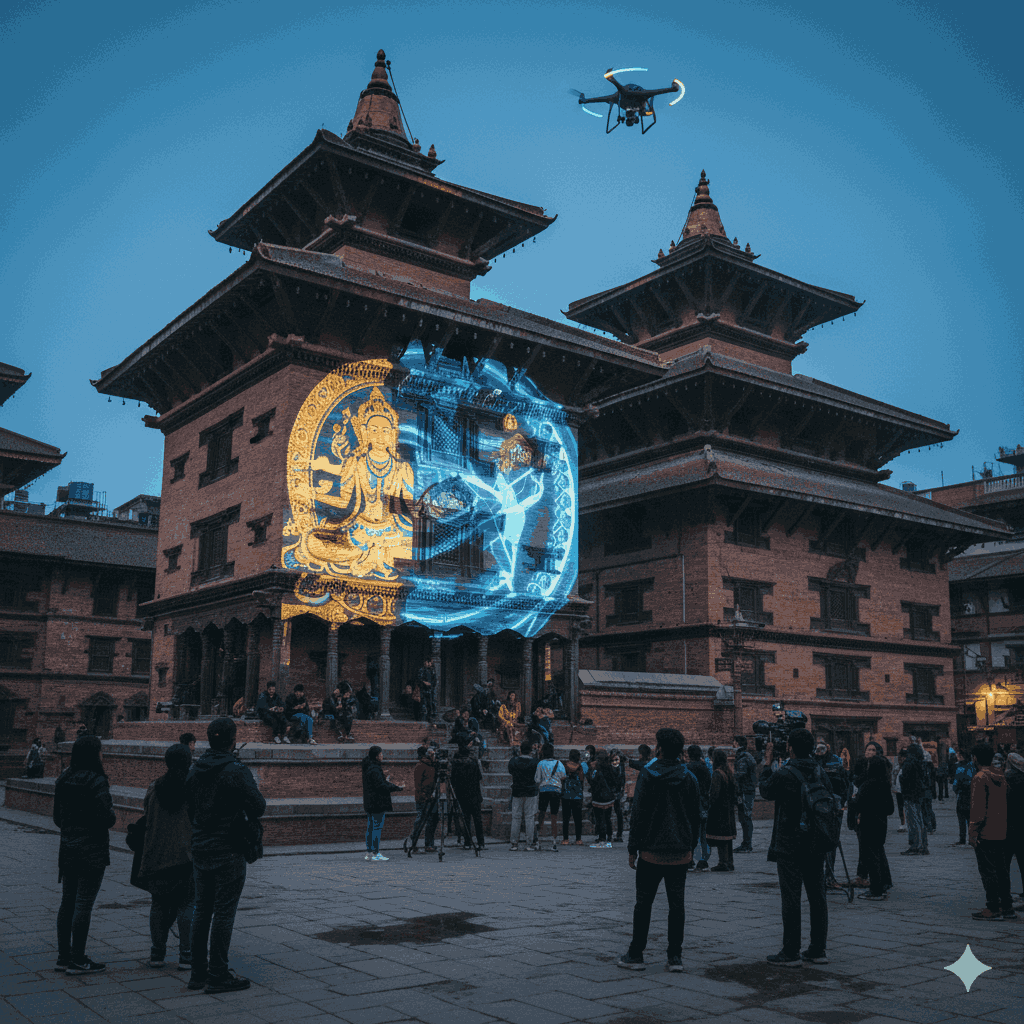
The year 2026 marks a turning point in our collective visual diet. The over saturated and hyper smooth filters that dominated the early 2020s have largely been discarded. Today, there is a profound craving for organic movement and authentic grain. When we talk about visual culture nepal, we are discussing a narrative anchor. The 2026 algorithm now favors what experts call High Definition Heritage. This involves using a 24fps film look to document the fascinating intersection of 5G connectivity and 17th century architecture.
Imagine filming a high tech helicopter landing on the rocky slopes of Everest Base Camp in the morning. Then, by the afternoon, you are in the middle of Bhaktapur, capturing a master potter whose hands move with the same rhythm used by his ancestors a thousand years ago. These dramatic juxtapositions are the hooks that keep a global audience engaged. They represent the core of visual culture nepal, where every frame tells a story of a nation that is both 1,000 years old and 10 minutes into the future.
Neo Paubha: When Sacred Art Meets Modernity
visual culture nepal is – Neo Paubha art fusion
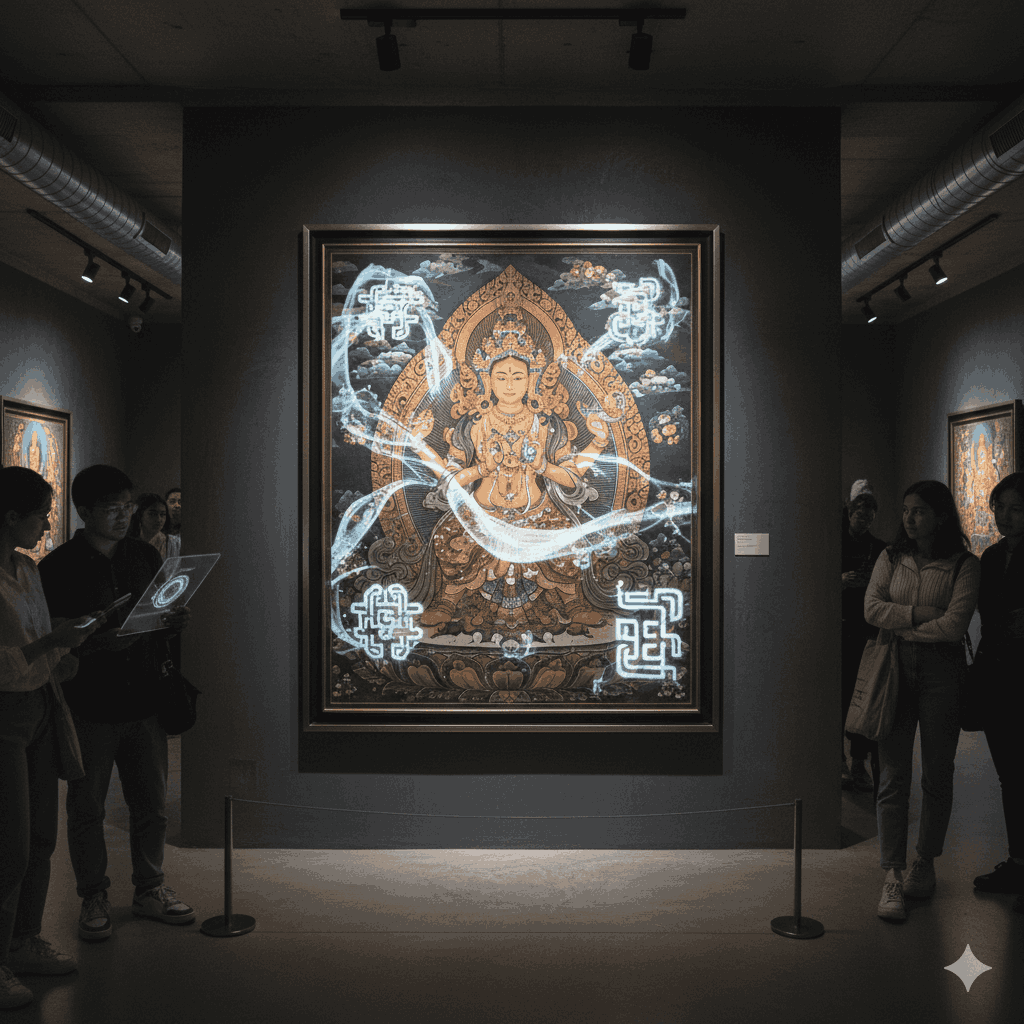
One of the most striking elements of visual culture nepal today is the Neo Paubha movement. Paubha is the traditional religious painting of the Newar community, traditionally used to depict deities and mandalas with strict iconographic rules. In 2026, artists have taken these ancient symbols and recontextualized them. They are now using this medium to address modern anxieties like climate change, gender identity, and the digital divide.
The visual style of Neo Paubha often incorporates mixed media. You might see a traditional mineral pigment painting enhanced with digital projections or metallic leaf. This creates a high contrast, glowing effect that is incredibly photogenic. It has turned galleries in Patan and Thamel into major hubs for visual culture nepal. Institutions like the Museum of Nepali Art are leading the way, showing that traditional art can be a powerful vehicle for contemporary social dialogue. This is a crucial pillar of visual culture nepal, proving that heritage is not a static relic but a living, breathing force.
The Rurban Street Movement and the Power of Contrast
The Rurban photography movement has redefined the street aesthetic within visual culture nepal. This style focuses specifically on the points of friction between the old and the new. In 2026, global audiences are no longer satisfied with just another mountain sunset. They want to see the reality of the Himalayas. This might mean a sleek electric vehicle parked in front of a weathered red brick palace, or a young monk in saffron robes using a high end tablet to study ancient scriptures.
This contrast is where visual culture nepal becomes truly cinematic. Photographers are moving away from the artificial look and toward true to life cinematic tones. They emphasize natural lighting, deep shadows, and a sense of “lived in” reality. These moments are found in the narrow alleys of Patan or the busy markets of Asan. The combination of neon light reflecting on ancient stone paths has become a signature look for visual culture nepal, offering a visual depth that few other places on earth can match.
Mithila 2.0: A Palette of Social Change
Moving south to the plains, we encounter Mithila art, a tradition that has seen a massive digital and urban evolution. Traditionally practiced by women on the mud walls of their homes in Janakpur, Mithila art is defined by vibrant colors and geometric symbols like fish, peacocks, and lotuses. In 2026, this aspect of visual culture nepal has scaled up to the urban environment. Huge murals now decorate the concrete flyovers and public buildings of Kathmandu.
This Mithila 2.0 trend is about more than just aesthetics; it is about empowerment. Artists are using the same traditional language to speak about modern issues like education for girls and environmental protection. This vibrant, high saturation look is a major draw for anyone documenting visual culture nepal. It provides a splash of organic color against the grey of the city, turning Janakpur and its modern extensions into living galleries that celebrate the female voice in Nepali art.
The Sonic Layer: Audio as Part of the Visual
In 2026, we have realized that you cannot fully experience visual culture nepal without its soundscape. The rise of high fidelity audio in social media has made the chime of a temple bell or the sizzle of a street side momo steamer just as important as the image itself. There is also a significant urban layer to this, particularly the jazz festivals and live music in Kathmandu which have become a sensory staple of the city’s night life.
The visual of a jazz drummer in a dimly lit Thamel basement, surrounded by traditional wood carvings, is the perfect example of modern visual culture nepal. These sonic hooks allow creators to build a “felt” reality. When a viewer sees a reel of a rainy night in Kathmandu, the sound of the rain hitting the cobblestones and the distant melody of a flute player creates an immersive experience that simple visuals cannot achieve. This multi sensory approach is now a fundamental requirement for anyone looking to master visual culture nepal.
High Altitude Minimalism and the Marpha Palette
As we travel higher into the rain shadow of the Himalayas, the visual culture nepal takes a turn toward minimalism. In places like Marpha and Upper Mustang, the aesthetic is defined by white washed stone walls, flat roofs stacked with firewood, and wide open brown landscapes. This is often called the Marpha Palette. It offers a clean, sophisticated visual language that stands in stark contrast to the colorful chaos of the valley.
In 2026, this minimalism has been embraced by a new wave of eco lodges. These structures use local materials like stone and timber but incorporate floor to ceiling glass windows that frame the mountains like living paintings. This version of visual culture nepal is quiet and serene. It is perfect for creators who want to showcase the “luxe adventure” side of the country. The visual of a minimalist room overlooking the peaks of the Annapurna range is a high impact image that defines the premium side of visual culture nepal.
The Blue Hour and Spiritual Symmetry
Finally, we must talk about the spiritual geometry that underpins much of visual culture nepal. The three Durbar Squares and the great stupas of Boudhanath and Swayambhunath are masterclasses in symmetry. In 2026, photographers have mastered the “Blue Hour”—that brief moment after sunset when the sky turns a deep indigo and the ancient monuments begin to glow with artificial light.
This is when the spiritual core of visual culture nepal is most visible. The repetition of carved windows, the circular paths around the stupas, and the flickering butter lamps create a visual rhythm that is both ancient and incredibly modern. Capturing these moments requires patience and an eye for detail, but it results in the most iconic representations of visual culture nepal. It reminds us that at the center of all this modern technology and digital storytelling, there is a pulse of devotion that has remained unchanged for centuries.
The journey through visual culture nepal in 2026 is an invitation to see the world differently. It is a reminder that tradition does not have to be preserved in a museum to survive; it can thrive on our screens and in our streets. By leaning into the Cinematic Ethno-Aesthetic, we are not just taking pictures; we are participating in the evolution of a nation’s identity.
Nepal offers the scale of the mountains and the depth of its people. Whether you are exploring the nepal cultural secrets of a remote monastery or the high energy streets of the capital, the visual culture nepal is your guide. It is a culture that is as comfortable with a drone in the sky as it is with a chisel in the hand. In 2026, the most powerful images are the ones that capture this balance, telling a story that is as vast as the Himalayas and as intimate as a single candle lit in a dark temple.
