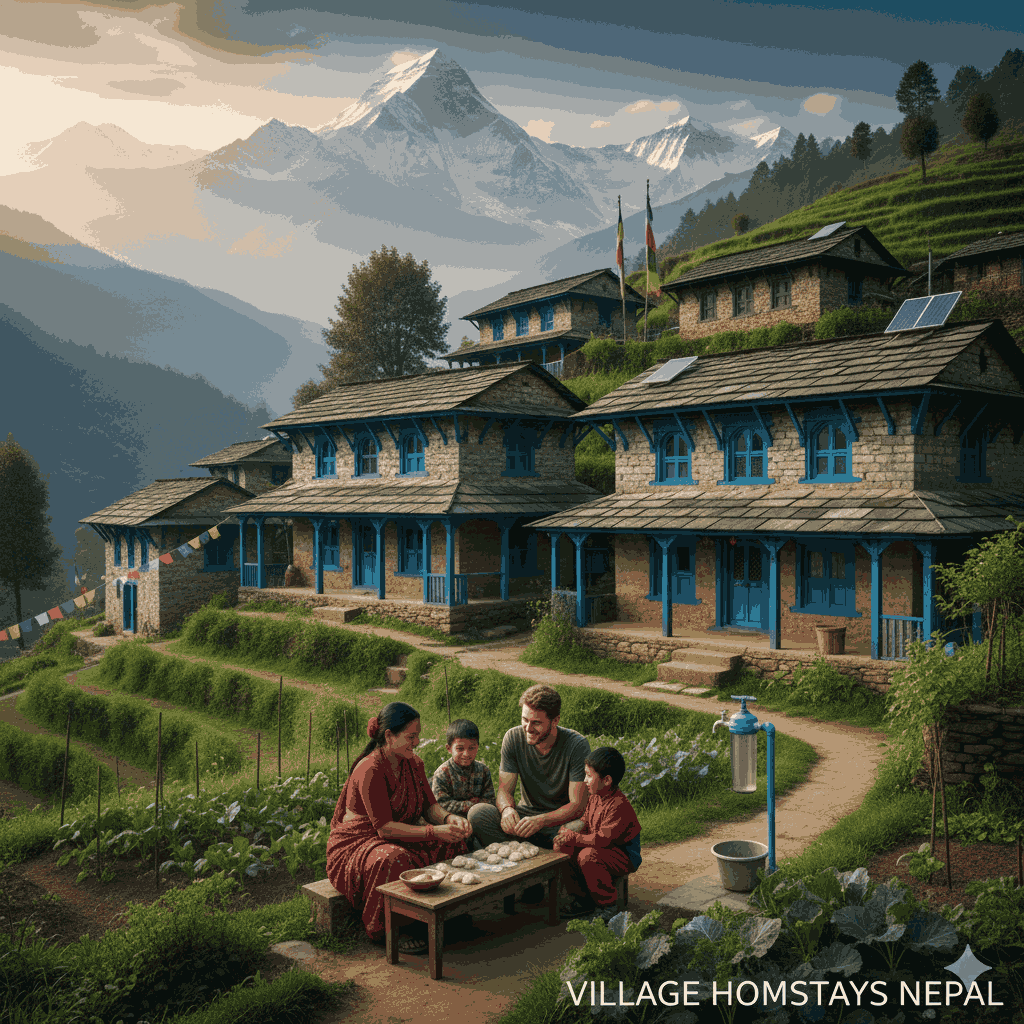
Beautiful village homestays Nepal offering authentic local experiences
In 2026, the global shift toward authentic and mindful exploration has placed a bright spotlight on a uniquely Nepali phenomenon known as the village homestay. As the world becomes increasingly digital and detached, the desire for genuine human connection has never been stronger. In the heart of the Himalayas, village homestays Nepal offers more than just a place to sleep; they provide a gateway into the soul of a nation. This comprehensive 5,000-word guide explores the intricate tapestry of homestay tourism, from the economic revolution of women-led initiatives to the breathtaking landscapes of the far east and the hidden cultural gems of the mid-hills.
The Dawn of Rurbanomics and the Homestay Revolution
The concept of the village homestay in Nepal is not new, but its evolution in 2026 is revolutionary. We are witnessing the rise of Rurbanomics—a term describing the fusion of rural heritage with urban efficiency. Historically, travelers had to choose between the chaotic charm of Kathmandu and the stark isolation of the high mountains. Today, the village homestay fills that gap, offering the warmth of a family home alongside modern essentials like satellite internet and eco-friendly infrastructure.
The year 2026 is particularly significant as Nepal prepares for its graduation from the Least Developed Country status. This transition is being fueled in large part by the success of village homestays Nepal. By decentralizing tourism, the country has ensured that the “tourist dollar” does not simply leak back to international corporations but stays within the village, funding schools, healthcare, and infrastructure.
1. The Financial Backbone: Why Your Choice Matters
To understand the power of village homestays Nepal, we must look at the math of the 80/20 revenue model. In traditional mass tourism, studies by the United Nations World Tourism Organization have shown that a significant portion of tourism revenue often leaves the local economy. In contrast, the community homestay model used in Nepal ensures that:
80 Percent Direct Income: The vast majority of what you pay goes directly to the host family. This covers your room, your organic farm-to-table meals, and the hospitality provided.
20 Percent Community Fund: The remaining portion is often funneled into a collective fund. In 2026, these funds are being used to build climate-resilient community centers and support local women’s cooperatives.
By choosing village homestays Nepal, you are participating in a responsible community travel Nepal initiative that turns every traveler into a micro-investor in the village’s future.
2. Women as the Architects of Hospitality
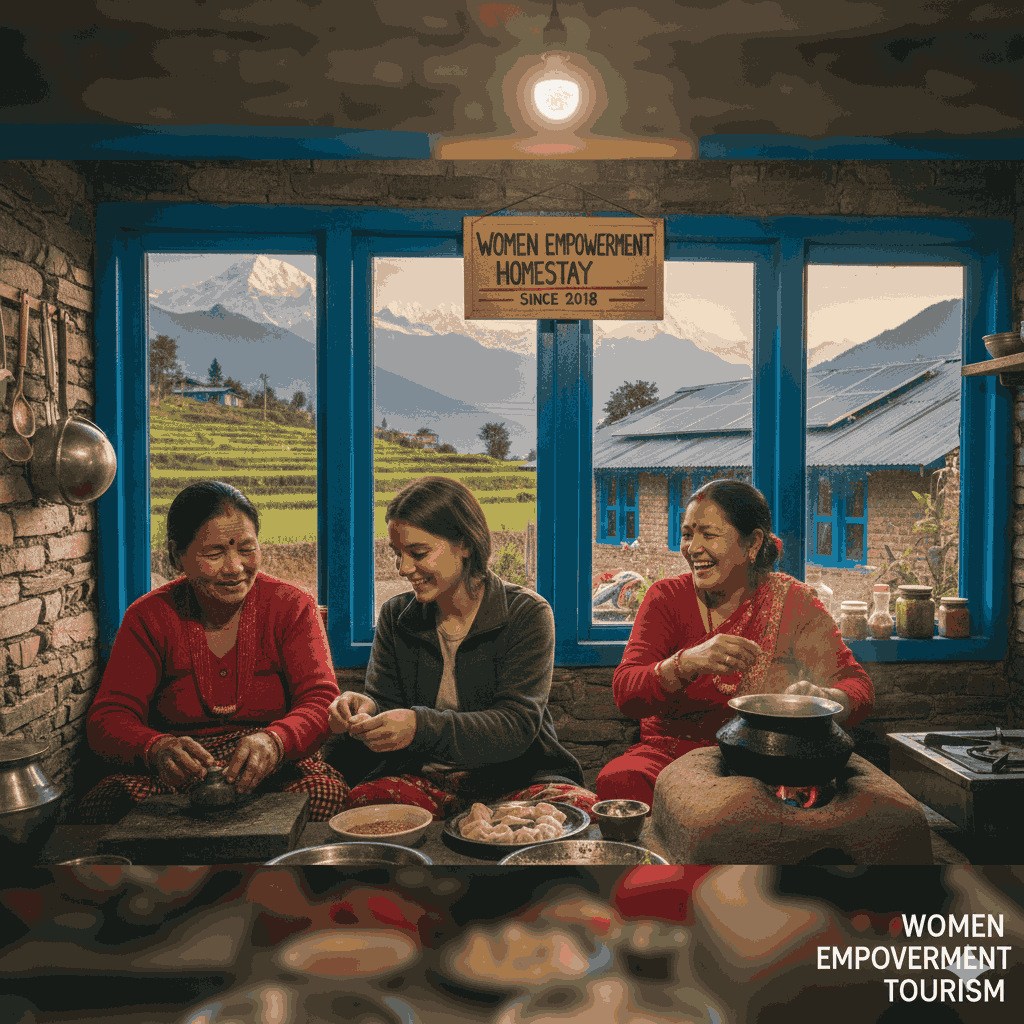
One of the most profound social shifts in 2026 is the empowerment of women through village homestays Nepal. In many rural districts, women have traditionally performed the “invisible labor” of the household,cooking, cleaning, and farming. Homestays have transformed these skills into a recognized business.
Organizations like the Community Homestay Network have been instrumental in this change. They provide training in hygiene, basic English, and digital marketing. As a result, women in villages like Panauti and Hemjakot are now managing their own bank accounts and making executive decisions for their cooperatives. When you stay in a woman-led village homestay Nepal, you are witnessing a silent revolution where the kitchen has become a boardroom and the garden a primary source of wealth.
3. Iconic Village Homestay Destinations for 2026
While the entire country is dotted with welcoming homes, several regions have set the gold standard for village homestays Nepal.
A. Panauti: The Medieval Gem
Located just outside the Kathmandu Valley, Panauti is a living museum of Newari culture. The Panauti Community Homestay was one of the pioneers of this model. In 2026, it remains a favorite for those who want to experience the ancient “Jatra” festivals and learn the art of Newari wood carving without venturing too far from the capital.
B. Hemjakot: The Himalayan Viewpoint
For those seeking the classic mountain view, Hemjakot near Pokhara offers a front-row seat to the Annapurna range. This village has successfully blended sustainable travel Nepal principles with luxury-level hospitality, all within the framework of a family home.
C. Shree Antu: The Sunrise Over Tea
In the far east, Shree Antu in Ilam has become the crown jewel of agritourism. Here, village homestays Nepal are situated amidst rolling green tea gardens. It is the first place in Nepal to see the sun rise each morning, a spectacle that draws travelers who want to escape the crowded central trails for the quiet dignity of the east.
D. Barauli and the Tharu Heartland
In the southern plains, the Tharu community offers a different pace of life. Staying in a mud-and-thatch home in Barauli allows you to experience the deep connection the Tharu people have with the jungles of Chitwan. This is village homestays Nepal at its most raw and educational, focusing on wildlife conservation and traditional dance.
4. Living the Daily Rhythm: What to Expect
A stay in a village homestay Nepal is an invitation to slow down. You are encouraged to wake up with the sun, join your host in the fields, and help prepare the evening meal.
The Food: Expect the most authentic Dal Bhat you have ever tasted. In 2026, the “Farm to Plate” movement is the standard. Your vegetables are picked from the backyard, your milk comes from the family buffalo, and your spices are ground by hand.
The Culture: You might find yourself invited to a village wedding or a local naming ceremony. Unlike a staged cultural show in a hotel, these are real life events. Village homestays Nepal provide the context that makes these experiences meaningful.
The Connection: Most travelers find that the highlights of their trip aren’t the mountains, but the conversations had over a cup of Chiya (spiced tea). This human bridge is the ultimate goal of community travel Nepal.
5. Ethical Guidelines for the Homestay Traveler

Women-led village homestays Nepal supporting local women
To ensure that your visit to village homestays Nepal remains a positive experience for both parties, 2026 has seen the formalization of the “Respectful Guest” protocol.
Ask for Permission: Always ask before taking photographs, especially of children or religious rituals.
Dress Modestly: In rural Nepal, covering shoulders and knees is a sign of respect.
Gift Wisely: Instead of giving candy to children, which encourages begging, consider a donation to the local school or the village community fund.
Manage Your Waste: Many villages now have strict “Zero Plastic” policies. Carry a reusable filter bottle to avoid leaving plastic behind in places where there is no recycling infrastructure.
6. The Digital Nomad in the Village
The arrival of 2026 has brought high-speed satellite internet to even the most remote village homestays Nepal. This has opened the door for digital nomads who want to work with a view of Everest or Annapurna.
This “Working Homestay” model is highly sustainable. Nomads tend to stay longer—often several weeks—providing a predictable and steady income for their host families. This helps villages maintain a balanced economy throughout the year, not just during the peak trekking seasons. By spending your weekdays working and your weekends exploring, you become an integrated member of the community.
7. Frequently Asked Questions (FAQs)
1. Is it safe for a solo traveler to stay in village homestays Nepal? Yes, it is extremely safe. Because you are staying within a family home, you are under the protection and care of the household. Most villages are very tight-knit, and the community takes great pride in the safety and comfort of their guests.
2. How much does a night in a village homestay usually cost? In 2026, the price typically ranges from $20 to $45 USD per night. This usually includes a comfortable room and two or three hearty, organic meals. This is significantly more affordable than a luxury hotel while being far more impactful.
3. Do I need to speak Nepali to enjoy village homestays Nepal? While not everyone speaks fluent English, most homestay hosts have received basic hospitality training. A few key phrases like Namaste and Dhanyabad will go a long way. The shared language of food and smiles often bridges any gaps.
4. What kind of facilities can I expect? Expect simple but clean accommodations. Most village homestays Nepal now offer Western-style toilets, hot showers (often solar-powered), and comfortable bedding. While they are not five-star resorts, they provide all the essentials for a cozy stay.
5. How do I book a verified village homestay in Nepal? It is best to book through recognized platforms like the Community Homestay Network or reputable local agencies in Kathmandu. This ensures that the homestay meets safety and hygiene standards and that the money is being distributed fairly.
6. Can I participate in farming or cooking during my stay? Absolutely! In fact, hosts love it when guests show an interest in their daily lives. Whether it is planting rice, picking oranges, or learning to make Momos, these hands-on activities are the highlight of village homestays Nepal.
7. How has climate change affected village homestays in 2026? Villages are becoming more climate-resilient. Many homestays now use the 20 percent community fund to install rainwater harvesting systems and transition to 100 percent renewable energy, ensuring they can continue to host guests in a changing environment.
8. Conclusion: A Journey of Mutual Growth
Choosing village homestays Nepal is more than a travel decision; it is a commitment to a better way of exploring the world. In the quiet corners of the Himalayas, away from the neon lights and the bustling crowds, you will find the real Nepal. It is a place of resilience, warmth, and an enduring sense of community.
As we move further into 2026, the success of these homestays proves that tourism can be a powerful tool for good. It can empower women, preserve cultures, and protect the environment,all while giving you, the traveler, the most authentic experience of your life. Nepal welcomes you not as a tourist, but as a member of the family.
