
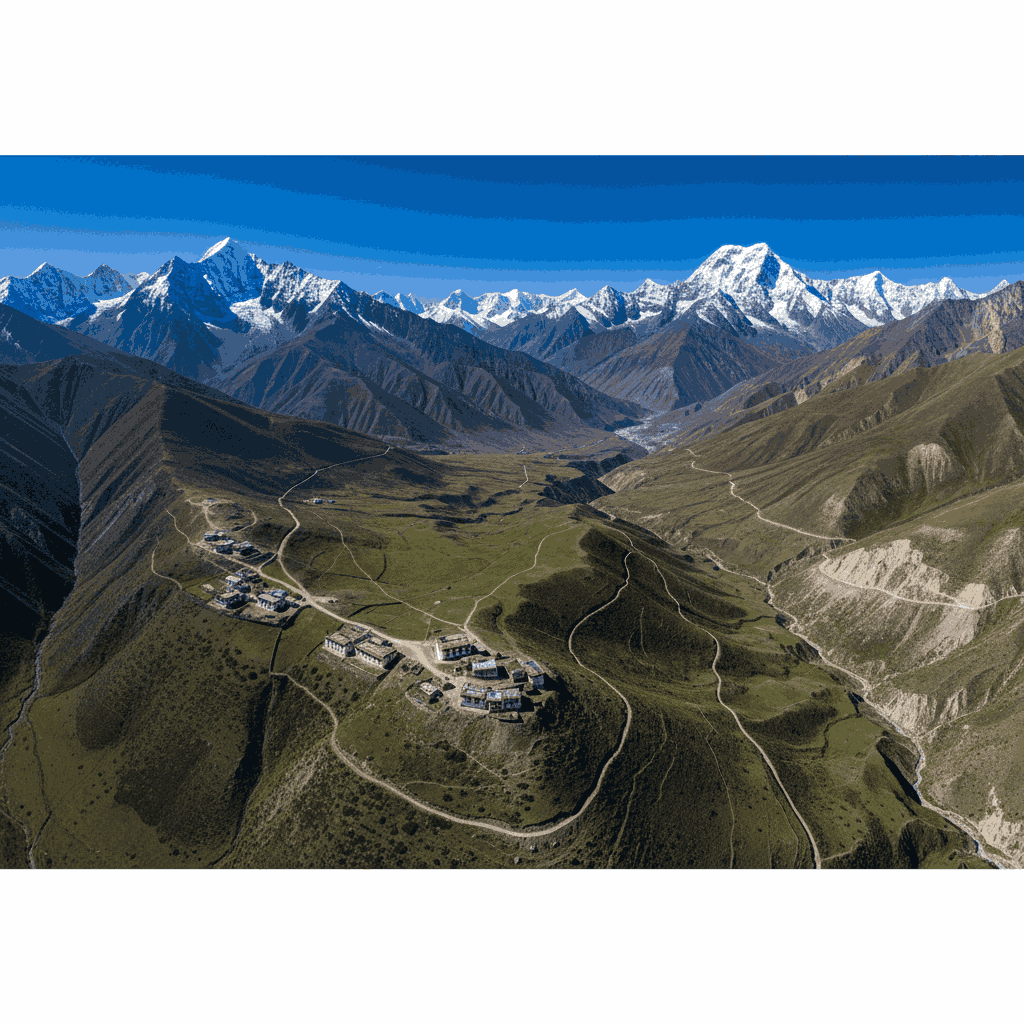
Spectacular aerial view of a remote valley in the Unexplored Himalaya Nepal
In an era where every peak seems to have a well-trodden path and every village a Wi-Fi signal, the Unexplored Himalaya Nepal still offers genuine wilderness and profound discovery. For the seasoned adventurer and the intrepid explorer, the familiar routes to Everest Base Camp or the Annapurna Circuit, while magnificent, represent only a fraction of what Nepal’s formidable mountains hold. The true magic, the raw, unadulterated essence of the Himalayas, lies in its hidden valleys, remote passes, and communities untouched by mass tourism.
The year 2026 beckons a new generation of trekkers to venture beyond the usual, to seek out the quiet majesty of the Unexplored Himalaya Nepal. This isn’t just about finding fewer people; it’s about connecting with a pristine natural environment, immersing oneself in genuinely preserved cultures, and undertaking a journey that truly earns the title of “expedition.” This comprehensive guide delves into the logistics, the challenges, and the unparalleled rewards of discovering Nepal’s last frontiers.
Before embarking on such a journey, understanding the nuances of Nepali culture is key. Even something as seemingly simple as navigating local transportation or appreciating the local music scene in Kathmandu can enrich your overall experience. For instance, experiencing the jazz festivals and live music in Kathmandu can provide a vibrant contrast to the solitude of the high mountains.
Chapter 1: Defining the Unexplored Himalaya Nepal: Regions Beyond the Beaten Path
The term “Unexplored Himalaya Nepal” refers to regions that see minimal tourist traffic, lack extensive infrastructure (like luxury lodges or consistent internet), and often require self-sufficiency or specialized permits. These areas typically fall into several distinct zones:
1. Far Western Nepal: The Land of Legends and High Plateaus
This includes regions like Upper Dolpo, Lower Dolpo, and the Simikot-Limiy Valley. These areas are characterized by:
Tibetan Buddhism: Strong cultural ties to Tibet, with ancient monasteries, prayer flags, and a distinct spiritual atmosphere.
Arid Landscapes: High desert plateaus, deep canyons, and a stark, almost lunar beauty contrasting with the lush central Himalayas.
Restricted Access: Many parts are still restricted areas, requiring special and often expensive permits. For more on this, the Nepal Tourism Board provides official guidelines.
2. Mid-Western Nepal: The Wilderness Corridor
This zone covers areas such as the Dhaulagiri Circuit and the Upper Mustang region (which, while popular, still offers deep cultural immersion beyond the main trail).
Dramatic Transitions: From sub-tropical valleys to high alpine glaciers and arid riverbeds.
Cultural Fusion: A blend of Gurung, Magar, and Tibetan-influenced cultures.
Geological Wonders: Unique rock formations, deep gorges carved by glacial rivers, and ancient trade routes.
3. Central & Eastern Nepal: Hidden Valleys and Towering Peaks
This includes the Rolwaling Valley, Ganesh Himal region (where the Ruby Valley lies), Tsum Valley, and the Makalu Barun National Park.
Glacial Majesty: Home to some of Nepal’s most impressive glaciers and glacial lakes.
Rich Biodiversity: Often falling within national parks or conservation areas, boasting diverse flora and fauna, including rare species like the red panda.
Cultural Isolation: Villages that have maintained traditional lifestyles due to geographical isolation.
Chapter 2: Why Venture into the Unexplored Himalaya Nepal in 2026?
The allure of the Unexplored Himalaya Nepal goes beyond simple adventure. It offers:
Authentic Cultural Immersion: Experience village life as it has been for centuries, partake in local festivals, and enjoy genuine homestay hospitality.
Pristine Wilderness: Trek through untouched forests, across vast alpine meadows, and beneath peaks rarely seen by outsiders.
Sense of Discovery: The feeling of truly exploring, of being one of the few to witness a particular view or traverse a specific pass.
Sustainable Tourism: Many of these regions benefit directly from trekkers who seek community-based tourism, ensuring your money supports local families.
Unparalleled Serenity: The silence of these remote trails is a profound antidote to the noise and rush of modern life. It’s an opportunity for deep reflection and connection with nature.
Chapter 3: Top Treks in the Unexplored Himalaya Nepal for 2026

Close-up of a rugged mountain pass in the Unexplored Himalaya Nepal
For 2026, several routes stand out as prime examples of the Unexplored Himalaya Nepal, each offering a unique challenge and reward.
1. Rolwaling Valley Trek (The Valley of the Yeti)
Location: East-central Nepal, between Everest and Langtang regions.
Highlights: Tsho Rolpa glacial lake, views of Gauri Shankar (7,134m), rich Sherpa culture, and the potential crossing of the technical Tashi Lapcha Pass ($5,755$m).
Why it’s Unexplored: Rugged terrain, limited infrastructure, and a reputation for being challenging keep the crowds away.
Difficulty: Strenuous to challenging, especially with the pass crossing. Requires experienced guiding and potentially camping.
2. Ruby Valley Trek (Ganesh Himal Region)
Location: Central Nepal, Dhading and Rasuwa districts.
Highlights: Named for local ruby and crystal mines, breathtaking views of Ganesh Himal, vibrant Tamang and Gurung culture, natural hot springs.
Why it’s Unexplored: Only recently opened for trekking, it offers authentic homestay experiences and fewer trekkers.
Difficulty: Moderate, but can be strenuous with steep ascents. Accessible to fit trekkers seeking cultural immersion.
3. Tsum Valley Trek (The Hidden Valley of Happiness)
Location: Manaslu region, near the Tibetan border.
Highlights: Ancient Buddhist monasteries, unique Tsumba culture, views of Ganesh Himal and Sringi Himal, strict “no killing” policy due to religious beliefs.
Why it’s Unexplored: Part of a restricted area, requiring special permits and a commitment to preservation.
Difficulty: Moderate to strenuous, often combined with the Manaslu Circuit.
4. Upper Dolpo Trek (The Last Kingdom)
Location: Far Western Nepal, Shey Phoksundo National Park.
Highlights: Crystal-clear Phoksundo Lake, ancient Bon-po and Buddhist monasteries, unique high-altitude desert landscape, traditional caravan routes.
Why it’s Unexplored: Restricted area permit (expensive), extreme remoteness, and challenging high passes (e.g., Kang La, Saldang La).
Difficulty: Strenuous to extremely challenging, often requiring full camping support.
5. Limi Valley Trek (Simikot to Hilsa)
Location: Far Western Nepal, Humla district, bordering Tibet.
Highlights: Traditional Tibetan culture, ancient monasteries, views of Saipal Himal, pristine river valleys, remote mountain passes.
Why it’s Unexplored: Extreme remoteness, lack of infrastructure, and a focus on cultural preservation. Only accessible by flight to Simikot.
Difficulty: Strenuous, typically requiring camping.
Chapter 4: Essential Logistics for the
Unexplored Himalaya Nepal in 2026
Planning a trek into the Unexplored Himalaya Nepal requires meticulous preparation far beyond standard EBC treks.
1. Mandatory Guide and Permits
Licensed Guide: As of 2026, a licensed government guide is mandatory for all foreign trekkers in Nepal. This is especially crucial in the Unexplored Himalaya Nepal where trails are less marked and emergencies are harder to manage.
Restricted Area Permits: Many “unexplored” regions are classified as Restricted Areas, requiring expensive permits (e.g., Upper Dolpo: $500/week; Upper Mustang: $500/10 days; Tsum Valley: $35/week). These can only be obtained through a registered trekking agency.
Conservation Area Fees: Expect to pay fees for national parks or conservation areas (e.g., Gauri Shankar Conservation Area Permit for Rolwaling).
2. Transportation
Domestic Flights: Essential for remote regions like Dolpo (Juphal) or Limi Valley (Simikot). These are often small planes and susceptible to weather delays.
Jeep/Bus: The initial road access to many trailheads (e.g., Chetchet for Rolwaling, Dhading Besi for Ruby Valley) involves long, sometimes rough, jeep rides.
Porters: While guides are mandatory, hiring a porter is highly recommended to ease your burden and support the local economy. Read our guide on how to hire a porter in Nepal.
3. Accommodation & Food
Teahouse/Homestay Hybrid: Expect simple teahouses at lower elevations, transitioning to basic homestays or camping at higher, more remote parts of the Unexplored Himalaya Nepal.
Food: Dal Bhat (rice, lentils, vegetables) will be your staple. In extremely remote areas, supplies are limited, so dietary restrictions might be challenging.
Camping: For treks like Upper Dolpo or Dhaulagiri Circuit, full camping support (tents, kitchen crew, food) is often essential.
Chapter 5: Gear and Preparation for the Unexplored Himalaya Nepal
The right gear is non-negotiable for the Unexplored Himalaya Nepal.
1. Essential Clothing Layers
Base Layers: Moisture-wicking thermals (merino wool or synthetic).
Mid Layers: Fleece jacket, lightweight down jacket.
Outer Layers: Waterproof and windproof shell jacket and trousers.
Warmth: A heavy ($800$ fill-power or higher) down jacket for evenings and high passes.
Footwear: Broken-in trekking boots, camp shoes/sandals, multiple pairs of wool socks.
2. Personal Equipment
Backpack: 60-75L for porters, 25-35L daypack for yourself.
Sleeping Bag: Rated for at least -15°C to -20°C, especially for camping or basic teahouses in the Unexplored Himalaya Nepal.
Water Purification: Steripen, Lifestraw, or purification tablets. Do not rely solely on bottled water in remote regions.
Headlamp: Essential for early morning starts and power outages.
First Aid Kit: Comprehensive kit for blisters, pain relief, stomach issues, and any personal medications.
Navigation: GPS device or app (Gaia GPS, Maps.me) with downloaded offline maps. Do not rely on mobile network coverage.
3. Power and Connectivity
Power Bank: High-capacity power bank(s) are crucial. Charging facilities are scarce and unreliable.
Solar Charger: A small, portable solar panel can be a lifesaver for devices.
Connectivity: Expect limited to no mobile network coverage. Satellite phones or Garmin inReach devices are recommended for emergencies in the truly Unexplored Himalaya Nepal.
Chapter 6: Health and Safety in the Wilds of Nepal
Trekking in the Unexplored Himalaya Nepal carries inherent risks, primarily related to altitude, isolation, and weather.
1. Altitude Sickness (AMS)
Slow Ascent: The cardinal rule. Listen to your guide and follow acclimatization schedules.
Hydration: Drink plenty of water and herbal teas.
Awareness: Know the symptoms of AMS, HACE, and HAPE. Never ignore symptoms; descend immediately if severe. The Himalayan Rescue Association is an invaluable resource.
2. Emergency Preparedness
Insurance: Comprehensive travel insurance covering high-altitude trekking ($5,500$m+) and emergency helicopter evacuation is NON-NEGOTIABLE.
Communication: A satellite phone or personal locator beacon (PLB) is highly recommended for treks in the truly Unexplored Himalaya Nepal.
Medical Kit: Carry a well-stocked first-aid kit with broad-spectrum antibiotics, pain relievers, anti-diarrhea medication, and steroids (Dexamethasone) for severe AMS (only to be used in emergency situations with proper guidance).
3. Environmental Awareness
Leave No Trace: Pack out everything you pack in. The Unexplored Himalaya Nepal remains pristine because of respectful trekkers.
Respect Wildlife: Maintain a safe distance and never feed wild animals.
Water Sources: Treat all water from natural sources.

Night scene in a remote village in the Unexplored Himalaya Nepal

Frequently Asked Questions (FAQs)
Q1: How much does it cost to trek in the Unexplored Himalaya Nepal?
A: Costs vary significantly. Restricted area treks like Upper Dolpo can be $3,000-$5,000+ per person for 3-4 weeks. Non-restricted, but still remote, treks like Rolwaling or Ruby Valley might range from $1,500-$2,500 for 2 weeks, excluding international flights.
Q2: Is solo trekking allowed in these remote areas in 2026?
A: Absolutely not. As of 2026, solo trekking is prohibited for all foreign nationals in Nepal’s trekking regions. A licensed guide is mandatory, particularly in the Unexplored Himalaya Nepal where safety is paramount.
Q3: What’s the best time of year to explore the Unexplored Himalaya Nepal?
A: Generally, Spring (March-May) for rhododendron blooms and clear skies, and Autumn (late September-November) for stable weather and excellent visibility. Winter is extremely cold, and monsoon (June-August) brings heavy rain and leeches to lower elevations.
Q4: Will I encounter large crowds in the Unexplored Himalaya Nepal?
A: No, that’s precisely the point! These regions are chosen for their solitude. While you’ll see local villagers and perhaps a handful of other trekkers, the trails are blissfully quiet.
Q5: Is there Wi-Fi or mobile signal in these remote regions?
A: Extremely limited to non-existent. Expect to be fully disconnected. Some villages might have a satellite phone for emergencies, but personal connectivity is rare. This is part of the appeal of the Unexplored Himalaya Nepal.
The Unexplored Himalaya Nepal offers an experience unlike any other. It challenges your limits, tests your resilience, and rewards you with views, encounters, and a sense of accomplishment that will resonate for a lifetime. In 2026, as the world searches for authentic experiences, these hidden valleys and towering peaks stand ready to reveal their ancient secrets to those brave enough to seek them.
This isn’t just a trek; it’s a journey into the wild heart of Nepal, a journey back to the essence of exploration.
