
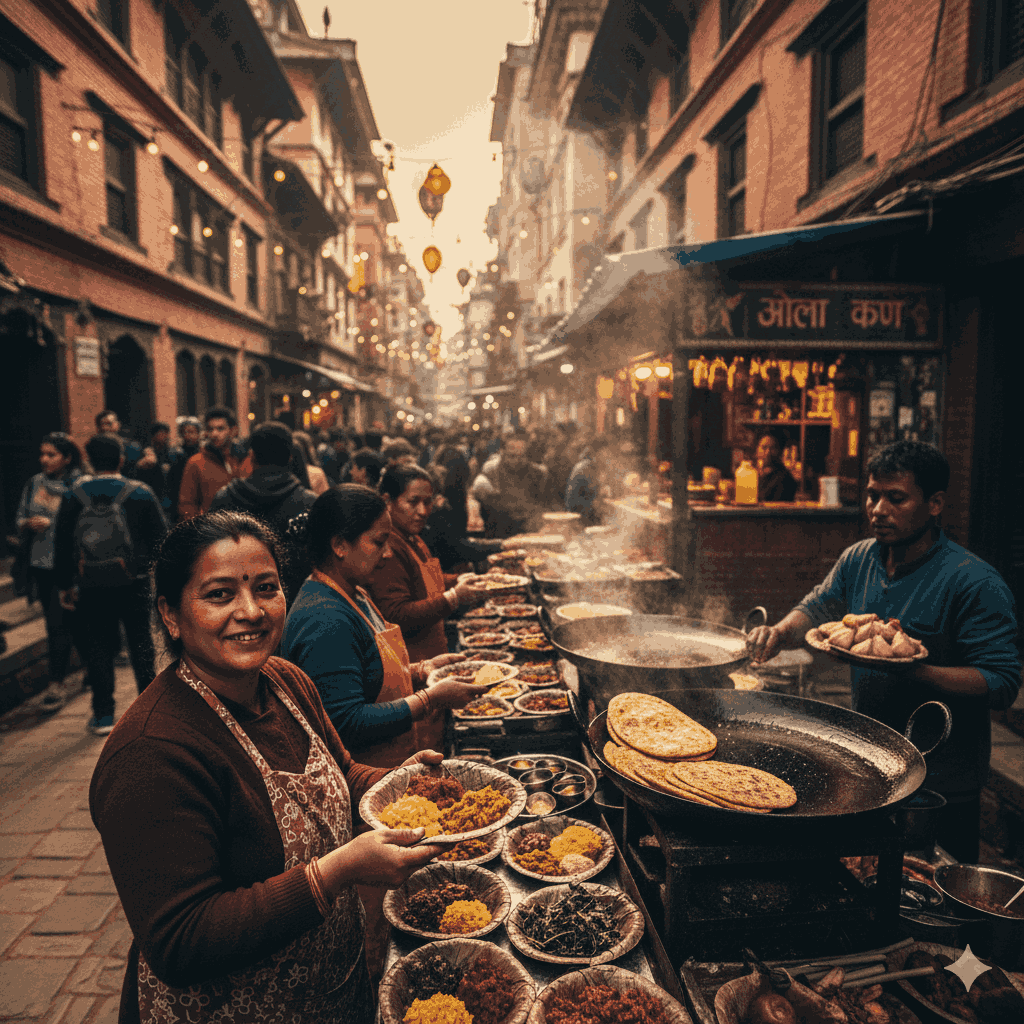
Vibrant scene of a traditional Newari food tour in Kathmandu, showcasing local dishes and bustling markets
To experience Kathmandu is to experience the Newar people. As the indigenous inhabitants of the valley, the Newars have spent thousands of years perfecting an intricate social structure, breathtaking architecture, and arguably the most complex cuisine in South Asia. A traditional Newari food tour is your passport to this hidden world, a world where food is not merely sustenance but an offering to the gods and a celebration of community life.
In 2026, food tourism has moved beyond the generic “Dal Bhat” restaurants that line the tourist strips. Travelers now seek authenticity—the kind found in the smoky kitchens of Kirtipur or the tiny, windowless eateries of Ason. This traditional Newari food tour guide will take you through the rituals of the Bhoj (feast), the history of the Samay Baji (snack set), and the best locations to taste these delicacies.
If you are planning your logistics, be sure to coordinate your meals with our Things to Do in Kathmandu for 3 Days to ensure you are never too far from a legendary snack spot. Additionally, after a long day of eating, there is nothing quite like witnessing the spiritual energy of the Pashupatinath Temple evening Aarati time to round out your cultural experience.
Part 1: Why the Newari Cuisine is the Heart of Nepal
Newari food is celebrated for its staggering diversity. It is meticulously divided into daily meals, midday snacks, and elaborate ceremonial feasts. Unlike many other cultures, the Newars have a philosophy of “zero waste,” utilizing every part of the animal (traditionally water buffalo) and possessing a profound understanding of fermentation and spice-pairing that predates modern culinary trends.
The Five Pillars of a Traditional Newari Food Tour
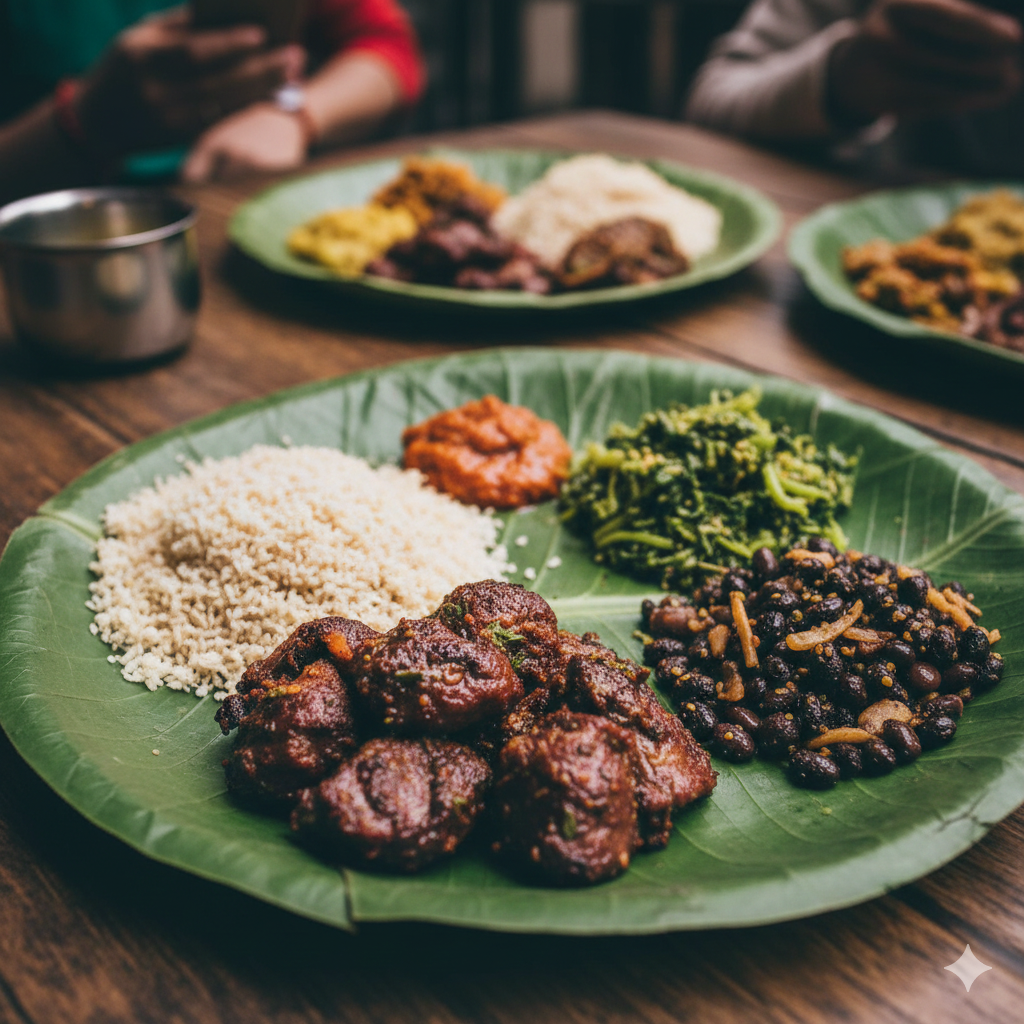
Traditional Newari food tour featuring buffalo meat, fermented greens, and beaten rice on a leaf plate
When you embark on a traditional Newari food tour, you are engaging with five core elements:
The Spice Palette: Mustard oil is the lifeblood of this cuisine. Combined with cumin, coriander, ginger, garlic, and the numbing timmur (Szechuan pepper), it creates a flavor profile that is earthy, pungent, and deeply satisfying.
The Buffalo (Buff): The buffalo is sacred to the Newari kitchen. Whether it is the marrow (Sapu Mhicha), the tongue, or the dried meat (Sukuti), the buffalo is transformed into dozens of distinct dishes.
The Fermentation: The Newars are masters of preservation. Gundruk (fermented leafy greens) and Tama (fermented bamboo shoots) provide the sour, umami notes that cut through the richness of meat dishes.
The Beaten Rice (Chiura): This is the staple of a traditional Newari food tour. Rice is soaked, beaten flat, and dried. It is lightweight, crunchy, and serves as the perfect edible “spoon” for scooping up spicy curries.
The Ritual Significance: Food is never just food. Every ingredient in a Samay Baji set represents an element of the universe or a specific blessing from the deities.
For those interested in the historical context of these rituals, our Bhaktapur ancient city guide offers a fascinating look at the medieval world where these culinary traditions were born and perfected.
Part 2: The Must-Eat Dishes on Your Newari Food Tour
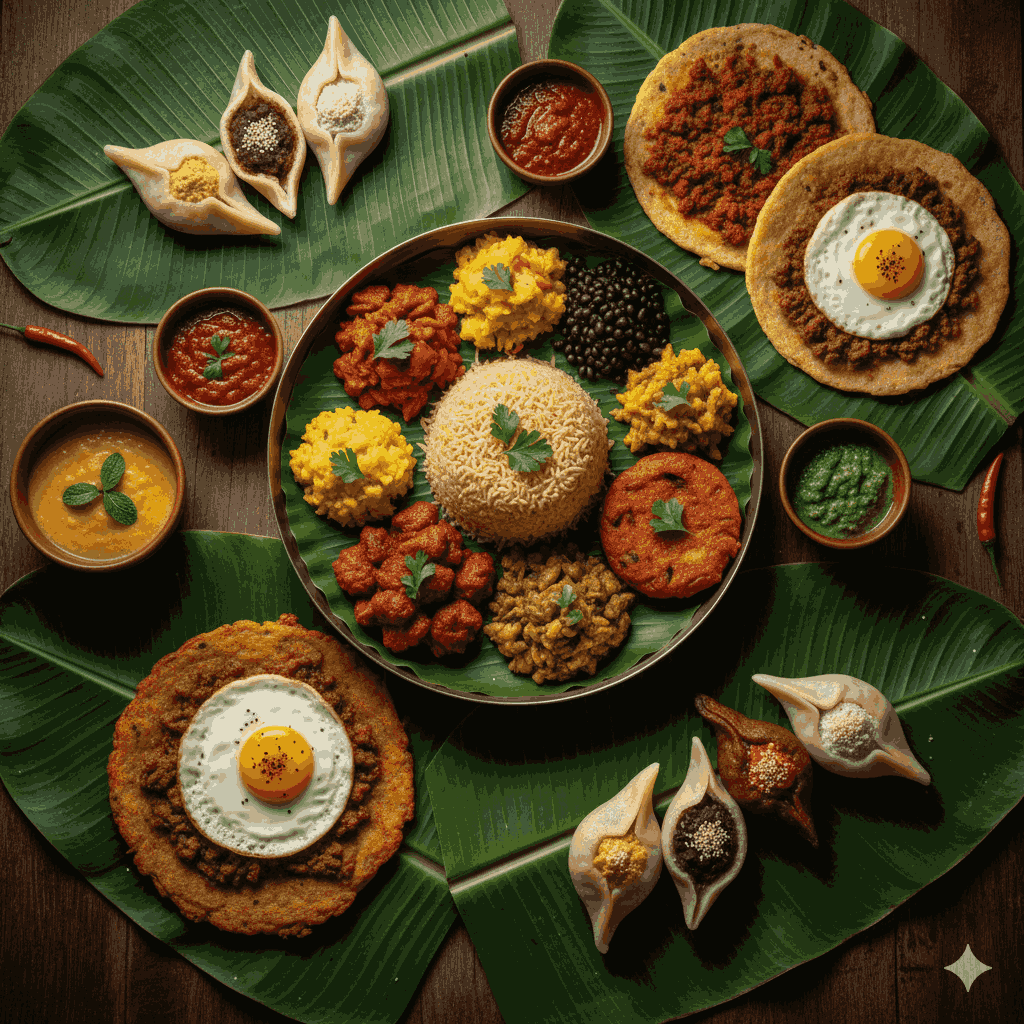
Traditional Newari food tour with Samay Baji, chatamari, and Yomari served during a cultural culinary experience
A traditional Newari food tour is a marathon, not a sprint. Your table will be covered in “taparis” (traditional leaf plates) filled with an array of colors and textures. Here is an exhaustive breakdown of what you must try.
1. Samay Baji: The Ultimate Ritual Platter
This is the most iconic set you will encounter on a traditional Newari food tour. It is often served during festivals and family gatherings.
Baji: The beaten rice.
Haku Musya: Black soybeans roasted with ginger and garlic.
Choila: Buffalo meat grilled over a wood fire and marinated in mustard oil and spices.
Aloo Wala: A spicy, boiled potato salad that is the ultimate comfort food.
Bara: A savory lentil pancake, often topped with an egg or minced meat.
Saag: Stir-fried mustard greens.
2. Chatamari: The “Nepali Pizza”
A delicate rice-flour crepe that is as beautiful as it is delicious. On your traditional Newari food tour, look for Chatamari being made on large iron griddles. It can be topped with minced buff, eggs, or seasonal vegetables.
3. Yomari: The Teardrop of Sweetness
During the winter months, specifically the Yomari Punhi festival, these steamed dumplings become the star of every traditional Newari food tour.
The Dough: Made from fresh rice flour.
The Filling: Traditionally Chaku (molasses) and sesame seeds, though modern versions include Khuwa (milk solids) or even chocolate.
4. Kachila: The Newari Carpaccio
For the adventurous foodie on a traditional Newari food tour, Kachila is a must. It is raw minced buffalo meat marinated in a potent blend of garlic, ginger, and mustard oil. It is incredibly tender and bursting with fresh spice.
Part 3: Neighborhoods to Explore for an Authentic Experience
Where you eat is just as important as what you eat. To find the best momo in Kathmandu for tourists while simultaneously enjoying Newari staples, you need to know where to walk.
Ason and Indra Chowk: The Living Market
This is the starting point for most traditional Newari food tours. The narrow streets are lined with vendors selling everything from dried fish to local spices.
Indra Chowk Lassi: While not strictly Newari, it is a staple for locals and tourists alike.
Bara Stalls: Look for the small, dark rooms where women flip lentil pancakes over massive iron plates.
Kirtipur: The Hillside Tradition
If you want a traditional Newari food tour that feels like a trip back in time, head to Kirtipur.
Newa Lahana: This is a community-run restaurant where you sit on straw mats (sukuls) and eat from leaf plates. It is a sensory explosion and widely considered the most authentic Newari dining experience in 2026.
Patan (Lalitpur): The Craft of the Bhatti
Patan is known for its “Bhattis”—local taverns that have served as social hubs for centuries. A traditional Newari food tour through Patan’s backstreets will reveal hidden courtyards where Aila (rice liquor) is distilled and served alongside spicy Sukuti.
Part 4: Drinking Tradition, The Spirit of the Newars
No traditional Newari food tour is complete without sampling the local spirits. These are not just drinks; they are integral to Newari hospitality.
Aila: This is a high-proof, clear rice liquor. In a traditional setting, it is poured from a Karwa (a traditional vessel) from a great height into a small clay cup called a Salicha. The higher the pour, the better the host.
Thwon: A cloudy, sweet fermented rice beer. It is thick, refreshing, and surprisingly filling. It is the perfect accompaniment to a spicy Samay Baji set.
For more information on how these traditions interact with the wider religious landscape, explore our guide to Religious Places in Nepal.
Part 5: 2026 Practical Tips for Your Food Tour
To make the most of your traditional Newari food tour, keep these expert tips in mind:
Hygiene Matters: In 2026, many local bhattis have upgraded their kitchens, but it is still wise to stick to places with high turnover.
The Spice Factor: Newari food can be incredibly spicy. If you have a low tolerance, always ask for “Piro Chaina” (Not spicy).
Dress Comfortably: You will be walking through dusty alleys and potentially sitting on the floor. Wear comfortable shoes and modest clothing.
Cash is King: While Thamel takes cards, the small authentic spots on a traditional Newari food tour will require Nepali Rupees.
Resources for Foodies
FAQs (Frequently Asked Questions)
1. Is Newari food suitable for vegetarians?
Absolutely. While buffalo is common, many of the best dishes on a traditional Newari food tour,like Bara, Chatamari (veg), and Aloo Wala,are completely vegetarian.
2. Can I take a Newari cooking class?
Yes, many local families in Patan and Kirtipur now offer workshops as part of a traditional Newari food tour package.
3. What is the best time for a food tour?
Late afternoon (around 4:00 PM) is ideal, as this is when the snack culture comes alive in the markets of Ason.
4. How much should I expect to pay?
A full day traditional Newari food tour with a guide and multiple stops will cost between $40 and $70 USD in 2026.
5. Is the water safe in local eateries?
We recommend sticking to bottled or purified water, even when offered “house water” during your tour.
A traditional Newari food tour is the ultimate way to peel back the layers of Kathmandu. It is a journey that takes you through ancient temples, into the hearts of local homes, and leaves you with a profound respect for the artistry of the Newar people. When you leave Nepal, you might forget the names of the kings, but you will never forget the taste of a fresh Yomari or the warmth of a shared Aila.
