
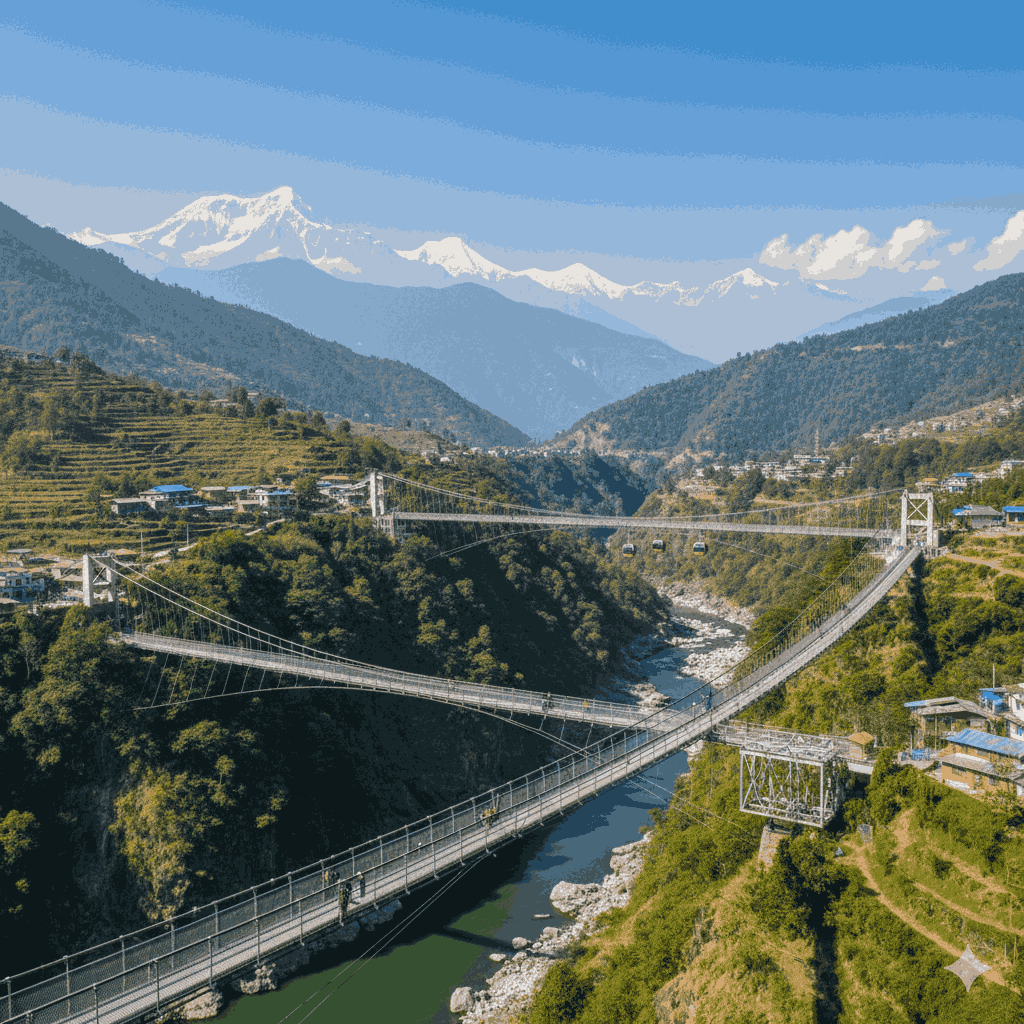
Tourist attractions of Parbat district featuring Kushma’s suspension bridges, including the Kushma-Gyadi and mechanical bridges over the Kaligandaki River.
Tourist attractions in Parbat district offer some of the most unique and record-breaking experiences in the Gandaki Province of Nepal. While many travelers rush toward the Annapurna Circuit or the lakeside serenity of Pokhara, those who stop in Parbat discover a world where record-breaking engineering meets ancient spiritual caves and untouched Himalayan vistas.
The Parbat district, often referred to as the “District of Suspension Bridges,” is a hidden jewel in the Gandaki Province of Nepal. While many travellers rush toward the Annapurna Circuit or the lakeside serenity of Pokhara, those who stop in Parbat discover a world where record-breaking engineering meets ancient spiritual caves and untouched Himalayan vistas.
In this comprehensive guide, we will delve into the tourist attractions of Parbat district, exploring why this region is becoming the ultimate destination for adrenaline junkies, spiritual seekers, and nature enthusiasts alike.
An Introduction to Parbat District
Parbat is one of the smallest districts in Nepal, yet it carries a weight of geographical and cultural significance that rivals the largest. Bordered by the mighty Kaligandaki River to the west and the Modi River to the east, the district is a narrow strip of land characterized by deep river gorges and high mountain ridges. When people search for tourist attractions in Parbat district, they often find themselves surprised by the sheer variety of experiences packed into such a small area.
The district headquarters, Kushma, was once a quiet trading post. Today, it is transformed into a bustling hub for adventure tourism in Nepal. The name “Kushma” itself is derived from the Sanskrit word Kushumpur, meaning a place abundant in “Kush” (a sacred grass) and flowers. Local legends say the goddess Parvati used to gather fruits in these valleys before meditating with Lord Shiva in the caves that are now prime tourist attractions in Parbat district.
The Geographic Marvel
Parbat sits at the crossroads of major trekking routes in Nepal. It serves as a gateway to the Mustang and Myagdi regions. The elevation ranges from approximately 520 meters at the riverbeds to over 3,300 meters at the peak of Kokhe Danda. This dramatic change in altitude creates diverse microclimates, allowing for everything from tropical fruit orchards to alpine rhododendron forests, making it one of the most diverse tourist attractions in Parbat district.
1. The Epicenter of Adventure: Kushma’s Record-Breaking Bridges
If you mention tourist attractions in Parbat district, the first thing most people think of is the bridges. Parbat has pioneered the use of high-suspension bridges to connect isolated communities across the deep Kaligandaki gorge.
The World’s Second Highest Bungee Jump

Tourist attractions of Parbat district showcasing bungee jumping at The Cliff Nepal, one of the top adventure activities in Parbat district.
Operating from a specialized 520-meter long suspension bridge, The Cliff Nepal offers a bungee jump that drops 228 meters. It is currently ranked as the second-highest bungee jump in the world and is the most famous of all tourist attractions in Parbat district. The experience of free-falling toward the turquoise waters of the Kaligandaki, with the Dhaulagiri and Annapurna ranges staring back at you, is incomparable.
Kushma-Gyadi Suspension Bridge
Before the bungee bridge, the Kushma-Gyadi bridge was the main attraction. Spanning 344 meters in length and hanging 117 meters above the Modi River, it provides a thrilling walk that connects Kushma to the fertile village of Gyadi. It is a masterpiece of local engineering and offers a perfect vantage point for photographers looking for scenic views in Parbat.This bridge remains one of the most visited tourist attractions in Parbat district.
Kushma-Balewa Mechanical Bridge
For something a little different, the mechanical bridge (cable car) connects Kushma to Balewa in the Baglung district. While it serves as a vital transportation link for locals, tourists use it to enjoy a bird’s-eye view of the river valley below, solidifying its place among the mechanical tourist attractions in Parbat district.
2. Spiritual Wonders: Caves and Temples
Parbat is deeply rooted in Hindu mythology. The district is scattered with caves and shrines that have been centers of pilgrimage for centuries. These sacred sites are integral tourist attractions in Parbat district.
Gupteshwor Cave

Tourist attractions of Parbat district featuring Gupteshwor Cave, a sacred Hindu site and a spiritual wonder in Parbat district.
One of the most famous tourist attractions in Parbat district, Gupteshwor Cave is a natural limestone wonder. Inside, you will find naturally formed images of Hindu deities, most notably a Shivalinga. During the festival of Maha Shivaratri, the cave is illuminated with thousands of oil lamps, and pilgrims from all over Nepal and India congregate here.
Alapeshwar Cave
Less crowded than Gupteshwor but equally mesmerizing, Alapeshwar Cave is located near the Kaligandaki River. It features stunning stalactite and stalagmite formations. As one of the more rugged tourist attractions in Parbat district, exploring its depths feels like a journey into the center of the earth.
Dahere Deurali Temple
Perched on a hilltop at an altitude of about 2,200 meters, this temple is dedicated to Lord Shiva. It offers a 360-degree view of the surrounding districts, making it a favorite for those seeking religious tourist attractions in Parbat district. The annual fair during Bala Chaturdashi is a vibrant display of local cultural festivals of Nepal, music, and religious devotion.
3. Nature’s Masterpieces: Mountains and Waterfalls
While Kushma handles the “adventure,” the rural municipalities offer pure, unadulterated nature through various tourist attractions in Parbat district.
Mahashila: The Great Stone
Located in the Mahashila Rural Municipality, this is arguably the largest single stone (monolith) in Asia. This natural wonder is one of the most unique tourist attractions in Parbat district. The rock is so massive that it houses a temple at its base and offers a flat plateau on top where festivals are held. Geologists and spiritualists alike are drawn to this massive formation.
Jaljala (Kalanjar) Hill
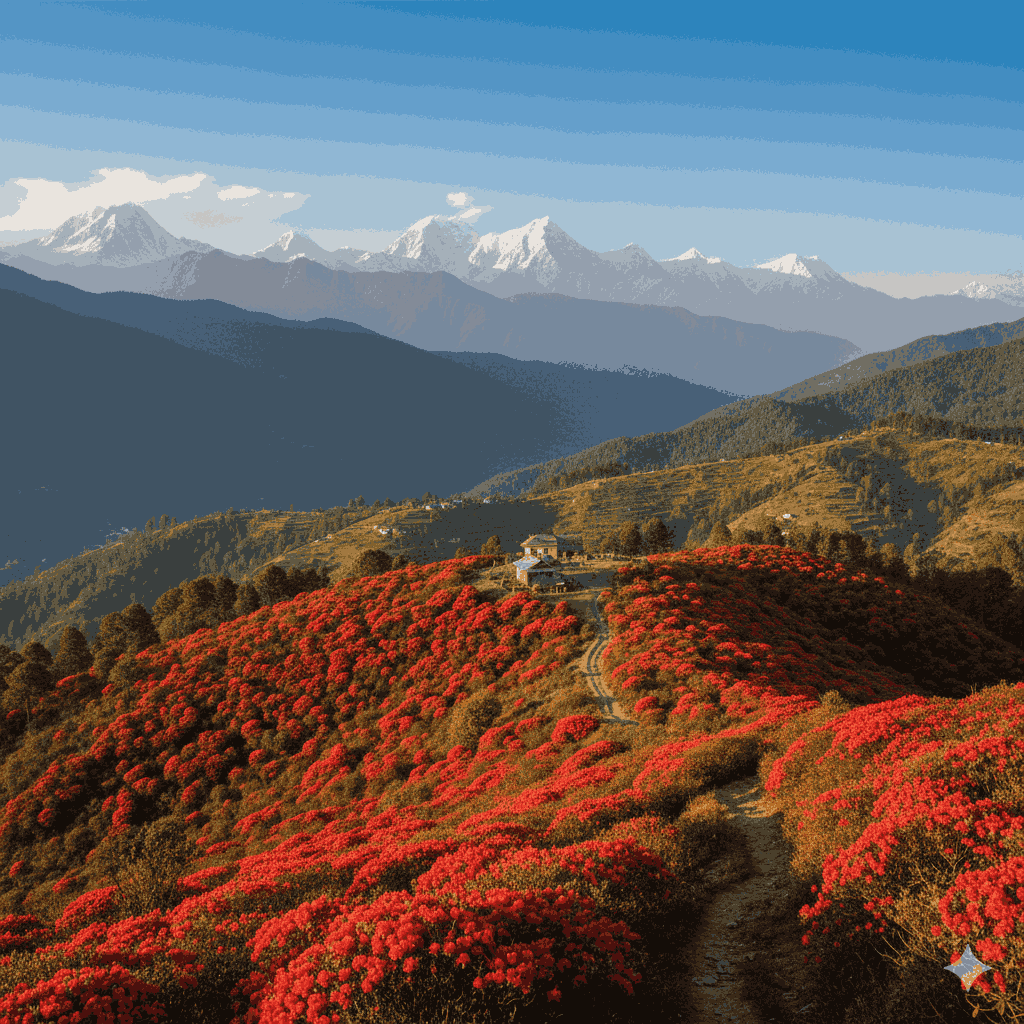
Tourist attractions of Parbat district showcasing Jaljala Hill, known for its rhododendron blooms and panoramic mountain views.
Jaljala is the “Poon Hill” of Parbat, but without the thousands of tourists. At nearly 3,000 meters, it is a premier peak among the tourist attractions in Parbat district. According to the Ramayana, this is the place where Hanuman came to find the Sanjivani herb. In the spring, the entire hillside turns red with blooming rhododendrons.
Mahabir Waterfall and Canyoning
For those who prefer water to heights, the Mahabir River in Durlung offers intense canyoning experiences. Rappelling down a 300-meter series of waterfalls is an exhilarating way to experience the natural tourist attractions in Parbat district.
4. Trekking Trails: The Paths Less Traveled
Parbat is an excellent destination for short, community-based treks. These trails are evolving into significant tourist attractions in Parbat district for sustainable travelers.
The Kokhe Danda Trek
Kokhe Danda is the highest point in Parbat. The trek usually starts from Kushma or Nayapul and takes 3 to 5 days. It is a “ridge trek,” meaning you walk along the top of the hills with constant views of the mountains on both sides.
Panchase Hill Trek
Though shared with Kaski and Syangja, the western approach to Panchase from Parbat is particularly beautiful. This trek is famous for its biological diversity, with over 100 species of orchids and various medicinal plants. It is often included in short treks near Pokhara lists.
5. Culture and Local Industry
Parbat is not just about the sights; it’s about the soul of the people.
Allo (Himalayan Nettle): Parbat is a leader in the production of Allo fabric. In villages like Lespar and Banau, you can see the traditional process of turning prickly nettles into soft, durable clothing.
Lapsi (Nepali Hog Plum): If you enjoy Titaura (Nepali candy), there is a high chance it came from Parbat. The district is the “Lapsi capital” of Nepal, with vast orchards and processing factories.
Traditional Music: During festivals, you can hear the distinct sounds of the Panche Baja and watch performances of Maruni and Sorathi dances.
6. How to Plan Your Visit
Getting There
Parbat is highly accessible. From Pokhara, it is a scenic 2-hour drive (approx. 60 km) via the Pokhara-Baglung Highway. From Kathmandu, you can take a luxury bus (8-10 hours) or fly to Pokhara and take a private cab. For transport details, visit the official Nepal transport guide.
Accommodation
In Kushma, you will find modern hotels and adventure resorts. In the rural areas, the Community Homestay program is the best way to stay. Villages like Chanaute and Khuijori offer warm hospitality, organic food, and a chance to sleep in traditional stone houses. Check out homestay options in Nepal for more ideas.
Top 10 Must-Do Activities in Parbat
| Activity | Location | Best Time |
| Bungee Jumping | The Cliff, Kushma | Oct – May |
| Cave Exploration | Gupteshwor Cave | All Year |
| Sunrise View | Jaljala Hill | March – April |
| Monolith Visit | Mahashila | All Year |
| Canyoning | Durlung | Sept – Nov |
| Suspension Walk | Kushma-Gyadi Bridge | All Year |
| Trekking | Kokhe Danda | Oct – Dec |
| Local Shopping | Kushma Bazaar (Allo/Lapsi) | All Year |
| Spiritual Visit | Dahere Deurali | Nov (Bala Chaturdashi) |
| Rafting | Kaligandaki River | Oct – Nov |
Frequently Asked Questions (FAQs)
1.
Absolutely. While the bungee is for thrill-seekers, the bridges, caves, and cultural tours are perfect for families. The roads are well-paved compared to other hilly districts.
2. What is the weather like in Parbat?
In the valleys (Kushma), it is subtropical—warm in the summer and mild in the winter. In the highlands (Jaljala), it can get very cold, with snow during January and February.
3. Do I need a trekking permit for Parbat?
For most local trails, you do not need a permit. However, if your trek enters the Annapurna Conservation Area, you will need a permit which can be obtained in Pokhara or Kathmandu.
4. What are the “must-try” foods in Parbat?
Try the local Dhido (buckwheat porridge) with Gundruk (fermented greens). Also, look for Sel Roti during festivals and the famous Lapsi candies for snacks.
5. How many days should I spend in Parbat?
A 3-day trip is ideal for the main highlights of Kushma. If you plan to trek to Jaljala or Kokhe Danda, add another 3 to 4 days to your itinerary.
The tourist attractions in Parbat district offer a unique blend that is hard to find elsewhere in Nepal. You can start your morning with a heart-stopping 228-meter jump and end your evening in the quiet, spiritual confines of an ancient cave. It is a district that respects its past while embracing a high-flying future.
Whether you are walking across the longest bridges in the country or trekking through the rhododendron forests of Jaljala, Parbat promises an experience that is both epic and intimate. So, the next time you are in Pokhara, don’t just look at the mountains in the distance—take a drive to Parbat and walk among them.
