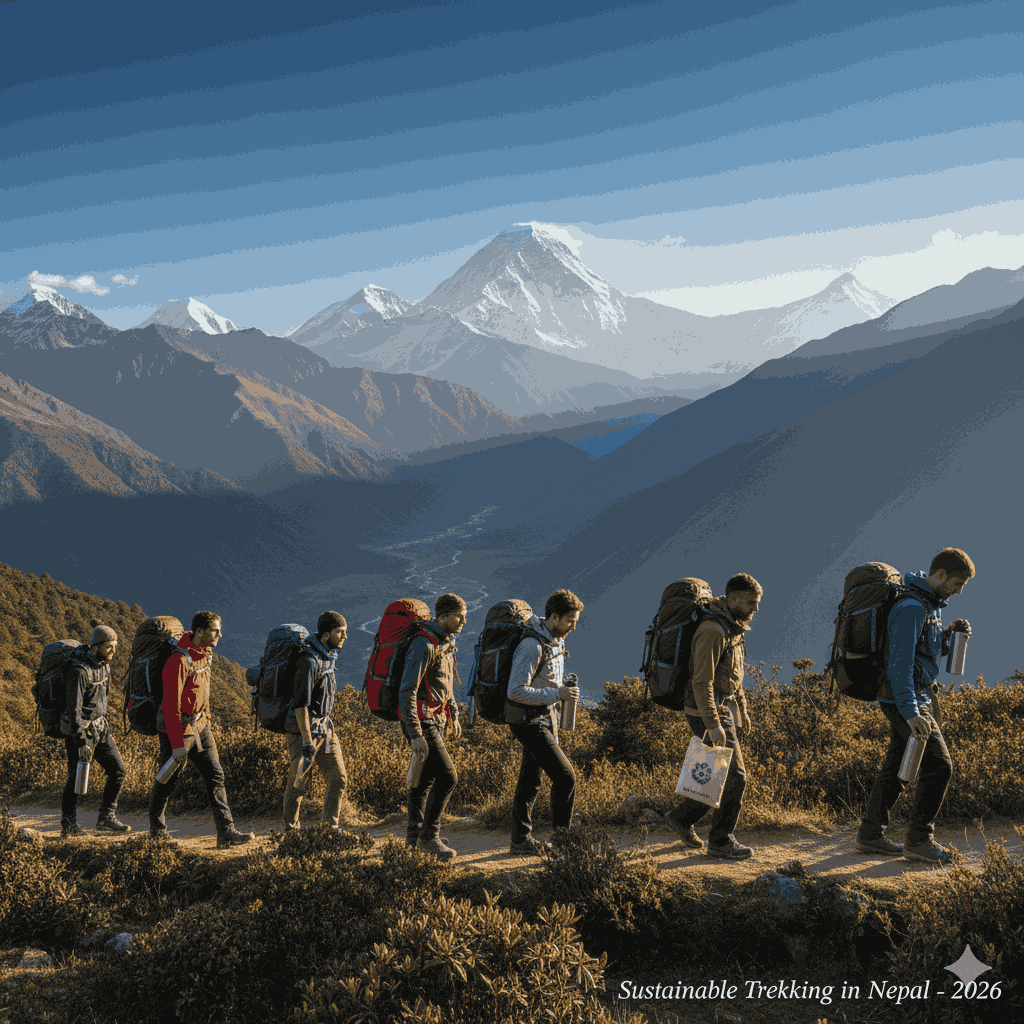
A breathtaking view of Mount Everest with trekkers practicing responsible trekking in Nepal in the foreground.
Mastering responsible trekking in Nepal is the most significant step you can take as a traveler in 2026. Nepal is home to eight of the world’s fourteen highest peaks, including the legendary Mount Everest. However, with great beauty comes great vulnerability. As thousands of adventurers flock to the Himalayas each year, the pressure on the environment, local resources, and indigenous cultures has reached a critical point. In 2026, responsible trekking in Nepal is no longer just a “best practice”,it is a necessity for anyone wishing to preserve these sacred landscapes for future generations.
Choosing a path of sustainability means more than just picking up your litter. It involves supporting local economies, respecting ancient traditions, and adhering to the latest safety and environmental regulations. This guide explores every facet of how you can contribute to the preservation of the “Roof of the World.”
1. Understanding the 2026 Trekking Regulations
The Government of Nepal has introduced significant changes to enhance safety and promote sustainable tourism. If you are planning a trip this year, staying informed about these rules is the first step toward responsible trekking in Nepal.
The Mandatory Guide Policy
As of 2026, the policy requiring a licensed trekking guide for all major trekking regions,including Langtang, Annapurna, and Manaslu, is strictly enforced. Even the Khumbu (Everest) region has seen increased local enforcement of safety protocols. This move by the Nepal Tourism Board aims to:
Enhance Safety: Reduce the number of missing person cases and altitude-related deaths.
Boost the Economy: Ensure that tourism revenue directly benefits local professionals and their families.
Environmental Oversight: Guides act as stewards of the trail, ensuring trekkers follow environmental protocols.
For a deeper dive into preparation, see our guide on Trekking Guidelines In Nepal to stay updated on legal shifts. Hiring a local expert is a cornerstone of responsible trekking in Nepal because it ensures you stay on the path and respect local boundaries.
Digital e-TIMS and QR Checkpoints
In 2026, the permit system has gone fully digital. The new e-TIMS (Trekkers’ Information Management System) integration now covers all major regions with QR code-based permits for faster checkpoint processing. This reduces paper waste and allows authorities to track trekker density in real-time, preventing overcrowding in fragile zones—a key goal of responsible trekking in Nepal.
2. The 7 Principles of Leave No Trace (LNT)
To truly practice responsible trekking in Nepal, every trekker must internalize the “Leave No Trace” principles. According to the Leave No Trace Center for Outdoor Ethics, these are globally recognized standards designed to minimize human impact on the wilderness.
Principle 1: Plan Ahead and Prepare
Know the Terrain: Research your route’s difficulty and weather patterns.
Repackage Food: Remove unnecessary plastic packaging before you leave Kathmandu or Pokhara.
Equip Yourself: Carry water purification systems (tablets or filters) to avoid buying single-use plastic bottles. This is vital for responsible trekking in Nepal.
Principle 2: Travel and Camp on Durable Surfaces
Stay on the Trail: Shortcuts lead to soil erosion and damage to fragile alpine vegetation.
Avoid “Trail Braiding”: If a trail is muddy, walk through the mud rather than around it to prevent the path from widening.
Principle 3: Dispose of Waste Properly
Pack It In, Pack It Out: Everything you carry onto the trail must come back with you.
Human Waste: Use teahouse toilets whenever possible. If you must go in the wilderness, dig a “cat hole” at least 200 feet away from water sources. Responsible trekking in Nepal demands that we protect the purity of Himalayan water.
Principle 4: Leave What You Find
Preserve the Heritage: Do not take rocks, plants, or artifacts from the trail.
No Graffiti: Avoid carving names into trees or painting on rocks.
Principle 5: Minimize Campfire Impacts
Use Stoves: Use gas or kerosene stoves instead of firewood. Deforestation is a major issue in the Himalayas; avoiding firewood is essential for responsible trekking in Nepal.
Principle 6: Respect Wildlife
Observe from a Distance: Never approach or feed wild animals like the Himalayan Tahr or Snow Leopard.
Store Food Securely: Prevent animals from becoming dependent on human food.
Principle 7: Be Considerate of Other Visitors
Yield the Trail: Always give way to porters and animal trains. Step to the uphill side to let them pass.
Keep it Quiet: Let the sounds of nature prevail; avoid loud music or shouting.
3. Cultural Sensitivity: Respecting the People of the Himalayas

Trekkers showing cultural respect by passing clockwise around a Buddhist stupa during responsible trekking in Nepal.
Responsible trekking in Nepal is as much about people as it is about the mountains. You are a guest in someone’s home.
Religious and Social Etiquette
Clockwise is Key: Always pass stupas, mani (prayer) walls, and shrines on their right side (moving in a clockwise direction).
Dress Modestly: Avoid revealing clothing. Long pants and shirts that cover the shoulders are preferred in villages.
Ask Before You Snap: Always ask for permission before taking photos of local people or religious ceremonies.
The “Right” Hand: In Nepali culture, the left hand is often considered unclean. Use your right hand (or both) when giving or receiving items.
The Power of Language
Learning basic Nepali phrases can transform your experience and is a sign of responsible trekking in Nepal:
Namaste: Hello / I bow to the divine in you.
Dhanyabaad: Thank you.
Mitho cha: It is delicious (perfect for your host at a teahouse!).
Check out our Top Authentic Nepali Recipes to learn more about the food culture you’ll encounter on the trails.
4. Supporting the Local Economy Ethically
Economic sustainability is a core pillar of responsible trekking in Nepal. Your spending power can empower communities if used wisely.
Fair Wages for Porters and Guides
Hire Registered Agencies: Ensure your agency pays fair wages and provides insurance.
Load Limits: In 2026, the strictly enforced weight maximum is 20kg–25kg per porter. Overloading is a serious ethical concern and contradicts the spirit of responsible trekking in Nepal.
Tipping: While not mandatory, tips are a significant part of a guide’s income. Budget around $10–$15 per day for guides and $8–$10 for porters.
Eat and Buy Local
Dal Bhat Power: Choosing local staples like Dal Bhat reduces the carbon footprint of your meal.
Support Artisans: Buy souvenirs directly from craftsmen in villages.
Stay in Teahouses: Choosing community-owned lodges ensures your money stays in the village, fostering responsible trekking in Nepal.
5. Waste Management: The Battle Against Plastic

Volunteers collecting plastic waste on a Himalayan trail, exemplifying responsible trekking in Nepal
The “High Altitude Trash” problem is real. Practice responsible trekking in Nepal by becoming part of the solution.
The Problem with Plastic
Over 150,000 plastic bottles are discarded annually in the Everest region alone. Waste management is difficult at 5,000 meters because there are no garbage trucks or recycling plants.
Your Action Plan for 2026
Water Purification: Use a LifeStraw, Grayl bottle, or Aquatabs. For more details, see our specific guide on Water Purification for Trekking Nepal.
Reusable Containers: Carry snacks in silicone bags or tins.
Toiletries: Use solid shampoo bars and biodegradable soap.
The “Green Fee”: In 2026, a new NPR 1,000 “Green Fee” has been added to many conservation area permits to fund waste management initiatives. Paying this fee is an investment in responsible trekking in Nepal.
6. Staying Safe: Health and Acclimatization
You cannot be a responsible trekker if you become a liability. Safety is a vital component of responsible trekking in Nepal.
Altitude Sickness (AMS)
Ascend Slowly: Do not exceed 500m of elevation gain per day once above 3,000m.
Hydrate: Drink 3–4 liters of water daily.
Listen to Your Body: If symptoms (headache, nausea) persist, descend immediately. Responsible trekking in Nepal means putting safety above the summit.
Emergency Preparedness
Insurance: Ensure your policy covers helicopter evacuation up to 6,000m.
2026 Certification: Note that guides now have certification levels (Basic, Advanced, and Expedition). Ensure your guide is certified for your trek’s altitude to ensure responsible trekking in Nepal.
7. Recommended Eco-Friendly Trekking Routes for 2026
If you want to avoid the crowds and support newer community initiatives, consider these routes for your journey into responsible trekking in Nepal:
| Trek Name | Region | Why it’s Responsible |
| Manaslu Circuit | Gorkha | Restricted access limits crowds; community-led lodges. |
| Mardi Himal | Annapurna | Shorter, lower impact, supports local hill communities. |
| Upper Dolpo | Mid-West | Preserves ancient Bon culture; highly regulated. |
| Tamang Heritage Trail | Langtang | Directly benefits the Tamang people through homestays. |
Exploring these lesser-known paths is a fantastic way to distribute tourism revenue and practice responsible trekking in Nepal.
8. The Impact of Climate Change on the Himalayas
Responsible trekking in Nepal also requires an awareness of the changing climate. Glacial retreats and unpredictable weather patterns are affecting the local communities first.
Carbon Offsetting: Consider offsetting your flight to Kathmandu through verified programs.
Energy Conservation: Many lodges use solar or micro-hydro. Limit your device charging and avoid long hot showers to reduce the strain on these small-scale systems.
Education: Talk to your guide about the changes they’ve seen in the glaciers. Understanding the impact is key to advocating for responsible trekking in Nepal.
9. Sustainable Gear Choices
Your gear list should reflect your commitment to responsible trekking in Nepal.
Rent Instead of Buy: Rent heavy gear like down jackets and sleeping bags in Kathmandu to reduce manufacturing demand.
Eco-Friendly Brands: Choose gear made from recycled materials.
Repair Over Replace: If a strap breaks, ask a local tailor to fix it rather than discarding the item. This mindset is central to responsible trekking in Nepal.
Frequently Asked Questions (FAQs)
What is the most important rule for responsible trekking in Nepal?
The most important rule for responsible trekking in Nepal is to respect both the environment and the local culture. This means following Leave No Trace principles and adhering to local customs, such as walking clockwise around religious sites.
Is it mandatory to hire a guide in Nepal in 2026?
Yes, for the majority of trekking regions (including Langtang, Annapurna, and Manaslu), the Nepal government now requires international trekkers to be accompanied by a licensed guide. This is a core part of the safety and economic pillars of responsible trekking in Nepal.
How do I manage drinking water without buying plastic bottles?
To practice responsible trekking in Nepal, you should carry a reusable bottle and use water purification methods like UV filters (SteriPEN), filtration bottles (Grayl), or chemical tablets (Aquatabs/Iodine).
What should I do with my trash during the trek?
Practice “Pack It In, Pack It Out.” Any non-biodegradable waste you produce should be carried back to a major hub like Namche Bazaar or Pokhara. Responsible trekking in Nepal means leaving no trace behind.
How can I ensure my porter is being treated fairly?
Ask your trekking agency about their porter policy. A company supporting responsible trekking in Nepal provides proper clothing, footwear, insurance, and medical care for their porters, and limits their loads to a maximum of 25kg.
Can I trek solo in Nepal?
As of 2026, solo trekking in national parks and conservation areas is generally prohibited for foreign nationals. To participate in responsible trekking in Nepal, you must trek through a registered agency and with a licensed guide.
Responsible trekking in Nepal is a journey of mindfulness. It asks us to look beyond the summit and see the delicate web of life that makes the Himalayas so special. By following the 2026 regulations, respecting the local culture, and minimizing our environmental footprint, we ensure that the “Abode of Snow” remains a sanctuary for all.
When you choose responsible trekking in Nepal, you aren’t just a tourist; you become a guardian of the mountains. The mountains are calling, but they are also asking for our protection. Let your trek be a testament to your respect for nature and humanity through your commitment to responsible trekking in Nepal.
