

Old craft villages Nepal showcasing stone carving culture Nepal in a traditional Newari artisan courtyard
In the narrow, brick-paved alleys of the Kathmandu Valley, the air smells of wet earth, mustard oil, and wood shavings. This is the sensory map of the old craft villages Nepal. These settlements are not mere historical relics; they are vibrant, breathing communities where the boundary between “art” and “daily life” does not exist.
When you explore all about Nepal’s rich cultural tapestry, you realize that the temples of the Durbar Squares were not built by ghosts—they were built by the ancestors of the people still living in these villages today. In 2026, old craft villages Nepal stand as the last bastions of “slow production” in a world of mass-manufactured goods. Here, a window frame might take six months to carve, and a clay pot is fired in a kiln that has been warm for generations.
The Spiritual Connection to Craft

Old craft villages Nepal in Patan highlighting stone carving culture Nepal through master artisans
For the artisans in these villages, crafting is a form of Sadhana (spiritual practice). A woodcarver doesn’t just shape timber; he invites a deity to reside within it. A potter doesn’t just mold clay; he honors the earth. This spiritual depth is what makes the old craft villages Nepal so breathtakingly unique.
1. Bungamati: The Secret Sanctuary of the Woodcarvers
Located just south of Patan, Bungamati is perhaps the most iconic of the old craft villages Nepal. This 6th-century village is the home of the Rato Machhindranath (the God of Rain), and its identity is inseparable from the sound of the chisel.
The Masterpieces of Timber
Bungamati is where the world-renowned Newari woodcarving tradition lives. As you walk through the village, you will see:
Intricate Windows (Sanjhya): The iconic overhanging windows that define Nepali architecture are born in the workshops of Bungamati.
Deity Sculptures: Artisans here specialize in carving the complex forms of Buddhist and Hindu gods, following rigid iconographic rules passed down since the Malla era.
Heritage Restoration: In 2026, Bungamati has become a hub for restoring monuments damaged in previous years, making it a critical player in the survival of old craft villages Nepal.
The Living Museum Experience
Unlike a museum, Bungamati allows you to sit on a straw mat beside a master carver. You can watch as a raw block of Sal wood is transformed into a delicate lotus petal. This hands-on connection is a hallmark of the best community travel in Nepal.
2. Khokana: The Breathtaking Heritage of Mustard Oil
Adjacent to Bungamati lies Khokana, a village that offers a different kind of craftsmanship. Khokana is one of the most famous old craft villages Nepal due to its industrial heritage—specifically, its ancient method of producing mustard oil.
The Rhythmic Grind of the Oil Mill
The “gold” of Khokana is its oil. In traditional mills, huge wooden beams are used to crush mustard seeds in a process that has remained unchanged for centuries.
The Scent of Tradition: The entire village carries the warm, nutty aroma of roasted mustard.
Communal Ownership: The mills are often run as cooperatives, a social structure that defines the resilience of old craft villages Nepal.
Spinning and Weaving: While the men work the mills, many women in Khokana still use traditional spinning wheels (Charkha) to produce wool, keeping the textile traditions of the valley alive.
3. Thimi: Discovering the Secrets of Clay and Masks
If Bungamati is wood and Khokana is oil, then Thimi is the undisputed capital of earth. Positioned between Kathmandu and Bhaktapur, Thimi is one of the most vital old craft villages Nepal for functional and ritual art.
The Potters’ Pulse
Thimi is home to thousands of potters from the Prajapati caste. The village is a sea of terracotta, with thousands of pots drying in the sun in every courtyard.
Ceremonial Masks: Thimi is famous for its hand-painted clay masks used in the Mahakali Pyakhan dances. These masks are considered “living” objects during festivals.
Traditional Kilns: Watching a “smoke-firing” session in Thimi, where pots are buried under straw and ash for days, is one of the most breathtaking sights in the old craft villages Nepal.
Innovation in 2026
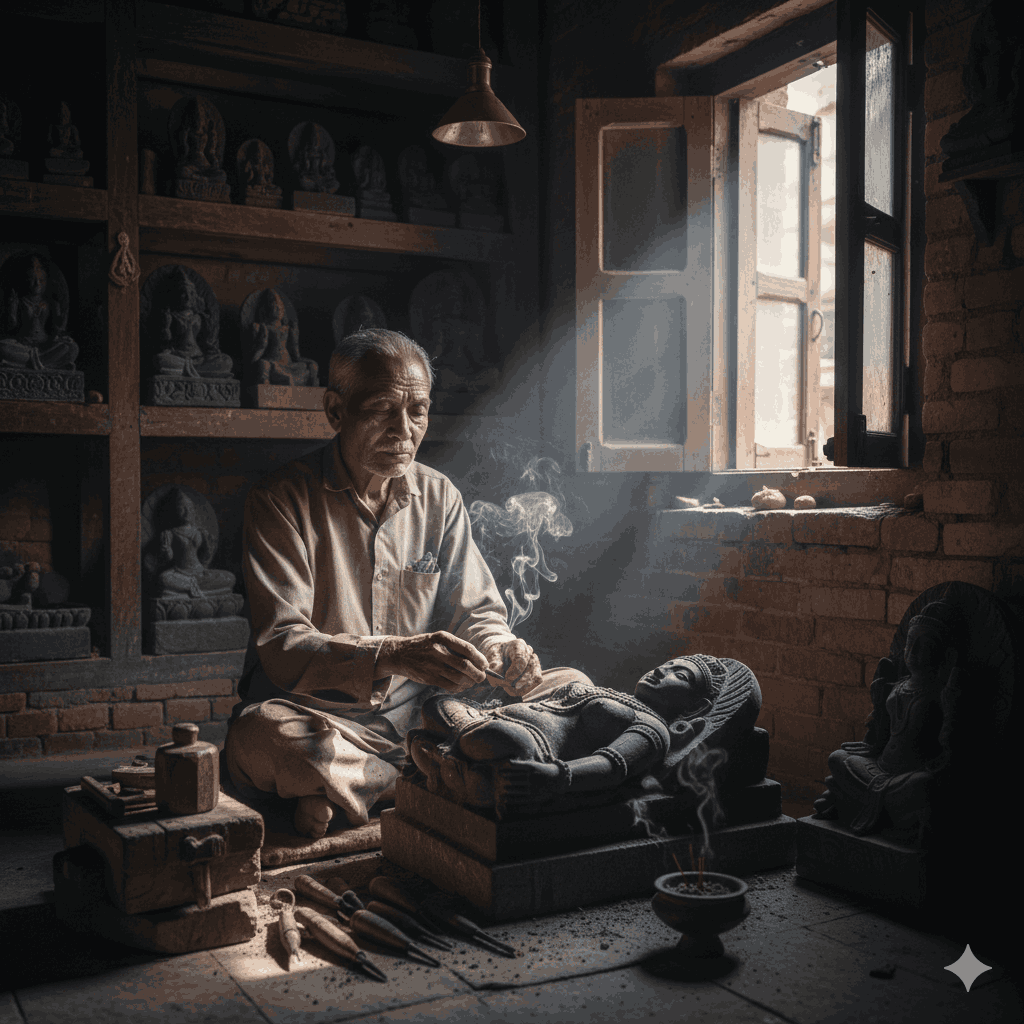
Old craft villages Nepal where stone carving culture Nepal is practiced as a spiritual tradition
In 2026, Thimi artisans are blending traditional terracotta with modern glazing techniques, creating high-end ceramics that are exported globally while maintaining the village’s ancient soul.
4. Bhaktapur’s Pottery Square: The Heart of the Kumhal Tole
While Thimi is the industrial hub, Bhaktapur’s Pottery Square (Kumhal Tole) is the most atmospheric of the old craft villages Nepal. Here, the craft is an open-air performance.
The Kick-Wheel Masters: You can witness potters using massive, concrete-filled truck tires as wheels, spun by hand with a long pole.
Juju Dhau Pots: Most of the clay bowls used for Bhaktapur’s famous “King Curd” are made right here.
Ritual Utility: In the old craft villages Nepal, pottery isn’t just for decoration; it is essential for every Newari ritual, from birth to death.
5. Patan (Lalitpur): The Breathtaking City of Fine Arts
While Patan is a city, its inner “Tol” (neighborhoods) function like a cluster of old craft villages Nepal. Patan is the global center for metal casting and stone carving.
The Lost-Wax Metal Casting
The bronze and brass statues of Nepal are famous worldwide, and nearly all of them originate in the hidden courtyards of Patan.
The Process: Artisans create a wax model, coat it in clay, melt the wax out, and pour in molten metal. This “lost-wax” technique is a secret skill preserved within families.
Stone Carving: The area around the Kumbeshwor Temple is home to master stone carvers who can turn hard limestone into fluid, divine forms. This is the same stone carving culture Nepal that built the Krishna Mandir.
6. Sankhu: The Ancient Gateway of Ritual Crafts
Sankhu, located on the ancient trade route to Tibet, is one of the more secluded old craft villages Nepal. It is a place of deep spiritual power and specialized ritual crafts.
Metal Embossing (Repoussé): Sankhu is known for its artisans who hammer sheets of copper into relief designs for temple roofs and doors.
The Salinadi Rituals: During the Madhav Narayan festival, the village’s crafts—from copper vessels to woven mats—become central to the month-long rituals.
7. The Modern Secret: Craft Villages and the 2026 Music Scene
One of the most breathtaking evolutions in old craft villages Nepal is their role as venues for cultural fusion. In 2026, the quiet courtyards of these villages often host jazz festivals and live music in Kathmandu’s outskirts.
Imagine the sound of a saxophone echoing off the hand-carved wooden beams of a Bungamati rest-house, or a jazz drummer keeping time with the rhythmic thud of a Khokana oil mill. This juxtaposition of ancient craftsmanship and modern musical expression is making the old craft villages Nepal a magnet for a new generation of travelers.
FAQs: Navigating Old Craft Villages Nepal
1. Which is the best old craft village Nepal to visit first?
If you have limited time, start with Bungamati. It offers a high concentration of woodcarving workshops and maintains a very traditional, medieval atmosphere that is easy to reach from Patan.
2. Can I buy crafts directly from the artisans?
Yes! Buying directly from the source in old craft villages Nepal ensures that the money stays within the community. In 2026, many villages have small cooperatives that help with shipping larger items like carved windows or bronze statues.
3. Are these villages safe for solo travelers?
The old craft villages Nepal are exceptionally safe and welcoming. Staying at a village homestay is the best way to experience the hospitality of the Newar people.
4. How has technology changed old craft villages Nepal in 2026?
While the techniques remain manual, many artisans now use social media to showcase their work and digital tools to manage custom orders from international collectors. However, the core of the “craft” remains human-centric.
5. Is there an entry fee for these villages?
Major heritage areas like Bhaktapur have an entry fee, but many of the smaller old craft villages Nepal like Khokana or Thimi do not. However, visitors are encouraged to support the local economy by purchasing goods or hiring local guides.
The old craft villages Nepal are the heart and soul of the Himalayas. They remind us that true beauty takes time, and that heritage is not something to be kept behind glass—it is something to be held in the hands. By visiting these villages, you aren’t just a tourist; you are a patron of an ancient art form that has survived for thousands of years.
To see these crafts in their ritual glory, plan your visit around the traditional festivals in the Kathmandu Valley.
