
Nepal is often described through its mountains.
Everest. Annapurna. Langtang. Mustang. Rara.
These places attract travelers because of their glaciers, high passes, forests, rivers, lakes and dramatic landscapes. But the same natural features that make Nepal extraordinary are also becoming increasingly exposed to a changing climate.
Glaciers are retreating. Snow patterns are shifting. Heavy rainfall is reaching places that historically received little rain. Mountain slopes are becoming more unstable, while glacial lakes and meltwater create new risks downstream.
For travelers, this does not mean Nepal’s mountains are suddenly off-limits.
It means the conditions that shape a trekking route, a mountain village or a popular tourist destination are changing.
Some destinations face the threat of glacial lake outburst floods. Others are more exposed to landslides and extreme rainfall. In places such as Mustang, even traditionally dry landscapes are beginning to experience unusual flooding.
Nepal’s climate vulnerability is therefore not the same everywhere.
Here are some of the country’s tourist destinations where those changes are becoming particularly important.
1. Langtang Valley
Why it is vulnerable: Glacial hazards, landslides and changing mountain conditions
Langtang is one of the clearest examples of how closely tourism and the changing Himalayan environment are connected.
The valley lies north of Kathmandu and is surrounded by high peaks, glaciers and steep mountain slopes. It is one of Nepal’s most accessible high-altitude trekking regions, which has made it particularly popular with travelers seeking a Himalayan experience without committing to the longer Everest or Annapurna routes.
But its geography also exposes it to mountain hazards.
The August 2026 disaster along the Nepal-China border has put the region under an especially intense spotlight. Preliminary investigations indicate that a massive ice-rock avalanche associated with the Langtang Lirung area triggered a destructive flood that moved through the river system downstream. Scientists are continuing to investigate the precise sequence of events, while experts have pointed to a warming mountain environment as an important part of the wider risk picture.
This does not mean every part of Langtang is facing the same immediate danger.
It does, however, demonstrate why a landscape containing glaciers, steep slopes and narrow river valleys can be highly sensitive to sudden changes.
For tourism, the consequences can extend beyond trekking trails.
Roads can be blocked. Bridges can disappear. Teahouses can be damaged. Communication can fail. A route that was accessible at the beginning of a season may become temporarily impossible after a major landslide or flood.
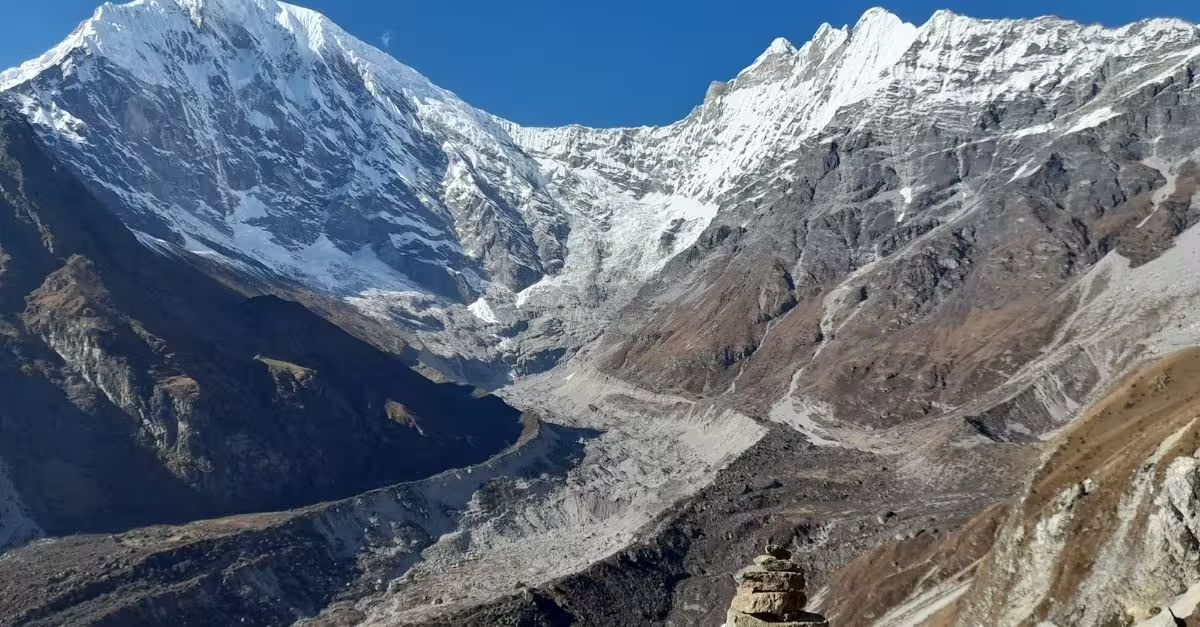
Nepal’s Most Climate-Vulnerable Tourist Destinations: Photo by Sameer Bajracharya on Pexels
Langtang is therefore likely to remain one of Nepal’s most important destinations for climate and mountain-risk research.
2. Everest Region and Sagarmatha National Park
Why it is vulnerable: Glacier loss, avalanches, glacial lakes and changing trekking conditions
Mount Everest itself is not going anywhere.
The environment around it is changing.
The Everest region depends heavily on its high-altitude landscape. Glaciers, snowfields and mountain streams influence both the scenery travelers come to see and the water systems that support communities along the trekking routes.
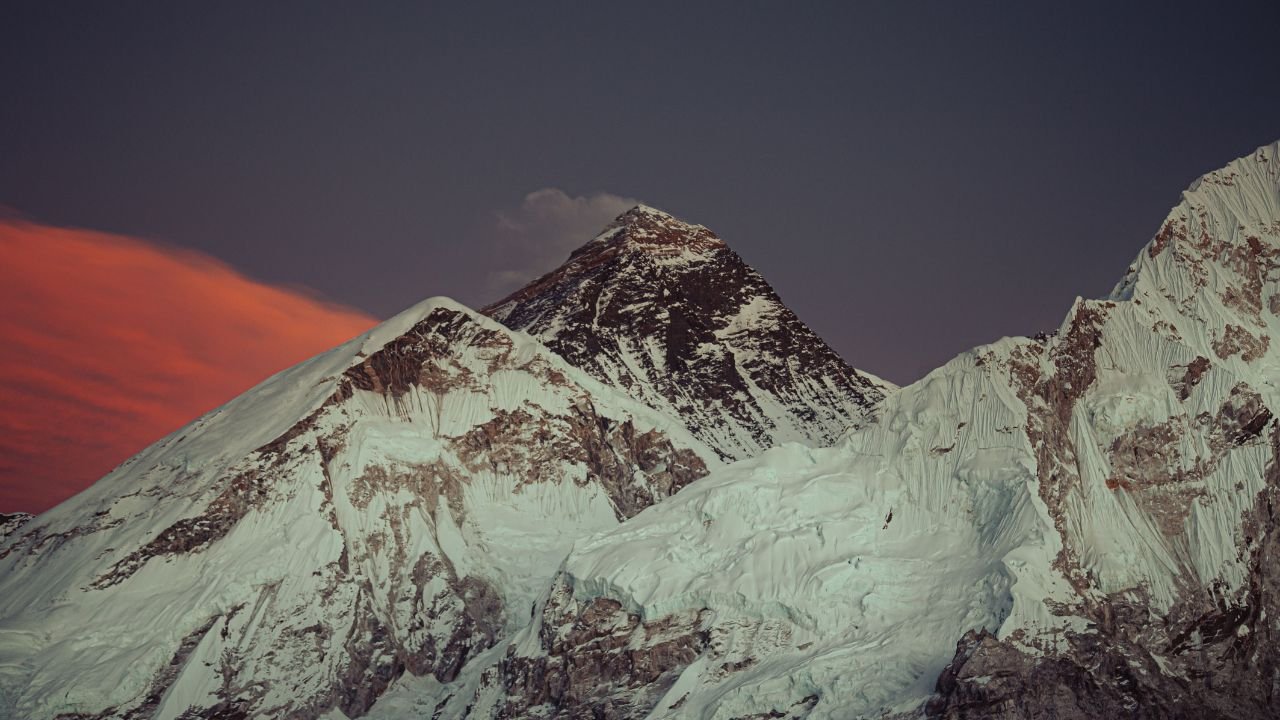
Everest Base Camp
As temperatures rise, glaciers lose mass and the shape of the high-altitude environment changes.
That creates several concerns.
Glacial lakes can expand.
Snow conditions can become less predictable.
Icefalls and mountain slopes can behave differently.
Trekking seasons may experience greater variation in weather.
And communities downstream can be exposed to hazards originating far above the villages where people live.
The problem is not simply that Everest will “lose its snow.”
Tourism itself depends on predictable access, functioning trails, bridges, water supplies and mountain infrastructure.
A changing climate can affect all of them.
The wider Hindu Kush Himalaya contains tens of thousands of glaciers, and scientists have warned that glacier loss, permafrost thaw and changing mountain conditions can increase exposure to floods, avalanches and landslides.
For visitors, this means that the traditional idea of a fixed trekking season is becoming less reliable.
3. Annapurna Conservation Area
Why it is vulnerable: Landslides, extreme rainfall and changing mountain weather
The Annapurna region is one of Nepal’s most visited mountain destinations.
The Annapurna Circuit, Annapurna Base Camp and surrounding villages bring travelers through an extraordinary range of environments, from subtropical valleys to high Himalayan terrain.
That diversity also means the region faces several different climate-related risks.
Lower elevations can experience intense rainfall, flash floods and landslides.
Higher areas are affected by changing snowfall, glacier conditions and extreme weather.
The result is a destination where climate risk can change dramatically from one part of the trekking route to another.
Research into climate vulnerability in Nepal’s nature-based tourism has long identified avalanches and glacial floods as major hazards in the high mountains, while landslides, debris flows and flash floods are particularly important in the hills.
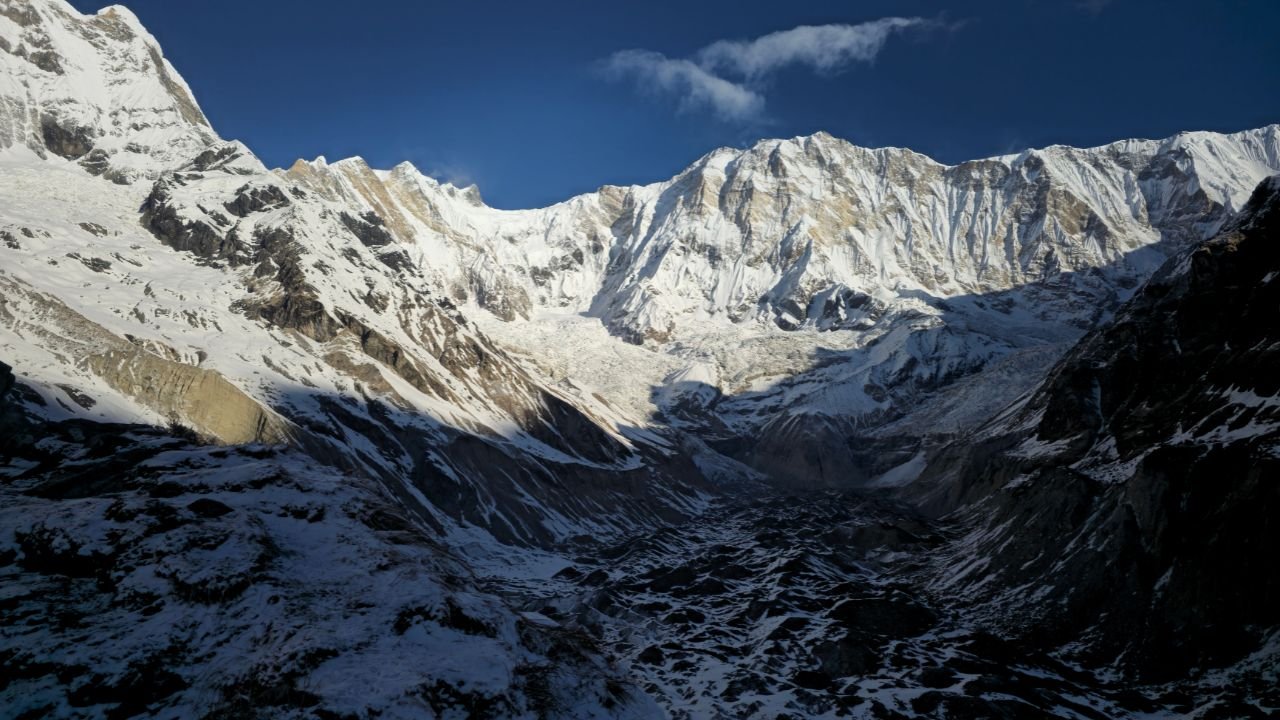
Annapurna Base Camp
The Annapurna region is also a useful example of why tourism infrastructure matters.
A landslide does not need to destroy a famous attraction to disrupt tourism.
If it cuts a road or trail, damages a bridge or isolates a village, the entire travel experience can be affected.
The region’s popularity makes resilience particularly important.
4. Mustang
Why it is vulnerable: Unusual rainfall, flash floods and pressure from tourism development
Mustang might seem like an unlikely place to discuss flooding.
Much of the region has a dry, almost desert-like appearance.
It sits in the rain shadow of the Annapurna and Dhaulagiri ranges, which historically limited the amount of monsoon rainfall reaching the area.
That is changing.
In August 2023, intense rainfall caused a destructive flash flood in Kagbeni, damaging homes, hotels, bridges, vehicles and other infrastructure.
Nilgiri Mountains from Jomsom: During visit to Mustang in Dec 2025
Research and reporting have also pointed to changing atmospheric conditions that may allow more moisture to penetrate areas that were traditionally much drier.
At the same time, Mustang has experienced a significant increase in visitors.
The expansion of roads has made the region accessible to far more domestic and international travelers, while new hotels and guesthouses have followed.
This creates a complicated situation.
Tourism provides income and opportunities for local communities, but rapid construction in vulnerable areas can increase exposure when extreme weather occurs.
Building close to river channels or on land that naturally absorbs floodwater can turn an unusual weather event into a much larger disaster.
Mustang therefore illustrates an important point about climate vulnerability:
The risk does not come from climate change alone.
Where and how people build can determine how severely a community experiences a natural hazard.
5. Rara Lake and Western Nepal
Why it is vulnerable: Changing rainfall, landslides, fires and limited infrastructure
Rara Lake is one of Nepal’s most spectacular destinations and remains considerably less developed than Everest, Annapurna or Pokhara.
Its isolation is part of its appeal.
It is also part of its vulnerability.
When a road is damaged by a landslide or extreme rainfall, reaching remote communities and tourist areas can become difficult.
Western Nepal is exposed to a combination of hazards, including landslides, changing precipitation patterns, forest fires and extreme weather.
For a destination such as Rara, climate vulnerability is therefore not only about what happens to the lake itself.
It is also about the infrastructure that connects visitors to the region.
A damaged road can disrupt tourism for days or weeks.
A prolonged dry period can increase wildfire risk.
Heavy rainfall can trigger landslides along mountain roads.
And because visitor facilities are more limited than in major trekking hubs, recovering from major disruptions can be harder.
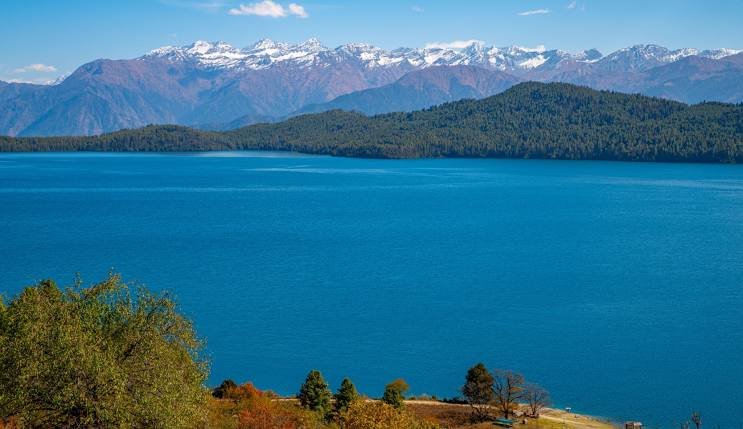
Rara Lake trek
Rara is among the areas now being included in Nepal’s emerging climate-resilient tourism planning research, alongside Sagarmatha, Langtang and Annapurna.
6. Chitwan National Park
Why it is vulnerable: Heat, flooding, changing rainfall and ecosystem stress
Climate vulnerability in Nepal is not limited to the Himalayas.
Chitwan is a useful reminder of that.
The national park sits in the southern lowlands, far below the glaciers and high mountain passes that dominate discussions about climate risk.
Its challenges are different.
The region can experience extreme heat, heavy monsoon rainfall, flooding and changes in water availability.
These changes matter because Chitwan’s tourism industry depends on its wildlife and ecosystems.
Visitors come to see rhinos, elephants, crocodiles, birds and other species in a landscape shaped by forests, rivers and wetlands.
When climate conditions change, wildlife habitats can change with them.
Water availability, vegetation and the timing of seasonal events can all influence ecosystems.
Research on climate vulnerability in Nepal’s nature tourism has specifically included Chitwan alongside Everest and Annapurna because different geographic zones face different forms of climate pressure.
In other words, climate change does not affect every tourist destination in Nepal through melting glaciers.
Sometimes the biggest question is what happens to the ecosystem visitors came to experience.
7. Pokhara
Why it is vulnerable: Flooding, landslides, extreme rainfall and changing water systems
Pokhara is one of Nepal’s most popular tourist cities, famous for Phewa Lake, mountain views, caves, waterfalls and its position as a gateway to the Annapurna region.
Its location also places it close to steep terrain and powerful river systems.
Heavy rainfall can produce landslides and flooding around the wider Pokhara region.
For tourism, the consequences can be surprisingly broad.
A major weather event can affect roads, flights, trekking access, lake activities, accommodation and attractions simultaneously.
Pokhara also illustrates another dimension of climate vulnerability: urban growth.
As tourism expands, more buildings, roads and other infrastructure are constructed around natural drainage systems.
If rainfall becomes more intense, the pressure on those systems increases.
The challenge is not simply protecting tourists.
Pokhara is a living city, and climate resilience has to protect residents and businesses as well.
8. Everest’s High-Altitude Villages
Why they are vulnerable: Water availability, glacier change and extreme weather
It is easy to think about climate change in Everest purely in terms of glaciers.
For local communities, the issue is much more immediate.
Many high-altitude settlements depend on water sources influenced by snow and ice.
When the timing and amount of meltwater changes, the availability of water can also change.
This can affect households, agriculture, livestock and tourism businesses.
Hotels and teahouses need water.
Trekkers need drinking water.
Local communities need water throughout the year.
A change in the mountain’s natural water cycle can therefore become an economic issue as well as an environmental one.
The challenge is particularly significant because tourism has become an important part of the local economy.
The more visitors a destination receives, the greater the pressure on limited natural resources.
9. The Annapurna and Mustang River Valleys
Why they are vulnerable: Roads, settlements and tourism development close to rivers
One of the less discussed aspects of climate risk in Nepal is where tourism infrastructure is built.
Mountain rivers are attractive locations for settlements because valleys provide some of the only relatively accessible land.
Roads also naturally follow river corridors.
Tourism businesses often develop along those same routes.
Under normal conditions, this makes transportation and construction easier.
During extreme rainfall or sudden flooding, it can create a serious exposure.
Mustang’s Kagbeni flood demonstrated how quickly water can damage buildings and infrastructure located close to a river.
The same principle applies elsewhere.
A changing climate can increase the importance of keeping natural flood channels clear and carefully planning where new hotels, roads and other structures are built.
10. The Remote Himalayan Valleys
Why they are vulnerable: Isolation
Some of Nepal’s most beautiful destinations are also among the hardest places to reach.
That creates a form of climate vulnerability that is easy to overlook.
A major city may recover from a flood relatively quickly because it has multiple roads, hospitals, communications networks and emergency services.
A remote Himalayan village may have none of those advantages.
If a bridge is destroyed, there may be no alternative route.
If a landslide blocks a road, supplies can stop arriving.
If communication systems fail, getting information to residents and visitors becomes much harder.
For remote trekking destinations, resilience is therefore not only about preventing disasters.
It is about making sure communities can continue functioning when something goes wrong.
Why Are Nepal’s Tourist Destinations Becoming More Vulnerable?
There is no single explanation.
Several forces are interacting.
Rising temperatures
The Himalayas are warming, and rising temperatures are contributing to glacier loss and changes in snow and frozen ground.
That can affect the stability of high mountain environments.
More complicated rainfall patterns
Climate change does not simply mean “more rain.”
Rainfall can become more variable.
A normally dry region can experience an unusually intense storm.
A mountain community can experience heavy rainfall over a short period.
That matters because intense rainfall can trigger landslides and flash floods.
Glacier and ice loss
Glaciers are natural components of Himalayan river systems.
As they change, the timing and amount of meltwater can change as well.
Retreating glaciers can also leave behind lakes and unstable terrain.
Nepal has recorded numerous GLOF events, and UNDP notes that 47 glacial lakes in the country are currently classified as potentially dangerous.
Rapid tourism development
Tourism is essential to many mountain communities.
But poorly planned development can increase vulnerability.
Hotels built close to rivers, roads constructed across unstable slopes and infrastructure placed without sufficient hazard mapping can all increase the consequences of extreme weather.
Mustang provides a particularly clear example of this interaction between tourism growth and environmental risk.
Nepal’s difficult geography
Nepal is a narrow country with enormous differences in elevation.
A traveler can move from subtropical forests to glaciers within a relatively short distance.
That means there is no single climate risk for the whole country.
The hazards change with elevation and geography.
Does This Mean Nepal Is Becoming Unsafe for Tourists?
Not necessarily.
This distinction is important.
Climate vulnerability does not mean a destination is permanently unsafe.
It means that the conditions affecting that destination are changing and that certain hazards may become more difficult to predict or manage.
Nepal remains an extraordinary destination for trekking, wildlife, culture and adventure.
But travelers should become more informed about the environment they are entering.
Before a trek, it is sensible to check:
- Current weather conditions
- Trail and road conditions
- Local warnings
- River and flood conditions
- Trekking route updates
- Recent landslides or infrastructure damage
- Guidance from local authorities or experienced operators
This is especially important during the monsoon and periods of unusual weather.
What Should Nepal Do to Protect Its Tourism Future?
Protecting tourism does not mean trying to freeze Nepal’s landscape in place.
The country needs to adapt.
That could include better monitoring of glaciers and glacial lakes, stronger flood-warning systems, improved landslide mapping, safer infrastructure and better planning around rivers and unstable slopes.
Tourism destinations also need plans that involve local communities.
The people living in these areas usually understand their environment better than anyone.
Their knowledge should be part of disaster planning, evacuation routes and decisions about future development.
Nepal is already beginning to move in this direction. A climate-resilient tourism research initiative at Tribhuvan University’s Center for Nepal and Asian Studies is focusing specifically on Sagarmatha, Langtang, Annapurna and Rara, examining how climate change and tourism pressures are affecting these destinations.
That kind of work will become increasingly important.
The Future of Travel in Nepal May Look Different
The biggest mistake would be to assume that climate change means travelers will simply stop visiting Nepal.
Tourism is more likely to adapt.
Trekking seasons may shift.
Some routes may need new infrastructure.
Some destinations may require stricter visitor management.
Early-warning systems may become as important to tourism as airports, hotels and trekking permits.
And travelers may increasingly choose destinations based not only on scenery, but also on how resilient they are.
Nepal’s greatest tourism asset is its natural environment.
That makes protecting the environment more than an environmental issue.
It is an economic issue.
It is a community issue.
And increasingly, it is a tourism issue.
The mountains that bring visitors to Nepal are changing. So are the rivers, forests, lakes and valleys below them.
The question is not whether Nepal should continue welcoming travelers.
It is whether the country can make sure that the places travelers come to see remain safe, resilient and worth protecting for the people who live there—and for the generations that will visit after them.
Frequently Asked Questions
Which tourist destination in Nepal is most vulnerable to climate change?
There is no single destination that can accurately be called the “most vulnerable.” Langtang and the Everest region face significant high-altitude risks involving glaciers, avalanches and glacial lakes, while Annapurna and Mustang face substantial exposure to landslides, flash floods and changing rainfall. Lower-elevation destinations such as Chitwan face different risks involving heat, flooding and ecosystem changes.
Is climate change affecting Everest?
Yes. Rising temperatures are contributing to glacier loss and changes in the high-altitude environment around Everest. The effects can extend beyond the appearance of glaciers, influencing water availability, mountain hazards and trekking conditions.
Is Mustang affected by climate change?
Yes. Mustang has traditionally been one of Nepal’s driest regions, but extreme rainfall events have already caused serious flooding, including the destructive Kagbeni flood in 2023. Researchers and reporting have highlighted concerns that changing atmospheric conditions could bring more moisture into traditionally dry areas.
Is Langtang safe to visit?
Safety varies by location and current conditions. Langtang is exposed to mountain hazards including landslides, floods and glacier-related events. Travelers should check current route conditions and official local guidance before visiting, particularly after a major disaster.
What is the biggest climate threat to Nepal’s tourism industry?
There is no single threat. Glacial hazards, extreme rainfall, landslides, floods, changing snowfall, heat and ecosystem changes can all affect tourism. The biggest concern is the combination of these hazards with infrastructure and communities located in vulnerable areas.
Will climate change stop people from trekking in Nepal?
There is no reason to assume that trekking will disappear. However, routes, seasons and safety practices may change as the mountain environment changes. Better monitoring, infrastructure and early-warning systems can help Nepal adapt.
What can tourists do to reduce their risk?
Travelers should check weather and route conditions before departure, follow local warnings, use reputable trekking operators, avoid closed or recently damaged routes and remain flexible when conditions change. In mountain environments, changing an itinerary is often safer than trying to continue through hazardous conditions.
