
mindful travel Nepal showcasing slow and spiritual journey in the Himalayan mountains
In 2026, the global shift toward intentionality has transformed how we view the Himalayas. Beyond the physical challenge of the climb, travelers are now seeking a mental and spiritual reset. This is the essence of mindful travel Nepal, a movement that encourages us to stop measuring our journeys in miles and start measuring them in moments of presence. As the “Visit Nepal 2026” campaign highlights a more transparent and sustainable infrastructure, there has never been a better time to embrace the “Slow Travel” philosophy.
This 5,000-word comprehensive exploration of mindful travel Nepal will guide you through the sacred art of being present in the mountains, the transformative power of monastery retreats, and the ethics of conscious community engagement.
In our hyper-connected world, the mind is often elsewhere,worrying about the next deadline or planning the next Instagram post. Mindful travel Nepal offers a profound antidote to this digital fatigue. In 2026, Nepal has successfully positioned itself not just as an adventure hub, but as the world’s premier “Wellness and Mindfulness Capital.” This isn’t just about meditation; it’s about a fundamental shift in how we perceive the act of movement. When we practice mindful travel Nepal, we move from being “tourists” to “pilgrims of the present.”
1. The Art of “Slow Trekking”: Quality Over Altitude
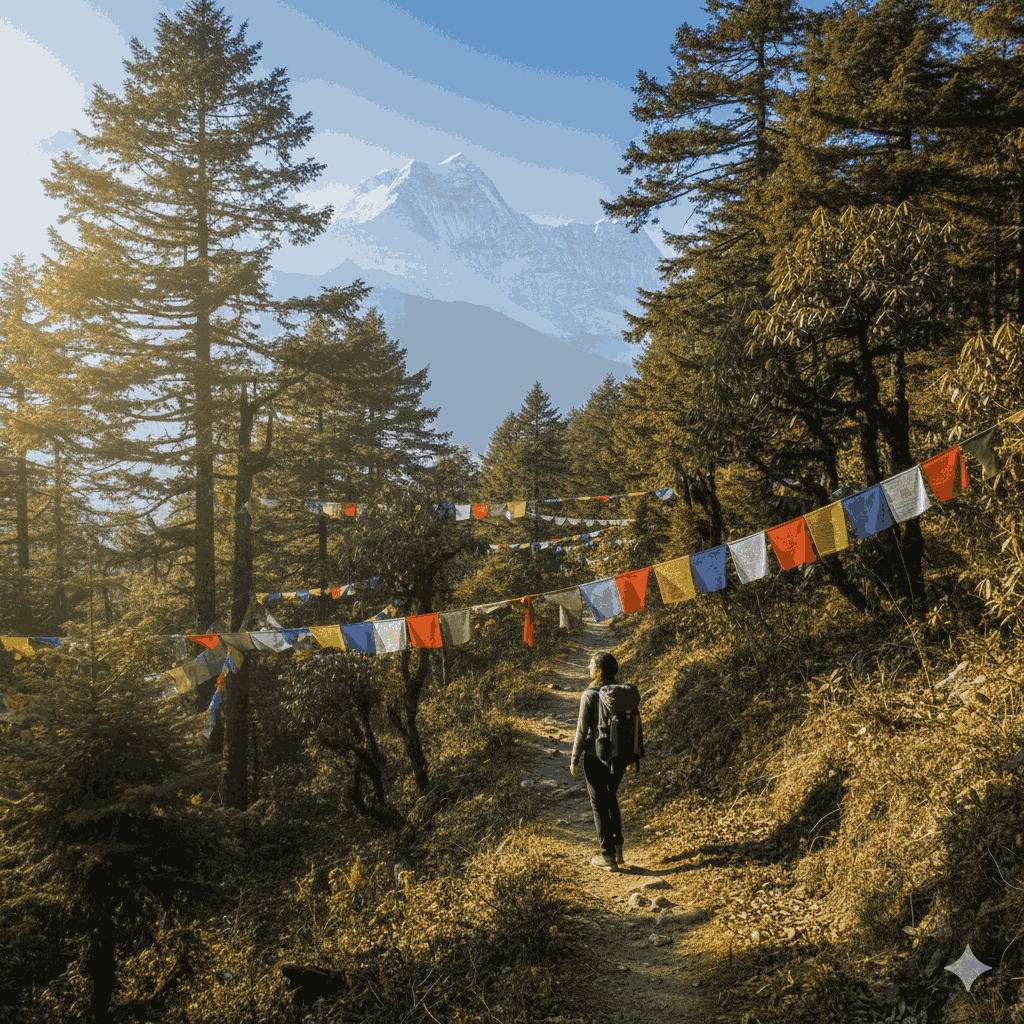
mindful travel Nepal slow trekking experience focused on presence and nature
The traditional trekking model often feels like a race to the summit. Mindful travel Nepal reclaims the path. In 2026, “Slow Trekking” itineraries in the Langtang Valley and the Annapurna Sanctuary focus on shorter daily distances, allowing trekkers to spend hours observing the play of light on cedar forests or listening to the distant roar of glacial rivers.
Mindfulness through Movement: Instead of focusing on the GPS coordinates, mindful travel Nepal encourages a “Step-Breath” synchronization. This rhythmic walking acts as a moving meditation, quieting the “monkey mind” and reducing the mental chatter that we carry from our urban lives.
The Unhurried Itinerary: A core secret of mindful travel Nepal is the 10-day version of a 7-day trek. This extra time allows for “rest days” that aren’t for physical recovery, but for creative and spiritual refueling—journaling by a waterfall or sketching a village scene in a teahouse.
2. Digital Detox and the Monastery Experience
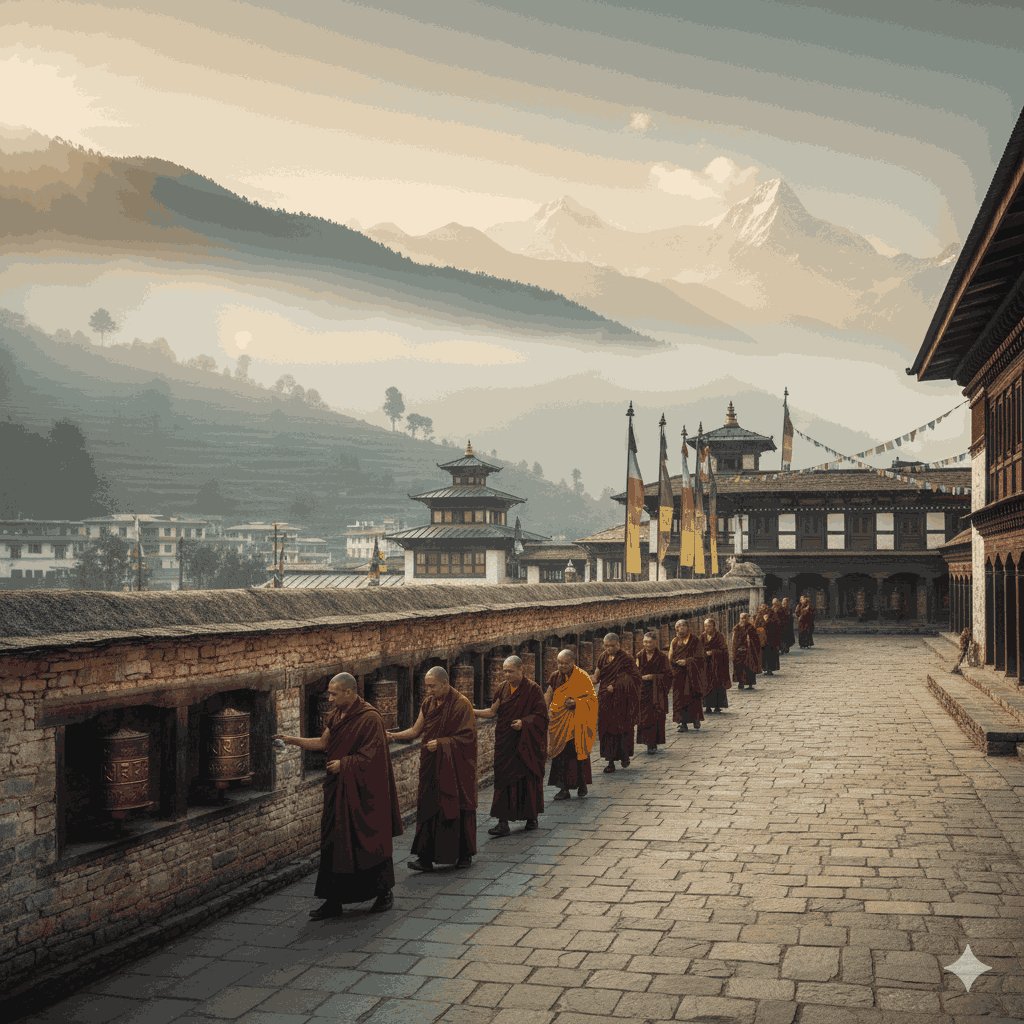
mindful travel Nepal monastery retreat focused on silence and meditation
One of the most powerful tools in the mindful travel Nepal toolkit is the digital detox. In 2026, several monasteries in Pharping and the Kanchenjunga region have opened guest wings for travelers seeking silence.
Checking into a monastery like Neydo or Kopan is a cornerstone of mindful travel Nepal. Here, you trade your smartphone for a meditation cushion. Following the monks’ daily routine,early morning chants, vegetarian meals, and silent contemplation, provides a rare opportunity to hear your own thoughts clearly. This immersion is a vital part of community tourism Nepal 2026, as the fees for these stays support the monks’ education and local social welfare projects.
3. Soulseeing: Authentic Cultural Immersion
In the bustling heritage squares of Patan and Bhaktapur, mindful travel Nepal takes the form of “Soulseeing.” This means moving past the facades of the temples and engaging with the living energy of the city.
Instead of rushing through a guided tour, mindful travel Nepal suggests sitting at a Patli (a traditional resting platform) for an hour. Watch the elders rotate prayer wheels, observe the artisans carving wood, and feel the rhythm of Newari life. As we discuss in our guide to cultural preservation Nepal, these moments of quiet observation foster a deep respect that no guidebook can provide. This is the heart of mindful travel Nepal: seeing the soul of the place, not just its surface.
4. Conscious Consumption: The Ethics of Awareness
Mindful travel Nepal is inextricably linked to our impact as consumers. Being “mindful” means being aware of where our money goes and what it leaves behind.
Support Local Artisans: When you buy a hand-knit scarf or a thangka painting, mindful travel Nepal encourages you to ask about the process. Understanding the days of labor involved creates a connection between you and the maker, turning a “souvenir” into a “sacred object.”
The Zero-Plastic Pledge: In 2026, mindful travel Nepal practitioners use high-altitude water filtration hubs, avoiding the thousands of plastic bottles that once littered the trails. Every sip of water becomes an act of environmental stewardship. This aligns perfectly with the broader best sustainable travel in Nepal 2026 initiatives.
5. Mindful Eating and the Dal Bhat Philosophy
In Nepal, food is medicine. The “Dal Bhat Power” is more than a slogan; it’s a nutritional balance of lentils, rice, vegetables, and pickles. Mindful travel Nepal involves eating with intention.
Participating in a farm-to-table experience in villages like Bandipur allows you to see the entire lifecycle of your meal—from the terraced fields to the wood-fired stove. In the 2026 season of mindful travel Nepal, many teahouses have introduced “Mindful Eating” sessions, where guests are encouraged to eat their first few bites in silence, fully savoring the flavors of the Himalayas. This practice honors the labor of the farmers and the bounty of the earth.
6. The Soundtrack of Silence and Sound Healing
Mindful travel Nepal isn’t just about what you see; it’s about what you hear. In 2026, Pokhara has become a global hub for “Sound Healing” and “Vibrational Therapy.”
Overlooking Phewa Lake, travelers can participate in Tibetan Singing Bowl sessions. The resonance of the bowls is used to realign the body’s energy, a perfect post-trek activity for mindful travel Nepal. Even on the trails, the ringing of mule bells and the flapping of prayer flags and live music in Kathmandu (which often features ambient, soulful sounds) provide a natural soundscape that encourages deep relaxation and internal focus.
7. Integrating Mindfulness into Your Return
The true test of mindful travel Nepal is not what happens in the mountains, but what happens when you go home. 2026 travel agencies now offer “Integration Workshops” on the final day of a trip.
These sessions help you translate the peace of the Himalayas into your daily urban life. Whether it’s a 10-minute morning breathing exercise or a commitment to “Slow Sundays,” the goal of mindful travel Nepal is to create a permanent shift in your perspective. You don’t just leave Nepal; you carry a piece of its stillness within you.
Frequently Asked Questions (FAQs)
1. What exactly is mindful travel Nepal? Mindful travel Nepal is an approach to tourism that emphasizes presence, awareness, and cultural respect. It involves slowing down the pace of travel, disconnecting from digital distractions, and focusing on deep, meaningful connections with nature and local communities.
2. Is mindful travel Nepal suitable for first-time trekkers? Absolutely. In fact, mindful travel Nepal is ideal for beginners because it encourages a slower, more manageable pace, reducing the risk of altitude sickness and burnout while maximizing the emotional rewards of the journey.
3. How can I practice mindfulness in a crowded city like Kathmandu? In urban settings, mindful travel Nepal involves “Soulseeing”—finding quiet corners in heritage sites, practicing mindful walking through ancient alleys, and engaging in sensory observation (smelling the incense, hearing the temple bells) without the need to constantly document it on a phone.
4. Are there specific retreats for mindful travel Nepal? Yes, in 2026, many centers in Pokhara, Pharping, and Dhulikhel offer specific “Mindfulness Retreats” that combine yoga, meditation, and eco-tours tailored to the principles of mindful travel Nepal.
5. How does mindful travel Nepal support the local environment? By advocating for zero-waste practices, supporting local organic farms, and reducing the demand for carbon-intensive rapid transport, mindful travel Nepal directly contributes to the preservation of the delicate Himalayan ecosystem.
6. Do I need to be a Buddhist to practice mindful travel Nepal? Not at all. While the spiritual roots of mindful travel Nepal are often Buddhist or Hindu, the practices of presence and respect are universal and can be enjoyed by anyone, regardless of their religious or secular background.
7. Can I combine adventure sports with mindful travel Nepal? Yes! Activities like paragliding in Pokhara or rafting on the Trishuli can be incredibly mindful. Mindful travel Nepal focuses on the total immersion and focus required during these activities, turning a “thrill” into a “zen” experience.
As we look toward the remainder of 2026, it is clear that the future of exploration lies in the depths of our own awareness. Mindful travel Nepal is an invitation to put down the camera, quiet the mind, and truly listen to what the mountains have to say. The Himalayas do not just offer views; they offer a mirror to our own souls.
When you choose mindful travel Nepal, you aren’t just taking a trip,you are embarking on a transformation. We hope this guide serves as your compass as you navigate the beautiful, silent, and soul-stirring paths of the Himalayas.
