
Losar vs Dashain vs Tihar with scenes of Himalayan monasteries, Nepali street celebrations, and festival lights, showcasing Nepal’s rich cultural tapestry
Losar vs Dashain vs Tihar: How Nepal’s Festivals Differ is a fundamental question for anyone seeking to understand the spiritual and social fabric of Nepal. Nepal is not merely a country of mountains; it is a country of festivals, where almost every day is a celebration of the divine, the natural, or the ancestral. Among the hundreds of celebrations, three stand out as the most culturally significant: Dashain, the grand national festival; Tihar, the dazzling festival of lights; and Losar, the ancient Himalayan New Year. Understanding Losar vs Dashain vs Tihar: How Nepal’s Festivals Differ requires a journey through Hindu mythology, Buddhist philosophy, and the unique ethnic traditions that define these lands.
In this exhaustive 4,000-word guide, we will break down every layer of these celebrations. From the fierce rituals of the Durga Puja during Dashain to the heartwarming sibling bonds of Tihar and the spiritual purification of the Losar festival, we will provide a definitive answer to how Losar vs Dashain vs Tihar: How Nepal’s Festivals Differ.
1. The Foundational Roots: Religion and Origin
The first major point in Losar vs Dashain vs Tihar: How Nepal’s Festivals Differ lies in their religious foundations.
Dashain: The Vedic Triumph

Nepali family celebrating Dashain with Tika and Jamara, highlighting the religious roots and rituals of Losar vs Dashain vs Tihar
Dashain is primarily a Hindu festival, though it is celebrated with national fervor by almost all Nepalese. It commemorates two great victories: the goddess Durga slaying the buffalo-demon Mahishasura after a nine-day battle, and Lord Rama’s victory over the ten-headed demon king Ravana. It represents the ultimate victory of Dharma (righteousness) over Adharma (wickedness).
Tihar: The Animistic and Vedic Blend

A colorful Tihar scene at night, with rows of oil lamps (Diyo), decorated doorsteps with Rangoli, and children wearing traditional clothes, representing light and bonds.
Tihar, also a Hindu festival, is the Nepalese version of Diwali. However, it is unique because it blends Vedic worship of Goddess Laxmi with ancient animistic traditions of honoring animals. It highlights the harmony between humans, gods, and the creatures that serve them.
Losar: The Buddhist New Year
In contrast, when analyzing Losar vs Dashain vs Tihar: How Nepal’s Festivals Differ, Losar stands apart as a Buddhist celebration. Its roots are in the pre-Buddhist Bon religion of Tibet, where it was a winter harvest festival. Today, it is the most important date for the Sherpa, Tamang, and Gurung communities. To see how these histories intertwine, read more on Interesting Facts About Losar Festival You Probably Didn’t Know.
2. Detailed Rituals: A Day-by-Day Breakdown
To understand Losar vs Dashain vs Tihar: How Nepal’s Festivals Differ, we must look at the specific rituals that take place during their multi-day durations.
The 15 Days of Dashain
Ghatasthapana (Day 1): Sowing of barley seeds for Jamara.
Phulpati (Day 7): Arrival of sacred flowers from Gorkha.
Maha Ashtami (Day 8): Intense worship of Goddess Kali with sacrifices.
Maha Navami (Day 9): Worshipping tools, vehicles, and weapons.
Vijaya Dashami (Day 10): The main day of Tika and blessings from elders.
The 5 Days of Tihar
Kaag Tihar: Worship of crows (messengers of death).
Kukur Tihar: Worship of dogs (protectors and companions).
Gai Tihar & Laxmi Puja: Worship of cows and the Goddess of Wealth.
Goru Tihar / Mha Puja: Worship of oxen or “Self-Worship” by the Newar community.
Bhai Tika: Celebrating the bond between brothers and sisters.
The 15 Days of Losar
Gutor: Driving out the negative energy of the old year.
Gyalpo Losar (Day 1): Offerings to the deities and family gatherings.
Day 2-3: Visiting relatives and community dancing.
Day 15: The Butter Lamp Festival.
In Losar vs Dashain vs Tihar: How Nepal’s Festivals Differ, Dashain is about power and victory, Tihar is about light and bonds, and Losar is about purification and rebirth.
3. Symbols and Decorations
In Losar vs Dashain vs Tihar: How Nepal’s Festivals Differ, the visual landscape of Nepal changes drastically.
Dashain Symbols: The dominant colors are red and yellow. The Red Tika (rice, yogurt, and vermillion) and the yellow Jamara (barley sprouts) are the iconic markers of this time. Bamboo swings (Ping) are seen across the hills.
Tihar Symbols: Marigold garlands (Sayapatri) and globe amaranth (Makhamali) dominate. The Rangoli at the doorstep and the flickering Diyo (oil lamps) create a golden glow.
Losar Symbols: Multi-colored Prayer Flags (Lung-ta) are raised. Families create Tormas (butter sculptures) and draw sun and moon symbols on kitchen floors with flour. This visual distinction is a key part of Losar vs Dashain vs Tihar: How Nepal’s Festivals Differ.
4. The Culinary Identity: Feasts of the Gods
Food is a primary way Losar vs Dashain vs Tihar: How Nepal’s Festivals Differ.
The Dashain Feast: Meat is the center of the table. Mutton and goat curry are prepared in vast quantities. People also enjoy Sel Roti and various pickles (Achar).
The Tihar Platter: This is the festival of sweets. Families prepare Sel Roti, Anarsa, and Fini. Trays of dry fruits and nuts are exchanged during Bhai Tika.
The Losar Menu: The iconic dish is Guthuk, a noodle soup with nine ingredients and hidden “personality dumplings.” Families also fry Khapse (pastries). To learn more about the specific recipes, check traditional food prepared during Losar festival in Nepal.
5. Social Structure and Community
Losar vs Dashain vs Tihar: How Nepal’s Festivals Differ in how they bring people together.
Dashain is a hierarchical festival. It focuses on the hierarchy of the family—younger members visiting elders to receive Tika and Dakshina (monetary gifts). It is a national homecoming where city dwellers return to their ancestral villages.
Tihar is more horizontal. While Bhai Tika respects the sister-brother bond, the “Deusi-Bhailo” tradition involves groups of youth going from house to house singing and dancing, making it a very public, social celebration.
Losar is communal and monastic. While families gather, much of the celebration happens in the Gompa (monastery). It is a time for the community to witness the Cham dances and share butter tea. For travelers, understanding these social layers is essential; see what tourists should know before attending Losar celebrations in Nepal.
6. The Different Types of Losar in Nepal
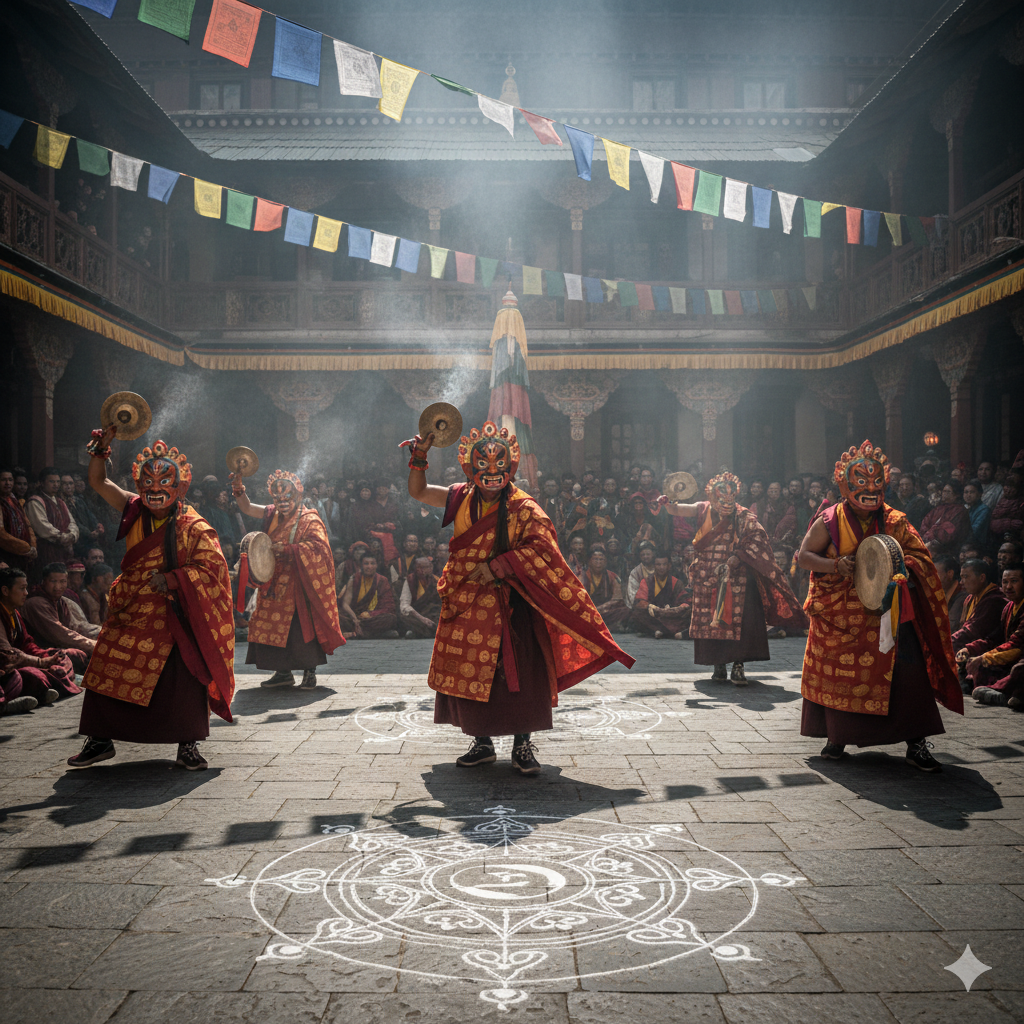
Masked Cham dance during Losar, symbolizing spiritual purification and sacred traditions contrasting with Dashain and Tihar celebrations
A unique aspect of Losar vs Dashain vs Tihar: How Nepal’s Festivals Differ is that Losar itself is divided into three types, whereas Dashain and Tihar are single unified events.
Tamu Lhosar: Celebrated by the Gurung community in December.
Sonam Lhosar: Celebrated by the Tamang community in January/February.
Gyalpo Lhosar: Celebrated by the Sherpas and Tibetans in February/March.
This internal diversity within the Losar festival is one of the most interesting facts about Losar festival that distinguishes it from the Hindu holidays. You can read more about these differences in our post on the different types of Losar in Nepal.
7. Music, Dance, and Soundscapes
The auditory experience of Losar vs Dashain vs Tihar: How Nepal’s Festivals Differ is striking.
Dashain Sounds: The sound of the Malshree Dhun (traditional music) and the laughter of children on the bamboo swings.
Tihar Sounds: The energetic chanting of “Deusi-re” and the rhythmic clapping of Bhailo groups.
Losar Sounds: The deep resonance of long brass horns (Dungchen), the clashing of cymbals, and the rhythmic chanting of Buddhist mantras.
8. Animal Sacrifices vs. Animal Worship
One of the most controversial points in Losar vs Dashain vs Tihar: How Nepal’s Festivals Differ is the treatment of animals.
Dashain: Historically involved large-scale animal sacrifices (goats, buffaloes) to appease Goddess Durga. While this is decreasing in urban areas, it remains a central tradition in rural Nepal.
Tihar: Explicitly forbids the killing of animals. Instead, it dedicates entire days to worshipping them. Even crows, often seen as pests, are treated with reverence.
Losar: Generally involves no animal sacrifice. Being a Buddhist festival, it emphasizes the sanctity of life and compassion for all sentient beings.
9. Modern Challenges and Evolution
How Losar vs Dashain vs Tihar: How Nepal’s Festivals Differ in the 21st century?
Dashain is becoming more about the holiday and less about the blood sacrifice. Many families now use coconuts or pumpkins for “sacrifice.”
Tihar has been influenced by global trends, with more electric lights replacing traditional oil lamps and firecrackers (though banned) becoming popular among youth.
Losar is seeing a cultural revival. As mountain people migrate to cities, they are organizing large-scale “Lhosar festivals” in public grounds like Tundikhel to preserve their identity.
10. Travel Advice: Which Should You Experience?
In the final analysis of Losar vs Dashain vs Tihar: How Nepal’s Festivals Differ, which one should a visitor prioritize?
Choose Dashain if you want to see the “Grand National Spirit” and experience the hospitality of a Nepali home.
Choose Tihar if you want the most beautiful, “Instagram-worthy” experience with lights and flowers.
Choose Losar if you want to experience the deep, mystical culture of the high Himalayas and the spiritual energy of Buddhist monasteries.
Frequently Asked Questions (FAQs)
1. Why is Dashain longer than Tihar?
Dashain is 15 days because it follows the Navaratri (nine nights) of the goddess Durga, plus several days for the Tika ceremony. Tihar is shorter (5 days) as it focuses on specific deities and animal worship.
2. Is the “Tika” the same in all three?
No. In Dashain, the Tika is usually red (made with vermillion). In Tihar (Bhai Tika), it is seven-colored (Saptarangi). In Losar, a white flour blessing is often used instead of a wet Tika.
3. Which festival is best for photographers?
Tihar is often considered the best for photography due to the evening lights, Rangolis, and marigold garlands. However, the Losar festival offers incredible shots of masked dances and prayer flags.
4. Can tourists receive Tika during Dashain?
Yes, many Nepali families are happy to share their culture. If you are invited to a home, it is a great honor to receive Tika and blessings from the head of the household.
5. Do people gamble during these festivals?
Yes, playing cards is a very common (though technically restricted) tradition during both Dashain and Tihar as a way for families to bond and pass the time during the long holidays.
6. Is Losar only celebrated in the mountains?
While its heart is in the mountains, large populations of Sherpas, Tamangs, and Gurungs live in Kathmandu, where the Losar festival is celebrated with massive public events.
7. What is the main difference between Tihar and Indian Diwali?
While they share the same date and the worship of Laxmi, Nepal’s Tihar is unique for its dedicated days to worshiping crows, dogs, and oxen, and the final day of Bhai Tika.
8. Are these festivals public holidays?
Yes. Dashain usually gets 5-6 days of public holidays, Tihar gets 3 days, and Losar gets 1-2 days depending on the specific community celebration.
In conclusion, Losar vs Dashain vs Tihar: How Nepal’s Festivals Differ is a story of three different paths to the same destination: a sense of belonging and spiritual peace. Whether it is the red Tika of Dashain, the golden lamps of Tihar, or the white prayer flags of Losar, these festivals are the heartbeat of the nation. They provide a rhythm to the year and a reason for families to unite across the rugged terrain of the Himalayas. Understanding how Losar vs Dashain vs Tihar: How Nepal’s Festivals Differ is the first step in truly understanding the beautiful complexity of Nepal.
