
Hidden deep within the majestic Himalayas of Nepal, Lho Village stands as one of the most beautiful and culturally preserved settlements along the famous Manaslu Circuit Trek. Surrounded by towering snow-covered peaks and ancient Buddhist traditions, this peaceful mountain village offers trekkers an unforgettable blend of natural beauty, spirituality, and authentic Himalayan lifestyle.
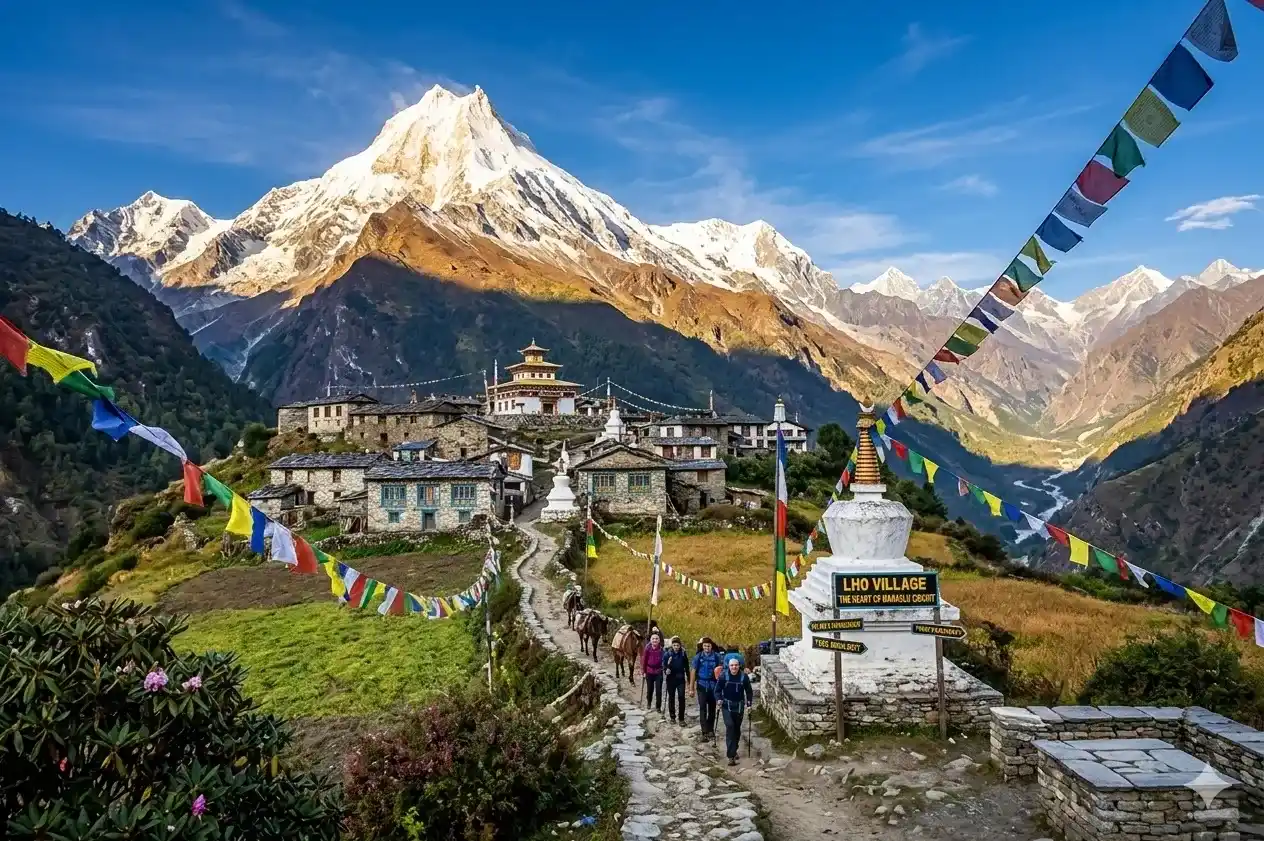
Lho Village Manaslu
Located at an altitude of approximately 3,180 meters beneath the mighty Mount Manaslu (8,163m), Lho Village provides one of the most spectacular close-up views of the world’s eighth-highest mountain. Unlike more crowded trekking regions, this destination remains calm, culturally rich, and deeply connected to Tibetan Buddhist heritage. For travelers seeking a meaningful trekking experience beyond commercial routes, this Himalayan settlement delivers both visual wonder and spiritual depth.
This comprehensive guide explores everything trekkers and travelers need to know about Lho Village, including its history, culture, trekking experience, monasteries, viewpoints, festivals, accommodation, and travel tips.
Introduction to Lho Village and Its Himalayan Setting
Situated along the Manaslu Circuit Trek in northern Nepal’s Gorkha region, this Village lies within the Nubri Valley, a culturally Tibetan-influenced area that remained closed to foreign visitors until 1991. Because of this long isolation, the region preserved its traditional architecture, language, and religious practices remarkably well.
Stone houses decorated with prayer flags, mani walls, spinning prayer wheels, and terraced fields define the landscape of Lho Village. The village sits strategically on a hillside, allowing uninterrupted panoramic views of Mount Manaslu and surrounding Himalayan ranges.
Trekkers often describe arriving here as one of the emotional highlights of the entire Manaslu Circuit journey.
The Meaning Behind Mount Manaslu
The mountain dominating the skyline above Lho Village is Mount Manaslu, whose name originates from the Sanskrit word Manasa, meaning “soul” or “spirit.” The spiritual meaning perfectly reflects the peaceful energy felt throughout the village.
Early morning sunlight illuminating Manaslu’s massive glaciers creates breathtaking scenery visible directly from lodges and monastery viewpoints. Many trekkers consider this Village the best location on the entire trek for observing the mountain’s grandeur.
Historical Importance of Lho Village
Before Nepal opened the Manaslu region to international trekkers, Lho Village functioned as an isolated Himalayan settlement connected mainly through trade routes with Tibet. This isolation allowed local communities to maintain centuries-old traditions untouched by modernization.
The Nubri people living in this Village continue practicing Tibetan Buddhism, preserving rituals passed down through generations. Traditional farming, yak herding, and seasonal trade still form essential parts of local livelihood.
Today, visitors experience a rare opportunity to witness authentic Himalayan culture rather than tourism-driven commercialization.
Ribung Monastery: Spiritual Heart of Lho Village
One of the most significant landmarks above this Village is the historic Ribung Monastery, believed to date back to the 17th century. Perched on a hill overlooking the settlement, the monastery offers both spiritual serenity and extraordinary mountain views.
Young monks residing here study:
Tibetan language
Sanskrit scriptures
Buddhist philosophy
English and Nepali education
Prayer ceremonies held daily fill the air with chanting sounds and incense, creating a deeply peaceful atmosphere. Visiting Ribung Monastery is often considered the spiritual highlight of staying in Lho Village.
Syangok Hill: The Ultimate Viewpoint Above Lho Village
A short but rewarding hike above Lho Village leads trekkers to Syangok Hill at approximately 4,110 meters. This viewpoint delivers one of the finest panoramic scenes in the Manaslu region.
From Syangok Hill, visitors enjoy:
360-degree Himalayan views
Stunning sunrise over Manaslu
Views of nearby villages and valleys
Snow peaks stretching endlessly across the horizon
Photographers and trekkers frequently wake before dawn to hike from Lho Village for sunrise photography sessions.
Culture and Daily Life in Lho Village
Life in this Village moves at a peaceful Himalayan rhythm. Residents follow agricultural cycles, livestock care, and religious traditions closely tied to Buddhist beliefs.
Daily scenes include:
Women spinning prayer wheels
Farmers tending barley and potato fields
Monks performing rituals
Children walking to monastery schools
Traditional stone houses with flat roofs reflect Tibetan architectural influence. Staying overnight allows travelers to experience genuine local hospitality.
Festivals Celebrated in Lho Village
Cultural celebrations remain central to community life in Lho. The region uniquely celebrates three different Lhosar (New Year) festivals due to its diverse ethnic population.
Tamu Lhosar
Celebrated by the Gurung community.
Sonam Lhosar
Observed by Tamang people.
Gyalpo Lhosar
Celebrated by Tibetan and Nubri communities.
During festival periods, Lho Village transforms with traditional dances, colorful clothing, rituals, and communal gatherings.
Sacred No-Hunting Tradition
One remarkable aspect of this Village culture is its sacred no-hunting tradition. Influenced by Buddhist beliefs emphasizing compassion toward all living beings, wildlife protection has long been practiced here.
As a result, surrounding forests host diverse Himalayan wildlife, contributing to the tranquil environment trekkers experience.
Trekking Experience to Lho Village
Reaching to this Village forms part of the Manaslu Circuit Trek, typically after passing settlements such as Machha Khola, Jagat, Deng, and Namrung.
The trail gradually transitions from subtropical forests to alpine landscapes. As trekkers approach the village, dramatic mountain views begin appearing along the route.
The arrival into Lho Village often marks the first truly close encounter with Mount Manaslu.
Accommodation and Food Options
Despite its remote location, This villages offers comfortable teahouse accommodations operated by local families.
Common facilities include:
Warm dining halls
Basic but clean rooms
Traditional Nepali meals
Tibetan bread and soup
Yak cheese and local tea
Staying overnight provides opportunities to interact with locals and observe mountain life firsthand.
Best Time to Visit Lho Village
The best seasons to visit Lho Village include:
Spring (March–May)
Clear skies
Blooming rhododendrons
Pleasant trekking weather
Autumn (September–November)
Stable weather
Excellent mountain visibility
Popular trekking season
Winter visits are possible but colder due to high altitude.
Photography Opportunities in Lho Village
Photographers find endless inspiration in Lho Village thanks to:
Sunrise views of Manaslu
Traditional Himalayan architecture
Prayer flags against snowy peaks
Monastery landscapes
Cultural portraits
Golden-hour lighting creates some of Nepal’s most iconic mountain photography scenes.
Why This Village Is Less Commercialized
Unlike Everest Base Camp or Annapurna Circuit routes, Lho Village remains relatively untouched by mass tourism due to restricted area permit requirements.
This controlled tourism helps preserve culture, environment, and community authenticity making visits more meaningful.
Altitude and Acclimatization Tips
At 3,180 meters, proper acclimatization is important in Lho Village.
Tips include:
Walk slowly
Stay hydrated
Avoid alcohol
Take acclimatization hikes
Many trekkers spend an extra night here before continuing higher.
Responsible Travel in Lho Village
Visitors should respect local customs by:
Dressing modestly
Asking permission before photos
Respecting monasteries
Avoiding littering
Responsible tourism helps protect the heritage of Lho Village.
Future Tourism Potential
As interest in sustainable trekking grows, this Village is gaining recognition among travelers seeking authentic Himalayan experiences. Its combination of scenery, spirituality, and cultural preservation positions it as one of Nepal’s emerging trekking highlights.
FAQs About Lho Village
1. Where is Lho Village located?
Lho Village lies along the Manaslu Circuit Trek in Gorkha District, Nepal, at an altitude of about 3,180 meters.
2. Why is Village famous among trekkers?
It offers one of the best panoramic views of Mount Manaslu along with rich Tibetan Buddhist culture.
3. How difficult is the trek to Village?
The trek is moderate and suitable for trekkers with basic fitness and proper acclimatization.
4. Can beginners trek to Village?
Yes, beginners can reach the village with preparation and guided trekking support.
5. What makes Lho Village culturally unique?
Its preserved Nubri culture, monasteries, festivals, and traditional lifestyle create an authentic Himalayan experience.
6. Is accommodation available in Lho Village?
Yes, several teahouses provide food and lodging for trekkers.
7. What is the best viewpoint near Village?
Syangok Hill offers breathtaking panoramic Himalayan views.
8. Is This Village crowded like Everest Base Camp?
No, it remains peaceful and less commercialized.
Among Nepal’s many Himalayan destinations, this Village stands out as a rare combination of natural beauty, spiritual heritage, and authentic mountain life. With breathtaking views of Mount Manaslu, ancient monasteries, vibrant festivals, and peaceful surroundings, the village offers an experience that goes far beyond trekking.
For travelers seeking meaningful connection with Himalayan culture rather than crowded tourism routes, this Village represents one of the most rewarding destinations in Nepal. Whether watching sunrise over Manaslu, exploring Ribung Monastery, or interacting with local communities, every moment here reflects the soul of the Himalayas.
A journey through Lho Village is not just a trek it is a spiritual and cultural experience that remains unforgettable long after leaving the mountains.
