
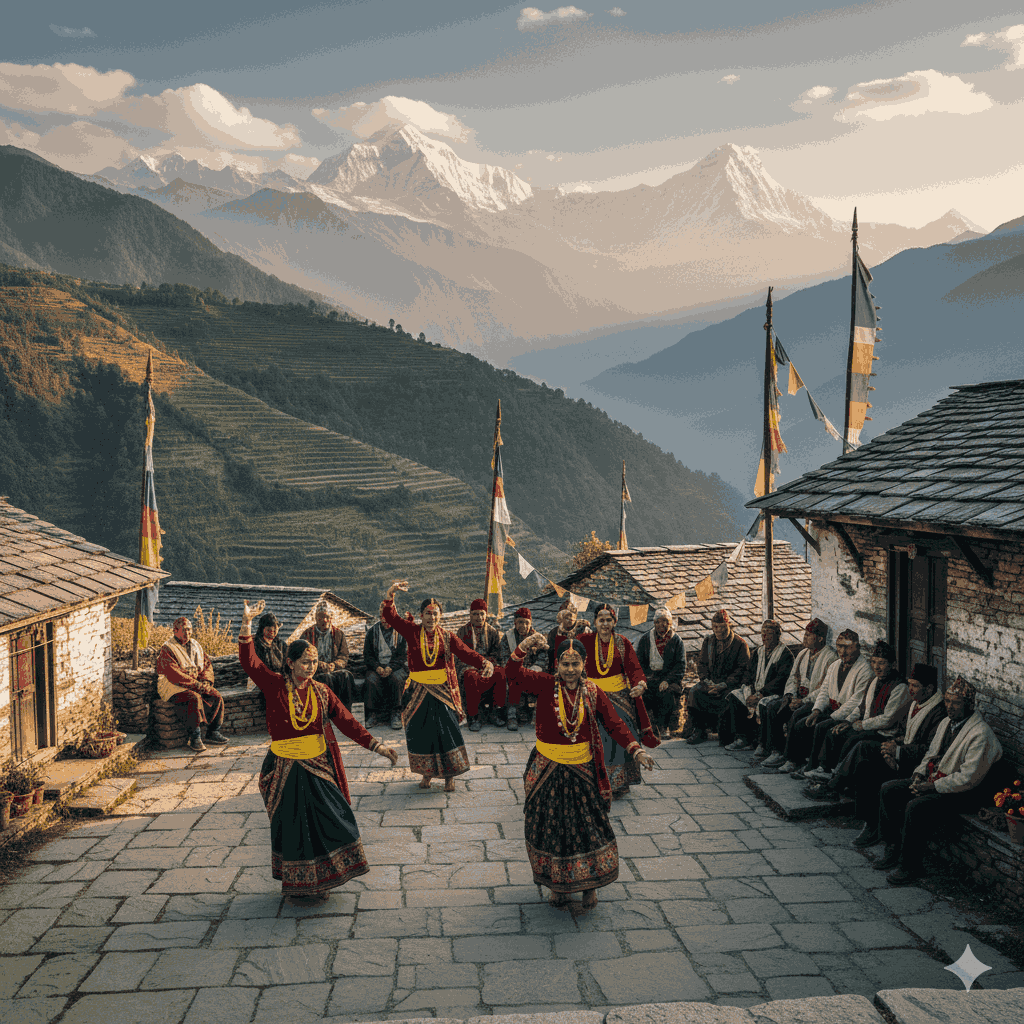
Exploring Gurung Traditions in a Himalayan village with Ghatu dance, Annapurna peaks, and traditional stone houses
In 2026, the landscape of global travel has moved away from superficial sightseeing and toward what experts call “heritage immersion.” Among the most profound experiences available in the Himalayas is Exploring Gurung Traditions. The Gurung people, or Tamu, are the indigenous guardians of the Annapurna and Lamjung massifs. Their culture is a fascinating intersection of ancient shamanism, martial history, and sustainable mountain living.
This comprehensive guide serves as the ultimate resource for Exploring Gurung Traditions in 2026. We will traverse the high-altitude villages of Ghandruk and Landruk, delve into the mysteries of the Ghatu dance, and explore how this community is leading the way in responsible tourism Nepal 2026
To understand the central hills of Nepal is to understand the Tamu people. Exploring Gurung Traditions reveals a community that has balanced the ferocity of a warrior lineage with the gentle spiritualism of the mountains. In 2026, as travelers seek authentic cultural experiences nepal, the Gurung villages offer a blueprint for preserving identity in a rapidly changing world.
1. The Migration and Ethnic Roots: From the North to the Mid-Hills
The history of the Gurung people is a nomadic epic. When Exploring Gurung Traditions, you learn of their migration from the Tibeto-Burman highlands.
The Legend of the Three Kings: Oral history suggests the Gurungs migrated from the “Kola Sothar” region. Understanding these migration routes is essential for anyone Exploring Gurung Traditions.
The Gorkha Regiment: Gurung men are world-renowned as soldiers. Their bravery in the British and Indian Gorkha regiments is a point of immense pride. However, Exploring Gurung Traditions shows that they are just as much poets and farmers as they are warriors.
Clan Lineages: The Gurung society is divided into two major groups: the Char Jate and Sora Jate. Each has its own specific rituals, which are key to Exploring Gurung Traditions.
2. The Spiritual Triad: Buddhism, Bön, and Shamanism
One of the most complex aspects of Exploring Gurung Traditions is their spiritual life. It is not a single religion but a blend of three distinct paths.
The Pachyu and Ghyabri: These are the local shamans. They perform animal sacrifices and rituals to appease nature spirits. No journey of Exploring Gurung Traditions is complete without witnessing a shamanic healing ceremony.
Lamaism: Over time, the Gurungs adopted Tibetan Buddhism. Today, you will see prayer flags and monasteries side-by-side with shamanic altars, a unique feature of Exploring Gurung Traditions.
Death Rituals (Arghun): The Gurung funeral rites are among the most elaborate in Nepal. They involve days of chanting and symbolic guidance of the soul to the land of the ancestors.
3. Architecture: The Stone Villages of Annapurna
Exploring Gurung Traditions in a Himalayan village with Ghatu dance, Annapurna peaks, and traditional stone houses
While Tharu Village Life Nepal is famous for its mud-thatch, the Gurung heartland is a kingdom of stone.
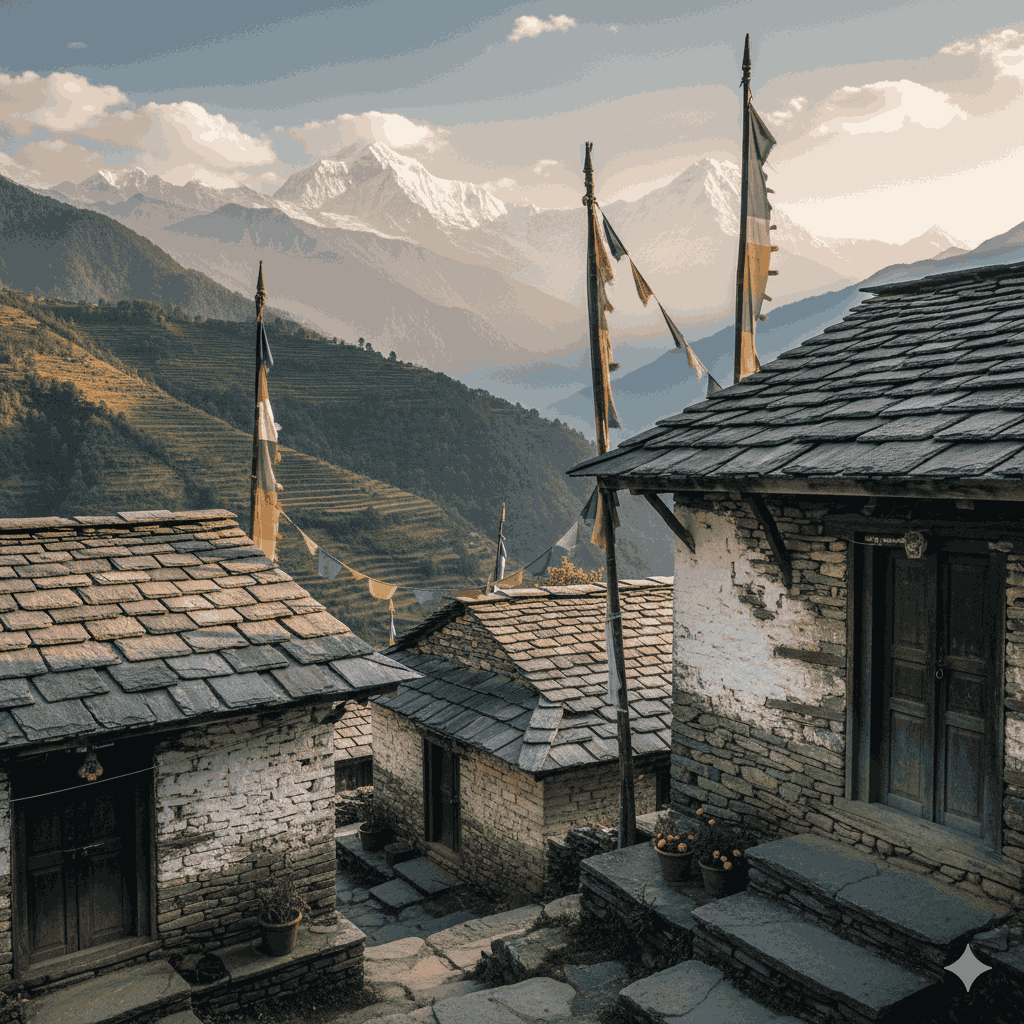
Slate-Roofed Houses: Villages like Ghandruk are famous for their grey slate roofs and white-washed stone walls. Exploring Gurung Traditions in these villages feels like walking through a living museum.
The Rodhi Ghar: Historically, this was a community house where young people gathered to socialize and weave. While modern life has changed the Rodhi, it remains a pillar of Exploring Gurung Traditions.
Sustainable “Rurban” Living: In 2026, many Gurung villages have integrated solar technology and micro-hydro power, making them leaders in carbon neutral travel Nepal 2026.
4. The Ghatu and Krishna Charitra: Dances of the Soul
Music and dance are the languages of Exploring Gurung Traditions.
The Ghatu Dance: This is a ritualistic dance performed by young girls known as Ghatus. It is believed that the dancers enter a trance-like state, possessed by the spirits of ancient queens. Witnessing this is a rare privilege when Exploring Gurung Traditions.
Sorathi Dance: A lively folk dance that narrates the story of a legendary king and queen. It involves vibrant costumes and rhythmic drumming, showcasing the artistic side of Exploring Gurung Traditions.
Tamu Lhosar: The Gurung New Year (celebrated in late December/early January) is the best time for Exploring Gurung Traditions. The streets of Kathmandu and the village squares of Pokhara erupt in parades and traditional music.
5. High-Altitude Agriculture and “Mad Honey”
The economy of Exploring Gurung Traditions is rooted in the land.
Terraced Farming: Gurungs are masters of carving farms into the sides of mountains. They grow millet, maize, and buckwheat, which are staples of specialty food in Nepal.
Honey Hunting: This is perhaps the most dangerous and thrilling aspect of Exploring Gurung Traditions. Gurung men scale cliffs on rope ladders to harvest “mad honey” from the world’s largest honeybees. This honey has medicinal and hallucinogenic properties.
Sheep Herding: Traditionally, Gurungs were nomadic herders. While this is less common in 2026, you can still find herders in the high pastures if you are deeply Exploring Gurung Traditions.
6. Culinary Traditions: The Taste of the Hills
Food is an essential gateway for Exploring Gurung Traditions.
Dhido and Gundruk: A thick millet porridge served with fermented greens. It is the ultimate fuel for mountain life.
Kodo ko Raksi: A local millet wine that is central to social gatherings in Exploring Gurung Traditions.
Sel Roti: A ring-shaped sweet bread made of rice flour, often served during festivals.
7. Indigenous Village Industries: Weaving and Craft
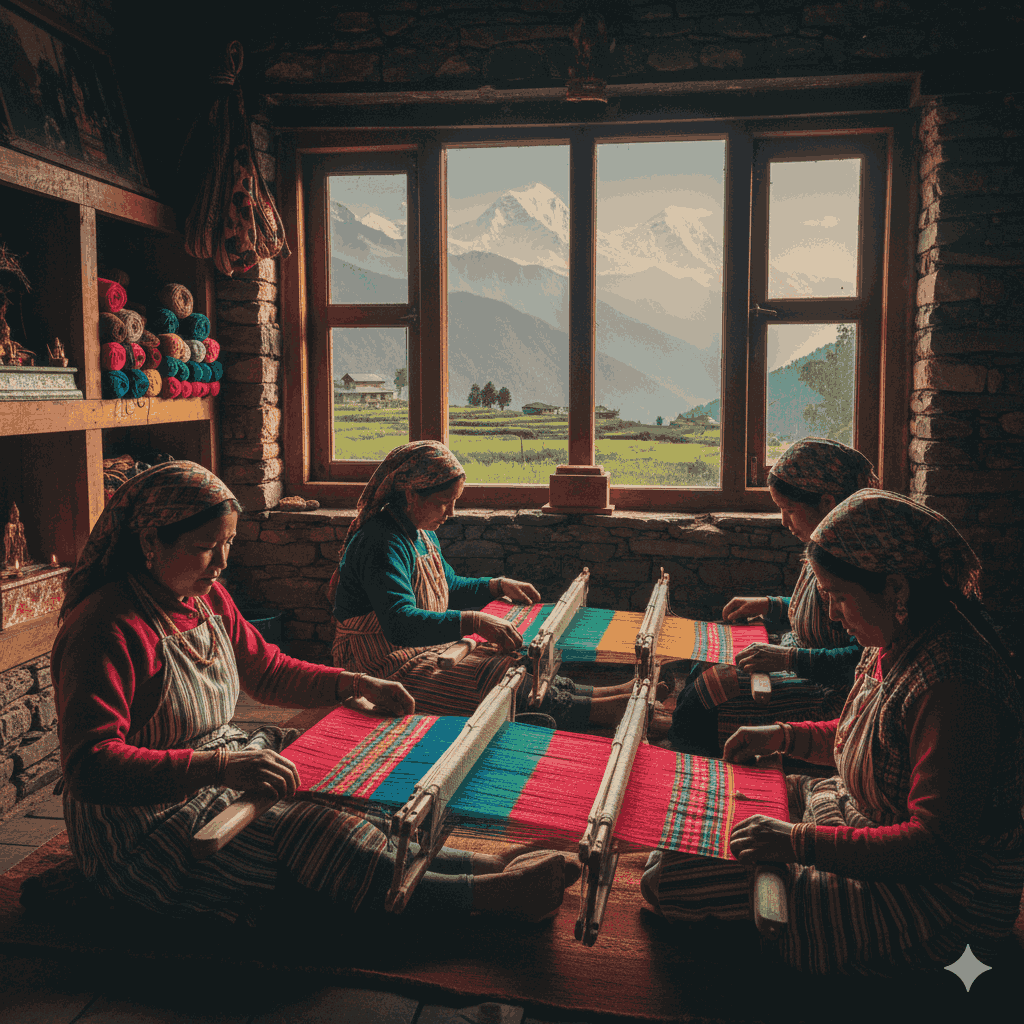
When Exploring Gurung Traditions, one cannot overlook the craftsmanship of the Tamu women.
Radi Pakhi: These are thick woolen blankets made from sheep wool. They are a staple of indigenous village industries nepal and are highly prized for their durability.
Bakkhu Weaving: The traditional sleeveless coats worn by Gurung men are hand-woven and designed to endure the mountain cold, a key element of Exploring Gurung Traditions.

Traditional Gurung stone houses with slate roofs and prayer flags in the Annapurna region
8. Community-Based Tourism in 2026
The Gurung people pioneered the “Homestay” model in Nepal. Villages like Sirubari and Ghalegaun are the benchmarks for community tourism Nepal 2026.
Authentic Immersion: When Exploring Gurung Traditions through a homestay, you don’t just watch the culture; you live it. You help grind the corn, you learn the local weavers’ knots, and you sit with the elders to hear tales of the mountains.
Economic Empowerment: These initiatives ensure that the profits from Exploring Gurung Traditions stay within the village, funding local schools and clinics.
Frequently Asked Questions (FAQs)
1. What is the best time for Exploring Gurung Traditions in 2026? The most vibrant time is during Tamu Lhosar (December/January). However, for trekking and agricultural rituals, the Spring (March-May) and Autumn (September-November) months are ideal.
2. Where are the best places to experience Gurung culture? Ghandruk, Dhampus, Ghalegaun, and Sirubari are the most accessible and culturally rich villages for Exploring Gurung Traditions.
3. What is “Mad Honey” and is it safe? It is honey made from rhododendron nectar by the Apis laboriosa bee. It has psychoactive effects. While it is a part of Exploring Gurung Traditions, it should only be consumed in tiny amounts under local supervision.
4. How does Gurung culture differ from Sherpa culture? While both are Buddhist/Mountain cultures, Sherpas live at much higher altitudes and have a more direct Tibetan influence. Exploring Gurung Traditions reveals a unique shamanic-animistic layer (Bön) that is distinct from the Sherpas.
5. What should I wear when visiting a Gurung village? Modesty is respected. While trekking gear is fine, if you are invited to a ceremony while Exploring Gurung Traditions, wearing long trousers or a skirt is appreciated.
6. Can I find live music in Gurung villages? Yes! While it is different from the jazz festivals and live music in Kathmandu, you will find traditional Madal drumming and folk singing in almost every village evening.
7. How has 2026 technology impacted these villages? Most villages now have high-speed Starlink internet, allowing youth to stay in their villages while working remotely, which helps in the preservation of Exploring Gurung Traditions.
Exploring Gurung Traditions is a journey into the heart of what makes Nepal unique. It is a story of a people who have successfully navigated the bridge between their warrior past and a sustainable, hospitable future. In 2026, the stone paths of Ghandruk and the rhythmic chants of the Ghyabri priests serve as a reminder that heritage is a living thing.
By choosing to spend your time Exploring Gurung Traditions, you are supporting a community that values its land, its history, and its guests with equal fervor. The soul of the Annapurna is waiting for you.
