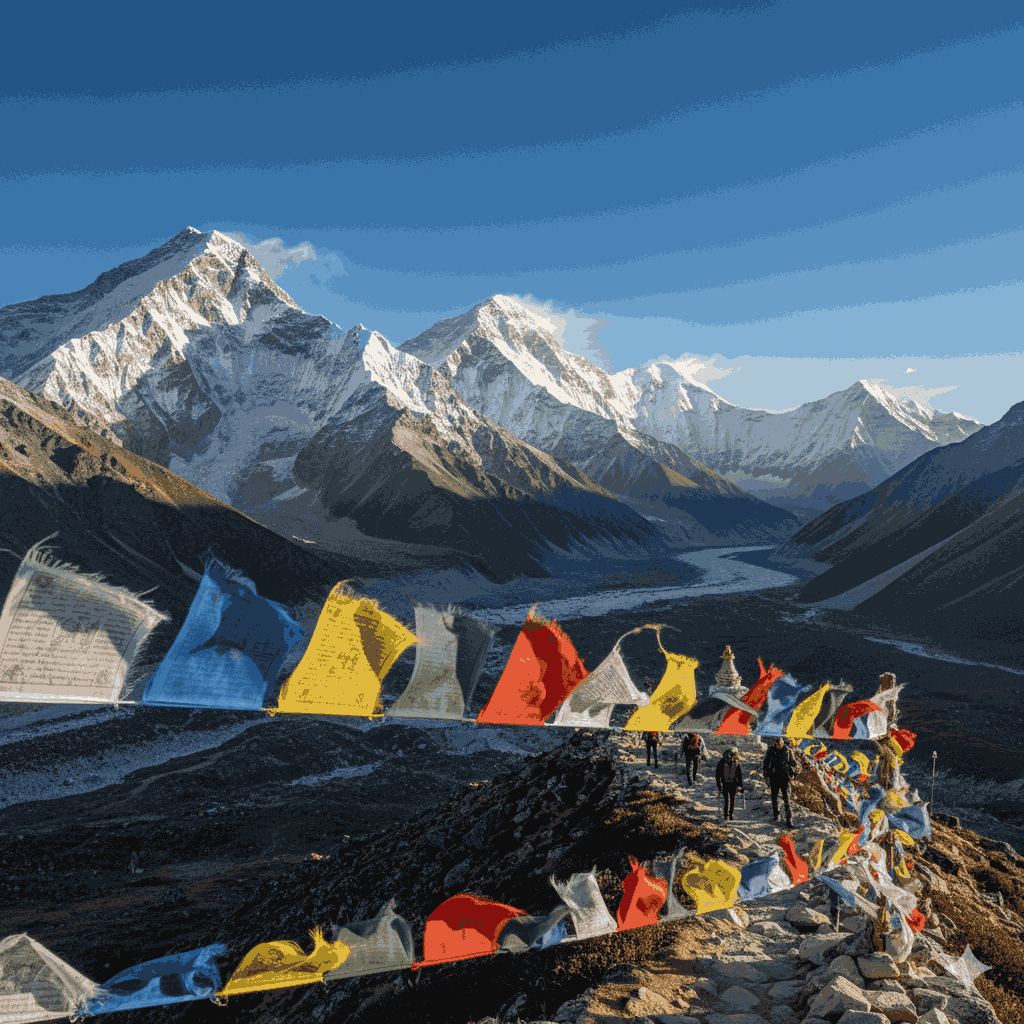
Everest trek in Nepal with trekkers walking toward Mount Everest in the Khumbu region
The Everest trek remains the ultimate benchmark for global trekking, a journey that beckons thousands of adventurers to the feet of the world’s highest peak, Sagarmatha. In 2026, the Everest trek has evolved into a sophisticated blend of raw wilderness and improved mountain infrastructure. As you step off the plane in Lukla, you aren’t just starting a hike; you are entering a high-altitude sanctuary where Sherpa culture, Tibetan Buddhism, and the sheer power of tectonic forces converge.
The Everest trek is the quintessential high-altitude expedition, representing the pinnacle of Himalayan adventure for the 2026 season. As global travel shifts toward sustainable and regulated exploration, the Everest trek has adapted with enhanced infrastructure, digital permit systems, and a renewed focus on the preservation of the Sagarmatha National Park. This journey is not merely a trail; it is a structural progression through one of the most geologically significant landscapes on the planet.
For those planning an Everest trek in Nepal, success is an absolute function of preparation. The trail leads from the emerald valleys of the lower Khumbu to the stark, oxygen-deprived moraines of the world’s highest base camp. While many seek the thrill of the ascent, the true value of the Everest trek lies in the immersion into Sherpa culture and the resilient ecosystems of the high Himalayas.
I. The 14-Day Technical Itinerary for 2026
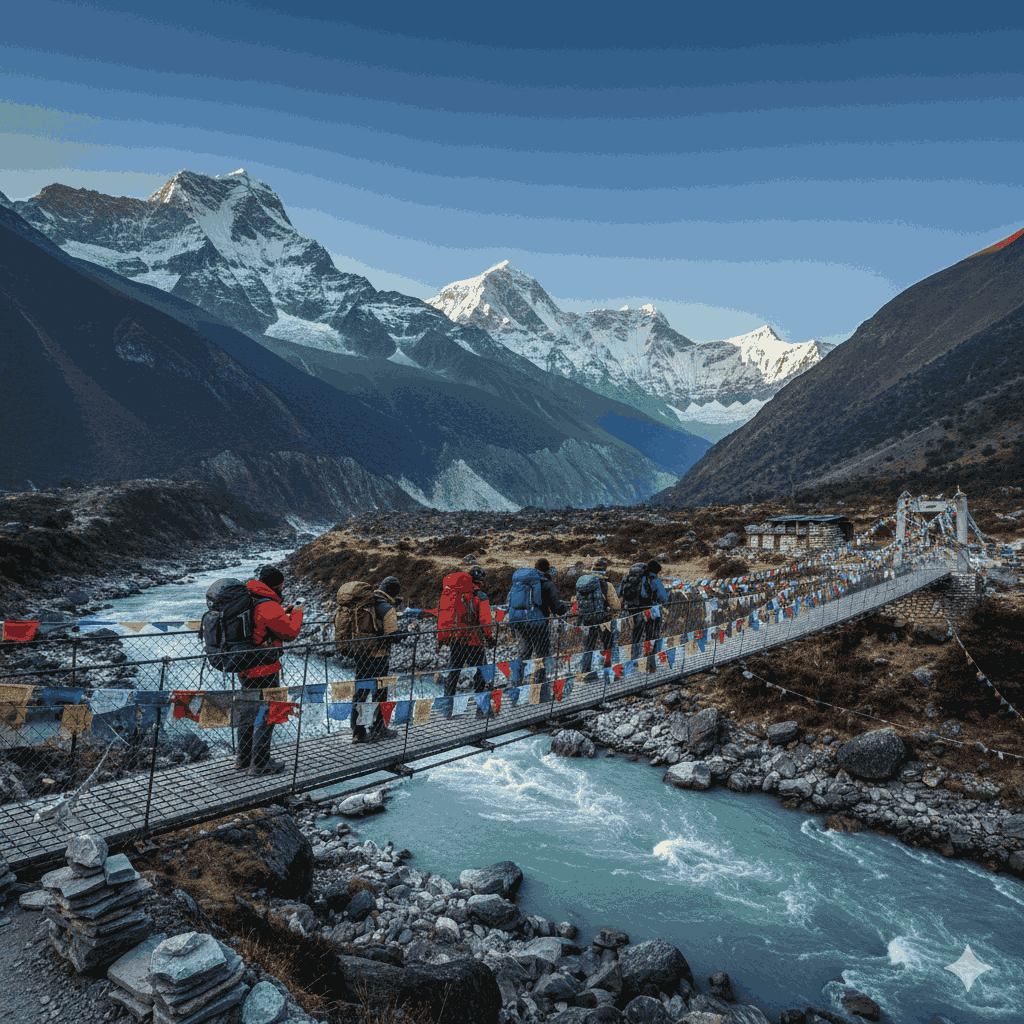
Everest trek in Nepal showing suspension bridge crossing on the way to Namche Bazaar
The following structure for the Everest trek in Nepal is built upon rigorous acclimatization protocols. In 2026, rushing the ascent remains the leading cause of evacuation. This 14-day model is essential for a safe summit view.
Phase 1: The Gateway and Initial Load (Days 1-4)
Arrival in Kathmandu (1,400m): Before starting the Everest trek in Nepal, a technical briefing and gear audit are conducted.
Lukla to Phakding (2,610m): The flight into Tenzing-Hillary Airport is the absolute start of the mountain phase. The trek begins with a gentle descent along the Dudh Koshi.
Phakding to Namche Bazaar (3,440m): A significant vertical gain. This stage of the Everest trek in Nepal crosses five suspension bridges and enters the National Park.
Acclimatization at Namche: This is essential. Trekkers typically hike to 3,880m (Everest View Hotel) and return to Namche to sleep, adhering to the “Climb High, Sleep Low” rule.
Phase 2: The Spiritual Heart (Days 5-7)
Namche to Tengboche (3,867m): This segment of the Everest trek features the Tengboche Monastery, where trekkers often receive blessings for a safe journey.
Tengboche to Dingboche (4,410m): You cross the tree line here. The environment shifts to alpine tundra.
Acclimatization at Dingboche: A second absolute requirement. A hike to Nangkartshang Peak (5,083m) is the standard protocol to prepare for the 5,000m+ thresholds.
Phase 3: The High-Altitude Push (Days 8-10)
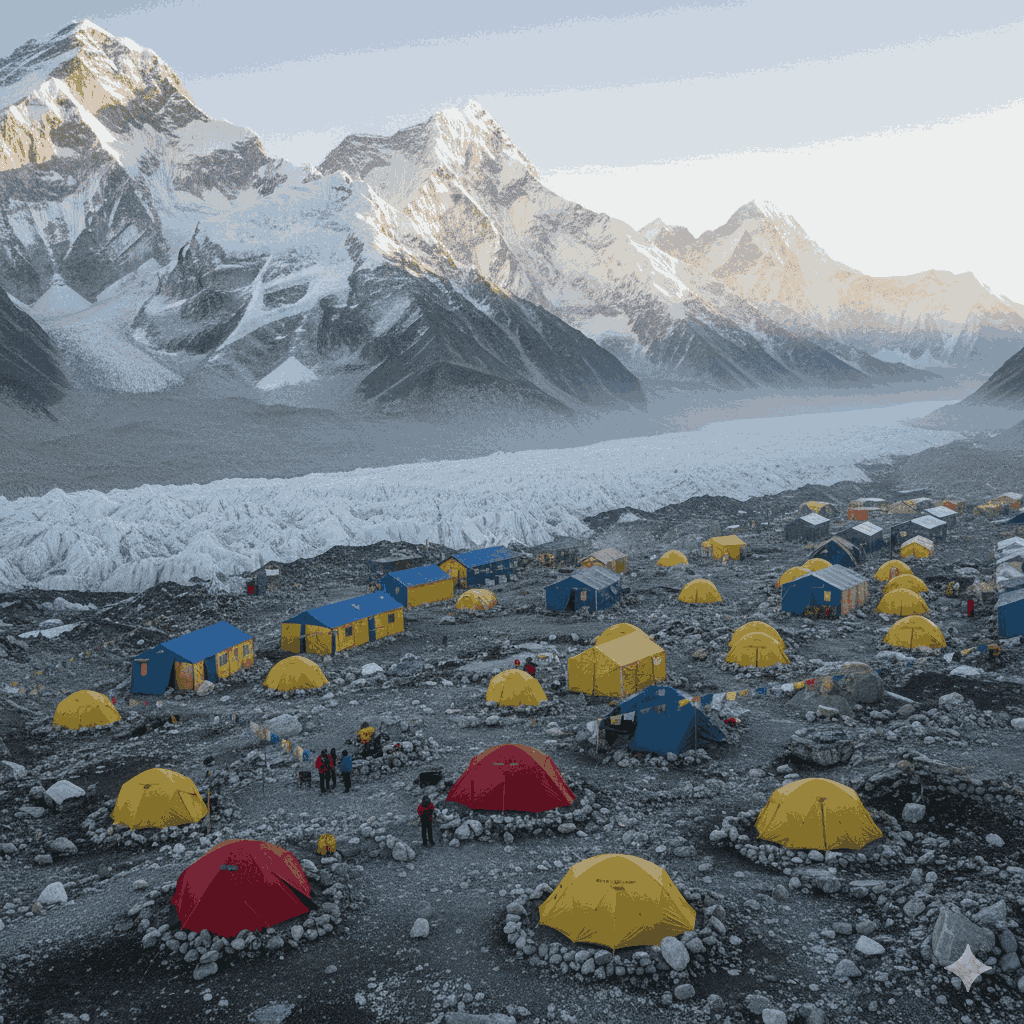
Everest trek in Nepal reaching Everest Base Camp on the Khumbu Glacier
Dingboche to Lobuche (4,940m): Passing the Thukla Pass memorials, a sobering reminder of the power of the mountains.
Gorak Shep and Everest Base Camp (5,364m): The primary goal of the Everest trek in Nepal. Walking on the Khumbu Glacier requires careful footing.
Kala Patthar (5,545m) and descent to Pheriche (4,240m): Sunrise from Kala Patthar offers the absolute best view of the Everest summit.
Phase 4: The Descent and Re-entry (Days 11-14)
Pheriche to Namche: A long descent through the valleys of the Everest trek in Nepal.
Namche to Lukla: The final 18km of the trail.
Flight to Kathmandu: Returning to the capital for rest.
Departure: Conclusion of the Everest trek in Nepal.
II. Technical Logistics: Permits and Regulations
In 2026, the Everest trek in Nepal requires specific digital documentation. The traditional TIMS card is no longer used in the Khumbu region.
Sagarmatha National Park Permit: NPR 3,000 (~$23 USD). This supports the UNESCO World Heritage site’s conservation.
Khumbu Pasang Lhamu Entry Permit: NPR 3,000 (~$23 USD). Collected in Lukla or Monjo.
Mandatory Guides: Since late 2025, the Everest trek in Nepal must be conducted with a licensed guide to ensure safety and environmental compliance.
While waiting for flight windows or processing permits, we recommend experiencing the jazz festivals and live music in Kathmandu, which serve as a modern cultural counterpoint to the ancient traditions of the mountains.
III. Health and Altitude: The Science of Survival
The Everest trek in Nepal involves significant physiological stress. Oxygen levels at 5,000m are roughly 50% of sea-level values.
Hydration Strategy: Drink 4 liters of water daily. This is essential to maintain blood viscosity.
Nutritional Load: The absolute fuel for the Everest trek in Nepal is Dal Bhat. High in carbohydrates and proteins, it provides sustained energy for 6-hour trekking days.
AMS Monitoring: Use a pulse oximeter daily. Any saturation below 75% at rest requires immediate consultation with your guide.
If you find the altitude of the Everest trek in Nepal too daunting for a first-time visit, the Homestay Trek in Nepal offers a beautiful, lower-altitude alternative with similar cultural depth.
IV. Gear Requirements for the 2026 Season
The Everest trek in Nepal demands a professional four-layer system to handle temperature swings from +20°C to -20°C.
Base Layer: Synthetic or Merino wool (Moisture-wicking is essential).
Mid Layer: Heavy fleece or down vest.
Insulation: A 700+ fill-power down jacket is an absolute necessity for the nights above 4,000m.
Shell: GORE-TEX waterproof and windproof jacket.
Footwear: Grade B/C trekking boots, fully broken in before your Everest trek in Nepal.
V. The Cultural Landscape: Sherpa Traditions
The Everest trek in Nepal is a journey through a living museum of Tibetan Buddhism.
Mani Stones: On your Everest trek in Nepal, you will encounter walls of stones carved with mantras. Respect dictates you pass these on the left.
Prayer Flags: These banners are more than decoration; they are essential spiritual symbols intended to spread peace across the Himalayas.
Monasteries: Visiting Tengboche or Pangboche during your Everest trek in Nepal provides a rare look into high-altitude monastic life.
Frequently Asked Questions (FAQ)
Is the Everest trek in Nepal safe for solo travelers?
Under 2026 regulations, solo trekking in the Everest region is restricted. You must be accompanied by a licensed guide for the Everest trek in Nepal to ensure safety and manage the fragile ecosystem.
What is the best month for the Everest trek in Nepal?
The absolute best windows are Spring (March–May) for the flora and Autumn (September–November) for the clearest mountain views.
How much does the Everest trek in Nepal cost in 2026?
A standard 14-day Everest trek in Nepal typically ranges from $1,300 to $1,800 USD, covering flights, permits, and teahouse accommodation.
How do I prevent altitude sickness on the Everest trek in Nepal?
The essential steps are: gradual ascent, drinking 4L of water daily, avoiding alcohol, and following the 14-day itinerary designed by experts.
Where can I relax after my Everest trek in Nepal?
Returning to Kathmandu allows for a great recovery. Many trekkers head to Thamel or Lazimpat to enjoy the jazz festivals and live music in Kathmandu at venues like Jazz Upstairs.
The Everest trek in Nepal remains the ultimate benchmark for global trekking. By adhering to the essential 14-day schedule and respecting the local regulations, you ensure a journey that is as safe as it is awe-inspiring.
As you transition from the quiet of the Khumbu back to the capital, the jazz festivals and live music in Kathmandu offer the perfect sensory bridge between the wilderness and the modern world. The Everest trek in Nepal is not just a hike; it is the absolute adventure of a lifetime.The Everest trek in Nepal is not just a hike; it is the absolute adventure of a lifetime. By following a structured 14-stage plan and honoring the regulations of the Khumbu, you participate in a legacy of exploration that spans decades.
