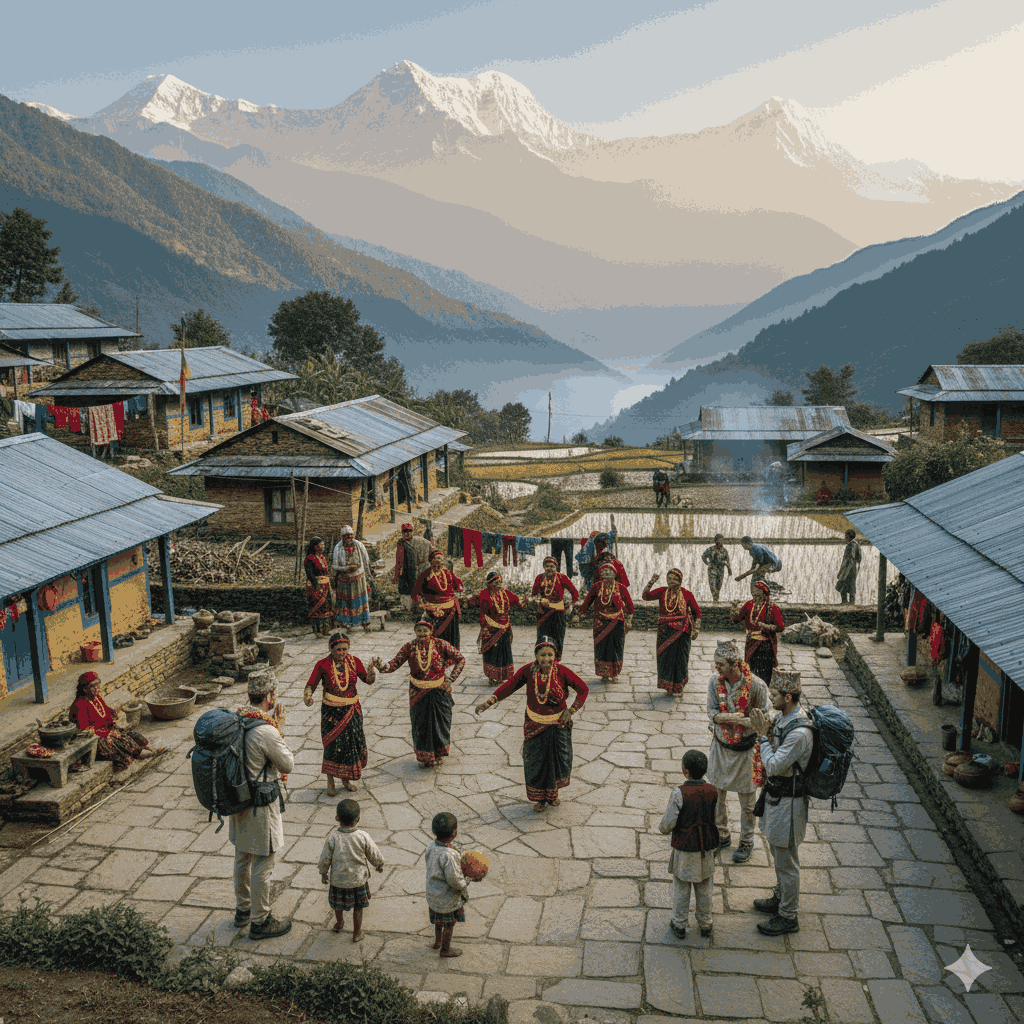
Authentic community tourism Nepal at a rural village with cultural performances and scenic mountain views
In 2026, the travel landscape has shifted from passive sightseeing to active participation. At the forefront of this movement is community tourism Nepal. This model is not just a trend; it is a vital lifeline for rural villages, ensuring that the economic benefits of travel are distributed directly to the people who host them. Community tourism Nepal represents a “living exchange” where travelers move beyond the traditional tourist bubble to experience the authentic heartbeat of the Himalayas.
While many visitors still flock to the jazz festivals and live music in Kathmandu, the true pioneer of the 2026 travel season is the one who seeks out community tourism Nepal. By choosing this path, you are not just a spectator; you become a stakeholder in the preservation of ancient Newari, Gurung, and Tharu cultures. Community tourism in Nepal is built on the pillars of transparency, equity, and environmental stewardship, making it the most ethical way to explore the roof of the world.
Chapter 1: The Core Philosophy of Community Tourism Nepal
To understand why community tourism in Nepal is so impactful in 2026, we must look at its foundational goals. Unlike mass tourism, which often leads to “leakage” (where profits leave the country), community tourism in Nepal keeps the wealth where it belongs.
The 80/20 Economic Model
In 2026, most community tourism Nepal initiatives operate on a strict 80/20 revenue-sharing model. Approximately $80\%$ of the costs you pay go directly to your host family and the local community fund. This fund is often used to build schools, improve water sanitation, or provide health clinics. Community tourism in Nepal is therefore a form of “direct action” through travel.
Preserving the “Living Museum”
Every time a traveler chooses community tourism in Nepal, they provide a financial incentive for locals to preserve their heritage. In a world of rapid globalization, community tourism in Nepal acts as a shield for traditional crafts, languages, and rituals that might otherwise be lost to time. For more on the historical context, see the Nepal Tourism Board.
Chapter 2: Iconic Destinations for Community Tourism Nepal in 2026
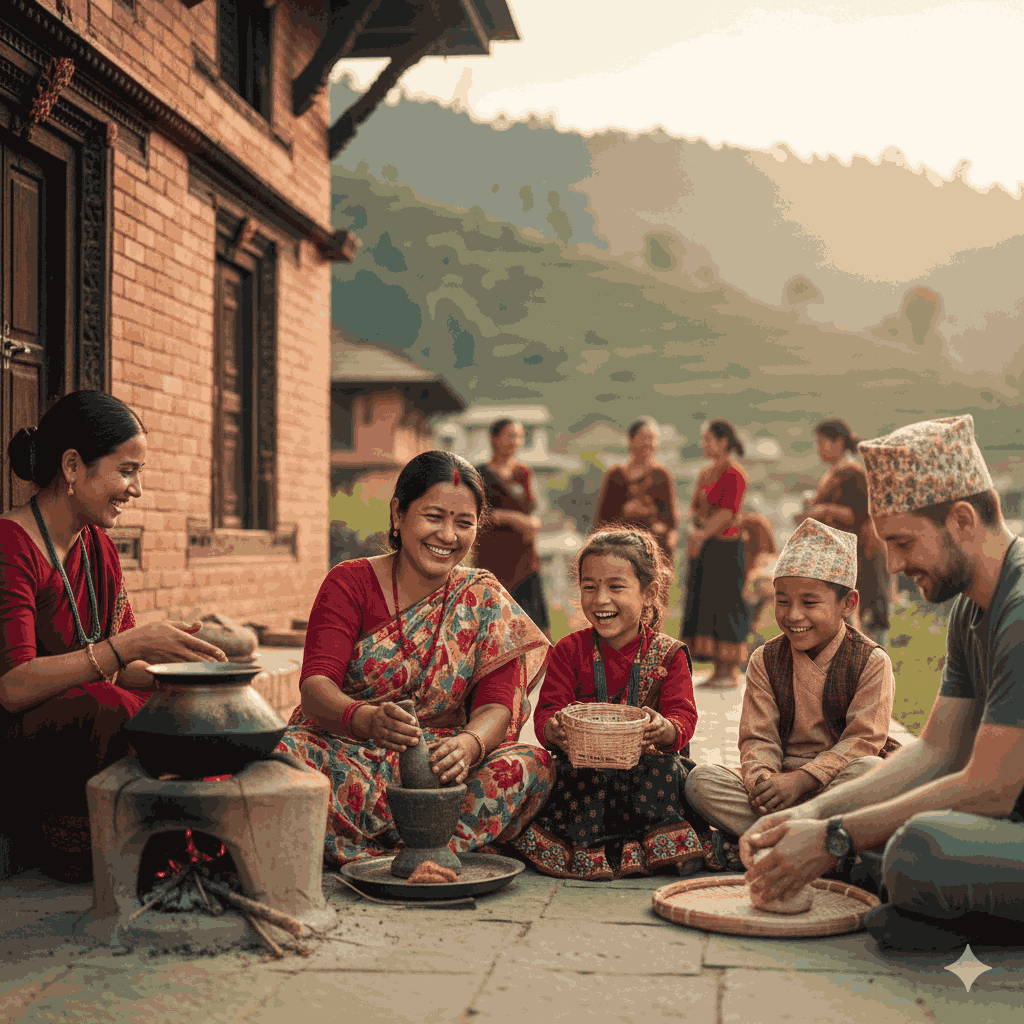
Family participating in community tourism Nepal with traditional cooking and cultural activities
The map of community tourism in Nepal is expanding. Beyond the classic trails, new hubs are emerging that offer profound cultural immersion.
1. Panauti: The Gateway to Newari Heritage
Panauti is a shining example of how community tourism in Nepal can revitalize a historic town. Here, travelers stay in traditional homes, learn to cook Yomari, and participate in the rhythmic life of the Punyamati River. Community tourism in Nepal in Panauti is renowned for its women-led initiatives, empowering local mothers to become successful entrepreneurs.
2. Ghalegaun: The Gurung Cultural Hub
High in the Lamjung district, Ghalegaun offers a pristine look at community tourism in Nepal. Known for its honey-hunting traditions and breathtaking views of the Annapurna range, the village has mastered the art of “community hospitality.” When you visit Ghalegaun through community tourism Nepal, you are welcomed with flower garlands and traditional dances that have been performed for centuries.
3. Narchyang: The Alternative Annapurna Path
Located along the Annapurna Circuit, Narchyang has utilized community tourism Nepal to mitigate overtourism in more crowded areas. It offers travelers a chance to see rare wildlife like snow leopards while supporting a community that relies on sustainable farming and livestock.
Chapter 3: The Rituals of Interaction in Community Tourism Nepal
What does a day in community tourism in Nepal actually look like? It is a series of small, meaningful moments.
The Morning Greeting: Your day in community tourism Nepal starts with a fresh cup of chiya and a heartfelt “Namaste”.
Hands-on Farming: Many community tourism Nepal packages include “Farm-to-Table” experiences. You might find yourself planting rice or harvesting millet, gaining a deep respect for the labor that sustains the nation.
Cooking Classes: Food is the universal language of community tourism in Nepal. Learning to balance the spices in a Dal Bhat is a lesson in Nepali history itself.
Evening Storytelling: In community tourism in Nepal, the night doesn’t end with a TV screen. It ends with stories shared around a clay stove, often involving local legends of mountain gods and ancient kings.
Chapter 4: The Environmental Impact of Community Tourism Nepal

Community tourism Nepal supporting biodiversity protection through local conservation efforts
Sustainability is no longer optional in 2026. Community tourism in Nepal is a leader in “regenerative travel.”
Zero-Waste Initiatives
Many villages involved in community tourism in Nepal have banned single-use plastics. Travelers are encouraged to use filtered water stations, reducing the “plastic footprint” on the trails. Community tourism in Nepal teaches us that we can explore the world without destroying it.
Biodiversity Protection
Income from community tourism Nepal often funds local anti-poaching units. In the Terai, the Tharu communities use tourism revenue to patrol the forests, protecting the endangered One-horned Rhino. This proves that community tourism Nepal is a vital tool for environmental defense.
Chapter 5: 2026 Travel Logistics for Community Tourism Nepal
Planning a trip centered on community tourism Nepal requires a slightly different approach than a standard holiday.
Booking Platforms: Use specialized networks like the Community Homestay Network to find verified community tourism Nepal hosts.
Cultural Etiquette: In community tourism in Nepal, respect is the currency. Always ask before taking photos, dress modestly, and remember that you are a guest in a private home.
Seasonal Timing: While community tourism Nepal is year-round, the festivals of Dashain and Tihar (October/November) offer the most vibrant cultural displays.
Chapter 6: The Future, Rurbanomics and Community Tourism Nepal
As we look toward the end of 2026, a new concept is taking hold: “Rurbanomics.” This is the integration of rural soul with urban efficiency. Community tourism Nepal is the bridge for this transition. By bringing digital nomads and conscious travelers into rural areas, community tourism Nepal is sparking a digital revolution in the hills. High-speed internet is now available in many community tourism Nepal hubs, allowing for “Work-from-Village” setups that provide a much-needed break from city life.
Frequently Asked Questions (FAQs)
Q1: How does community tourism Nepal benefit the local economy?
A: Community tourism Nepal ensures that the majority of traveler spend stays within the village, funding schools, healthcare, and infrastructure.
Q2: Is community tourism in Nepal safe for solo travelers?
A: Absolutely. The communal nature of community tourism in Nepal means you are looked after by the entire village. It is one of the safest ways to travel in Asia.
Q3: Can I participate in community tourism Nepal if I don’t speak Nepali?
A: Yes! Most community tourism Nepal hosts speak basic English, and the language of hospitality and food transcends words.
Q4: What is the best way to support community tourism Nepal?
A: The best way is to stay longer, buy local handicrafts, and share your experiences on social media to encourage other conscious travelers to choose community tourism in Nepal.
Q5: Are there community tourism Nepal options near Kathmandu?
A: Yes, places like Panauti, Kirtipur, and Sankhu are excellent hubs for community tourism in Nepal.
To choose community tourism in Nepal is to choose a path of heart and integrity. In 2026, as travelers become more aware of their impact on the planet, community tourism in Nepal stands as a beacon of what travel should be: a force for good. It is a reminder that the greatest “Highlight of Nepal” is not just the height of the mountains, but the depth of the people. By investing your time and resources in community tourism in Nepal, you are ensuring that the spirit of the Himalayas continues to shine for generations to come.
