
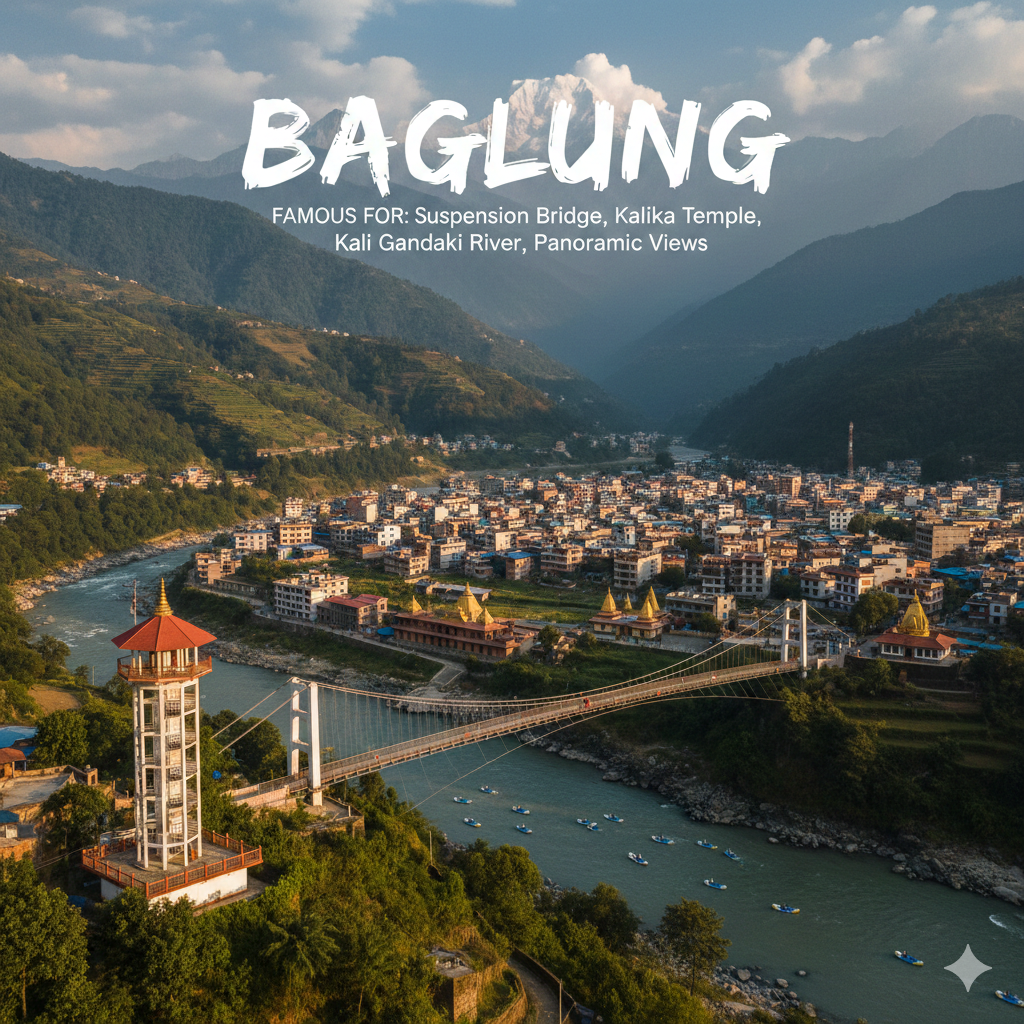
Baglung is famous for its remarkable blend of cultural heritage, breathtaking natural beauty, deep religious significance, and a traditional lifestyle that truly represents the authentic spirit of western Nepal. Located in Gandaki Province, Baglung has historically served as an important gateway connecting the mid-hills with the Himalayan region. This strategic location has shaped its culture, trade, and way of life over centuries.
For travelers who value authenticity over commercial tourism, Baglung offers an experience that feels genuine and deeply rooted in tradition. The district’s peaceful environment, welcoming communities, and unspoiled landscapes make it an ideal destination for those seeking spiritual calm, cultural understanding, and scenic exploration. Baglung is famous for preserving age-old customs while still embracing gradual development.
From sacred hilltop temples and dramatic suspension bridges over roaring rivers to traditional food prepared with local ingredients and untouched villages that reflect rural Nepali life, Baglung is famous for experiences that go far beyond ordinary sightseeing. Every journey through Baglung reveals stories of faith, resilience, and harmony with nature.
This blog explores in detail what Baglung is famous for, highlighting its cultural importance, historical background, natural attractions, and local lifestyle. Whether you are planning a visit or simply learning about Nepal’s lesser-known destinations, Baglung deserves a meaningful place on every Nepal travel itinerary.
1.Its Religious and Spiritual Significance
One of the primary reasons Baglung is famous for pilgrimage tourism is the revered Baglung Kalika Temple. Perched on a scenic hilltop overlooking the powerful Kali Gandaki River, this sacred temple holds immense religious importance for devotees from across Nepal. Dedicated to Goddess Kalika, a fierce manifestation of Shakti, the temple is believed to be a place where prayers are answered and wishes fulfilled.
Baglung is famous for being a major religious center in western Nepal, particularly during auspicious festivals such as Dashain, Navaratri, and Chaite Dashain. During these times, the temple becomes a vibrant hub of devotion, rituals, and cultural gatherings. Thousands of pilgrims climb the hill to offer prayers, light oil lamps, and seek blessings for protection, prosperity, and spiritual strength.
The spiritual atmosphere surrounding Kalika Temple, combined with panoramic views of hills and rivers, makes the pilgrimage both a religious and visual experience. Many visitors describe a deep sense of peace and spiritual connection upon reaching the temple, reinforcing why Baglung is famous for faith-based tourism.
Apart from Kalika Temple, Baglung is famous for numerous smaller shrines, local temples, and sacred sites scattered throughout its hills and villages. These include family deities, ancient stone shrines, and village temples that play a vital role in everyday spiritual life. Together, they reflect the district’s deep-rooted beliefs and strong connection between religion, nature, and community.
This widespread presence of sacred spaces highlights why Baglung is famous for its deep spiritual roots, making it a meaningful destination not only for pilgrims but also for travelers interested in understanding Nepal’s religious traditions and cultural identity.
2. The Iconic Suspension Bridge
Another major reason Baglung is famous for national recognition is the iconic Baglung Suspension Bridge, one of the longest pedestrian suspension bridges in Nepal. Stretching across the mighty Kali Gandaki River, the bridge connects Baglung Bazaar with Kusma and serves as both a crucial transportation link and a popular tourist attraction.
Baglung is famous for this bridge not only because of its impressive length and engineering but also because of the dramatic natural scenery it offers. As visitors walk across the bridge, they are treated to breathtaking views of the roaring river far below, steep rocky cliffs, deep gorges, and lush green hills that define the landscape of western Nepal.
For many travelers, crossing the bridge is an exhilarating experience—especially when gentle swaying adds a sense of adventure. Locals rely on it daily for travel and trade, while tourists visit to enjoy photography, sightseeing, and the thrill of standing above one of the deepest river gorges in the world.
The bridge perfectly symbolizes why Baglung is famous for blending functionality with natural beauty. It represents human resilience and innovation set against a powerful natural backdrop. Over time, it has become one of the most photographed landmarks in the region and a must-visit spot for anyone exploring Baglung.
This combination of practical importance and scenic grandeur further strengthens why Baglung is famous for unique attractions that leave lasting impressions on both domestic and international visitors.
3.Stunning Natural Landscapes
It is famous for its breathtaking scenic beauty, defined by rolling green hills, fertile valleys, winding rivers, cascading waterfalls, and distant mountain views that change character with every season. The district lies along the world’s deepest gorge carved by the Kali Gandaki River, making Baglung not only visually stunning but also geographically significant on a global scale.
Nature lovers often say Baglung is famous for peaceful landscapes that remain largely untouched by mass tourism. Unlike crowded destinations, Baglung offers quiet hilltops, forest trails, and riverbanks where visitors can truly connect with nature. Early mornings bring mist-covered valleys and birdsong, while evenings reward travelers with golden sunsets spreading across layered hills.
Baglung is famous for sunrise and sunset viewpoints that offer magical moments ideal for photography, meditation, and reflection. During spring, blooming rhododendrons color the hillsides, while monsoon seasons turn rivers and waterfalls into dramatic natural spectacles. Autumn and winter provide crystal-clear skies and panoramic mountain visibility, making every season special in its own way.
Because of its strategic location, Baglung is famous for serving as a natural gateway to trekking routes leading toward the Annapurna region and the remote Dhorpatan Hunting Reserve. Trekkers often pass through or start their journeys from Baglung, making it an important hub for adventure tourism in western Nepal.
This rare combination of dramatic geography, serene natural environments, and trekking access further explains why Baglung is famous for its unmatched natural charm, appealing to nature lovers, hikers, photographers, and travelers seeking tranquility away from crowded destinations.
4.Dhorpatan Hunting Reserve
Baglung is famous for hosting the remarkable Dhorpatan Hunting Reserve, the only hunting reserve in Nepal. This rare and unique protected area sets Baglung apart from other districts, giving it special importance in the country’s conservation and tourism landscape. Spread across high-altitude terrain, the reserve is known for its vast alpine meadows, dense forests, rugged hills, and remote wilderness.
Baglung is famous for the incredible wildlife diversity found within Dhorpatan. The reserve is home to rare and protected species such as blue sheep, Himalayan tahr, musk deer, Himalayan black bears, and a wide variety of bird species, making it an attractive destination for wildlife enthusiasts and birdwatchers. The changing altitude and climate zones support rich biodiversity, adding to the ecological value of the region.
Although regulated hunting is permitted in limited areas under strict conservation guidelines, Baglung is famous for attracting many visitors who are not interested in hunting at all. Trekking through Dhorpatan offers breathtaking landscapes, peaceful trails, and untouched natural beauty. Photographers visit to capture dramatic mountain scenery and rare wildlife, while nature lovers come for solitude and exploration.
The reserve also passes through traditional villages where local communities maintain age-old lifestyles, offering travelers cultural insight alongside natural adventure. This blend of conservation, adventure, and cultural exposure further reinforces why Baglung is famous for offering unique experiences that cannot be found elsewhere in Nepal.
Dhorpatan Hunting Reserve stands as a symbol of Baglung’s ecological richness and responsible tourism potential, making it one of the most distinctive attractions in the district.
5.Traditional Nepali Food
Food is another major reason Baglung is famous for cultural authenticity. Traditional dishes are prepared using locally grown ingredients and age-old cooking techniques.
Baglung is famous for foods such as:
- Dhido (buckwheat or millet porridge)
- Dal Bhat with organic vegetables
- Gundruk and sinki
- Sel roti
- Homemade pickles and fermented foods
Baglung is famous for its traditional cooking methods, often using wood-fired stoves that enhance flavor and preserve cultural identity.
6.Rich Cultural Heritage
Baglung is famous for its vibrant cultural life, which is deeply influenced by diverse communities such as the Magar, Gurung, Brahmin, Chhetri, and other ethnic groups. The district’s cultural richness is reflected in its traditional music, folk dances, handicrafts, and rituals that are an integral part of daily life. From morning prayers to evening gatherings, Baglung is famous for preserving centuries-old customs that give visitors a glimpse into authentic western Nepali culture.
Baglung is famous for its lively festivals, which serve as both spiritual observances and community celebrations. Major festivals like Dashain, Tihar, Maghe Sankranti, and local jatras bring people together in joyful gatherings full of music, dance, and traditional rituals. During these times, the streets and temples are adorned with decorations, lights, and offerings, creating a festive atmosphere that enchants both locals and travelers.
Visitors often remark that Baglung is famous for the warmth and hospitality of its people. It is common for guests to be invited into homes to share meals, tea, and conversations during festival times. Experiencing these celebrations firsthand allows travelers to understand why it is famous for maintaining a living cultural heritage, where every village, every festival, and every ceremony tells a story of community, devotion, and tradition.
The district’s cultural vibrancy, combined with its scenic landscapes, makes Baglung a unique destination where nature and tradition coexist harmoniously, further strengthening why Baglung is famous for its authentic cultural experiences in western Nepal.
7. Rural Village Life
One of the most meaningful reasons it is famous for is its authentic village lifestyle, which offers a glimpse into the traditional way of life in western Nepal. The rural communities of Baglung are characterized by terraced farming, stone-built houses, and a strong sense of communal living. Daily life in these villages moves at a slower, more deliberate pace, allowing visitors to experience a lifestyle that is deeply connected to nature and seasonal rhythms.
Baglung is famous for preserving traditional values despite the influence of modernization. In many villages, age-old farming techniques, handcrafts, and local rituals are still practiced, maintaining a living cultural heritage. Walking through these villages, travelers can witness locals cultivating crops such as millet, maize, and rice, tending livestock, and engaging in communal tasks that strengthen social bonds.
Baglung is famous for offering visitors an immersive experience in sustainable living. Staying in village homestays allows travelers to participate in daily routines, share meals prepared from organic ingredients, and gain firsthand insight into the resilience and resourcefulness of rural communities. These experiences highlight why it is famous for its harmonious blend of tradition, nature, and community life, making it a destination that resonates deeply with travelers seeking authenticity.
The charm of Baglung’s villages lies not only in their scenic surroundings but also in the stories, customs, and simplicity of life preserved over generations, further reinforcing why Baglung is famous for its timeless village culture.
8. Agriculture and Farming Practices
Agriculture plays a major role in why Baglung is famous for self-sustaining communities. The district relies heavily on terrace farming, livestock rearing, and seasonal crops.
Baglung is famous for producing maize, millet, rice, vegetables, and dairy products. Traditional farming tools are still widely used, making agricultural life both educational and culturally rich for visitors.
9. Trekking and Hiking Routes
Adventure seekers know that Baglung is famous for short hikes and long trekking routes. Trails pass through forests, villages, rivers, and hilltops, offering diverse experiences.
Baglung is famous for being less crowded than popular trekking hubs, making it ideal for travelers seeking peaceful exploration and authentic encounters.
10. Scenic Viewpoints
Baglung is famous for viewpoints that offer panoramic views of hills, rivers, and distant Himalayan peaks. These locations are perfect for photography, meditation, and relaxation.
Sunrise and sunset viewpoints further reinforce why Baglung is famous for natural serenity.
11. Handicrafts and Local Skills
Baglung is famous for handmade tools, woven items, and traditional craftsmanship. Local artisans create baskets, farming tools, and household items using natural materials.
These crafts reflect Baglung’s self-reliant culture and sustainable lifestyle.
12. Historical Importance
Historically, Baglung is famous for serving as a key trade and cultural route connecting western Nepal with the mid-hills and Himalayan regions. Its strategic location allowed merchants, pilgrims, and travelers to pass through, shaping the district into a vibrant hub of commerce, culture, and tradition over centuries. Ancient settlements, stone pathways, and centuries-old temples still stand as testaments to this historical significance, making Baglung a living archive of Nepal’s western heritage.
Baglung is famous for the stories and legends passed down through generations, preserving oral history, local myths, and cultural identity. From tales of royal travelers to folklore tied to temples and rivers, these narratives provide insight into the district’s rich past and social fabric. Visitors often find that exploring these historical aspects of Baglung adds depth to their travel experience, highlighting why Baglung is famous for blending history, culture, and community life in a way few other districts can match.
13.Warm Hospitality
Visitors often say Baglung is famous for its friendly people. Locals are known for their kindness, humility, and willingness to share stories, food, and traditions.
This genuine hospitality makes Baglung famous for memorable travel experiences.
14. Baglung Is Famous For Off-the-Beaten-Path Tourism
Unlike crowded tourist destinations, it is famous for quiet exploration. Travelers looking for peace, culture, and nature find Baglung refreshing and authentic.
Baglung is famous for being ideal for slow travel and meaningful journeys.
15. Why Baglung Deserves More Recognition
Despite all it offers, Baglung remains underexplored. However, Baglung is famous for qualities modern travelers seek—authenticity, sustainability, and cultural depth.
As tourism grows, Baglung is famous for balancing tradition with gradual development.
For more travel destinations, cultural guides, and detailed trekking information, visit 👉 Explore All About Nepal.
If you need assistance with planning your trip, including guides and hotel bookings, our team can help you arrange everything. You can contact us directly on WhatsApp for personalized support and bookings.
