
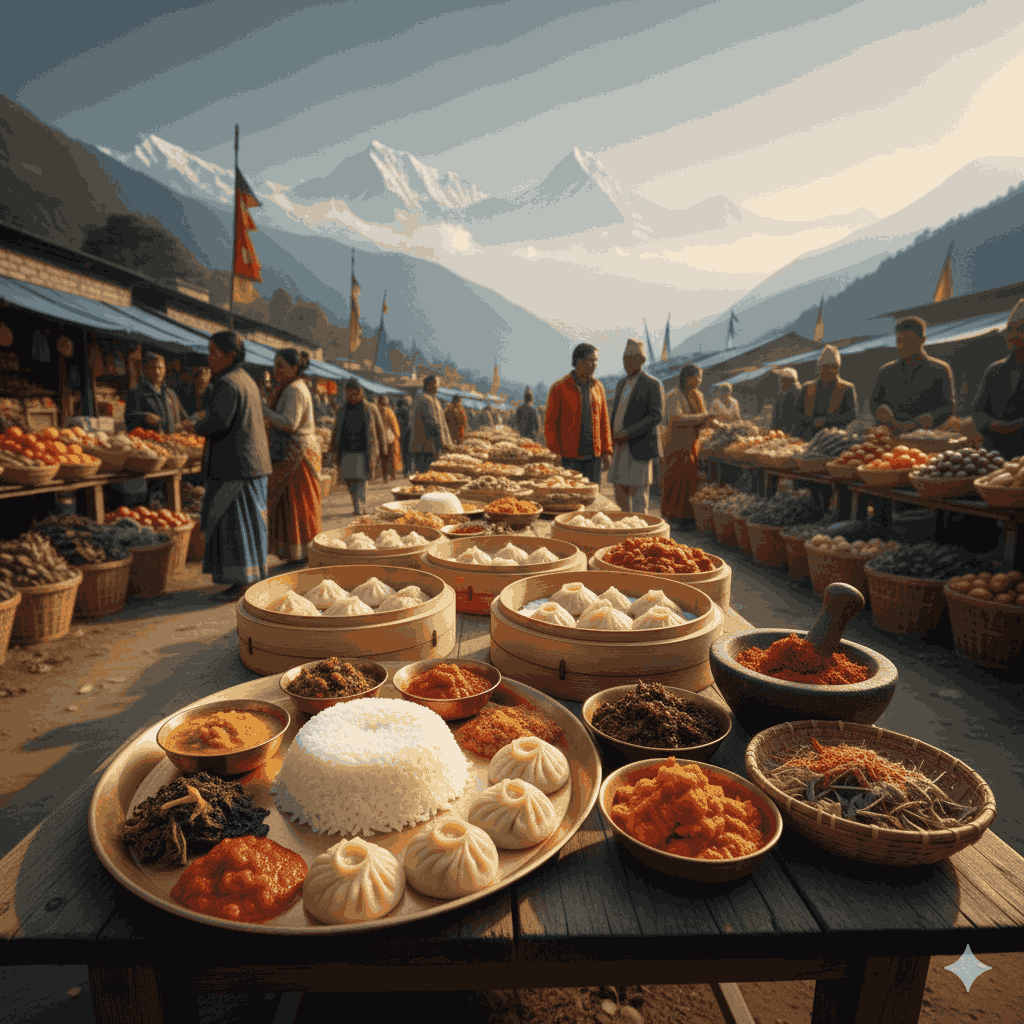
Vibrant scene of local food Nepal in 2026, showcasing colorful dishes from the mountains and plains, emphasizing traditional ingredients and cultural richness.
In 2026, as the global culinary world pivots toward sustainability and fermented superfoods, local food nepal stands as a beacon of ancestral wisdom. To understand Nepal is to taste its soil, its seasons, and its spirit. This local food nepal is not merely about calories; it is a profound expression of hospitality and a testament to the country’s staggering biodiversity. From the sun-drenched plains of the Terai to the oxygen-thin altitudes of the Himalayas, every morsel tells a story of survival, celebration, and sanctity.
While many travelers visit for the jazz festivals and live music in Kathmandu, they often find that the most rhythmic part of their journey is the pounding of spices in a stone mortar. In 2026, local food nepal has gained international acclaim, with cities like Patan being named among the best places to eat globally. This manual dives into the deep, smoky kitchens where this magic happens, offering an exhaustive look at one of the world’s most resilient food systems.
The history of this cuisine is a journey through ancient trade routes. The Newar traders of the Kathmandu Valley once traveled to Tibet, bringing back spices and techniques that forever changed the local food nepal landscape. Meanwhile, the southern plains were influenced by the slow-cooked, aromatic traditions of the Gangetic plains. This mix of high-altitude preservation and lowland abundance creates a culinary profile that is entirely unique.
The Sacred Rhythm of Dal Bhat Tarkari
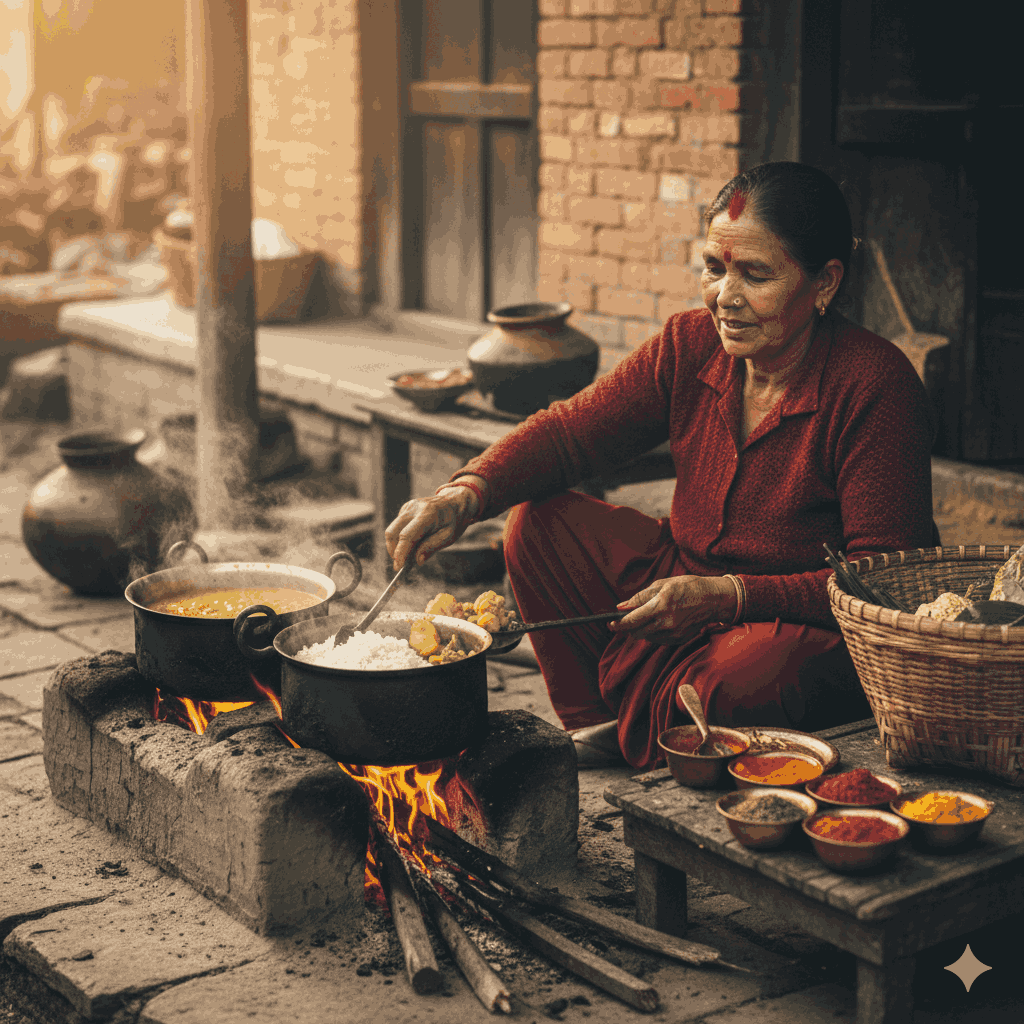
Nepali vendor preparing Dal Bhat Tarkari in a traditional kitchen, highlighting the focus on local food Nepal’s staple cuisine
If local food nepal had a heartbeat, it would be the sound of a pressure cooker whistling at noon. Dal Bhat, consisting of lentil soup and steamed rice, is the undisputed king of the national palate. It is a meal that bridges the gap between the poorest households and the wealthiest urban centers.
The Nutritional Trinity: A standard set includes Dal (protein-rich lentils), Bhat (carbohydrates from rice), and Tarkari (vitamins from seasonal vegetable curry).
The Powerhouse: The famous phrase “Dal Bhat Power 24 Hour” isn’t just a trekker’s joke; it reflects the slow-release energy required for high-altitude farming and mountain life within the local food nepal tradition.
The Ritual of Refills: Hospitality dictates that the host provides unlimited refills of dal and curry until the guest is completely satisfied, a core tenet of local food nepal.
Achar (The Flavor Bomb): No Dal Bhat is complete without Achar—tangy, spicy pickles made from fermented radish, tomato, or even hemp seeds.
In the rural mid-hills, the preparation of this meal is a slow, meditative process. The lentils are often simmered in heavy iron pots called Karai, which leach essential minerals into the soup. The rice is steamed to fluffy perfection, often featuring local varieties like the aromatic Chamre. This daily consistency is what makes local food nepal so grounded and reliable. Even in the modern era of 2026, where fast food is available, the majority of Nepalis still return to the comfort of the family Dal Bhat twice a day.
Newari Cuisine: The Fine Dining of Ancient Kathmandu
The Newar community of the Kathmandu Valley has developed what many consider the most sophisticated branch of local food nepal. Deeply tied to the Sankhu heritage town and the medieval courtyards of Patan, Newari food is a ritualistic explosion of flavors.
Unlike the daily simplicity of Dal Bhat, Newari food is characterized by its extravagance and the sheer number of dishes served during a feast, or Bhoj. A traditional Samay Baji platter is a marvel of culinary engineering. It includes beaten rice, marinated grilled buffalo meat known as Choila, black soybeans, ginger, and various types of lentil pancakes called Bara.
One of the most fascinating aspects of Newari local food nepal is the philosophy of zero waste. In traditional Newari kitchens, every part of the water buffalo is used. Dishes like Sapumhicha, which is stuffed tripe, and Swan Puka, or stuffed lungs, demonstrate a medieval commitment to nose-to-tail eating that has become highly fashionable in 2026. This practice is not just about survival; it is about respecting the life of the animal that provided the meal.
Newari food is also heavily linked to the “Gutthis,” or community organizations. When a festival occurs, the Gutthi organizes the cooking. This communal approach to dining ensures that recipes are passed down exactly as they were hundreds of years ago, preserving the integrity of the local food nepal identity.
Himalayan Staples: Survival in the Clouds
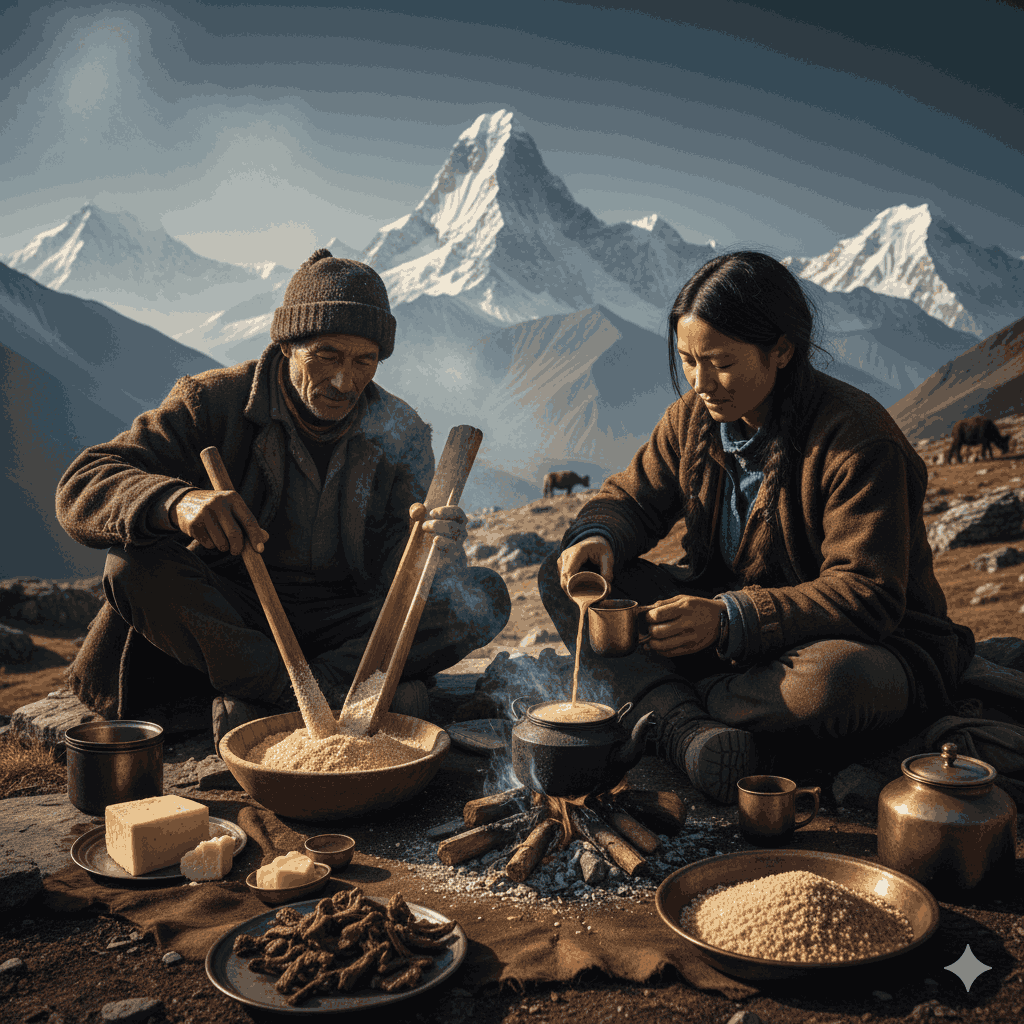
High-altitude Nepali shepherds preparing Tsampa and butter tea, illustrating the resilience of local food Nepal in mountain regions.
As you move higher into the mountains, local food nepal adapts to the extreme cold and limited agricultural windows. Here, the emphasis shifts toward warming, high-calorie foods that can be preserved through long winters.
Dhido: When rice is scarce, Dhido—a thick porridge made from buckwheat, millet, or corn flour—takes center stage. It is eaten by dipping small balls of the dough into a rich soup or ghee.
The Probiotic Masters: Fermentation is a survival tool. Gundruk, which is fermented leafy greens, and Sinki, or fermented radish, are iconic elements of local food nepal that provide essential nutrients when fresh produce is unavailable.
Butter Tea and Tsampa: Influenced by Tibetan traditions, Sherpa and Thakali communities often start the day with Su-Chya, a salt-butter tea that provides the fats necessary for high-altitude insulation.
Tsampa, or roasted barley flour, is perhaps the most portable food in the local food nepal repertoire. It can be mixed with tea or milk to form a quick, nutrient-dense paste, making it the perfect fuel for high-altitude herders and trekkers alike. In 2026, high-altitude lodges have begun offering “Artisanal Tsampa” bowls, blending traditional grains with local honey and nuts, a sign of the evolving local food nepal scene.
The Masters of the Mountain Palette: Thakali Gastronomy
If you ask a local where to find the best food, they will often point to a Thakali kitchen. Originating from the Mustang region, the Thakali people are the legendary hoteliers of local food nepal. Their cuisine is celebrated for its precision, cleanliness, and the unique use of Himalayan herbs.
A traditional Thakali meal is more than just food; it is a harmonious arrangement of lentils, rice, and vegetables. What sets it apart is the quality of the ingredients, specifically the use of Jimbu, an aromatic wild Himalayan allium, and Timmur, a type of Szechuan pepper, to season the lentils. The addition of a spoonful of pure ghee drizzled on top adds a richness that is characteristic of this elite branch of local food nepal.
Thakali restaurants often serve their food in Kansatali, or traditional bronze utensils. These heavy plates are believed to retain heat and impart health benefits to the diner. In the world of 2026, the Thakali style of hospitality—where the host serves the food with a bow and an eagle-eye for refills—is considered the gold standard of local food nepal.
Beyond the Valley: Terai and Kirat Flavors
To truly experience local food nepal, one must travel to the eastern hills and the southern plains.
Kirat Rai Cuisine: In the east, you will find Wachipa, a unique dish made from rice, minced chicken, and the powder of burnt chicken feathers, which gives it a distinct bitter flavor and medicinal properties.
Tharu Delicacies: In the Terai, the Tharu people are famous for Ghonghi (water snails) and Dhikri (steamed rice dough shapes). These dishes reflect a deep connection to the wetlands and river systems of southern Nepal.
Mithila Sweets: The southern plains are also the heart of Nepal’s sweet tradition, with Anarsa and Thekuwa being essential local treats during festivals like Chhath.
These regional variations ensure that local food nepal is never monotonous. Every hundred miles, the language changes, and with it, the contents of the plate.
Frequently Asked Questions About Local Food Nepal
How does the geography of Nepal affect its food?
The varied landscape, from tropical plains to arctic mountains, dictates what can be grown. This diversity has created a local food nepal culture that is incredibly varied, with each altitude offering its own unique ingredients and preservation techniques.
Is local food nepal similar to Indian or Tibetan food? While it shares influences with both neighbors, local food nepal is distinct. It uses less cream and oil than North Indian food and more local herbs and fermentation than Tibetan food. It is a unique bridge between the two great culinary traditions.
What is the best way to experience authentic local food nepal as a tourist?
The best way is to stay in a community-led homestay. This allows you to see the daily rhythm of the kitchen, learn how to grind spices, and eat meals that are prepared for the family, rather than for a commercial menu.
What role does alcohol play in local food nepal? Traditional liquors like Aila (distilled from rice) and Tongba (fermented millet) are central to many ethnic rituals. They are served as a sign of respect and hospitality to guests and are an integral part of the local food nepal social fabric.
How is local food nepal being preserved in 2026?
Through the revival of indigenous grains like buckwheat and millet, the documentation of oral recipes, and the integration of traditional cooking into the global “slow food” movement, local food nepal is stronger than ever.
As we look toward the future, local food nepal remains the ultimate bridge between the past and the present. In 2026, as industrial food systems face challenges, the resilience of the Nepali kitchen,built on local grains, community sharing, and seasonal wisdom,offers a blueprint for the entire world. To taste the food of Nepal is to accept an invitation into a culture that has mastered the art of living well with less.
Whether you are sipping a local tea in a hidden tavern in Patan or sharing a simple bowl of Gundruk in a mountain homestay, you are participating in a tradition that has sustained souls for centuries. This local food nepal is more than a menu; it is a movement of the heart, a celebration of the earth, and a flavor that lingers long after you have descended from the mountains.
The 2026 culinary landscape of Nepal is one of “Selective Adaptation.” We embrace the new, but we never let go of the old. We use 4G to order our groceries, but we still grind our spices on a stone. This balance is the secret to why local food nepal is not just surviving, but thriving.
In the end, the most important ingredient in local food nepal is the people. The warmth with which a plate is offered, the pride in a perfectly fermented pickle, and the insistence that you eat “just one more momo” are what truly define the experience. As you explore the diverse kitchens of this nation, you realize that local food nepal is an invitation to belong.
