
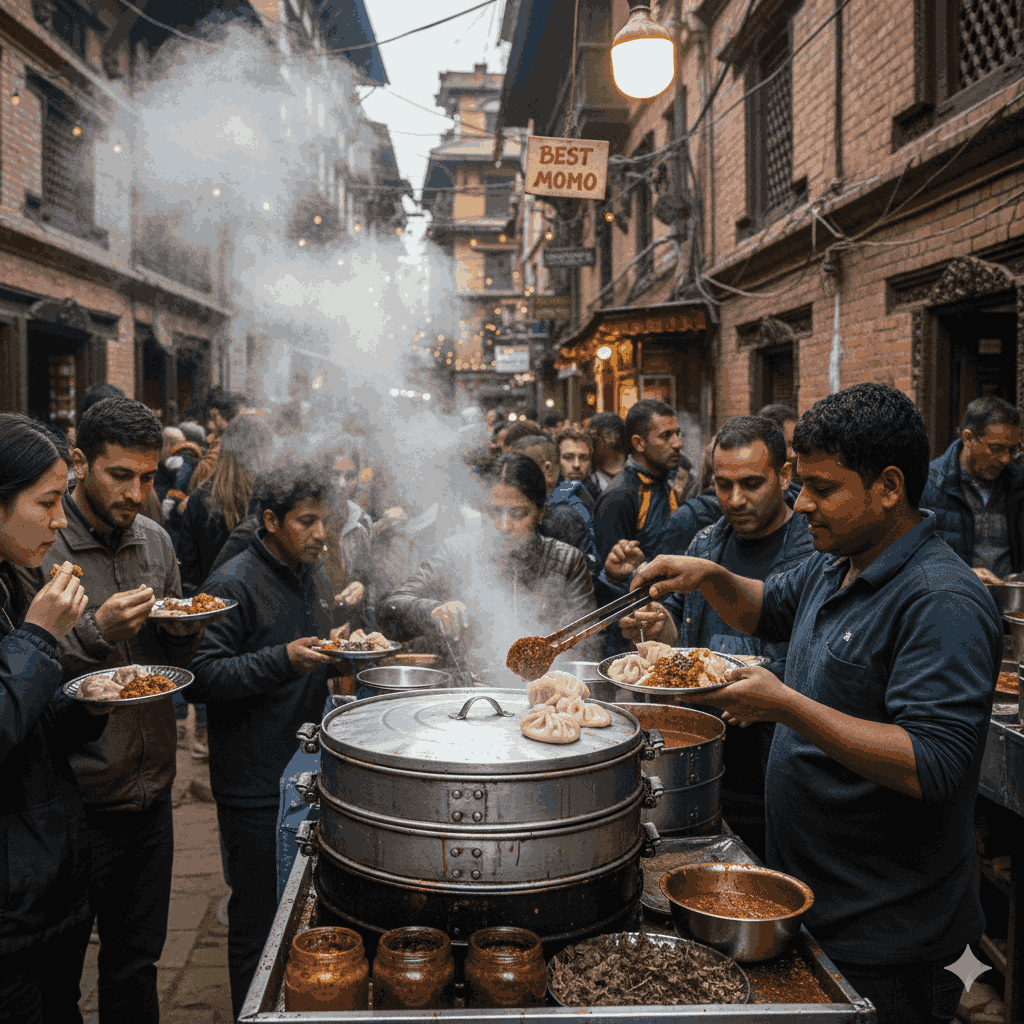
Vibrant scene of the best momo in Kathmandu for tourists being prepared at a bustling street stall in Kathmandu
Prepare your taste buds for an extensive culinary odyssey through the winding gullies and bustling squares of Nepal’s capital. Finding the best momo in Kathmandu for tourists is more than just a search for dinner; it is a rite of passage for every traveler who steps foot in the Himalayas.
If there is one culinary thread that stitches together the diverse fabric of Nepal, it is the momo. Whether you are trekking through the high-altitude silence of the Everest region or navigating the chaotic symphony of Kathmandu’s streets, the sight of a steaming circular metal macha (steamer) is a universal sign of comfort. For a first-time visitor, the quest for the best momo in Kathmandu for tourists can be both thrilling and daunting. Every corner seems to house a “Momo Pasal” (momo shop), each boasting a recipe passed down through generations.
In 2026, the momo scene has reached its zenith. We are seeing a beautiful collision of ancient Tibetan roots, Newari spice profiles, and modern fusion experiments. This guide is your massive roadmap to navigating the spice, the steam, and the soul of Kathmandu’s most beloved dish.
Before we dive into the meat of the matter, if you are planning your logistics, our Things to Do in Kathmandu for 3 Days guide will help you strategically place these food stops between your temple visits.
Part 1: The Historical Roots of the Momo
To find the best momo in Kathmandu for tourists, one must respect its history. While commonly associated with Nepal, the momo’s journey began in Tibet. Newari merchants—specifically the Lhasa Newars—traveling the Silk Road brought the concept back to the Kathmandu Valley between the 15th and 18th centuries.
Evolution of the Dish
The Tibetan Origin: Originally known as “mog mog,” these were simple steamed buns filled with yak meat and few spices.
The Newari Influence: Merchants adapted the recipe using water buffalo (buff) and local spices like cumin, coriander, and ginger, creating what we now call “momocha.”
Commercialization: While once a home-cooked delicacy for wealthy families, momos became a commercial street food phenomenon around the 1940s and 50s.
Today, the best momo in Kathmandu for tourists is a blend of this history and modern innovation. For those interested in the deep heritage of the valley beyond the food, our Bhaktapur ancient city guide offers a look at the medieval world where these culinary traditions first took root.
Part 2: The Hall of Fame , 15 Unmissable Momo Spots
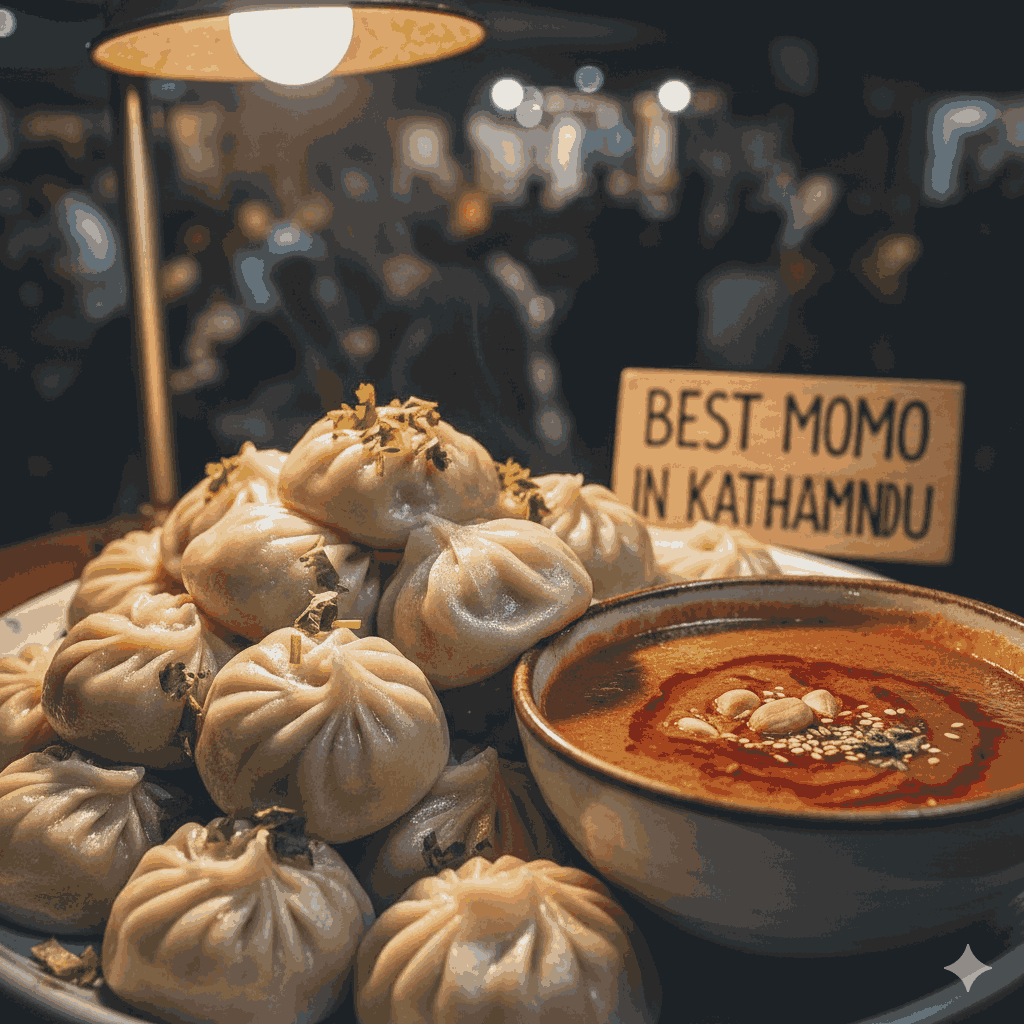
Juicy chicken momos with peanut and soy gravy, one of the best momo in Kathmandu for tourists
Finding the best momo in Kathmandu for tourists requires venturing beyond the polished menus of hotel restaurants. Here are the 2026 champions:
1. New Everest Momo Center (Lekhnath Marg)
A true institution. This is not a place for a romantic dinner; it is a place for a momo pilgrimage.
The Signature: Only buff momos are served here.
The Secret Sauce: It’s all about the creamy “jhol” (soup). Unlike spicy tomato chutneys, their sauce is a rich, peanut-and-soy-based gravy.
Vibe: Fast-paced, crowded, and authentic.
2. Yangling Tibetan Restaurant (Thamel)
Consistently voted as having the best momo in Kathmandu for tourists by international travelers.
Top Pick: Their Chicken Kothey (half-fried, half-steamed) is world-famous.
Why it works: The dumplings are large, the dough is thin, and the filling is exceptionally juicy.
3. Ghangri Sui Mai (Pulchowk & Lazimpat)
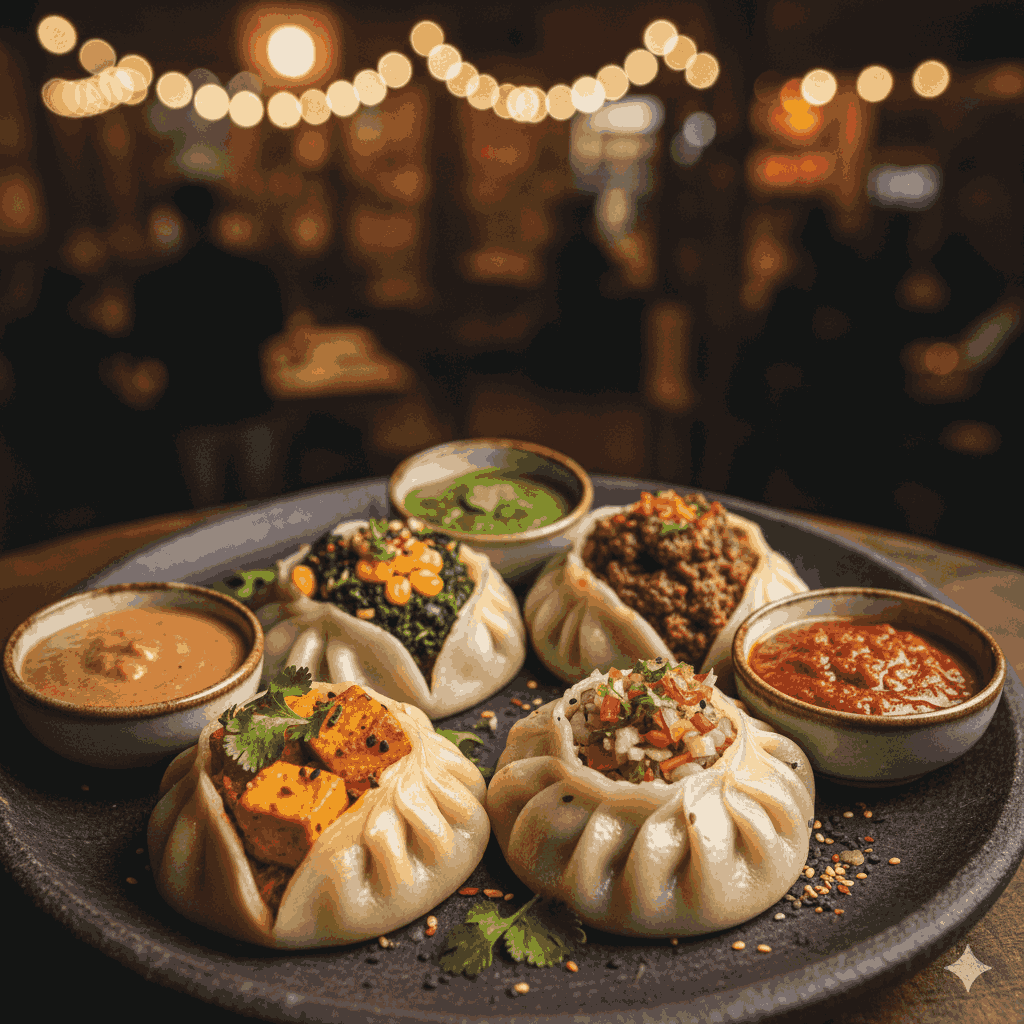
Open-style momos with multiple chutneys, showcasing the innovative best momo in Kathmandu for tourists
The pioneers of the “Open Momo.” These are not sealed at the top, leaving four distinct “pockets.”
Interactive Eating: You pour three signature chutneys (peanut, mint, and tomato) directly into the openings.
Reputation: Known for high hygiene standards, making it the best momo in Kathmandu for tourists with sensitive stomachs.
4. Narayan Dai Ko Masangalli Ko Famous Momo
Operating for over five decades, this is a local legend located near Basantapur.
Cultural Experience: This shop serves momos with a rich, spicy red chili paste that is a favorite among spice-loving locals.
5. Bagmati Sweets (Tripureshwar)
For vegetarians, this is the gold standard for the best momo in Kathmandu for tourists.
Paneer Perfection: Their Paneer Momos are soft, fresh, and paired with a tangy tomato achar.
Pro Tip: Arrive between 11:30 AM and 2:00 PM; they often sell out early!
6. Shandar Momo (Basantapur/New Road)
A classic street food experience. They serve their momos in a “tapari” (leaf plate), offering a truly eco-friendly and traditional feel.
7. Bota Momo (Various Locations)
A successful modern chain. Bota has modernized the best momo in Kathmandu for tourists by offering varieties like “Crunchy Momo” and “Momo Chaat” in a clean, fast-casual setting.
8. Dalle Restaurant
Famous for its “Dalle Achar” (made from the extra-spicy round chilies of Nepal), this place offers some of the best momo in Kathmandu for tourists looking for heat. They even serve pork and mushroom options.
9. Mo:MoLa Palpasa Café
Located near JP Road, this café is famous for its Momo Platter, which includes everything from savory fillings to dessert options like Chocolate Banana Momos.
10. Great Tasty Momo (Sanepa)
Formerly known as “Boso Rahit Momo” (Fat-Free Momo), this spot is known for serving healthy, lean meat fillings, making it a top contender for the best momo in Kathmandu for tourists who are health-conscious.
Part 3: Deciphering the Momo Menu (The 2026 Glossary)
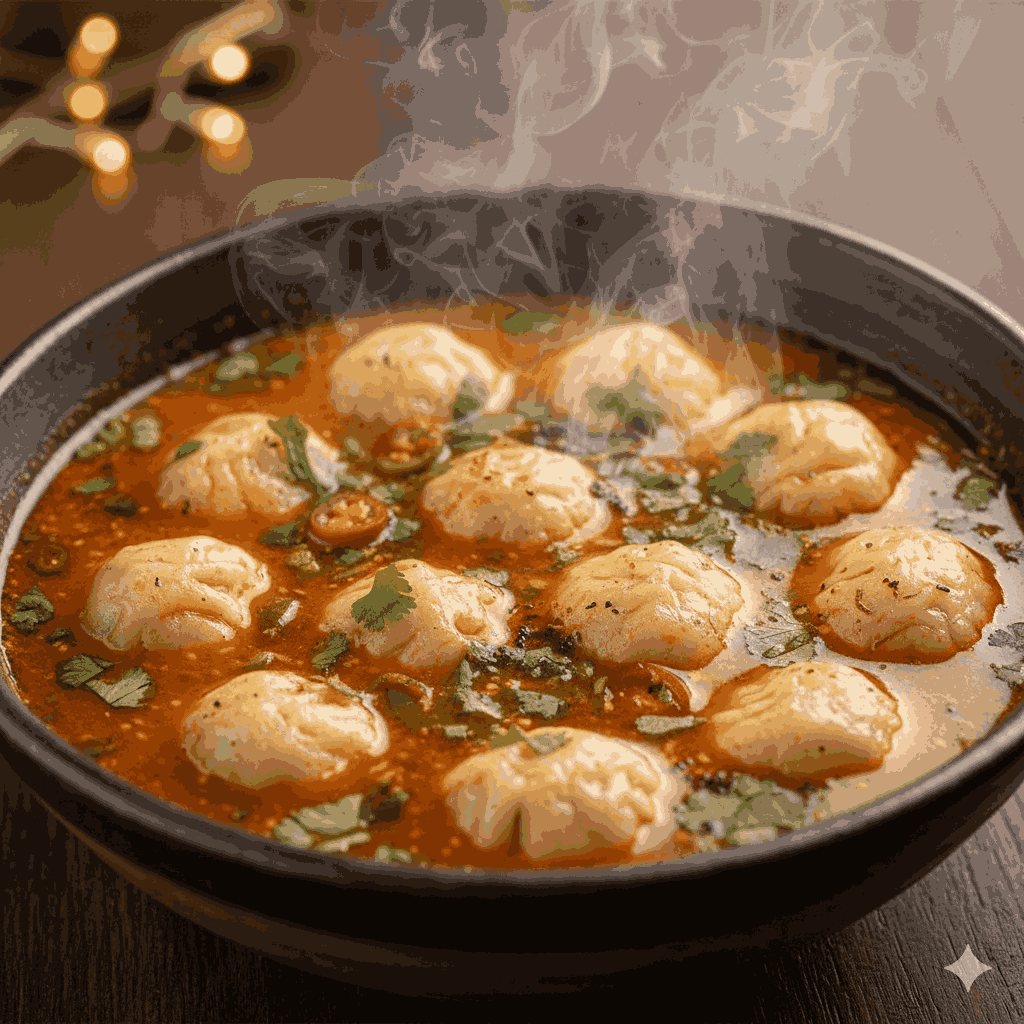
Spicy Jhol Momo in flavorful broth, a signature dish of the best momo in Kathmandu for tourists
To order the best momo in Kathmandu for tourists, you must speak the local lingo. Here is your comprehensive cheat sheet:
Steamed (Classic): The pure form. The taste of the meat and spices shines through.
Kothey: Half-pan-fried. The contrast in texture—crispy bottom and soft top—is what makes this a tourist favorite.
Jhol Momo: Dumplings drowned in a bowl of spicy, tangy liquid sauce (jhol achar).
C-Momo (Chilli): Fried momos tossed in a spicy, stir-fry-style sauce with onions and bell peppers. Caution: This is often the spiciest item on the menu.
Sadheko: A cold “momo salad” where the dumplings are marinated with raw garlic, mustard oil, and fresh coriander.
Tandoori: A modern fusion where momos are marinated in yogurt and spices, then charred in a clay oven.
Open Momo (Sui Mai): A flower-shaped dumpling with four holes at the top for pouring sauce.
Part 4: The Art of the Achar (The Sauce)
The best momo in Kathmandu for tourists is nothing without its sauce. In Nepal, the sauce is called Achar.
Tomato & Sesame: The most common variety. It’s tangy, nutty, and mildly spicy.
Jhol Achar: A thin, soup-like sauce usually made from roasted soybeans or peanuts, seasoned with timmur (Szechuan pepper).
Dalle Achar: Made from the fiery “Dalle Khursani” (round chilies), this is only for those who can handle extreme heat.
According to culinary historians at Saveur, the secret to a great momo is the ratio of fat to meat in the filling, which ensures a “juice burst” with every bite.
Part 5: Health, Hygiene, and Ethical Eating
While street food is the soul of Nepal, we want you to stay healthy. When searching for the best momo in Kathmandu for tourists, keep these safety rules in mind:
Look for Crowds: High turnover equals fresh ingredients.
Water Safety: Only eat Jhol momos at reputable restaurants that use purified water.
Steam is Safe: Steaming at high temperatures kills most bacteria.
Vegetarian Benefits: If you are unsure about meat quality, vegetable and paneer momos are often the safer, yet equally delicious, choice.
For more on staying healthy while visiting shrines, read our Pashupatinath Temple evening Aarati time guide, which covers ritual etiquette and local snacks.
Part 6: Momo-Making Workshops and Cultural Significance
If you want to go beyond just eating the best momo in Kathmandu for tourists, consider a hands-on experience:
Cooking Classes: Many organizations in Thamel offer 3-hour workshops where you learn to fold the 15+ different types of pleats.
Symbolism: In many households, the circular shape of the momo represents the cycle of life, and the pleats represent prosperity.
Social Fabric: Making momos is a communal activity in Nepal. Families gather to roll dough and mix fillings, much like the communal spirit found at major Religious Places in Nepal.
Resources for the Foodie Traveler
FAQs (Frequently Asked Questions)
1. What is the average price for a plate of momo in 2026?
Street vendors charge 180–300 NPR ($1.50–$2.50). Higher-end cafes in Thamel or Jhamsikhel may charge 450–900 NPR ($4–$7).
2. How many pieces are in a standard serving?
Almost everywhere in Kathmandu, a standard plate consists of 10 pieces.
3. What is “Buff” meat? “Buff” refers to water buffalo meat. It is leaner than beef and is the most traditional filling in the Kathmandu Valley.
4. Can I find vegan momos in Kathmandu?
Absolutely. Places like Loving Heart in Thamel and Utpala Café offer 100% vegan vegetable and tofu momos.
5. Is the sauce (Achar) always spicy?
Most are mildly spicy, but “Jhol” can be quite tangy. If you are sensitive to spice, always ask for “Piro Chaina” (Not spicy).
Finding the best momo in Kathmandu for tourists is a personal journey through the history and heart of Nepal. Whether you fall in love with the creamy soup at New Everest or the crispy crunch of a Kothey in Thamel, you are participating in a living tradition. The momo is more than a dumpling; it is the hospitality of the Nepali people wrapped in a thin layer of dough.
