
Every travel article about Kathmandu food eventually lands on the same three words: “momo,” “dal bhat,” and “Thamel.” Then it lists five restaurants with a stock photo of dumplings and moves on.
This is not that article.
Kathmandu has one of the most layered, underrated, and genuinely delicious urban food cultures in Asia and almost none of it exists on the menus that international travel writers ever see. The best local restaurants in Kathmandu are not in guidebooks. They are in the old Newar neighbourhoods behind Asan Tole. They are in the residential lanes of Jhamsikhel and Patan. They are in the kind of places where the English menu is an afterthought, the seating is a low wooden stool, and the woman cooking in the back has been making the same dal bhat set since 1987.
Best Local Restaurants in Kathmandu
We live here. We know where to eat.
This guide covers every food category that matters in Kathmandu in 2026 Thakali, Newari, momos, rooftop cafes, street food, dal bhat joints with real prices in NPR, honest reviews, neighbourhood context, and the kind of specific, local knowledge that no London or Sydney travel writer can give you.
Before You Eat: The Essential Kathmandu Food Pricing Guide
Understanding Kathmandu restaurant pricing before you sit down saves you from the most common tourist mistake: ordering in a tourist-facing restaurant and paying three times what the identical meal costs one street over.
| Category | Price Range per person | What you get |
|---|---|---|
| Street food / local stalls | NPR 80–250 (~$0.60–$2) | Momo plate (10 pcs), sel roti, chatpate, tea |
| Local dal bhat joints | NPR 200–400 (~$1.50–$3) | Full dal bhat set, unlimited refills |
| Authentic Newari/Thakali restaurants | NPR 350–800 (~$2.50–$6) | Full thali/set with multiple dishes |
| Mid-range local restaurants | NPR 500–1,200 (~$4–$9) | Full meal with drinks |
| Tourist-area restaurants (Thamel) | NPR 800–2,000 (~$6–$15) | Same food, tripled price |
| Cultural dining / heritage restaurants | NPR 1,400–4,000 (~$10–$30) | Multi-course feasts with cultural performance |
The most important note: Many Kathmandu restaurants add a 10% service charge plus 13% VAT that is a 23% addition to your bill. Most local, non-tourist restaurants do not add these. Always ask “service charge ra VAT lagcha?” before ordering if you want to avoid surprise additions.
Part 1: The Best Thakali Restaurants in Kathmandu
Thakali food is Nepal’s most beloved cuisine after dal bhat and for good reason. Originating from the Thak Khola valley in Mustang, Thakali cuisine is built around the same thali format as dal bhat but elevated: ghee-polished rice, black kidney bean soup (dum) that takes hours to cook, buckwheat preparations, Himalayan spices including the aromatic jimbu herb, and a mustard greens pickle that has no equivalent anywhere else.
The best Thakali restaurants in Kathmandu are where locals go for a proper meal. If you see Nepali families at every table at lunchtime, you are in the right place.
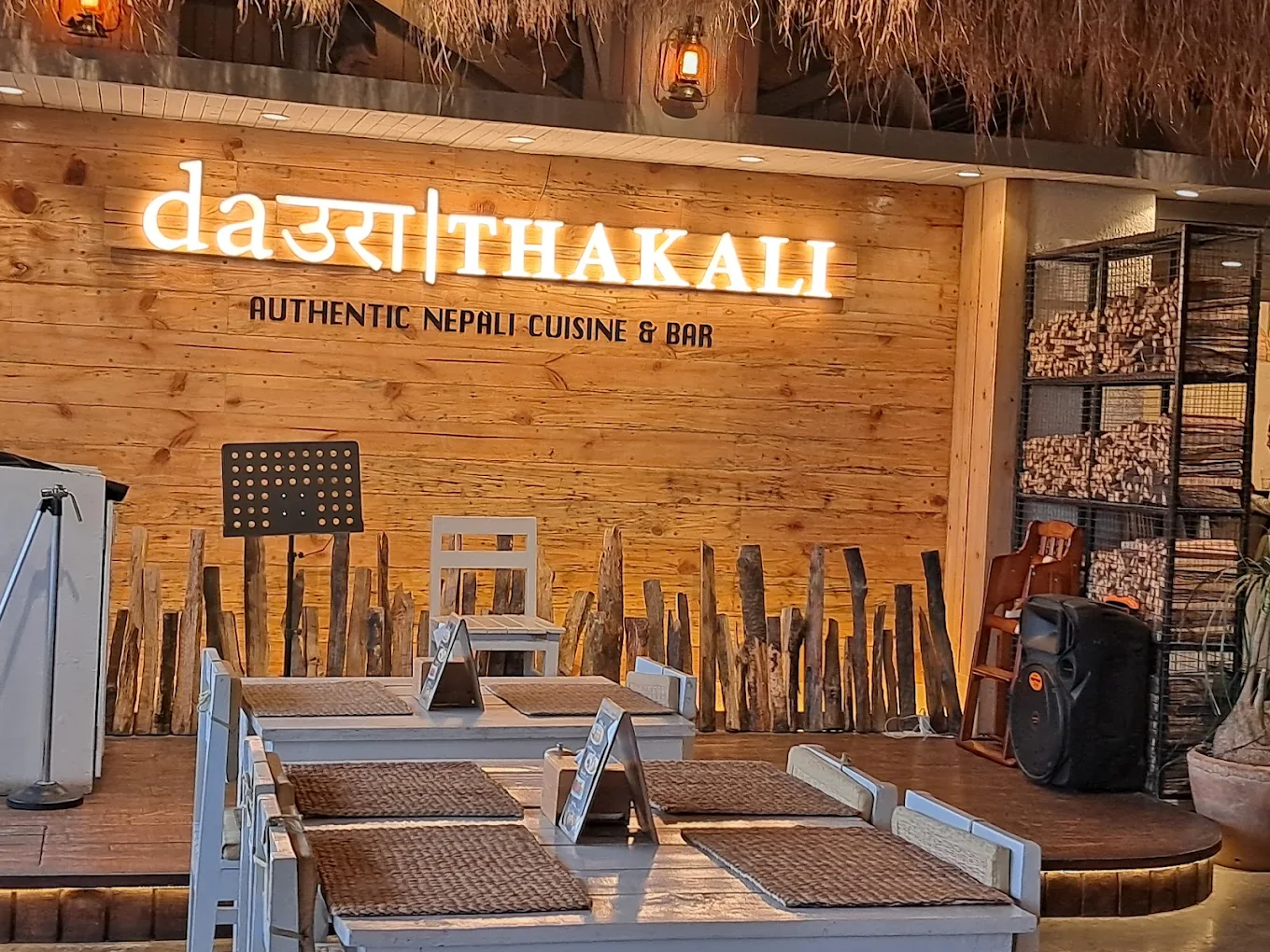
1. Daura Thakali — The City’s Best-Known Thakali Institution
Daura Thakali
Locations: Nayabazar, Gairidhara, Pulchowk, Pepsicola Budget per person: NPR 500–900 (~$4–$7) Best time to go: Lunch (11:30am–2pm) | Dinner (6pm–9pm)
Daura Thakali, from the founders of the Bota Group, is the name that comes up most consistently when Kathmandu locals discuss where to take someone visiting for the first time. It has four branches across the city, each with a slightly different character the Nayabazar branch is the one to visit for evenings, with live cultural music and performances that turn a meal into a proper event. The Pulchowk branch has a rooftop with a good valley view. The Gairidhara branch suits families with a kids’ play area.
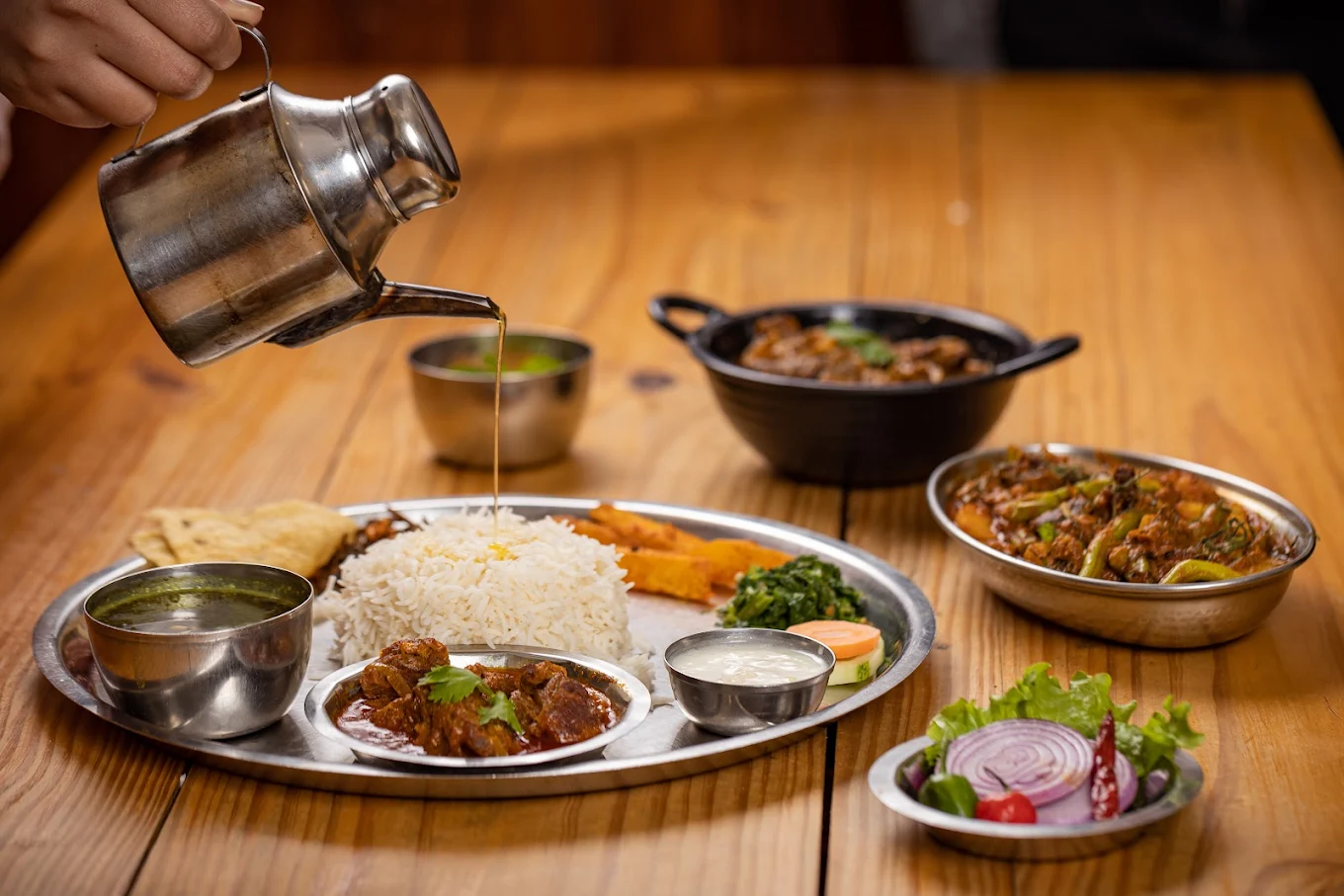
The Thakali khana set is the draw: ghee-drizzled rice that arrives shining, dum (slow-cooked black kidney beans with a richness that reminds you why some dishes take all day), a rotating selection of seasonal vegetables, gundruk pickle, and the mustard-leaf achar that is simultaneously the simplest and most addictive condiment in Nepali cooking.
What locals order beyond the set: Mustang aloo (Mustang potatoes floury, salted, unlike anything from the plains), mutton momo as a side dish, and spicy chicken wings if you want something to drink around.
Honest review summary: Consistently praised for freshness, hygiene, and authenticity. The Nayabazar branch gets crowded by 7pm on weekends arrive early or book ahead. Some reviewers note it can feel slightly commercial compared to smaller family-run options, but the food quality justifies the reputation.
2. Jimbu Thakali — The Authentic Family Kitchen
Jimbu Thakali
Location: Tangal, Kathmandu Budget per person: NPR 400–700 (~$3–$5.50) Best time to go: Lunch (the chicken Thakali disappears early)
Jimbu Thakali in Tangal is the place that serious Kathmandu food people recommend when they want the real thing rather than the popular thing. The chicken Thakali here has a reputation that precedes it locals describe it with the quiet certainty of people who have found something they trust completely: fresh, flavorful, cooked with the balance of spice and ghee that distinguishes a good Thakali kitchen from a great one.
The restaurant itself is unassuming. There is no design language, no Instagram moment in the dining room. What there is: a kitchen run by people who understand the food they are cooking, and a thali that consistently delivers on what Thakali cuisine is supposed to be.
What to order: Chicken Thakali set. The black kidney bean dum. If available, the Mustang aloo. Do not skip the gundruk.
Price note: More affordable than Daura, and many regulars prefer it precisely because of that less busy, more personal, the food arrives faster.
3. Tukche Thakali Kitchen — Village Food in the City
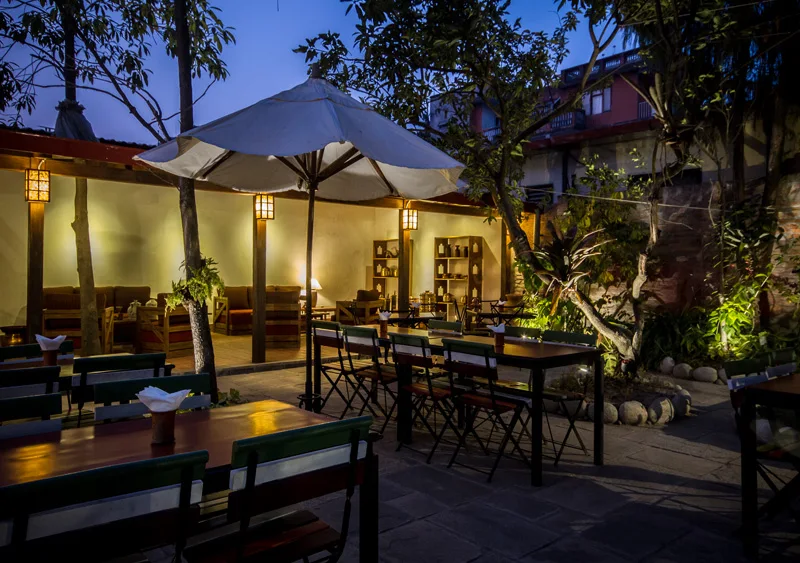
Tukche Thakali Kitchen
Location: Central Kathmandu (Thamel-adjacent) Budget per person: NPR 450–750 (~$3.50–$6)
Tukche Thakali Kitchen takes its name from Tukche village in the Kali Gandaki valley one of the heartland communities of Thakali culture and sources its ingredients and recipes accordingly. This is a family-run restaurant with the specific quality of cooking that only comes from someone who grew up eating this food, not someone who learned it from a cookbook.
The kitchen uses fresh local produce sourced from Kali Gandaki region villages, and that provenance shows in the taste. The goat meat curry here gets strong reviews from regulars: slower-cooked than most, with a depth that suggests patience rather than shortcuts.
Honest caveat: Some recent reviews note portion sizes have become variable, particularly the paneer Thakali check quantities before ordering if this matters to you.
4. Mantra Thakali — Best for Mutton Lovers
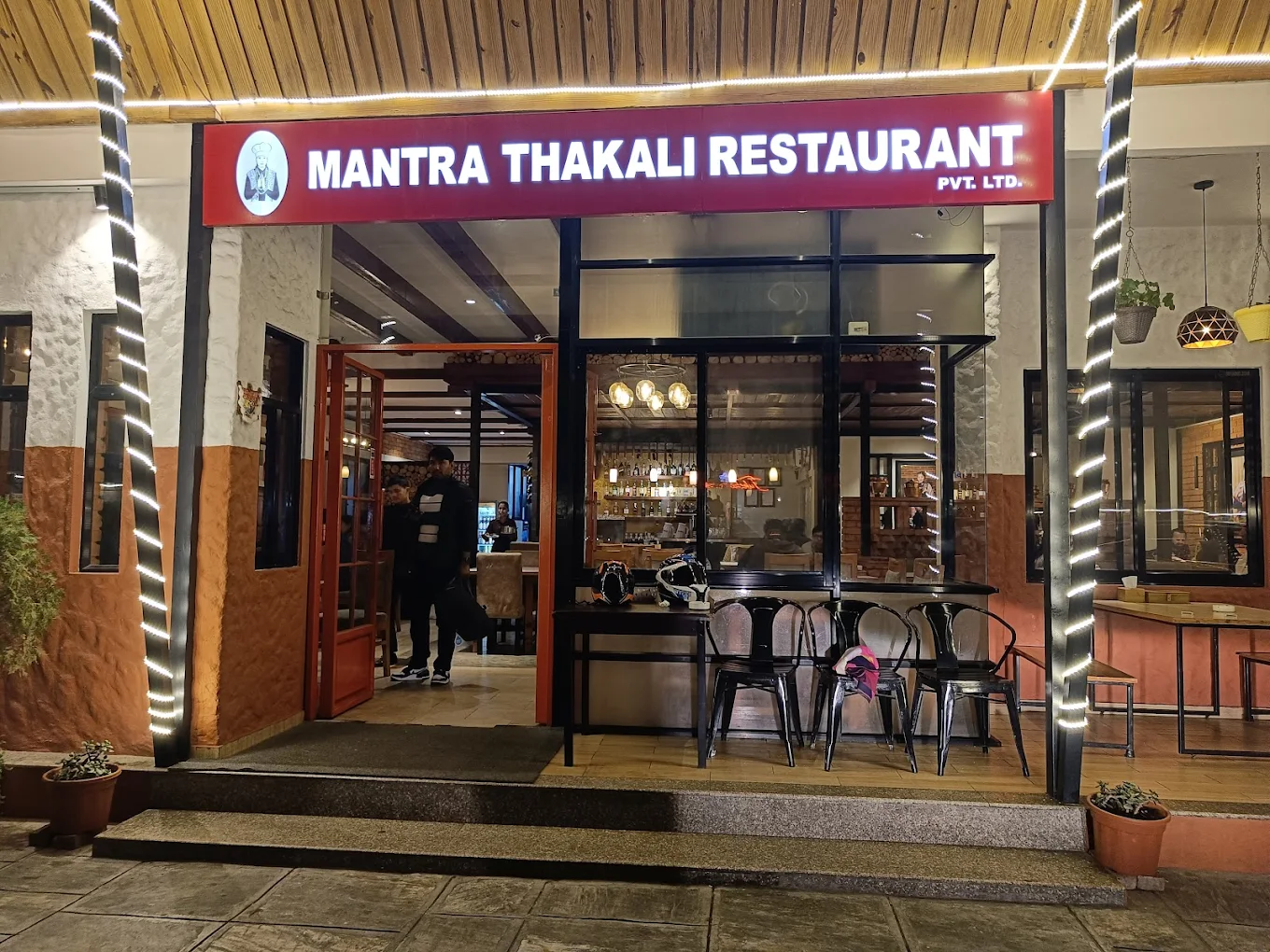
Mantra Thakali
Locations: Jhamsikhel and Maharajgunj Budget per person: NPR 500–850 (~$4–$6.50)
Mantra Thakali has a specific fan base in Kathmandu mutton eaters. The mutton preparation here stands out in a city where mutton is common: well-seasoned, properly rendered, without the gamey edge that less careful kitchens produce. The Jhamsikhel branch is particularly popular with the residential neighbourhood crowd meaning it serves a lot of locals who could walk somewhere else if the food wasn’t consistently good.
What to order: Mutton Thakali set. Mustang aloo. The black kidney bean soup. Ask if the seasonal special is available.
Part 2: Best Newari Restaurants in Kathmandu — Eating the Food of the Valley’s Original People
Newari cuisine is Kathmandu’s deepest food tradition developed over centuries by the Newar people, the indigenous inhabitants of the Kathmandu Valley, and historically reserved for festivals, ritual occasions, and community celebrations. It is also some of the most complex, fermented, and boldly flavored food in South Asia.
Understanding the basics before you order makes the experience significantly better:
- Samay baji: The centerpiece Newari platter beaten rice (chiura) surrounded by buff chhoila (spiced grilled water buffalo), bara (black lentil patties), boiled egg, fried/fermented items, pickle, and sometimes aloo tama (potato-bamboo shoot soup). This is the ritual food of the Newar people, eaten at festivals and rites of passage.
- Buff chhoila: Grilled water buffalo, marinated in mustard oil, spices, and fresh garlic. The definitive Newari meat dish. One of the great things to eat in Asia if you have not tried it.
- Chatamari: Often called the “Newari pizza” a rice flour crepe topped with minced meat, egg, or vegetables. Light, crispy-edged, completely unique.
- Bara: Black lentil patties, fried until crisp on the outside and soft inside. Eaten as a snack or as part of a samay baji set.
- Yomari: A steamed dough dumpling filled with chaku (molasses) or sweet khuwa. The iconic Newari sweet available during Yomari Punhi festival but findable year-round at good Newari restaurants.
- Aila: The traditional Newari rice spirit, distilled in-house by many restaurants. Sharp, clear, and far stronger than it looks.
- Kwati: A soup of nine different sprouted beans, traditionally served during the festival of Janai Purnima. Rich, nutritious, and available at many Newari restaurants year-round.
5. Harati Newari Restaurant — The Local Neighborhood Gem
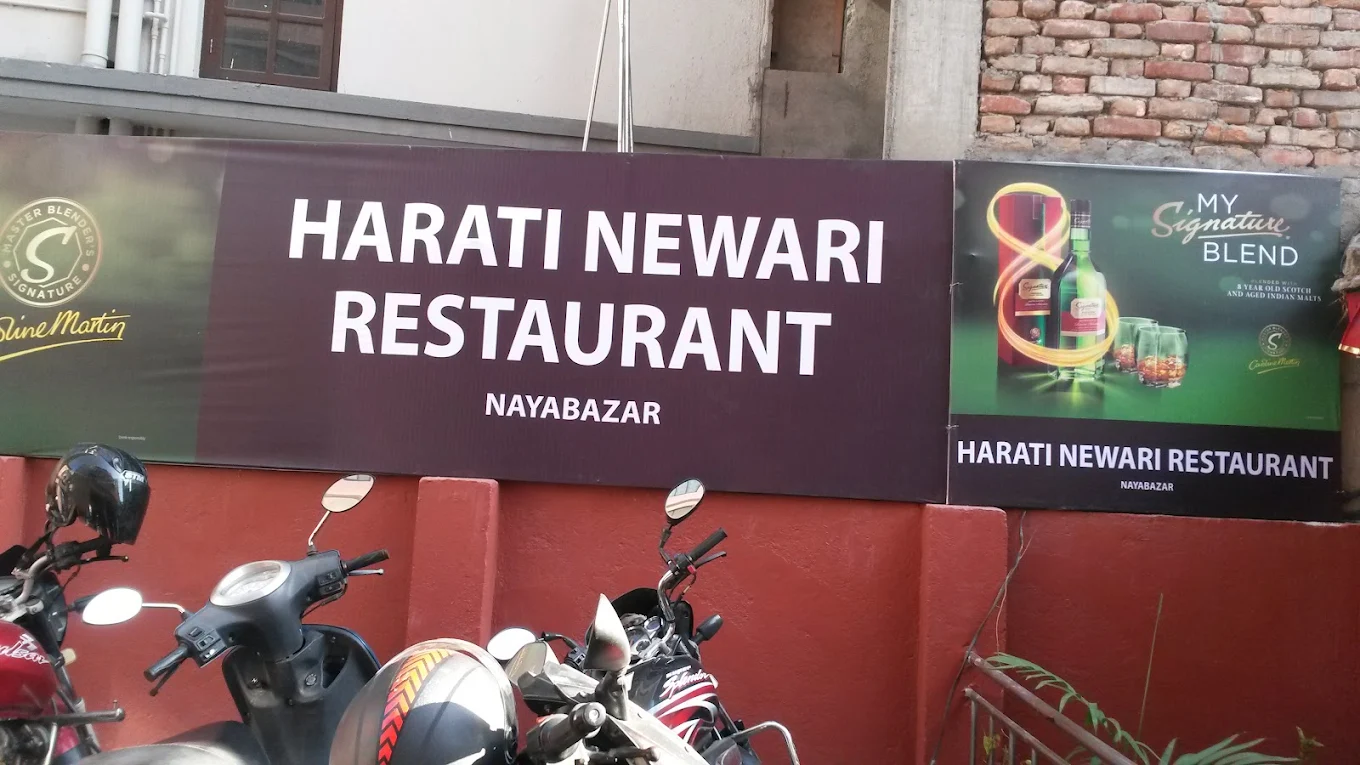
Harati Newari Restaurant
Location: 10 minutes’ walk from Thamel center (ask for directions locally) Budget per person: NPR 400–800 (~$3–$6) Vibe: Authentic, crowded on weekends, no design pretensions
Harati is consistently the restaurant that Kathmandu locals recommend to travelers who want the real Newari experience, not the tourist version of it. The restaurant sits about ten minutes’ walk from the heart of Thamel, just far enough that casual tourists rarely find it, which means the crowd is mostly Nepali.
The chhoyela here roast water buffalo in mustard oil and spices gets superlatives from both local and international reviewers with unusual consistency. One Tripadvisor reviewer described it as the best restaurant in Kathmandu and went every night of their stay. The chhoyela is the reason.
Important note: There is no English menu. Go with a basic knowledge of what you want to order (buff chhoila, bara, samay baji set, aloo tama), or ask the staff to guide you they are described uniformly as helpful and patient with international visitors. For Newari food adventurers: the kachilaa (raw minced water buffalo) is available here and is safe to eat the restaurant prepares fresh daily and serves high volumes, which is why the dish is trusted.
What to order: Buff chhoila (non-negotiable), bara, samay baji set, aloo tama soup. For the brave: kachilaa. Wash down with aila.
Crowd warning: Book ahead on weekends the restaurant fills completely and the kitchen closes 30 minutes before closing time.
6. Newa Ghasa — Traditional Floor Seating, Live Music Every Evening
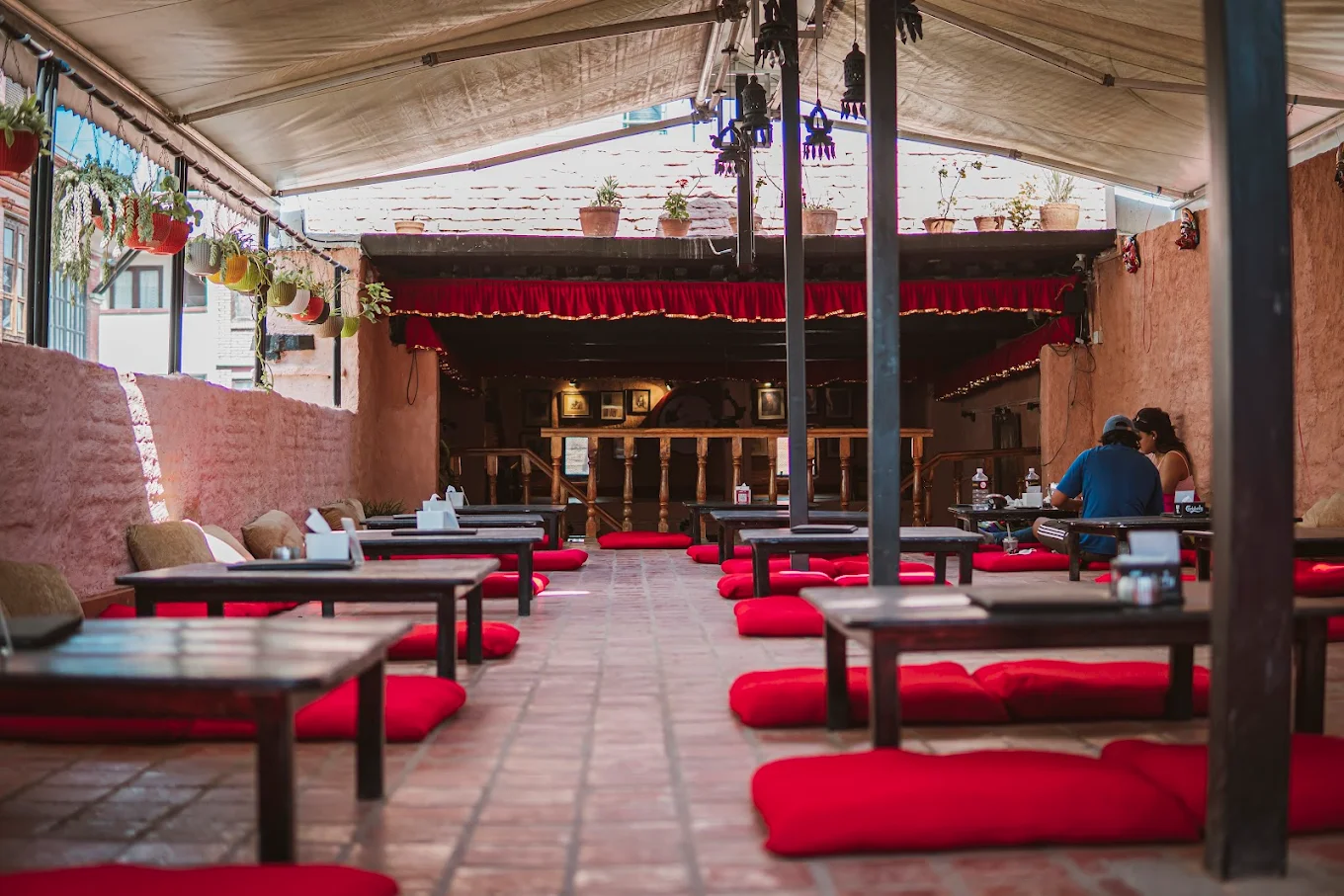
Newa Ghasa
Locations: Basantapur, Patan, Sorakhutte, Maharajgunj Budget per person: NPR 450–850 (~$3.50–$6.50) Vibe: Atmospheric, traditional, great for groups
Newa Ghasa has four branches across the valley and a formula that works: traditional sukul (floor seating on straw mats), staff in Newari attire, an extensive menu of authentic dishes, and live music almost every evening. It is slightly more polished than Harati but still genuinely local not a tourist performance.
The Basantapur branch sits in the heart of the old city and is the best entry point for first-time visitors to Newari food: the menu is comprehensive, the staff are accustomed to explaining dishes, and the setting an old Newari building near Durbar Square adds context to what you are eating.
What to order: Buff chhoila, chicken chhoila (if available), chatamari (mixed topping), samay baji, sukuti (dried meat), bamboo shoots. In the evening, the buff chilli pairs well with aila and live music.
7. Newa Lahana — Best Value, Multiple Locations
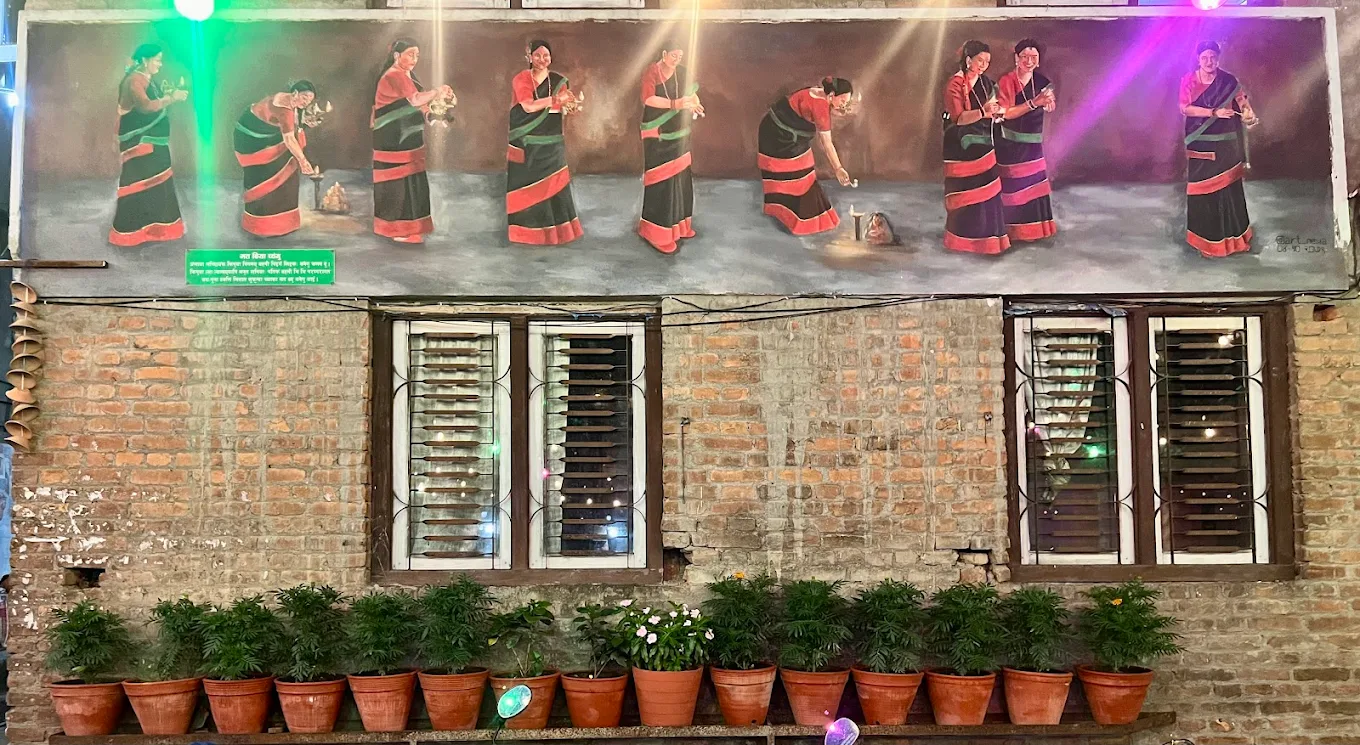
Newa Lahana
Locations: Kirtipur, Bhaktapur, Tokha, Kamaladi Budget per person: NPR 350–700 (~$2.50–$5.50) Vibe: Relaxed, affordable, perfect for solo travelers
Newa Lahana is the Newari restaurant that Kathmandu residents who eat Newari food regularly not for special occasions, but as everyday meals tend to default to. Four locations across the valley means accessibility. The Kamaladi branch in central Kathmandu is the most convenient for travelers staying in Thamel. The Kirtipur branch, on the rim of the valley with views across to the mountains on clear days, is the one worth making a journey for.
Prices are reasonable even by Kathmandu standards a full samay baji set with aila here is an extraordinary value. The chatamari is consistently good; the buff momo (available as a separate order) gets strong reviews from regulars.
Good for: Solo travelers, first-timers to Newari food, anyone who wants excellent food without spending much.
8. Bhojan Griha — The Heritage Dining Experience Worth Splurging On
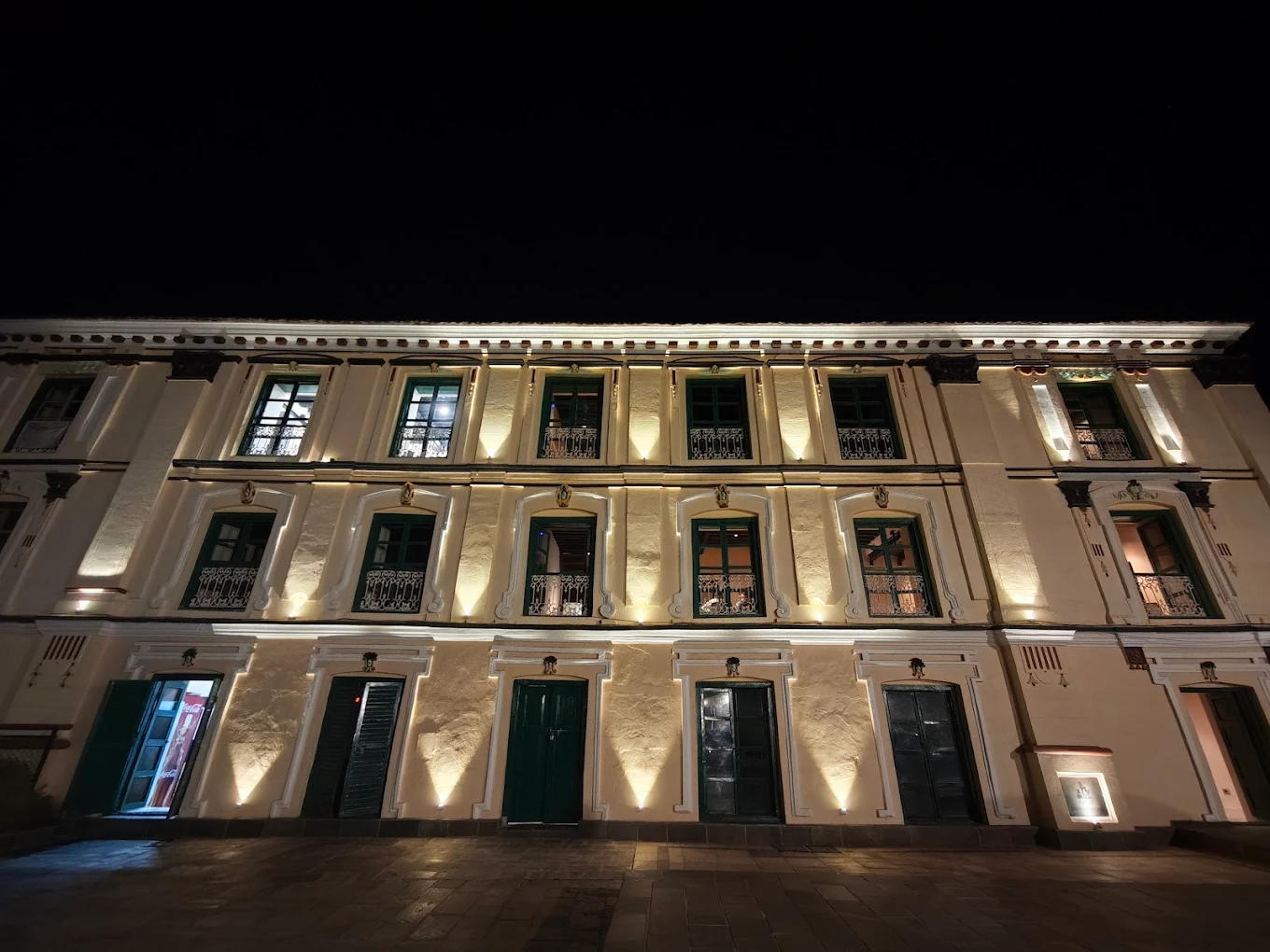
Bhojan Griha
Location: Dillibazar, Kathmandu Budget per person: NPR 1,800–2,500 (~$14–$19) including cultural performance Vibe: Special occasion, tourist-friendly but genuinely good
Bhojan Griha operates inside a 150-year-old building that was once home to Rana-era royalty. It is more expensive than any other restaurant on this list by a significant margin, and it is worth flagging that context: this is tourist-targeted heritage dining, not a local canteen.
But here is the honest assessment: it is good. The 5-course Newari feast is well-executed, the traditional dances from various regions of Nepal are genuinely entertaining rather than perfunctory, and the setting ancient wood carvings, oil lamps, a courtyard that has seen centuries is atmospheric in the way that money sometimes successfully buys.
One TripAdvisor reviewer called it “a tourist trap but a good one,” which is probably the most accurate three-word review in Kathmandu. The raksi (home-brewed rice spirit) is included. The food will not disappoint. Go on a night when you want an event rather than a meal.
What it costs: Approximately USD 20–30 per person for the full cultural dinner set. Worth it once.
Part 3: Best Momo Restaurants in Kathmandu — Because This Deserves Its Own Section
The momo is not a side dish in Nepal. It is not a starter. It is not a snack. In Kathmandu, the momo is a cultural institution a gathering food, a comfort food, a food that people queue for, argue about, and build loyalties around that last decades. Understanding momo varieties before you order significantly expands your options:
| Momo Type | Description |
|---|---|
| Steamed (Pakeko) | The classic. Thin dough, juicy filling, served with tomato or sesame chutney |
| Fried (Taareko) | Crispy exterior, same filling. Better texture for some |
| Kothey | Half-fried, half-steamed — the bottom pan-fried, the top steamed. Juicy inside, crisp base |
| Jhol momo | Served in a rich, peanut-and-sesame-based soup broth. The Kathmandu winter specialty |
| C-momo / Chilly momo | Deep-fried then tossed in a spicy sauce. Street food favorite |
| Open momo | Unsealed at the top, four open “pockets” — a Kathmandu innovation |
| Buff momo | Water buffalo filling — the traditional Kathmandu original |
| Kachilaa momo | Raw buffalo momo, served at specialist restaurants only |
Standard price reference: Street vendors NPR 150–300 (~$1–$2.50) per plate of 10 pieces. Mid-range restaurants NPR 300–600. Tourist-area cafes in Thamel NPR 450–900.
9. Yangling Tibetan Restaurant — Best Overall Momo in Kathmandu
Location: Satghumtee, Kathmandu (Thamel-adjacent — the restaurant has moved; use Google Maps to find current location) Budget per person: NPR 250–500 (~$2–$4) Vibe: Casual, family-run, consistently excellent
Yangling comes up in nearly every serious discussion of the best momo in Kathmandu. It is a Tibetan restaurant which matters, because Tibetan-style momos have a slightly different character from Nepali ones: larger, with a more substantial dough and a filling that tends toward juicier, more generous seasoning.
The fried chilly momos here are the thing to order: deep-fried first, then tossed in a sticky, warm sauce that is flavored with heat without being numbing. They are described by multiple reviewers as some of the best they have eaten anywhere.
Note: The restaurant is clean, family-run, and maintains standards that make it trustworthy for travelers with sensitive stomachs. Arrive before 6pm to avoid the longest waits. Pork chilly momos: NPR 250.
10. Newa Mo:Mo Restaurant — The Hole-in-the-Wall Institution
Location: Kwabahl, Thahity, Thamel Marg (down a small alley look for signs) Contact: +977 9803925602 Budget per person: NPR 90–250 (~$0.70–$2) Vibe: Tiny, family-run, no frills, extraordinary value
Newa Mo:Mo is the kind of restaurant that travel writers find by accident and then tell everyone about quietly because they are slightly afraid it will get too crowded. It is genuinely tiny a few tables in a clean, simple space accessed through a small alley in Thamel. The momo are made fresh, cooked to order, and served with care.
The buff momo and potato-cheese momo are both outstanding. The spinach and cheese momo is worth ordering if you want something lighter. Prices start at NPR 90 among the lowest for quality momo in Kathmandu.
The restaurant also runs momo cooking classes, which is worth knowing if you want to take the skill home with you.
Honest verdict: This is the most authentic momo experience available within walking distance of Thamel. Find it. Go twice.
11. Aambo Momo — The Locals’ Hole-in-the-Wall
Location: Multiple branches around Kathmandu including Thamel Budget per person: NPR 150–250 (~$1–$2) Vibe: Packed with locals, bar-stool seating, no atmosphere beyond the food itself
Aambo Momo is a chain in the loosest sense multiple branches, minimal design, maximum momo. The dough is described consistently as ultra-thin and light, the filling well-seasoned. What sets Aambo apart is the trio of sauces: mild, medium, and straight chili flakes, used in combination to build your own heat level.
When a restaurant is consistently packed with locals at peak hours, that is the only review that matters. Aambo qualifies. At NPR 150 for a plate approaching the price of street food it is also the easiest recommendation to make.
Part 4: Best Dal Bhat Restaurants in Kathmandu — Nepal’s National Dish Done Right
Dal bhat is not a tourist dish. It is what Nepal runs on the twice-daily meal of steamed rice, lentil soup, vegetable curry, and pickle that fuels everyone from office workers to Everest trekkers. The phrase “dal bhat power, 24 hour” is a Nepali expression, not a marketing slogan.
The best dal bhat in Kathmandu is found not in restaurants at all but in neighborhood kitchens and local canteens where the set is refillable and the cook has made it ten thousand times. Look for:
- Small local canteens near Asan Tole, Naya Bazaar, and the market lanes around Durbar Square
- Neighborhood “bhojanalayas” (food houses) in residential areas of Patan, Kirtipur, and Bhaktapur
- Markets near bus parks, where working-class locals eat and the dal bhat is fresh, cheap, and consistently good
Price guide for dal bhat: Local canteens NPR 150–300 (~$1–$2.50), unlimited rice and dal refills standard. Mid-range restaurants NPR 350–600. The best dal bhat you will eat in Kathmandu costs NPR 200 and the woman who cooks it does not have a TripAdvisor listing.
Part 5: Best Rooftop Cafes in Kathmandu — For When You Want the View
Kathmandu is a city of rooftops. The old city’s buildings are low enough that a third-floor terrace gives you a skyline of pagoda temples, prayer flags, and, on clear mornings, the Himalayan snow line Langtang, Ganesh Himal, the white teeth of the range rising above the valley rim.
12. Cafe du Temple — Boudhanath’s Best View
Location: Boudha Road, near Boudhanath Stupa, Kathmandu Contact: +977 1 4489002 Budget per person: NPR 400–900 (~$3–$7) Best for: Morning coffee, afternoon momo, evening drinks with stupa views
Cafe du Temple sits directly opposite Boudhanath Stupa one of the largest Buddhist stupas in the world with a roof terrace that makes every meal feel like a cultural event. The momo are decent rather than outstanding (NPR ~250), but the context elevates everything: watching monks in maroon robes circumambulate the stupa while you drink your coffee is an experience that no amount of interior design can replicate.
Best visited in the morning (7–9am) when the stupa is quiet and the light is extraordinary, or in the late afternoon when the butter lamps begin to be lit.
13. Penthouse Rooftop Bar and Lounge — Durbar Marg Views
Location: Durbar Marg, Kathmandu Budget per person: NPR 800–1,800 (~$6–$14) Best for: Evening drinks, city skyline, after-dinner drinks
Penthouse is the Kathmandu rooftop for evenings modern design, cocktails, live music on weekends, and a view of the city that proves Kathmandu is more beautiful from above than from within its traffic. It skews more expensive than everything else on this list but delivers on atmosphere in a way that makes it worth the splurge once.
Part 6: Street Food in Kathmandu You Should Not Miss
The best food in Kathmandu is often not in restaurants at all. Here is what to eat on the streets, where to find it, and what to pay.
Chatpate — NPR 50–100
Puffed rice tossed with onion, tomato, green chili, sev, and tamarind-spiced water. The most common street snack in Kathmandu, found at every corner cart. Best eaten at one of the pushcarts around Asan Tole or Indra Chowk.
Sel Roti — NPR 30–60 each
A deep-fried ring doughnut made from rice flour, slightly crispy outside, chewy inside. A Nepali festival food that is eaten year-round at street stalls. Find it near Pashupatinath, around Bhaktapur’s Durbar Square, and at morning markets across the valley.
Chatamari from street stalls — NPR 80–150
Some of the best chatamari in Kathmandu costs under NPR 150 and comes from small stalls in Newari neighborhoods — particularly around Ason Tole, Patan Durbar Square, and the lanes of Bhaktapur’s old city.
Aloo Tama (Bamboo Shoot Potato Soup) — NPR 150–250
Bamboo shoots fermented then cooked with potato, black-eyed beans, and spices into a soup that is simultaneously sour, earthy, and deeply warming. Available in Newari restaurants but also as a bowl from street kitchens in old Kathmandu.
Juju Dhau (Bhaktapur Only) — NPR 100–200 for a clay pot
The best yoghurt in Nepal, produced in Bhaktapur and available nowhere else at the same quality. Thick, slightly sweet, set in traditional clay pots. If you visit Bhaktapur for any reason — and you should — eating Juju Dhau at one of the small clay-pot sellers near Bhaktapur Durbar Square is non-negotiable.
Kathmandu Food by Neighbourhood: Where to Eat and Why
Thamel: Convenient but overpriced. Good for international food, rooftop cafes, and a few excellent local spots that have survived the tourist markup. Always walk one street back from the main drag for cheaper, better food.
Asan Tole / Indra Chowk: The old bazaar heart of Kathmandu. Best for street food, morning sel roti, chatpate, and the kind of tidy-but-basic Newari food that has no TripAdvisor listing and needs none.
Patan / Lalitpur: The most food-forward neighbourhood in the valley for local cuisine. The residential lanes south of Patan Durbar Square have some of the best Newari and local restaurants in Kathmandu — more authentic, less crowded, and 30% cheaper than comparable Thamel options.
Jhamsikhel: Kathmandu’s expat neighbourhood and the city’s most interesting food street. A mixture of excellent local restaurants (Mantra Thakali), European-style cafes, and wine bars. Good for an evening when you want options.
Bhaktapur: Not technically Kathmandu but 30 minutes away and completely worth it for Newari food, Juju Dhau, and the best chatamari you will eat anywhere. The old city’s food scene is built for locals, not tourists.
Boudhanath: The Tibetan enclave of Kathmandu. Best for momos (particularly Tibetan-style), thukpa noodle soup, and butter tea. The lanes around the stupa have dozens of small Tibetan restaurants that are generally excellent and cheap.
Essential Food Vocabulary for Ordering in Kathmandu
| Nepali term | What it means | Order it? |
|---|---|---|
| Buff | Water buffalo meat | Yes — try buff chhoila and buff momo |
| Chhoila | Spiced grilled meat in mustard oil | Yes — a Newari essential |
| Chiura | Beaten/flattened rice | Yes — the base of samay baji |
| Dal bhat | Lentil soup + rice | Yes — every day |
| Gundruk | Fermented leafy greens | Yes — try the pickle |
| Jimbu | Himalayan herb used in Thakali cooking | Yes — what makes Thakali unique |
| Piro chaina | Not spicy (what to say if you can’t handle heat) | Know this phrase |
| Dhanyabad | Thank you | Always |
| Kati ho? | How much does it cost? | Always useful |
Frequently Asked Questions: Eating in Kathmandu 2026
Is street food in Kathmandu safe to eat?
For most travelers: yes, with common sense. Stick to cooked food (avoid raw salads and pre-cut fruit). Choose busy stalls with high turnover volume means freshness. Start with steamed momo or dal bhat if you have a sensitive stomach. Carry basic stomach medication as a precaution and drink bottled or purified water only.
What is the cheapest good meal in Kathmandu?
A full dal bhat set with unlimited rice and dal refills costs NPR 150–300 (~$1–$2.50) at a local canteen. A plate of 10 momo from a local stall costs NPR 150–200. You can eat extraordinarily well in Kathmandu on USD 5–8 per day if you eat where locals eat.
Should I tip in Kathmandu restaurants?
Tipping is appreciated but not compulsory. At restaurants that add service charge and VAT (the 23% total), tipping is not expected. At local restaurants without these charges, leaving NPR 50–100 for a good meal is a thoughtful gesture. Never tip less than you would comfortably spend on a bottle of water.
What is buff meat and is it safe?
Buff is water buffalo. It is Nepal’s most common red meat leaner than beef, darker in color, with a slightly stronger flavor. It is the traditional filling for Kathmandu momo and the primary meat in Newari cuisine. It is entirely safe when cooked; raw buff dishes like kachilaa are safe at high-volume, reputable Newari restaurants where preparation is daily and fresh.
What time do Kathmandu restaurants serve dal bhat?
Local canteens serve dal bhat from approximately 11am–2pm for lunch, and 6pm–8:30pm for dinner. Many smaller local places stop serving by 8pm. Tourist-area restaurants serve all day.
Can I eat well as a vegetarian in Kathmandu?
Completely. Nepal has a strong tradition of vegetarian cooking many Hindu households are vegetarian, and vegetarian versions of dal bhat, chatamari, bara, Thakali sets, and momo are available everywhere. Tell the restaurant “shakahari” (vegetarian) when ordering.
The Bottom Line: Eating in Kathmandu in 2026
The best food in Kathmandu costs almost nothing and requires only the willingness to walk one street past the tourist menu, sit on a low wooden stool, and trust that the woman who has been cooking this dal bhat for thirty years knows something a Thamel restaurant does not.
The restaurants in this guide are not exhaustive. Kathmandu’s food scene changes, expands, and surprises. New Newari restaurants open in Patan every season. A family in Jhamsikhel decides to serve the Thakali food they have always cooked at home. A street stall in Asan Tole produces chatpate that the whole neighbourhood queues for.
Eat wherever the queue is longest. Eat where the staff are eating their own lunch. Eat anywhere that smells of ghee and jimbu and fresh achar. You will not go wrong.
Spotted a restaurant we missed, or has a place changed since this was published? Leave a comment below we update this guide regularly from Kathmandu.
