
Planning to trek one of Nepal’s most iconic routes? Then your preparation starts with building the perfect Annapurna Circuit Packing List. This trek is not just about walking it’s about adapting to changing climates, high altitudes, and unpredictable mountain weather. Having the right gear can make the difference between an unforgettable adventure and a difficult, uncomfortable experience.
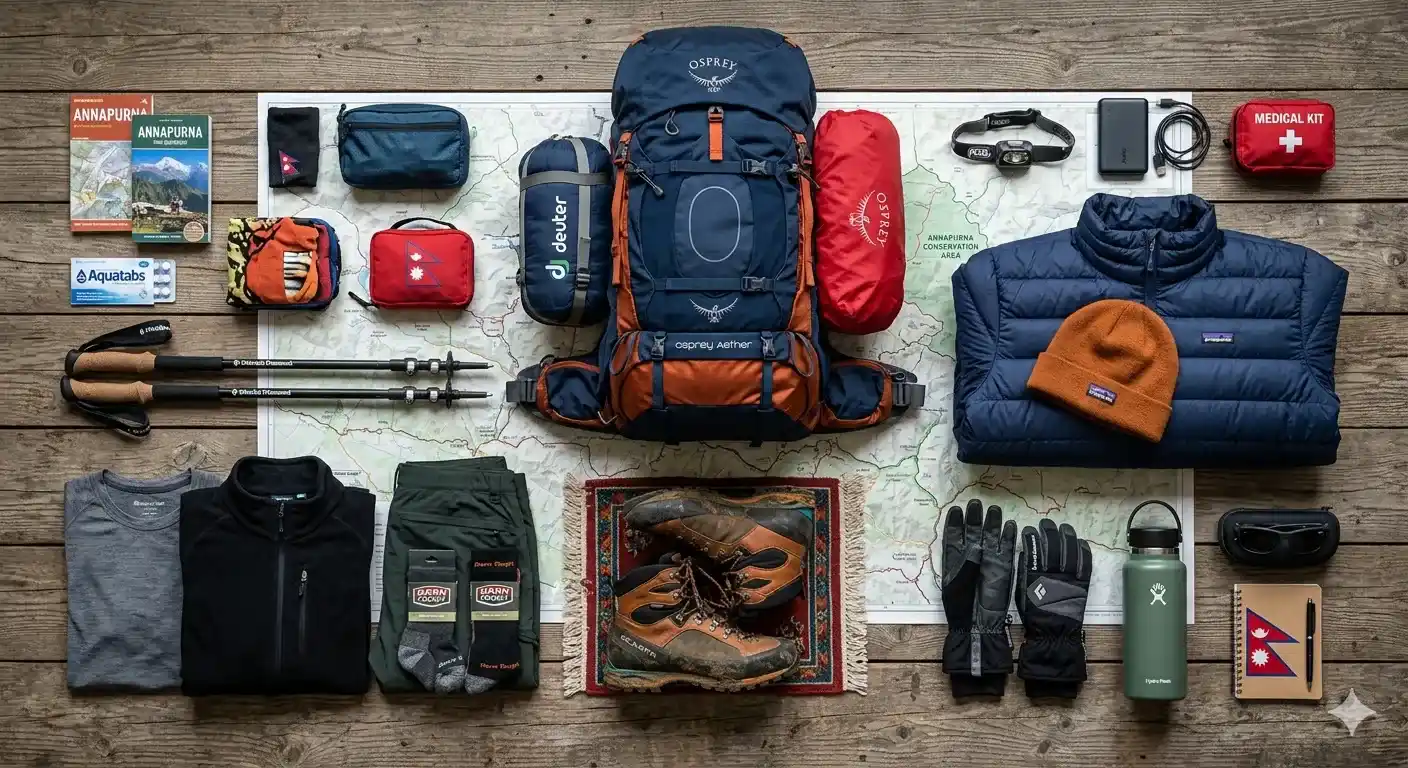
Annapurna Circuit Packing List (Don’t Overpack!)
This guide is based on a real 8-day trekking setup, similar to the one shown in your image. Instead of overwhelming you with unnecessary gear suggestions, this article focuses on a practical, minimalist, and field-tested Annapurna Circuit Packing List that actually works on the trail.
From clothing layers to trekking gear, health essentials to packing techniques, everything here is designed to help you pack smart, stay light, and trek efficiently. Whether you’re a beginner or an experienced hiker, this guide ensures you don’t overpack or forget crucial items.
The Annapurna Circuit takes you from lush valleys to high-altitude passes like Thorong La, where temperatures can drop dramatically. That’s why your Annapurna Circuit Packing List needs to be flexible, lightweight, and well-organized.
By the end of this article, you’ll know exactly:
- What to pack
- What to avoid
- How to pack efficiently
- And how to prepare for every condition
Let’s build the ultimate trekking packing strategy.
Why Your Annapurna Circuit Packing List Matters More Than You Think
Many trekkers underestimate how important a proper Annapurna Circuit Packing List really is. The Annapurna Circuit is unique because it passes through multiple climate zones within just a few days. You might start your trek in warm, humid conditions and end up crossing a freezing high mountain pass.
Because of this dramatic variation, packing randomly or copying a generic list can lead to serious problems. If your Annapurna Circuit Packing List is not optimized, you could face issues like excessive fatigue, cold exposure, or even health risks.
Carrying too much weight is one of the most common mistakes. Every extra kilogram becomes noticeable after hours of trekking uphill. On the other hand, underpacking can leave you unprepared for sudden weather changes, especially in higher altitudes where conditions can turn harsh quickly.
A well-thought-out Annapurna Circuit Packing List helps you:
- Maintain energy levels during long trekking days
- Stay warm and protected in cold conditions
- Adapt to weather changes easily
- Keep your backpack organized and accessible
Another important factor is logistics. Along the Annapurna Circuit, you’ll stay in tea houses where basic amenities are available, but not everything is guaranteed. This means your Annapurna Circuit Packing List should cover personal essentials while avoiding unnecessary duplicates.
Smart packing is not about bringing more—it’s about bringing the right things. When you follow a structured Annapurna Circuit Packing List, your trek becomes smoother, safer, and far more enjoyable.
Backpack Setup: Choosing the Right Size and Weight
Your backpack is the foundation of your entire Annapurna Circuit Packing List. Choosing the wrong size or overloading it can significantly affect your trekking experience. The ideal backpack for this trek is typically between 50 to 60 liters, which offers enough space without encouraging overpacking.
A 60-liter backpack, like the one shown in the image, is perfect for carrying all the essentials required for an 8-day trek. It allows you to organize clothing, gear, and personal items efficiently while still keeping the weight manageable.
When building your Annapurna Circuit Packing List, you should aim to keep your total pack weight between 8 to 12 kilograms if you are carrying it yourself. If you have a porter, you may carry slightly more, but keeping it light is always beneficial.
A well-fitted backpack is just as important as its size. Look for features like:
- Adjustable shoulder straps
- Strong hip belt support
- Ventilated back panel
- Multiple compartments for organization
Your Annapurna Circuit Packing List should also include a rain cover for your backpack. Weather conditions can change quickly, and keeping your gear dry is essential.
Proper weight distribution is key. Heavier items should be placed closer to your back, while lighter items go on top or in outer compartments. This improves balance and reduces strain on your body.
Ultimately, the goal of your Annapurna Circuit Packing List is to make your backpack feel like a tool—not a burden. A well-packed bag allows you to focus on the journey, not the weight on your shoulders.
Clothing Strategy: The Layering System Explained
One of the most important aspects of your Annapurna Circuit Packing List is understanding the layering system. Instead of packing bulky clothes, layering allows you to adjust your outfit based on temperature and activity level.
The Annapurna Circuit presents a wide range of weather conditions. Mornings and nights can be freezing, while midday temperatures can feel quite warm. A proper layering system ensures that you stay comfortable throughout the day.
The three main layers included in a smart Annapurna Circuit Packing List are:
- Base layer
- Mid layer
- Outer layer
The base layer is responsible for moisture control. It sits directly on your skin and helps wick sweat away, keeping you dry. This is crucial because moisture can make you feel colder, especially at higher altitudes.
The mid layer provides insulation. Items like fleece jackets or Merino wool shirts trap body heat and keep you warm. These are versatile and can be worn alone in moderate temperatures.
The outer layer protects you from wind, rain, and snow. A down jacket combined with a windproof shell is essential for high-altitude conditions.
A well-balanced Annapurna Circuit Packing List ensures that each layer works together. Instead of carrying heavy jackets, you rely on multiple lighter layers that can be combined as needed.
This system not only reduces weight but also improves flexibility. You can easily add or remove layers depending on the weather, making your trekking experience much more comfortable.
Footwear: The Most Important Part of Your Gear
Your footwear is arguably the most critical element of your Annapurna Circuit Packing List. A poor choice in boots can lead to blisters, discomfort, and even injuries that could cut your trek short.
A good pair of trekking boots should provide:
- Strong ankle support
- Waterproof protection
- Durable grip for uneven terrain
The Annapurna Circuit includes rocky trails, steep ascents, and sometimes snow-covered paths. Your boots need to handle all these conditions. Investing in high-quality footwear is essential for a successful trek.
Equally important is your sock system. Your Annapurna Circuit Packing List should include at least four pairs of trekking socks—two regular and two woolen. This allows you to rotate socks, keeping your feet dry and reducing the risk of blisters.
Another useful addition is lightweight sandals or camp shoes. After a long day of trekking, your feet need to rest and breathe. Wearing sandals in tea houses provides comfort and helps prevent foot fatigue.
Breaking in your boots before the trek is crucial. Never bring brand-new shoes without testing them first. A well-prepared Annapurna Circuit Packing List includes gear that you are already comfortable using.
Taking care of your feet during the trek is just as important as choosing the right footwear. Keeping them dry, clean, and well-supported ensures a smoother and more enjoyable journey.
Accessories & Essentials: Small Items That Matter
While major gear often gets the most attention, it’s the smaller items in your Annapurna Circuit Packing List that can significantly impact your comfort and safety. Accessories may seem minor, but they play a crucial role in protecting you from environmental conditions and making your trek more manageable.
Head and face protection is essential. At higher altitudes, the sun’s UV rays are much stronger, and the cold wind can be harsh. Your Annapurna Circuit Packing List should include a cap for daytime use, woolen beanies for cold mornings and nights, and a buff or bandana for added protection. Sunglasses are also a must to protect your eyes from intense sunlight and glare, especially when trekking on snow.
Gloves are another important accessory. A combination of thin inner gloves and thicker fleece gloves provides flexibility. You can wear them separately or together depending on the temperature. This layering approach for your hands is just as important as your clothing system.
Other small but essential items include a headlamp, which is useful during early morning hikes or in tea houses where electricity may be limited. A power bank ensures your devices stay charged throughout the trek.
Your Annapurna Circuit Packing List should also include basic hygiene items such as sunscreen, lip balm, toilet paper, and a quick-dry towel. These may seem simple, but they greatly improve your comfort during multi-day trekking.
These small items often make the biggest difference. A well-prepared Annapurna Circuit Packing List ensures you are ready not just for the trek, but for all the little challenges along the way.
Creating the perfect Annapurna Circuit Packing List is about finding the right balance between preparedness and simplicity. You don’t need to carry everything—only what truly matters for your safety, comfort, and performance on the trail.
This guide shows that a well-organized 60-liter backpack is more than enough for an 8-day trek. By focusing on layering, choosing the right gear, and avoiding unnecessary items, you can keep your pack light and efficient.
A smart Annapurna Circuit Packing List allows you to:
- Trek longer without fatigue
- Adapt to changing weather conditions
- Stay comfortable at high altitude
- Enjoy the journey without stress
Remember, every item you pack should have a purpose. If something doesn’t serve a clear function, it probably doesn’t belong in your bag.
The Annapurna Circuit is one of the most rewarding trekking experiences in the world. With the right preparation and a carefully planned Annapurna Circuit Packing List, you’ll be ready to take on the adventure with confidence.
Pack smart, trek light, and enjoy every moment of your journey through Nepal’s incredible landscapes.
FAQs About Annapurna Circuit Packing List
1. What should I include in an Annapurna Circuit Packing List for an 8-day trek?
A complete Annapurna Circuit Packing List for an 8-day trek should focus on essentials rather than excess items. You need a proper layering system (base, mid, and outer layers), a down jacket, trekking pants, and moisture-wicking clothing. Footwear is critical, so include sturdy trekking boots and multiple pairs of socks.
In addition, your Annapurna Circuit Packing List should include trekking poles, a headlamp, a reusable water bottle, a thermos, and energy snacks. Personal essentials like sunscreen, toiletries, and a basic medical kit are also important. The key is to pack versatile items that can serve multiple purposes while keeping your backpack light and organized.
2. How heavy should my backpack be for the Annapurna Circuit?
The ideal weight for your backpack when following an Annapurna Circuit Packing List is between 8–12 kg if you are carrying it yourself. Keeping your pack within this range helps reduce fatigue and makes long trekking days more manageable.
If you hire a porter, your total weight can go up to around 12–15 kg, but it’s still recommended to pack light. Every extra kilogram becomes noticeable, especially during steep ascents. A well-balanced Annapurna Circuit Packing List prioritizes lightweight gear and eliminates unnecessary items to improve overall trekking comfort.
3. Do I really need a down jacket for the Annapurna Circuit?
Yes, a down jacket is an essential part of any Annapurna Circuit Packing List, especially for higher altitudes. Temperatures can drop below freezing, particularly near Thorong La Pass. Even if you trek during warmer seasons, early mornings and evenings can still be very cold.
A down jacket provides excellent insulation without adding too much weight. It works best when combined with a layering system, allowing you to adjust your clothing based on weather conditions. Skipping this item can make your trek uncomfortable and even risky in colder regions.
4. Can I rent trekking gear in Nepal instead of packing everything?
Yes, renting gear is a popular option, and many trekkers rely on it to complete their Annapurna Circuit Packing List. In Kathmandu and Pokhara, you can rent items such as down jackets, sleeping bags, trekking poles, and even backpacks at affordable prices.
However, it’s recommended to bring personal items like boots, base layers, and undergarments from home to ensure comfort and proper fit. Renting is a great way to reduce luggage weight when traveling internationally while still maintaining a complete Annapurna Circuit Packing List.
5. How many clothes should I pack for the Annapurna Circuit trek?
You don’t need a large number of clothes if you follow a smart Annapurna Circuit Packing List. Instead of packing multiple outfits, focus on a layering system with versatile clothing.
Typically, 2–3 base layer tops, 1–2 mid-layers, and 1 outer layer are enough. Add 1–2 trekking pants and a few undergarments. Many tea houses offer laundry services or allow you to hand wash clothes. Packing light not only reduces weight but also makes your trek more comfortable.
6. Are trekking poles necessary for the Annapurna Circuit?
While not mandatory, trekking poles are highly recommended in any Annapurna Circuit Packing List. They provide better balance, reduce strain on your knees, and help during steep ascents and descents.
This is especially important when crossing uneven terrain or descending long trails, where knee pressure can build up quickly. For beginners and even experienced trekkers, trekking poles can significantly improve stability and reduce the risk of injury.
7. What type of backpack is best for the Annapurna Circuit?
A 50–60 liter backpack is ideal for your Annapurna Circuit Packing List. This size provides enough space for clothing, gear, and essentials without encouraging overpacking.
Look for a backpack with strong hip support, adjustable straps, and multiple compartments for organization. Comfort is key, so choose a backpack that fits your body properly. A poorly fitted backpack can lead to back pain and discomfort during long trekking days.
8. Do I need to carry a sleeping bag on the Annapurna Circuit?
Most tea houses provide blankets, but including a sleeping bag in your Annapurna Circuit Packing List is still recommended, especially during colder months. A sleeping bag adds extra warmth and ensures hygiene.
If you prefer not to carry one, you can rent it in Kathmandu or Pokhara. For high-altitude areas, a sleeping bag rated for cold temperatures is a safer option.
9. How do I manage water and hydration during the trek?
Hydration is crucial, so your Annapurna Circuit Packing List should include at least one reusable water bottle and a thermos. Drinking enough water helps prevent altitude sickness and keeps your energy levels stable.
You can refill water at tea houses along the route. Carrying water purification tablets or a filter is also a good idea. A thermos is especially useful in cold regions where warm water can help maintain body temperature.
10. What are the most common packing mistakes to avoid?
Many trekkers make avoidable mistakes when preparing their Annapurna Circuit Packing List. The most common ones include:
- Overpacking unnecessary clothes
- Carrying heavy gadgets
- Ignoring proper layering
- Not bringing enough socks
- Forgetting sun protection
Avoiding these mistakes will make your trek much more comfortable and efficient. A well-planned Annapurna Circuit Packing List focuses on essentials and eliminates anything that doesn’t serve a clear purpose.
