
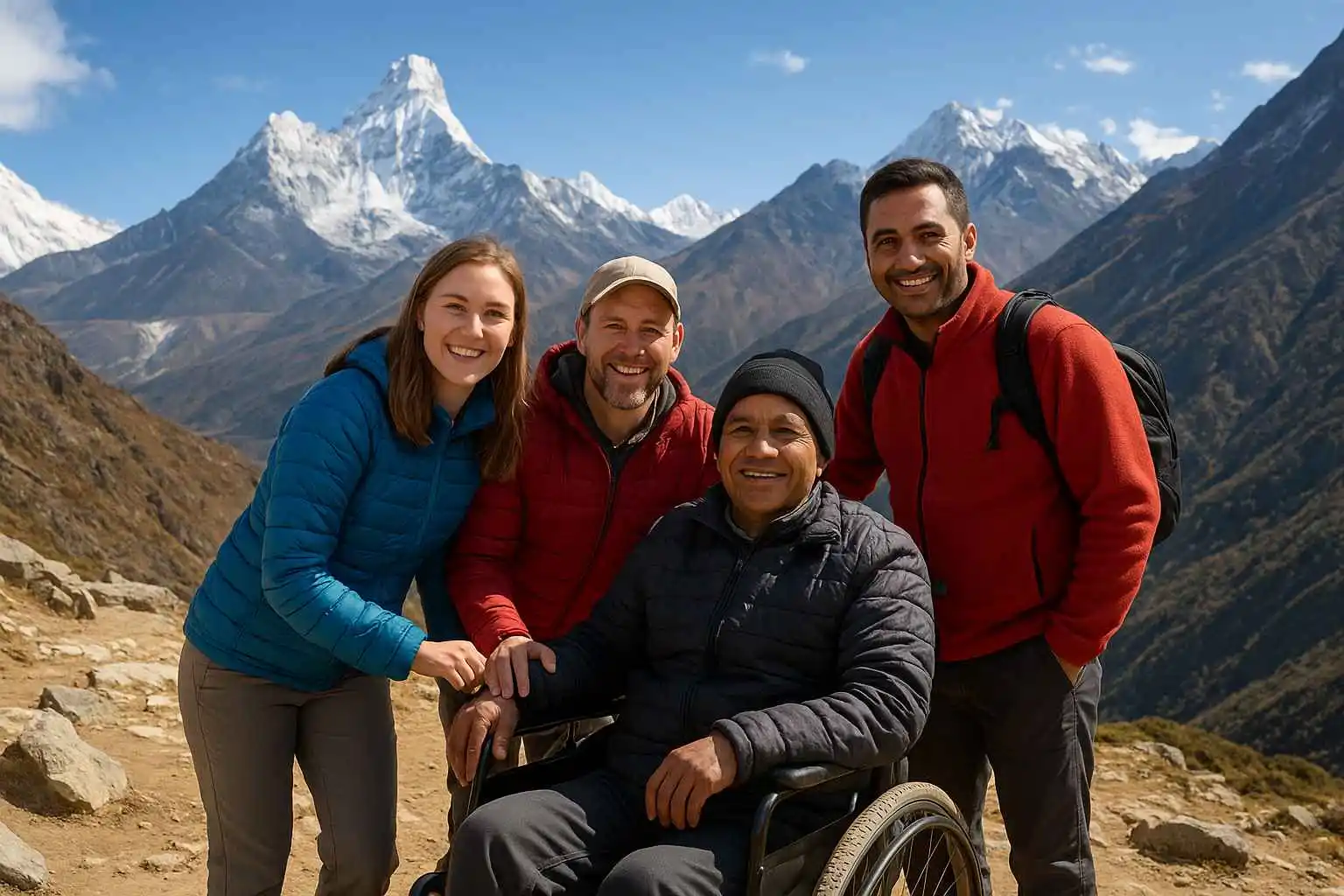
wheelchair accessible tours in Nepal
Nepal, a land of soaring Himalayan peaks, serene lakes, ancient temples, and vibrant culture, has long attracted travelers from around the world. For many, trekking through its hills and mountains is a lifelong dream. However, for travelers who use wheelchairs or have limited mobility, Nepal’s rugged terrain can make this dream seem challenging. Fortunately, things are changing. Thanks to dedicated tour operators, supportive local communities, and the development of accessible infrastructure, wheelchair accessible tours in Nepal are now possible, offering travelers with mobility challenges the opportunity to experience the breathtaking beauty of this unique country.
This comprehensive guide is designed for first-time wheelchair travelers, providing practical advice, top destinations, itinerary suggestions, and tips to make your journey smooth, safe, and enjoyable.
Why Nepal is an Ideal Destination for Wheelchair Travelers
Nepal is renowned for its natural beauty, including towering peaks, lush forests, and crystal-clear lakes. Beyond nature, the country offers rich cultural heritage, with centuries-old temples, bustling markets, and colorful festivals. While Nepal’s geography poses challenges for mobility, recent initiatives in tourism have started to bridge the gap.
By focusing on wheelchair accessible tours in Nepal, travelers can enjoy iconic sights, scenic landscapes, and cultural experiences without compromising comfort or safety. Inclusive tourism ensures that the country’s wonders are accessible to everyone, reflecting Nepal’s growing commitment to welcoming all travelers.
Planning Your Trip: Key Considerations
Proper planning is essential for wheelchair accessible tours in Nepal. Consider the following factors:
1. Choosing the Right Season
Spring (February–April): Pleasant temperatures, blooming flowers, and clear skies.
Autumn (October–November): Stable weather, ideal for sightseeing and moderate treks.
Avoid Monsoon (June–September): Heavy rains can make trails slippery and increase the risk of landslides.
Seasonal planning ensures safer travel, especially when using wheelchairs or navigating accessible trails.
2. Selecting Wheelchair-Friendly Destinations
While Nepal is mountainous, several regions have been developed with accessibility in mind:
Pokhara: Famous for lakes, mountains, and the pioneering Kaskikot Accessible Trail.
Kathmandu Valley: Offers accessible heritage sites, cable cars, and wheelchair-friendly accommodations.
Bhaktapur & Patan: Certain temples and squares can be explored with assistance.
Choosing destinations with established accessibility infrastructure ensures a rewarding travel experience.
3. Working with Specialized Tour Operators
Tour operators specializing in accessible tourism can provide:
Wheelchair-friendly transport and vehicles
Trained guides for assistance on trails and at attractions
Reservations at accessible accommodations
Customized itineraries tailored to mobility needs
Communicating your requirements in advance is crucial for a smooth experience.
4. Accommodation Considerations
When selecting hotels or guesthouses:
Confirm the availability of ramps, elevators, and roll-in showers.
Ensure accessible toilets and wide doorways.
Book early, as accessible rooms are limited in Nepal.
Top Wheelchair Accessible Tours in Nepal
Nepal offers a range of experiences specifically designed for travelers with mobility challenges.
1. Kaskikot Accessible Trail (Pokhara)
The Kaskikot Accessible Trail is the first of its kind in Asia. It features smooth surfaces, gentle gradients, and panoramic views of the Annapurna range. This trail offers a Himalayan trekking experience without the physical strain of traditional routes, making it ideal for wheelchair users and first-time trekkers.
Trail length: Approximately 1.2–1.3 km
Facilities: Wheelchair-accessible toilets, resting points
Scenic highlights: Machhapuchhre (Fishtail), Annapurna, Dhaulagiri
This trail demonstrates how wheelchair accessible tours in Nepal can combine adventure with comfort.
2. Chandragiri Hill (Kathmandu)
Chandragiri Hill is accessible via cable car, with ramps and wheelchair-friendly facilities. At the summit, travelers can enjoy breathtaking views of the Kathmandu Valley and Himalayan peaks. This destination is perfect for those who want a Himalayan experience without trekking.
Cable car provides easy access to the top
Restaurants and rest areas are wheelchair-friendly
Ideal for day trips and short excursions
3. Gokarna Forest Resort (Kathmandu)
Located on the outskirts of Kathmandu, Gokarna Forest Resort offers wheelchair-accessible paths, ramps, and comfortable accommodations. It’s ideal for relaxation, nature walks, and cultural immersion.
4. Wheelchair Friendly Vehicle and Helicopter Tours for Nepal
For those unable to trek:
Jeep tours to Mustang, Pokhara villages, or other scenic destinations
Helicopter tours to Himalayan viewpoints like Annapurna or Everest
Ensure vehicles are equipped for wheelchair users
These tours allow travelers to experience Nepal’s landscapes and culture while bypassing challenging trails.
Exploring Heritage Sites and Cities
Nepal’s cultural attractions, including temples and historic squares, are partially accessible:
Kathmandu Valley: Select parts of Patan, Bhaktapur, and Kathmandu Durbar Square can be visited with assistance.
Accessibility Tips: Hire a local guide, bring a companion, and focus on areas with smooth pathways or ramps.
Planning: Limit sightseeing to shorter excursions to prevent fatigue.
Essential Packing Tips for Wheelchair Travelers
Lightweight, foldable wheelchair for transport convenience
Cushions and support accessories for long rides or uneven terrain
Rain covers, sun protection, and comfortable clothing
Portable battery packs for powered wheelchairs
Basic medical kit and medications
Proper packing ensures comfort and preparedness for Nepal’s variable terrain and weather.
Health and Safety Tips
Stay hydrated and take regular breaks
Keep emergency contacts and hospital information handy
Avoid remote or high-altitude areas if not accompanied by a guide
Travel insurance covering mobility challenges is highly recommended
Sample 10-Day Wheelchair Accessible Tours in Nepal Itinerary
| Day | Activity |
|---|---|
| 1 | Arrival in Kathmandu – airport wheelchair assistance, check-in at accessible hotel |
| 2 | Explore Kathmandu Valley – visit accessible areas of Patan and Bhaktapur |
| 3 | Drive to Pokhara – check-in at lakeside accessible hotel |
| 4 | Lakeside exploration – wheelchair-friendly pathways and boat rides |
| 5 | Kaskikot Accessible Trail – gentle trekking experience with mountain views |
| 6 | Jeep tour to nearby cultural villages or relaxation day at hotel |
| 7 | Optional short trek or cultural visit with guided assistance |
| 8 | Return to Kathmandu – visit Chandragiri Hill via cable car |
| 9 | Gokarna Forest Resort – nature walk and leisure activities |
| 10 | Departure – airport wheelchair assistance and travel wrap-up |
This itinerary balances sightseeing, gentle trekking, cultural exposure, and relaxation.
Choosing the Right Tour Operator
Selecting a tour operator experienced in accessible tourism is essential. They provide:
Wheelchair-friendly vehicles and transport arrangements
Trained guides for assistance
Reservations at accessible accommodations
Customized itineraries that match mobility requirements
Final Tips for First-Time Wheelchair Travelers
Plan every detail in advance, including transport, accommodation, and itinerary
Maintain realistic expectations — some trails remain inaccessible
Don’t hesitate to ask for help; local communities are welcoming
Travel at your own pace, focusing on scenic views and cultural experiences
Nepal is gradually becoming more accessible for travelers with mobility challenges. With wheelchair accessible tours in Nepal, first-time visitors can experience the Himalayan mountains, cultural heritage, and natural beauty safely and comfortably. Careful planning, choosing accessible destinations, and partnering with experienced tour operators make it possible to enjoy an inclusive and unforgettable journey.
Adventure in Nepal is for everyone regardless of mobility level. With the right preparation, wheelchair travelers can explore the mountains, lakes, and cultural treasures, creating memories that last a lifetime.
Frequently Asked Questions (FAQ)
1. Is Nepal suitable for wheelchair travelers?
Yes. While Nepal’s mountainous terrain can be challenging, recent initiatives like the Kaskikot Accessible Trail, Chandragiri Hill cable car, and wheelchair-friendly tours make it possible for travelers with mobility needs to explore key destinations safely.
2. What is the best time to plan wheelchair accessible tours in Nepal?
The ideal seasons are spring (February–April) and autumn (October–November), as the weather is clear, dry, and comfortable for travel. Monsoon season (June–September) should be avoided due to slippery trails and potential flooding.
3. Which destinations are most wheelchair-friendly tours in Nepal?
Top accessible destinations include:
Pokhara — lakeside walks and Kaskikot Accessible Trail
Kathmandu Valley — Patan, Bhaktapur, Chandragiri Hill
Gokarna Forest Resort — accessible accommodations and nature paths
4. Are there accessible trekking options for first-time travelers?
Yes. Wheelchair accessible tours in Nepal focus on gentle trails such as Kaskikot, short cultural treks, or vehicle/jeep-based tours. These allow first-time travelers to experience Himalayan scenery without challenging terrain.
5. How can I find a reliable tour operator for wheelchair accessible tours in Nepal?
Look for agencies that specialize in accessible tourism. They should provide:
Wheelchair-friendly transport
Trained guides
Reservations at accessible accommodations
Customized itineraries based on your needs
6. What should I pack for wheelchair accessible travel in Nepal?
Essential items include:
Lightweight, foldable wheelchair
Cushions or support accessories
Rain cover and sun protection
Comfortable clothing suitable for varying terrain
Portable battery packs for powered wheelchairs
Basic medical kit
7. Are there helicopter or vehicle tours available for wheelchair travelers?
Yes. For those unable to trek, jeep or private vehicle tours and helicopter flights to Himalayan viewpoints like Annapurna or Everest are excellent alternatives, allowing travelers to enjoy Nepal’s landscapes comfortably.
8. Are accommodations in Nepal wheelchair accessible tours in Nepal?
Some hotels and resorts in Kathmandu, Pokhara, and nearby areas are wheelchair-friendly, offering ramps, elevators, roll-in showers, and accessible rooms. Early booking is recommended as accessible rooms are limited.
9. Can I explore cultural heritage sites while using a wheelchair accessible tours in Nepal?
Yes, many heritage sites in Kathmandu Valley, Patan, and Bhaktapur are partially accessible. Bringing a companion or hiring a guide is recommended for smoother navigation, especially in cobblestone areas.
10. Is Nepal safe for first-time wheelchair travelers?
Yes. With careful planning, selecting accessible destinations, traveling during the right season, and using specialized tour operators, wheelchair travelers can enjoy a safe and memorable trip.
