
Authentic indigenous culture Nepal with traditional rituals, vibrant clothing, and Himalayan scenery.
In 2026, as the world increasingly recognizes the value of diversity, indigenous culture Nepal stands as a profound testament to human resilience and cultural richness. Nepal, a land often defined by its towering peaks, is in fact a vibrant mosaic of over 125 distinct ethnic groups, each contributing a unique thread to the nation’s spiritual and social fabric. Indigenous culture Nepal is not a monolithic entity; it is a symphony of languages, traditions, and an enduring connection to the land that dates back millennia.
While many visitors are drawn to the jazz festivals and live music in Kathmandu, the true pioneers of 2026 travel seek the untouched stories of indigenous culture Nepal. By choosing this path, travelers become witnesses to ancient shamanic rituals, participate in age-old farming practices, and gain a profound understanding of how humans can live in harmony with nature. This manual serves as your guide to this invaluable, yet often overlooked, treasure.
1: Defining Indigenous Culture Nepal – Beyond the Numbers
To truly appreciate indigenous culture Nepal, we must first understand what it means to be “indigenous” in the context of the Himalayan nation. It’s more than just a census category; it’s a claim to ancestral land, language, and an unbroken lineage of traditional knowledge.
The “Janajati” Identity
In Nepal, indigenous communities are often referred to as Janajati. This term encompasses a diverse array of groups, from the high-altitude Sherpas to the lowland Tharus, and the mid-hill Gurungs and Tamangs. Each group within indigenous culture Nepal possesses its own:
Ethno-Linguistic Group: A distinct language, often with unique scripts.
Traditional Territories: Ancestral lands where their cultural practices developed.
Socio-Cultural Structures: Unique forms of governance, customary laws, and social organization.
Belief Systems: Animistic, shamanistic, or specific interpretations of Hinduism and Buddhism.
The Historical Context: A Tapestry Woven by Time
The history of indigenous culture Nepal is intertwined with the very formation of the nation. Many of these groups predate the unification of Nepal in the 18th century, maintaining distinct kingdoms and autonomous regions. The Newars of the Kathmandu Valley, for instance, developed a sophisticated urban civilization, with their own rich Sankhu heritage town and unique festivals. Understanding this deep history is key to appreciating the resilience of indigenous culture Nepal today.
2: The High-Altitude Guardians: Sherpas, Tamangs, and Rai

High-altitude indigenous culture Nepal with Sherpas and Rai in traditional harvest rituals.
Nepal’s mountains are not just peaks; they are the spiritual homes of several prominent indigenous groups.
The Sherpas: Legends of the Himalayas
Renowned globally for their mountaineering prowess, the Sherpas are synonymous with the Everest region. But their indigenous culture Nepal goes far beyond climbing.
Buddhist Faith: Deeply rooted in Tibetan Buddhism, their monasteries (
gompas) are centers of spiritual life.Khumbu Traditional Practices: Their unique
khumbu(customary law) governs forest use, agriculture, and social harmony.High-Altitude Adaptations: Genetic and physiological adaptations allow them to thrive where others struggle, a testament to living in harmony with their harsh environment.
The Tamangs: Mid-Hill Mysticism
The Tamangs, one of Nepal’s largest indigenous groups, primarily inhabit the mid-hills surrounding Kathmandu. Their indigenous culture Nepal is characterized by:
Shamanistic Traditions (
Jhankri): The Jhankri (shamans) play a crucial role in healing, divination, and spiritual guidance.Dharma-Buddhist Influence: A unique blend of Buddhism with animistic beliefs.
Folk Music (
Tamang Selo): Their distinctive circular dance and music are integral to every festival and gathering.
The Rai: Keepers of Kirat Heritage
The Rai people, from the eastern hills, are part of the larger Kirat family, known for their strong cultural identity. Their indigenous culture Nepal includes:
Animistic Beliefs: Reverence for nature, spirits, and ancestors is central to their worldview.
Unique Rituals: Practices like the Sakela dance are performed during planting and harvesting seasons to appease the land spirits.
Oral Histories: Much of their wisdom is passed down through generations via intricate oral traditions and epic narratives.
3: The Lowland Guardians: Tharus, Dhimal, and Meche
The Terai plains of Nepal are also home to a rich tapestry of indigenous culture Nepal, often distinct from their mountain counterparts.
The Tharus: Guardians of the Terai
The Tharus, the largest indigenous group in the Terai, possess a unique indigenous culture Nepal that has adapted to the lowland environment.
Malaria Resistance: Historically resistant to malaria, they thrived in areas where others fell ill.
Traditional Houses (
Ghar): Their homes are built from mud, dung, and thatch, creating natural insulation.Conservation Efforts: Tharu communities are often at the forefront of wildlife protection, as seen in community tourism Nepal initiatives within the Chitwan National Park buffer zones.
The Dhimal and Meche: The Unsung Tribes
These smaller indigenous groups in the eastern Terai maintain fascinating traditions that are lesser-known but equally vibrant. Their indigenous culture Nepal often includes:
River-Based Livelihoods: Fishing and riverine agriculture are central to their way of life.
Unique Languages: Dhimal and Meche languages are distinct and endangered, highlighting the urgent need for preservation efforts.
4: The Valley Civilizations: Newars and Traditional Lifestyle Nepal
The Newars of the Kathmandu Valley are a cornerstone of indigenous culture Nepal, boasting a history of urban sophistication and artistic brilliance.
Newari Urbanism and Artistic Legacy
The Newars, though geographically central, maintain a distinct indigenous culture Nepal.
Art and Architecture: Renowned for their intricate wood carvings, pagoda-style temples, and metalwork.
Festivals (
Jatra): Their calendar is punctuated by numerous vibrant jatras (festivals) like Indra Jatra and Bisket Jatra, showcasing masked dances and living goddess rituals.Newari Language (
Nepal Bhasa): A Tibeto-Burman language with its own rich literary tradition.
The Living Goddess (Kumari)
The tradition of the Kumari (Living Goddess) is a unique and captivating aspect of indigenous culture Nepal, primarily among the Newar community. A young girl is chosen to embody the goddess Taleju, representing purity and divine power. This practice, observed even in 2026, bridges ancient spirituality with modern life, where a normal girl lives an extraordinary existence until puberty.
5: Agriculture and Resource Management in Indigenous Culture Nepal
The relationship with the land is foundational to indigenous culture Nepal. Survival has always depended on sustainable practices.
Terraced Farming and Crop Diversity
The iconic terraced fields visible across the mid-hills are a testament to the agricultural ingenuity of indigenous culture Nepal. Different ethnic groups have perfected:
Mixed Cropping: Growing multiple crops on the same plot to maximize yield and soil health.
Shifting Cultivation: (Historically, in some areas) A rotational system that allowed land to regenerate naturally.
Traditional Irrigation: Complex systems of canals and water channels built centuries ago, still in use today.
Forest Management and Sacred Groves
For many within indigenous culture Nepal, forests are not just resources; they are sacred entities.
Community Forestry: Many indigenous communities have their own customary laws for forest management, preventing deforestation.
Sacred Groves: Specific patches of forest are considered sacred, acting as biodiversity hotspots and places for spiritual rituals.
6: Traditional Healthcare and Shamanism
Long before modern medicine, indigenous culture Nepal relied on traditional healers and shamans.
The Jhankri (Shamans)
The Jhankri are central figures in many indigenous communities, serving as spiritual guides, healers, and intermediaries between the human and spirit worlds. Their role in indigenous culture Nepal includes:
Healing Rituals: Using herbs, chants, and trance states to cure illnesses believed to be spiritual in origin.
Divination: Providing guidance on future events, harvests, or family matters.
Community Counsel: Acting as respected advisors in disputes and communal decision-making.
Herbal Medicine and Local Knowledge
The rich biodiversity of Nepal’s forests has provided a vast pharmacopeia for indigenous culture Nepal. Elders possess invaluable knowledge of medicinal plants and their applications, a knowledge that is slowly being recognized by modern science.
7: Challenges and the Future of Indigenous Culture Nepal in 2026
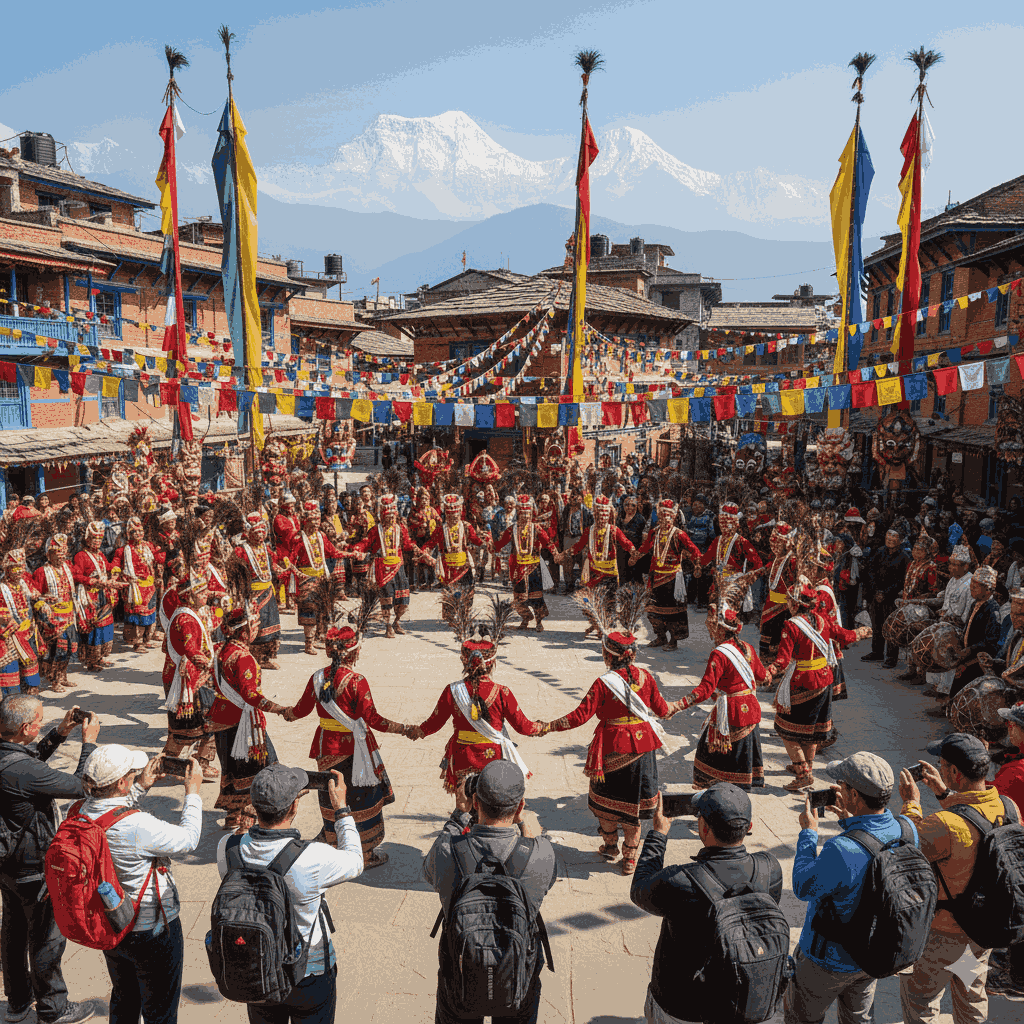
Indigenous festival in Nepal showcasing traditional dance and cultural exchange with focus on indigenous culture Nepal
Despite its richness, indigenous culture Nepal faces significant threats in the 21st century.
Threats to Language and Identity
The dominant Nepali language and urban migration pose a threat to the 100+ indigenous languages of Nepal. Without active preservation, elements of indigenous culture Nepal are at risk of being lost.
Land Rights and Economic Marginalization
Many indigenous communities struggle with securing their ancestral land rights, often leading to displacement and economic marginalization. Initiatives like the National Indigenous Peoples’ Development Fund are working to address these issues.
Climate Change Impact
Indigenous culture Nepal, particularly in high-altitude regions, is at the forefront of climate change impacts, with changing weather patterns affecting traditional agricultural cycles and access to natural resources.
8: Preserving and Promoting Indigenous Culture Nepal through Tourism
In 2026, sustainable tourism has emerged as a powerful tool for preserving indigenous culture Nepal.
Community-Led Homestays
Projects like the Community Homestay Network allow travelers to directly support indigenous families. This model of community tourism Nepal ensures that economic benefits flow directly to the hosts.
Cultural Exchange Programs
These programs facilitate a deeper understanding between visitors and local communities, helping to revive traditional crafts, music, and dance that might otherwise fade.
The “Rurbanomics” Bridge
The concept of “Rurbanomics” recognizes the symbiotic relationship between rural indigenous culture Nepal and urban economies. It promotes digital connectivity in villages, allowing young indigenous entrepreneurs to sell their crafts online, access education, and reverse the “brain drain” trend.
Frequently Asked Questions (FAQs)
Q1: How many indigenous groups are there in Nepal? A: There are officially 59 recognized indigenous nationalities, but the number of distinct ethnic and linguistic groups is over 125.
Q2: Is it respectful to visit indigenous communities in Nepal? A: Absolutely, as long as you engage through responsible tour operators and community tourism Nepal initiatives that respect local customs and benefit the community directly.
Q3: What are some unique festivals in indigenous culture Nepal? A: The Sakela dance of the Rai, the Tamang Selo, the Indra Jatra of the Newars, and various Lhosar (New Year) celebrations are all vibrant examples.
Q4: How can I support the preservation of indigenous culture Nepal? A: Choose community tourism Nepal, buy local handicrafts, learn a few words of the local language, and support NGOs working on indigenous rights and language preservation.
Q5: Is there an “official” indigenous language in Nepal? A: No, Nepali is the national language, but numerous indigenous languages are spoken, and efforts are underway to preserve and promote them through education.
To embark on a journey through indigenous culture Nepal in 2026 is to witness the resilience of the human spirit. It is to understand that true wealth is not measured in material possessions, but in the richness of traditions, the strength of community bonds, and an unwavering respect for the natural world. Each ethnic group, with its unique stories, dances, and languages, offers a profound lesson in how to live meaningfully.
The challenges facing indigenous culture Nepal are real, but so too is the determination of its people to preserve their heritage. Through sustainable tourism, educational initiatives, and a global recognition of their invaluable wisdom, the vibrant tapestry of indigenous culture Nepal will continue to weave its magic. By choosing to explore this facet of Nepal, you are not just a tourist; you are a patron of ancient ways, a student of profound wisdom, and a witness to the enduring heartbeat of the Himalayas.
