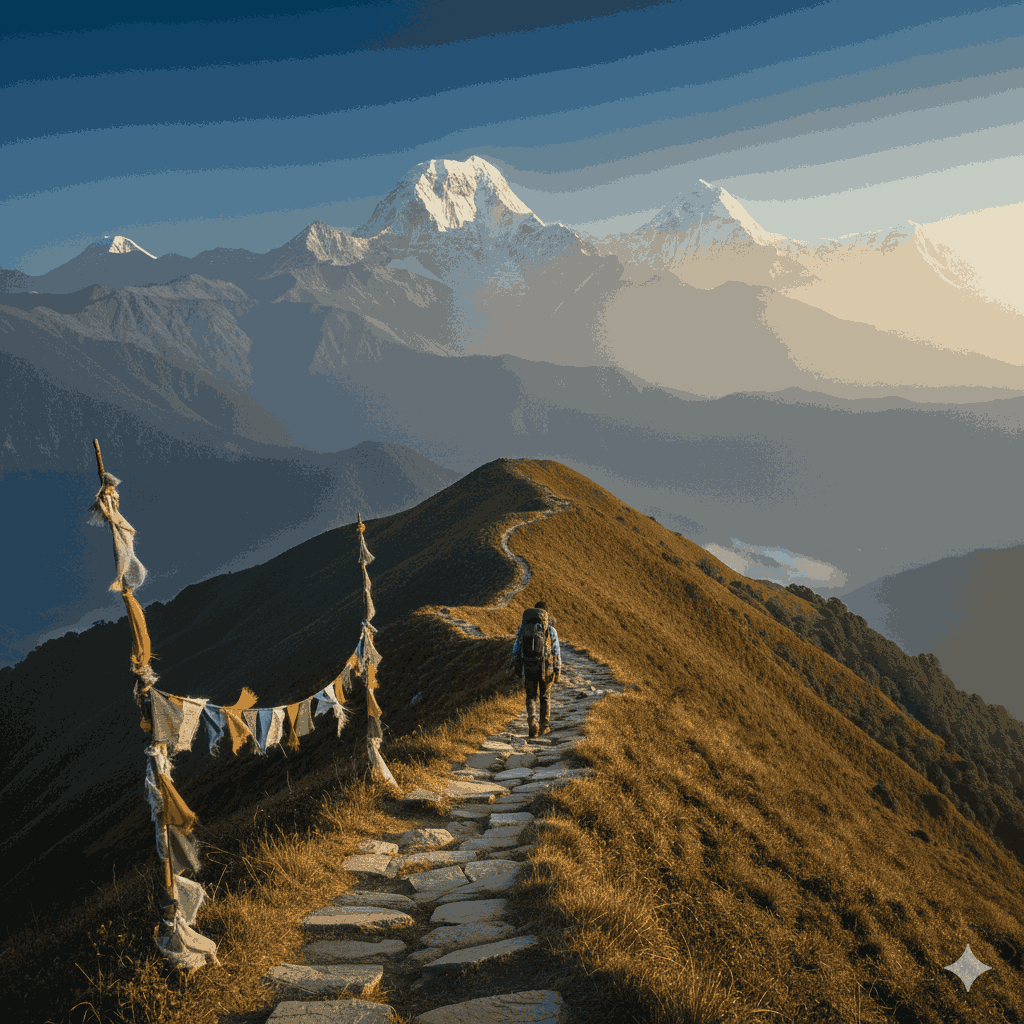
Solo trek in Nepal with a lone hiker walking through a Himalayan mountain trail surrounded by snow capped peaks
For decades, the idea of a solo trek in nepal represented the pinnacle of adventure,a lone hiker with a backpack, a map, and the infinite horizon of the Himalayas. However, as we navigate through 2026, the landscape of independent trekking has fundamentally transformed. While the “spirit” of the solo journey remains alive, new government regulations and a shift toward sustainable tourism have redefined what it means to hike alone in the world’s highest mountains.
In 2026, a solo trek in nepal is no longer about total isolation; it is about “supported independence.” Following the strictly enforced 2023 policy, all foreign trekkers are now required to hire a licensed guide when entering most of Nepal’s national parks and conservation areas. This shift was designed to enhance trekker safety, protect the fragile alpine environment, and provide vital employment for local mountain communities. For the modern traveler, this means your solo adventure now comes with a local partner who acts as a cultural bridge, a safety anchor, and a fountain of Himalayan wisdom.
But the journey doesn’t end at the trailhead. In 2026, the most successful trips are those that balance the ruggedness of the trail with urban sophistication. By pairing your solo trek in nepal with a restorative yoga trek in nepal and capping it off with the world-class jazz festivals and live music in kathmandu, you create a 360-degree Himalayan experience that feeds both the body and the soul.
Discover the New Reality: Solo Trek in Nepal Regulations 2026
If you are planning a solo trek in nepal this year, the first thing you must understand is the legal framework. Gone are the days of simply buying a permit and heading into the Annapurna or Langtang regions alone.
The Mandatory Guide Policy: Safety and Sustainability
As of 2026, the Nepal Tourism Board (NTB) and the Trekking Agencies’ Association of Nepal (TAAN) have made it mandatory for all foreign hikers to be accompanied by a licensed guide. This rule applies to major regions like Annapurna, Langtang, and Manaslu. While the Everest region (Khumbu) occasionally has differing local council rules, the general trend for 2026 is “no guide, no trek.”
Why the change? Between 2022 and 2025, a significant number of solo trekkers went missing or suffered from untreated altitude sickness. A guide provides immediate first aid and emergency communication.
Economic Impact: Hiring a guide ensures your tourism dollars directly support the families of the mountain regions, fostering a more ethical tourism model.
The 2026 Permit System: Phasing out the TIMS Card
The permit landscape is shifting. In many regions, the traditional TIMS (Trekkers’ Information Management System) card is being replaced by local municipality entrance fees.
Annapurna Region: You still require the ACAP (Annapurna Conservation Area Permit), which costs roughly NPR 3,000 (~$23 USD).
Everest Region: Trekkers must pay the Khumbu Pasang Lhamu Rural Municipality Fee directly in Lukla or Monjo.
Digital Tracking: Many trails now use QR-code-based check-in points to ensure that even a solo trek in nepal is monitored for safety.
For real-time updates on permit costs, check the Nepal Tourism Board official site.
Unveil the Best Routes for a “Supported Solo” Trek in Nepal
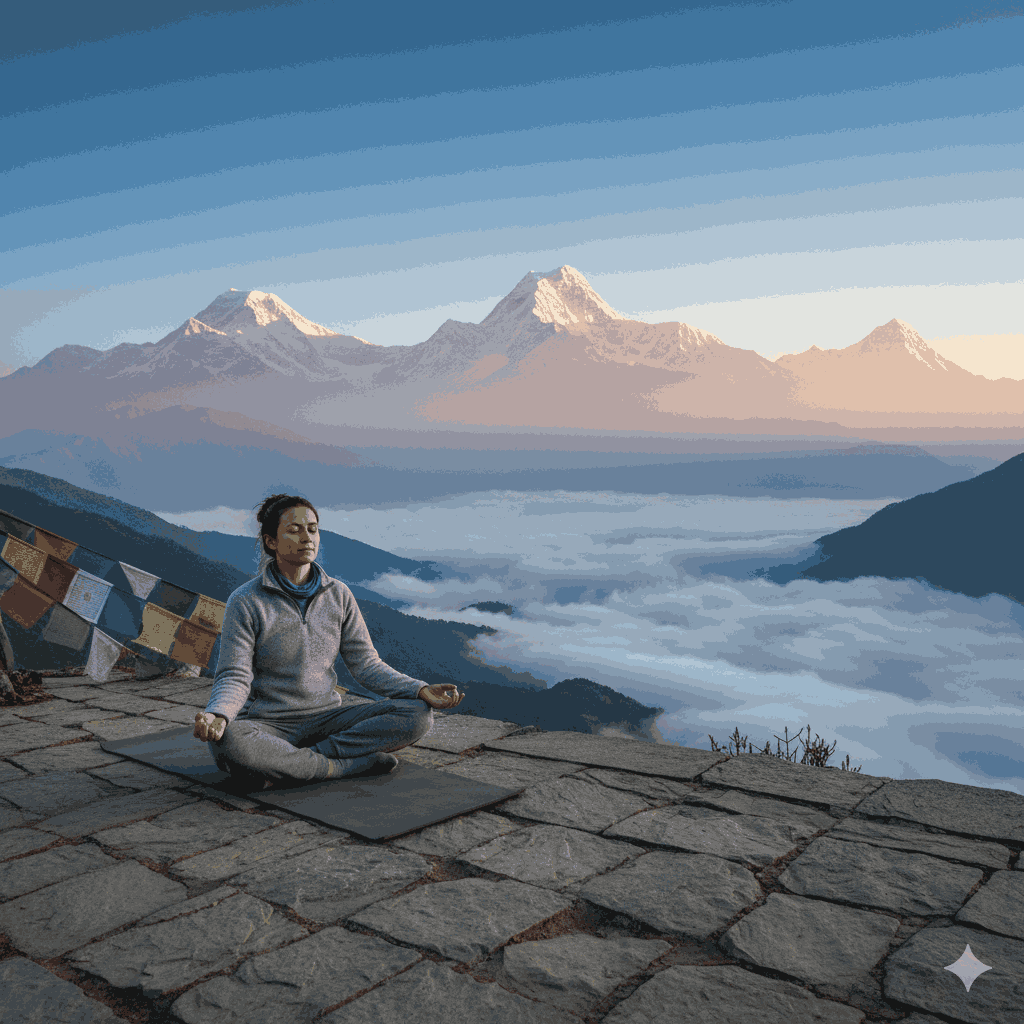
Solo trek in Nepal on the Mardi Himal ridge with panoramic mountain views and quiet trails
Even with a guide, you can maintain the “solo vibe” by choosing trails that offer solitude, introspection, and breathtaking scenery. Here are the top picks for your solo trek in nepal in 2026:
1. The Mardi Himal Trek (5–7 Days)
This is widely considered the best solo trek in nepal for those seeking a ridge-line adventure with fewer crowds than the neighboring Annapurna Base Camp.
The Experience: You walk along a narrow, high-altitude ridge that leads directly toward the “Fishtail” peak (Machhapuchhre).
The Solitude: Because it is a relatively new trail, the teahouses are intimate, making it easy to meet other travelers in the evenings while enjoying quiet forest walks during the day.
2. Langtang Valley Trek (7–9 Days)
Close to Kathmandu, this trek offers a deep dive into Tamang culture and glacial landscapes.
The Highlight: Reaching Kyanjin Gompa and climbing Kyanjin Ri for a 360-degree view of the valley’s white peaks.
Accessibility: In 2026, improved road conditions to Syabrubesi make this the most time-efficient high-altitude trek.
3. Pikey Peak (5–6 Days)
Known as Sir Edmund Hillary’s favorite view of Everest, this is a lower-altitude “off-the-beaten-path” gem. It’s the perfect solo trek in nepal for those who want to see the giants—Everest, Lhotse, and Makalu—without the crowds of the EBC highway.
Immerse in the Wellness Path: The Solo Yoga Trek in Nepal
For many, a solo trek in nepal is a pilgrimage for the mind. In 2026, integrating a yoga trek in nepal into your itinerary is a major trend, allowing you to turn a physical hike into a moving meditation.
The Synergy of Breath and Altitude
Pranayama for Acclimatization: A yoga trek in nepal focuses heavily on breathing techniques. Learning to control your breath at 3,000 meters isn’t just spiritual; it’s a biological hack that helps your body process oxygen more efficiently.
Daily Routine: Most wellness treks involve a sunrise Hatha session before the day’s hike and a restorative Yin session in the evening to soothe tired muscles.
Mental Clarity: The silence of the mountains, combined with guided meditation, allows for a level of introspection that is rarely found in the modern world.
Top Wellness Retreats for 2026
Many solo travelers choose to stay at dedicated centers before or after their trek. The Himalayan Yoga Academy and various retreats in the Pokhara Lakeside area offer specialized “Trekker’s Recovery” programs that are essential for long-term physical health.
Experience the Rhythm: Jazz Festivals and Live Music in Kathmandu
The final phase of any great solo trek in nepal is the “victory lap” back in the city. In 2026, the cultural scene for jazz festivals and live music in kathmandu has reached a global peak, offering a sophisticated contrast to the raw silence of the mountains.
Jazzmandu: The Crown Jewel of 2026,
Solo Trek in Nepal
If your solo adventure aligns with late October, you are in for a treat. Jazzmandu, the Kathmandu International Jazz Festival, is the definitive event for jazz festivals and live music in kathmandu. It brings together international maestros and local fusion artists in ancient 17th-century courtyards and world-class venues.
Iconic Venues for Your Post-Trek Encore
On any given night in 2026, you can find incredible talent at these legendary spots:
Jazz Upstairs (Lazimpat): This is the “holiest” site for jazz in Nepal. It’s a dark, woody room where the music is the only thing that matters—perfect for solo travelers to blend in and enjoy the set.
Moksh (Jhamel): A sprawling cultural hub that often hosts the Cadenza Collective. It is essential for anyone seeking the best of jazz festivals and live music in kathmandu.
Purple Haze Rock Bar (Thamel): If you need high-energy rock after the quiet of the trail, this is the most famous venue in the country.
For the latest gig dates, check out the 2026 Kathmandu Live Music Calendar.
Master the Logistics: Costs and Gear for 2026
Planning a solo trek in nepal requires a detailed budget. In 2026, prices have stabilized, but you must account for the mandatory guide fees.
2026 Cost Breakdown (Daily Estimates)
| Item | Budget Trekker | Mid-Range |
| Mandatory Guide | $25–$30 | $35–$50 (Specialized) |
| Food & Lodging | $30–$35 | $50–$70 |
| Permits (Average) | $5–$10 | $5–$10 |
| Misc (WiFi, Shower) | $5 | $10 |
| Total Per Day | $65–$80 | **$100–$140** |
Essential Packing for the Soloist:
Solo Trek in Nepal
Water Purification: Don’t rely on plastic bottles. Use a LifeStraw or Grayl press to stay eco-friendly.
Connectivity: Get a Ncell or Nepal Telecom SIM card with at least 20GB of data. Coverage in 2026 is surprisingly good, even on the Mardi Himal ridge.
Power: A 20,000mAh power bank is non-negotiable, as charging at teahouses often costs $2–$5 per hour.
Frequently Asked Questions (FAQs) on Solo Trek in Nepal
Q: Can I really not trek alone in 2026?
A: In 90% of Nepal’s trekking regions, you must have a licensed guide. Solo hiking without a guide can result in fines or being turned back at checkpoints.
Q: Is a yoga trek in nepal suitable for someone who has never done yoga?
A: Yes! Most yoga trek in nepal itineraries are designed for all levels, focusing on stretching and breathing rather than advanced poses.
Q: When is the best time for jazz festivals and live music in kathmandu?
A: October is the month of Jazzmandu, but the “KatJazz” festival in April also offers a week of incredible performances.
Q: What is the safest solo trek in nepal for a beginner?
A: The Ghorepani Poon Hill Trek or the Mardi Himal Trek are the top choices due to the well-marked trails and excellent teahouse infrastructure.
Choosing a solo trek in nepal in 2026 is an exercise in mindful travel. It is the balance between the independence of the high trail and the support of a local guide. It is the harmony found between the physical challenge of the mountains and the spiritual depth of a yoga trek in nepal. Finally, it is the bridge between the silence of the high ridges and the electric energy of jazz festivals and live music in kathmandu.
