
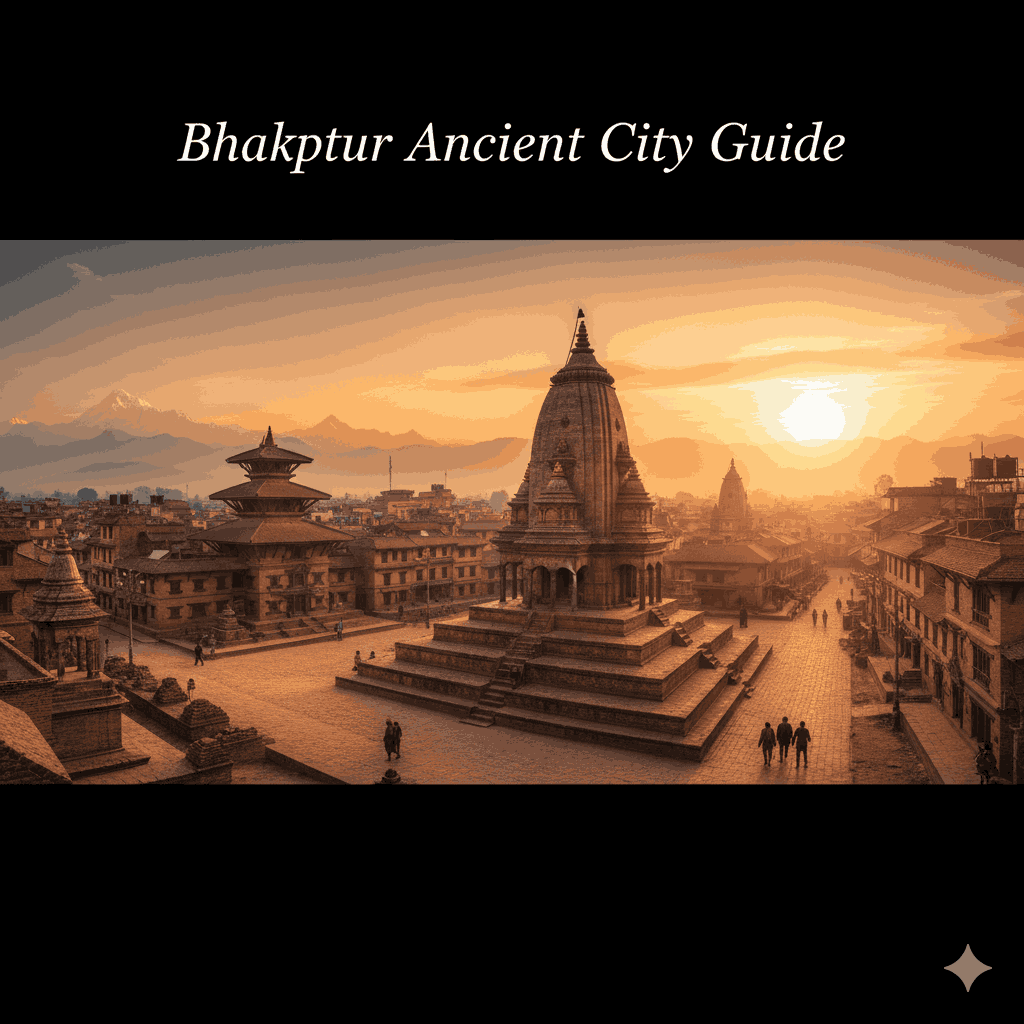
Panoramic view of Bhaktapur ancient city with historic temples and cobblestone streets, a must-see on the Bhaktapur ancient city guide
When you walk through the massive stone gates of Bhaktapur, the sounds of modern Nepal,the honking motorcycles and bustling city noise, suddenly fade away. You are greeted by the smell of red clay, the sight of golden pagodas, and the rhythmic sound of artisans carving wood. This Bhaktapur ancient city guide is designed to lead you through the cobblestone alleys of a kingdom that served as the capital of Nepal during the Malla dynasty.
Bhaktapur, also known as Bhadgaon or Khwopa, remains the best-preserved of the three royal cities in the Kathmandu Valley. Unlike Kathmandu and Patan, Bhaktapur has maintained a traffic-free core, allowing its medieval charm to shine. In 2026, the city has emerged as a global leader in community-led heritage restoration, having beautifully recovered from the 2015 earthquake. Whether you are a history buff, a spiritual seeker, or a food lover, this Bhaktapur ancient city guide will ensure you don’t miss a single “hidden gem.”
To see how this ancient capital fits into a broader trip, you might find our Things to Do in Kathmandu for 3 Days guide extremely helpful for planning your logistics.
Part 1: History and Heritage of Bhaktapur: Bhaktapur ancient city guide
To truly use this Bhaktapur ancient city guide, one must understand the layers of history beneath your feet. Founded in the 8th century by King Ananda Malla, the city reached its architectural peak between the 14th and 18th centuries.
The Malla Dynasty Legacy
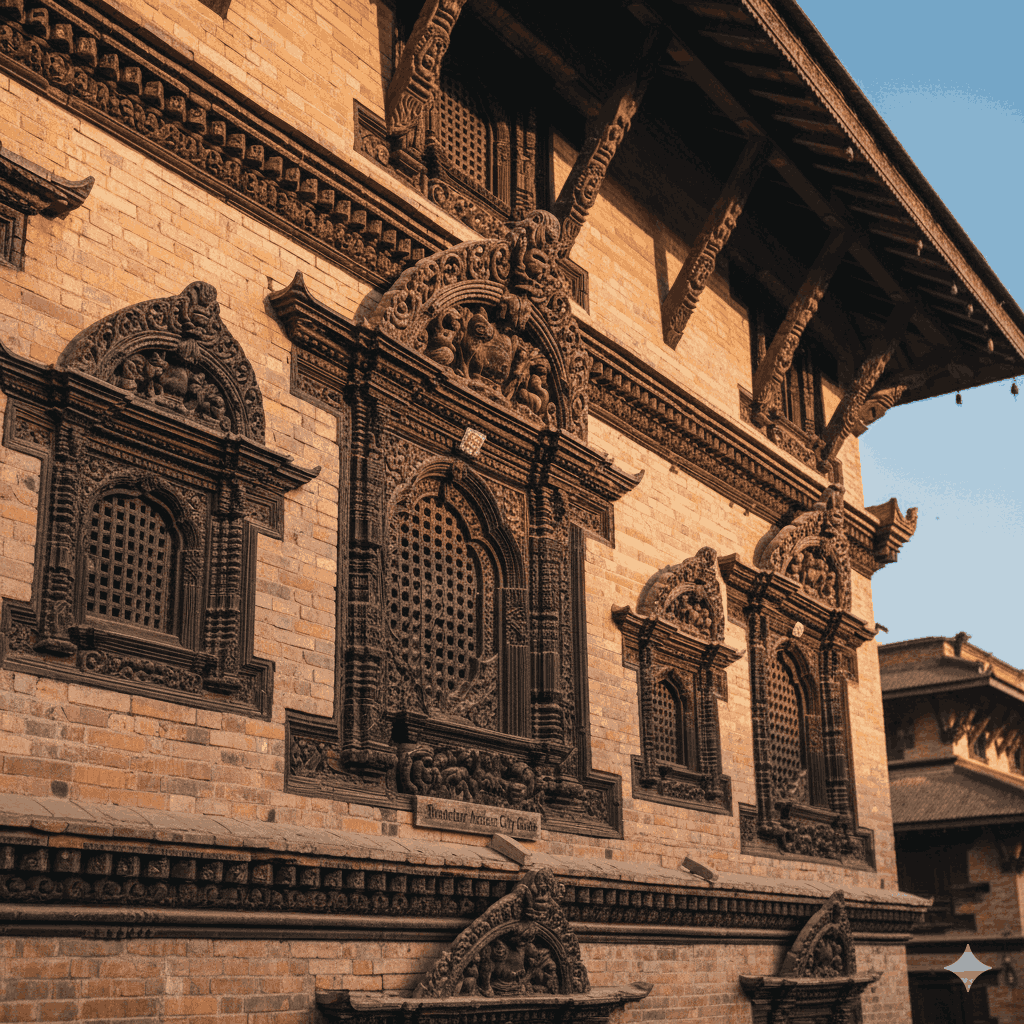
Detail of the 55-Window Palace in Bhaktapur, a highlight of the Bhaktapur ancient city guide showing traditional Nepalese architecture
The Malla kings were fierce rivals, each trying to outdo the other in building the most magnificent palaces and temples. This competition resulted in the creation of the three Durbar Squares of the valley. Bhaktapur’s square was widely considered the grandest. The city’s layout is shaped like a flying pigeon, a design intended to offer divine protection.
The spiritual essence of this city is tied to the same roots as other major shrines in the region. For instance, the devotion seen here parallels the intensity of the Pashupatinath Temple evening Aarati time, where fire and faith meet.
The 2015 Earthquake and the 2026 Revival
The 2015 Gorkha earthquake was a dark chapter for Bhaktapur, destroying several landmarks including the Vatsala Durga Temple. However, by 2026, the restoration is nearly complete. What makes Bhaktapur unique is that the local community rejected foreign concrete, choosing instead to use traditional sun-baked bricks and hand-carved timber to rebuild their heritage. This Bhaktapur ancient city guide celebrates this resilience.
Part 2: The Four Major Squares of Bhaktapur:Bhaktapur ancient city guide
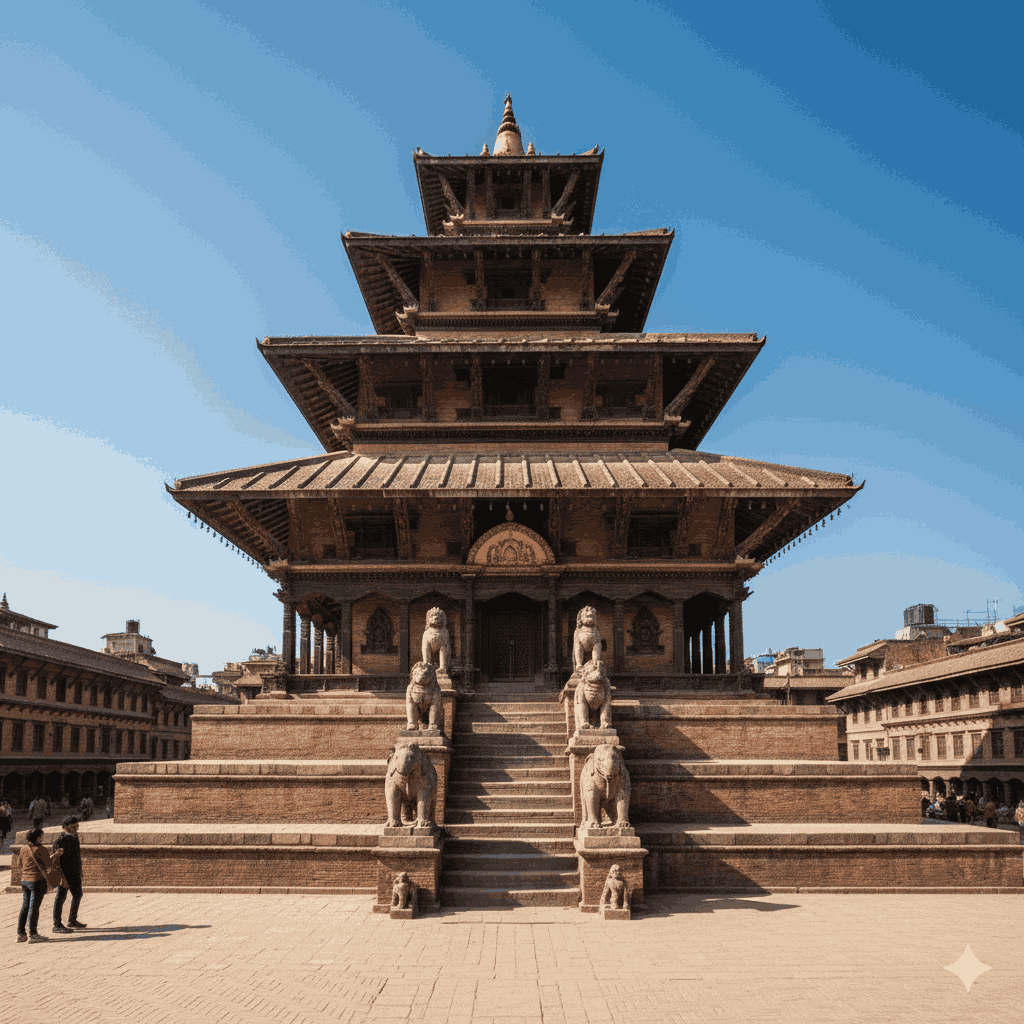
Nyatapola Temple in Bhaktapur, the tallest pagoda in Nepal, featured in the Bhaktapur ancient city guide
Any comprehensive Bhaktapur ancient city guide must focus on the four distinct squares that define the city’s geography. Each square has a different “vibe” and purpose.
1. Bhaktapur Durbar Square: The Royal Epicenter
This is the heart of the kingdom and the primary site listed under the UNESCO World Heritage Site designation for the Kathmandu Valley.
The 55-Window Palace: A masterpiece of woodcarving built in 1427 AD. The intricate black-oak windows are some of the finest examples of Newari art.
The Golden Gate (Sun Dhoka): Described by many as the most beautiful piece of art in all of Nepal, this gilded gate leads to the Taleju complex.
Big Bell: Used to announce prayers at the Taleju Temple, its deep resonance still echoes through the square today.
2. Taumadhi Square: The Architectural Marvel
Located a short walk from Durbar Square, this area is dominated by the Nyatapola Temple.
Nyatapola Temple: Standing five stories high (30 meters), it is the tallest pagoda in Nepal. It is dedicated to Goddess Siddhi Lakshmi and is famous for its guardian statues—wrestlers, elephants, lions, and griffins—each ten times stronger than the one below.
Bhairavnath Temple: Dedicated to the fierce manifestation of Shiva, this rectangular temple sits adjacent to Nyatapola, representing a balance between the gentle and the terrifying.
3. Dattatreya Square: The Ancient Core
This is the oldest part of the city.
Dattatreya Temple: Legend says this temple was carved from the trunk of a single tree.
The Peacock Window: Located in a narrow side street near the square, this 15th-century masterpiece is the most famous woodcarving in Nepal. This Bhaktapur ancient city guide suggests looking closely at the tiny intricate feathers carved into the wood.
4. Pottery Square (Talako Tole): The Living Tradition
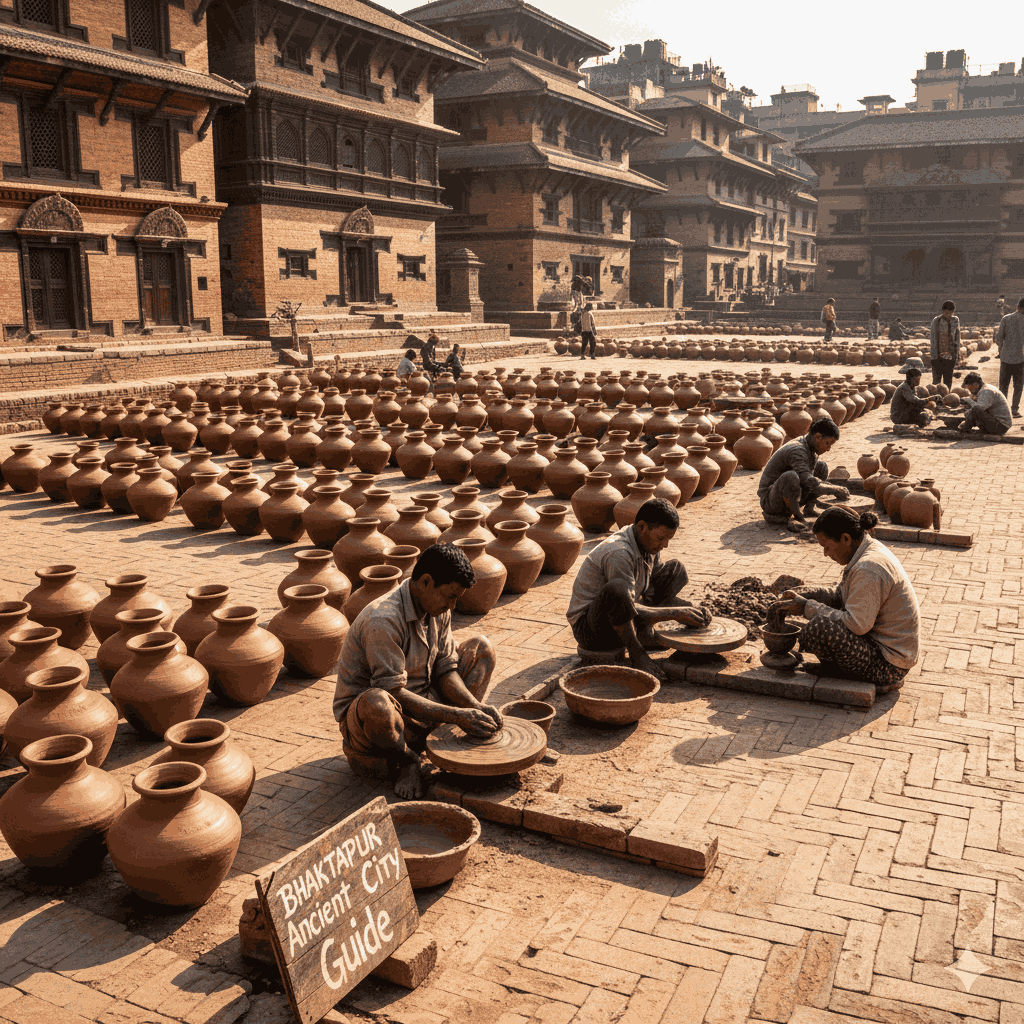
Pottery-making at Pottery Square in Bhaktapur, a living tradition highlighted in the Bhaktapur ancient city guide
Bhaktapur is famous for its clay. In Pottery Square, you can see hundreds of clay pots drying in the sun. Watching the master potters at their manual wheels is one of the most hypnotic experiences you’ll find. Many potters here belong to the Prajapati caste, who have been doing this for over 40 generations.
Part 3: Culinary Journey,The Taste of Newar Culture
You cannot follow a Bhaktapur ancient city guide without indulging in the local flavors. The Newar community is famous for its elaborate feasts and unique ingredients.
Juju Dhau: The King of Curds
The signature dish of Bhaktapur is Juju Dhau. Made from buffalo milk and flavored with honey and cardamom, this thick, creamy yogurt is served in traditional clay bowls. The clay absorbs the excess moisture, leaving the yogurt so thick it can be sliced with a knife.
Newari Khaja Set
A traditional “snack set” that is a must-try for any foodie:
Choila: Spiced, grilled buffalo meat.
Bara: Savory lentil pancakes.
Yomari: A pointed rice-flour dumpling filled with sweet molasses (chaku) or sesame.
For a deeper dive into the religious significance of food in Nepal, see our Religious Places in Nepal article, which explores how food is offered to the gods.
Part 4: Festivals and Traditions in 2026
If you time your visit correctly, this Bhaktapur ancient city guide becomes a front-row ticket to some of the most vibrant festivals on earth.
Bisket Jatra (April): The Nepali New Year festival. A massive wooden chariot is pulled through the streets, often resulting in a friendly “tug-of-war” between the upper and lower parts of the city.
Gai Jatra (August): The “Festival of Cows,” where families who have lost a relative in the past year lead a cow (or a boy dressed as a cow) through the streets to help the soul find its way to heaven.
Yomari Punhi (December): A celebration of the harvest where the sweet Yomari dumplings are the star of the show.
Part 5: 2026 Travel Logistics and Expert Tips
To maximize your experience with this Bhaktapur ancient city guide, you need to know the latest 2026 updates regarding entry and access.
Entrance Fees
Foreigners: 1,800 NPR (approx. $14 USD).
SAARC/Chinese Nationals: 500 NPR.
Pro Tip: Your ticket is technically valid for one day, but if you are staying overnight in a Bhaktapur guest house, you can get it extended for the duration of your stay at the Tourist Information Center near the main gate.
How to Get There:Bhaktapur ancient city guide
Taxi: From Thamel, it takes about 45 minutes to 1 hour depending on traffic. Expect to pay around 1,500 NPR.
Local Bus: For the adventurous, buses leave frequently from Ratna Park (Kathmandu). It costs less than 100 NPR but can be quite crowded.
Suggested 3-Day Bhaktapur Itinerary
Day 1: Explore the major squares and enjoy a sunset dinner overlooking Nyatapola.
Day 2: Take a pottery-making workshop and visit the National Art Museum.
Day 3: Hike to the nearby Changu Narayan Temple, the oldest temple in Nepal.
FAQs
1. Is Bhaktapur better than Kathmandu Durbar Square?
While both are incredible, this Bhaktapur ancient city guide argues that Bhaktapur is better preserved and more peaceful due to the lack of motor vehicles in the city center.
2. Can I stay overnight in Bhaktapur?
Yes! In fact, we highly recommend it. Staying overnight allows you to see the city at 6:00 AM when locals are performing their morning puja and the light is perfect for photography.
3. What should I buy in Bhaktapur?
Look for hand-painted Thangkas, traditional pottery, and “Dhaka” fabric.
4. Is it safe for solo travelers?
Bhaktapur is incredibly safe. The locals are known for their hospitality, often called “The City of Devotees” for a reason.
5. How long does it take to see everything?
You can see the main highlights in 4-5 hours, but to truly experience the city, you need at least 2 full days.
As the golden sun sets over the red-brick rooftops of the valley, you begin to understand why every Bhaktapur ancient city guide emphasizes the “spirit” of the city. It is not just about the stone and wood; it is about the people who continue to live, pray, and create within these ancient walls. Bhaktapur is a reminder that heritage is not something to be kept in a glass case, but something to be lived every single day.
Whether you are here for the architecture, the food, or the spiritual energy, Bhaktapur will leave an indelible mark on your heart.
