

best season for honey hunting in Nepal:A daring Himalayan honey hunter descending steep cliffs in Nepal
Deep within the emerald shadows of the Annapurna and Manaslu massifs, a tradition as old as the mountains themselves continues to defy the march of modernity. Honey hunting in Nepal is not merely a task; it is a spiritual, perilous, and breathtakingly beautiful dance between man and nature. However, for any traveler or documentarian wishing to witness this spectacle, timing is the most critical factor.
Finding the best season for honey hunting in Nepal is a complex calculation involving lunar cycles, rhododendron blooms, and weather patterns. In this master guide, we will strip away the mystery and provide you with a comprehensive roadmap to experiencing the harvest of “Himalayan Gold.”
1. Introduction: What Makes Honey Hunting in Nepal So Special?
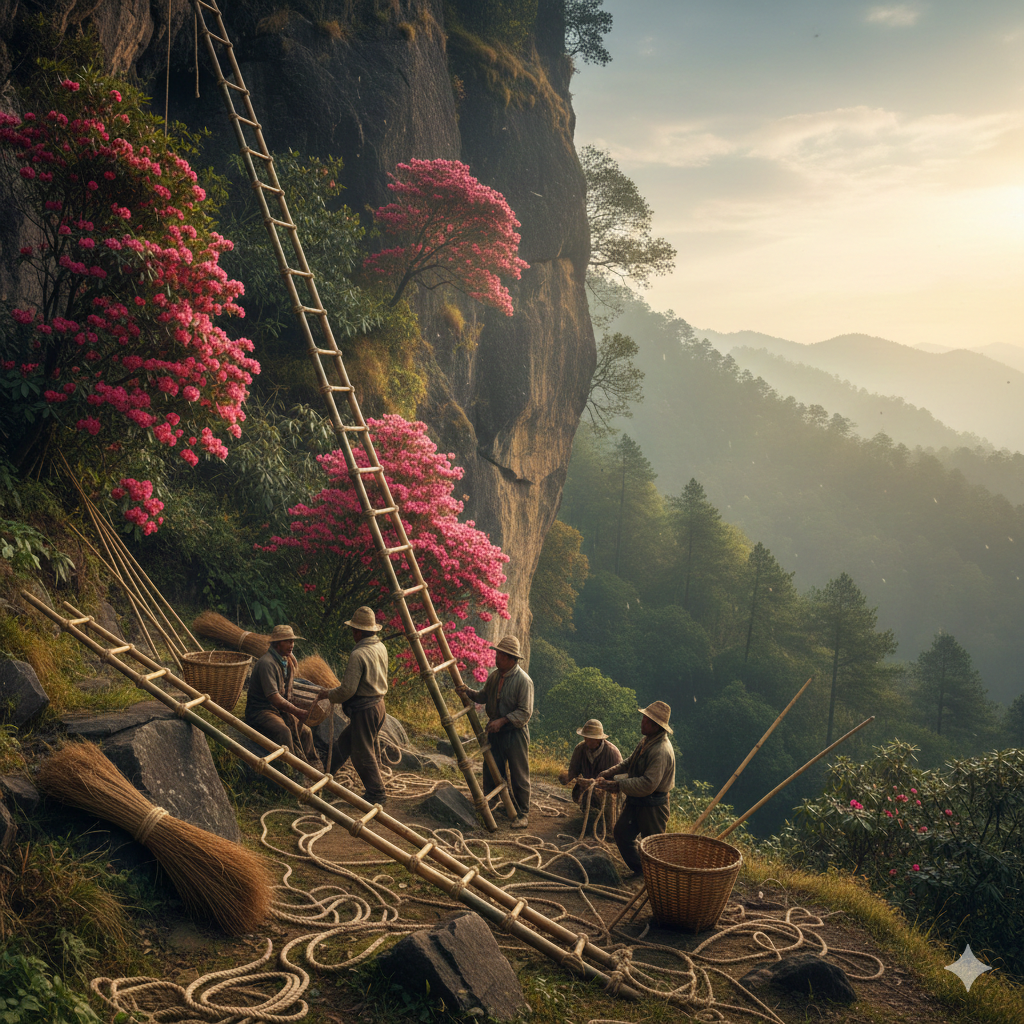
Honey hunters in Nepal during the best season for honey hunting, setting up bamboo ladders against lush green cliffs amid blooming rhododendrons
Before we dive into why spring or autumn is the best season for honey hunting in Nepal, we must understand the “Who” and the “What.” The hunters are primarily from the Gurung and Magar ethnic groups. For generations, they have scaled vertical cliffs reaching heights of 300 meters, supported only by handmade hemp ropes and bamboo ladders.
The prize? The honey of the Apis laboriosa, the world’s largest honeybee. These bees build massive semi-circular nests under the overhangs of steep cliffs to protect themselves from predators. The honey they produce, particularly in the spring, is known globally as “Mad Honey” due to its hallucinogenic and medicinal properties.
2. Defining the Best Season for Honey Hunting in Nepal
There is no singular “best” day, but there are two distinct windows that qualify as the best season for honey hunting in Nepal.
The Spring Window (Late April to June)
Spring is widely regarded as the best season for honey hunting in Nepal for those who want to see the harvest of the famous “Red Honey.”
The Bloom: This season coincides with the blooming of red rhododendrons (Lali Gurans).
The Potency: The grayanotoxins from the flowers are concentrated in the honey during this time, creating the psychoactive effect.
The Scenery: The hills are lush, green, and bursting with life.
The Autumn Window (October to November)
Alternatively, autumn is the best season for honey hunting in Nepal for those who prioritize safety, clear photography, and stable trekking conditions.
The Clarity: Post-monsoon skies offer the most dramatic views of the peaks.
The Honey: Autumn honey is “Golden Honey”—sweeter, non-hallucinogenic, and used mostly for its nutritional value.
The Rituals: Autumn harvests often coincide with major festivals like Dashain and Tihar.
3. Part 1: Spring – The Season of Mad Honey
If your interest lies in the mystical and medicinal side of Himalayan culture, then spring is the best season for honey hunting in Nepal.
The Science of the Spring Bloom
During the months of May and June, the giant bees forage on rhododendron nectar. This is why spring is the best season for honey hunting in Nepal for “Mad Honey.” The toxin, grayanotoxin, acts on the human nervous system. In small doses, it is used by locals to treat hypertension and joint pain. In large doses, it creates a “drunken” state that can last for 24 hours.
Environmental Factors in Spring
While it is the best season for honey hunting in Nepal for potency, spring brings challenges:
Heat: The lower foothills can be quite warm and humid.
Leeches: As the pre-monsoon rains begin, leeches become active on the trails.
Aggression: The bees are most active and protective of their hives in the heat, making the hunt significantly more dangerous for the hunters.
4. Part 2: Autumn – The Season of the Golden Harvest
Many professional photographers consider October to be the best season for honey hunting in Nepal. After the monsoon rains have washed the dust from the air, the visibility is unparalleled.
Safety and Accessibility
The best season for honey hunting in Nepal for physical safety is autumn.
Dry Cliffs: Moisture is the enemy of the honey hunter. Slippery rocks can lead to fatal falls. In autumn, the limestone and gneiss cliffs are dry and provide better friction for the bamboo ladders.
Stable Weather: Unlike spring, which can see sudden pre-monsoon thunderstorms, autumn offers predictable blue skies. This makes it the best season for honey hunting in Nepal for those planning tight travel schedules.
The Cultural Connection
Autumn is a time of celebration. If you choose this as your best season for honey hunting in Nepal, you will witness villages in their most festive state. You can learn about local life by following a Nepal1 week itinerary for beginners which often incorporates these hill-station visits.
5. Top Locations: Where to Find the Harvest
Even if you travel during the best season for honey hunting in Nepal, you must be in the right village.
Ghalegaun and Bhujung (The Heartland)
Located in the Lamjung district, these villages are the epicenter of honey hunting culture.
Why here? The community has preserved the tradition with immense pride.
Access: A 6-8 hour drive from Kathmandu followed by a short trek. During the best season for honey hunting in Nepal, these villages offer organized homestays.
The Myagdi and Kaski Cliffs
If you are an adventure seeker, the cliffs near the Annapurna Circuit trek offer a more raw experience. The best season for honey hunting in Nepal in these regions is usually late May. Adventure lovers can find more high-octane ideas in our Nepal 1 week itinerary adventure seekers guide.
6. The Honey Hunter’s Ritual: More Than Just a Climb
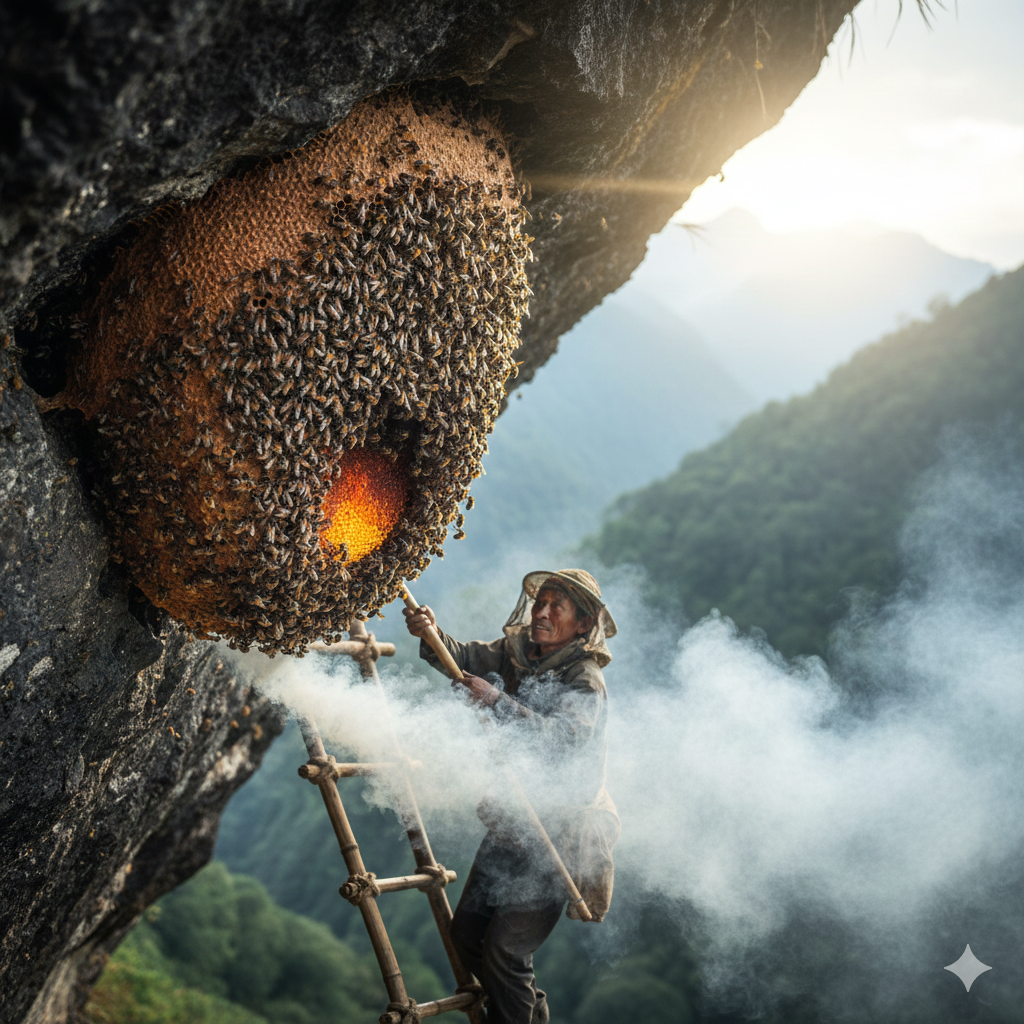
Massive honeybee hive hanging from a Nepalese cliff during the best season for honey hunting, with a hunter using smoke to calm the bees
Regardless of the best season for honey hunting in Nepal, the hunt cannot proceed without the blessing of the gods.
The Role of the Shaman
The “Chidhar” (lead hunter) consults a shaman to find the “Auspicious Day.” Even within the best season for honey hunting in Nepal, certain days of the week are considered “unlucky” for disturbing the bees.
The Sacrifice: A goat or chicken is often sacrificed at the base of the cliff to appease the spirits of the forest.
The Taboos: Hunters must abstain from certain foods and activities for days leading up to the hunt to maintain purity.
7. The Technique: Weapons of Bamboo and Smoke
Witnessing the technique is why travelers seek out the best season for honey hunting in Nepal.
Smoke out: A fire is lit at the base of the cliff using green wood to create thick, white smoke. This “drifts” up to the hive to calm the bees.
The Descent: The hunter descends from the top of the cliff on a rope ladder (Prang).
The Tango: Using two long bamboo poles, the hunter maneuvers a basket (Khori) under the hive while the other pole cuts the honeycomb.
The Sting: Even during the best season for honey hunting in Nepal, hunters are stung dozens of times. They believe their blood has become somewhat immune over generations.
8. Safety and Ethical Considerations for Tourists

Traditional honey harvesting in Nepal during the optimal season, showcasing a hunter using bamboo tools and smoke in the Himalayan landscape
While you may be excited to visit during the best season for honey hunting in Nepal, you must be a responsible traveler.
Distance: Do not attempt to climb the ladders. Stay at the designated viewing areas.
Bee Suits: Even at a distance, the Apis laboriosa can swarm. Always wear thick clothing and head nets provided by your guide.
Sustainability: Commercial demand for “Mad Honey” is leading to over-harvesting. Support operators who only harvest twice a year during the traditional best season for honey hunting in Nepal windows.
Safety Links: Always check the Official Nepal Tourism Board for updated travel advisories. For general safety, refer to our guide Is it Safe to Visit Nepal?.
9. Comparison: Spring vs. Autumn Harvest
| Category | Spring Harvest | Autumn Harvest |
| Primary Goal | Mad Honey / Medicine | Food / Tradition |
| Climate | Humid, Mist, Rain | Dry, Clear, Cool |
| Bee Activity | Peak Aggression | Moderate |
| Visuals | Green, Lush, Foggy | Snow-capped Mountains |
| Best For | Documentarians / Researchers | Photographers / Tourists |
10. Frequently Asked Questions (FAQs)
Q: Can I buy mad honey during the best season for honey hunting in Nepal?
Yes, it is sold in local markets, but be extremely careful. Real mad honey is very potent. Ensure you are buying from a reputable village source.
Q: Is honey hunting cruelty to animals?
Traditional hunters only take a portion of the hive, leaving enough for the colony to survive. However, as it becomes more commercialized, this balance is at risk. Visiting during the best season for honey hunting in Nepal with a local guide ensures ethical practices.
Q: How much does a honey hunting tour cost?
Prices vary, but a 3-4 day trip from Kathmandu typically costs between $400 – $700 USD per person, depending on the group size and level of comfort.
Q: Can I go honey hunting in the monsoon?
Absolutely not. July through September is never the best season for honey hunting in Nepal. It is too dangerous for both the hunters and the spectators.
Choosing the best season for honey hunting in Nepal is the difference between a frustrating trip and a life-changing one. If you want the thrill of the “Mad Honey” and the lushness of the jungle, aim for May. If you want the crisp air of the Himalayas and the joy of the autumn festivals, aim for October.
Nepal is a country that rewards the patient and the prepared. By aligning your visit with the best season for honey hunting in Nepal, you are not just a tourist; you become a witness to a disappearing world.
