
Taleju Bhawani Temple
In the heart of Kathmandu Durbar Square stands a temple that has long captivated devotees, historians, and travelers alike the Taleju Bhawani Temple. A masterpiece of Newar architecture and an important symbol of royal devotion, this temple is not just a place of worship but a reflection of Nepal’s rich cultural and spiritual heritage.
Built during the Malla dynasty, the Taleju Bhawani Temple is dedicated to Goddess Taleju the royal goddess and protector of the Malla kings. This sacred site remains one of the holiest temples in Nepal, accessible only to Hindus and open to the public just once a year during Dashain, Nepal’s biggest festival.
The Historical Significance of Taleju Bhawani Temple
The Taleju Bhawani Temple was constructed in the 16th century by King Mahendra Malla, who was deeply devoted to Goddess Taleju. According to legend, the goddess herself appeared to him in a dream and instructed him to build a temple dedicated to her.
This temple not only became a royal shrine but also a symbol of power and divine guidance for the Malla kings of Kathmandu Valley. It was believed that as long as the rulers worshipped Taleju with pure devotion, their reign and the kingdom would prosper.
Even today, the temple stands as a reminder of the artistic brilliance and deep spirituality that define Nepal’s medieval history.
Architectural Beauty of Taleju Bhawani Temple
| Feature | Description |
|---|---|
| Style | Newar Pagoda Architecture |
| Built By | King Mahendra Malla (1564 AD) |
| Height | Three-tiered roof structure |
| Material | Carved wood, brick, and gilded metal |
| Deities Inside | Goddess Taleju, her attendants, and tantric symbols |
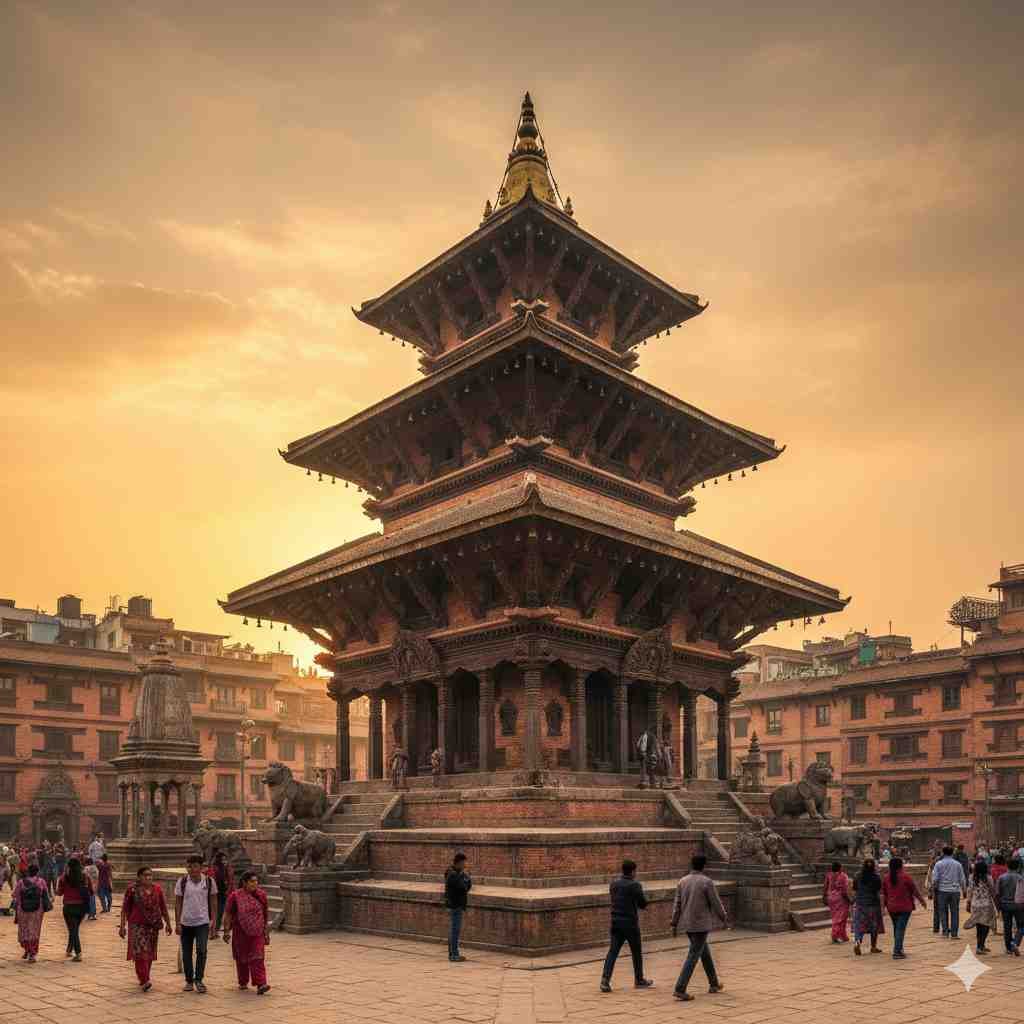
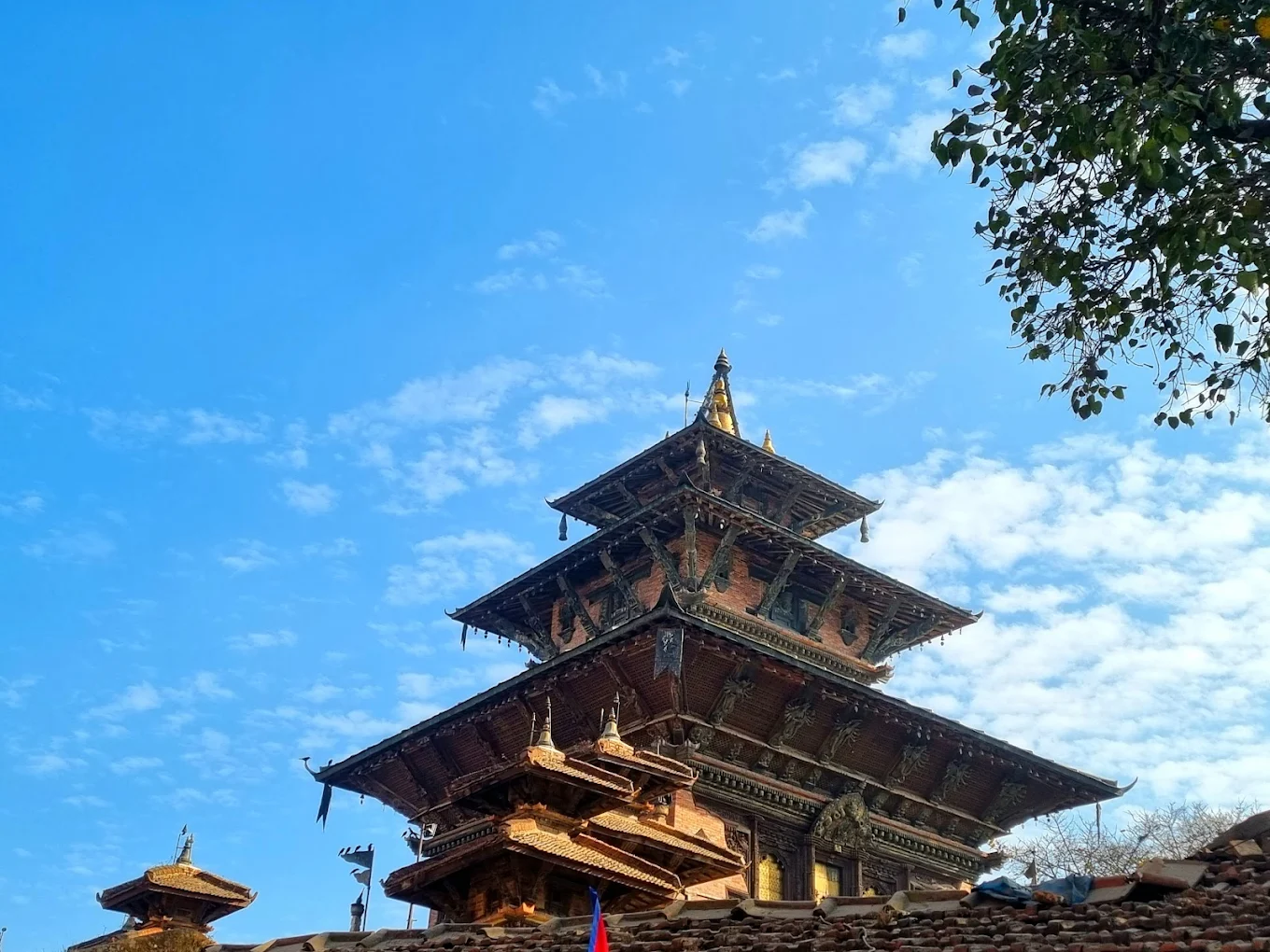
The temple is a stunning example of Newar craftsmanship, featuring intricately carved wooden struts, golden finials, and detailed lattice windows. Its towering three-roofed pagoda design dominates the skyline of Kathmandu Durbar Square, drawing both pilgrims and photographers.

The main shrine houses the idol of Goddess Taleju, said to have 12 smaller heads representing her divine powers. Around the temple are shrines dedicated to other deities such as Kumari, the Living Goddess, and Lord Bhairav.
Religious Importance
The Taleju Bhawani Temple is one of the most sacred Hindu temples in Nepal. Taleju is considered the royal deity of the Malla and Shah kings, symbolizing strength, protection, and prosperity.
Only Hindus are allowed to enter the temple courtyard. For the general public, the temple opens its doors just once a year during Maha Navami (the ninth day of Dashain). On that special day, thousands of devotees visit the shrine to receive blessings from the goddess.
The temple is also closely connected to the Kumari tradition the living goddess of Kathmandu. The Kumari Ghar (house of the living goddess) was built to honor Taleju, as the Kumari is believed to be her earthly manifestation.
Location and Accessibility
Location: Kathmandu Durbar Square, Basantapur, Nepal
Distance from Thamel: Around 1.5 km (10–15 minutes walk)
Entry: Open to Hindus only; others can view from outside.
Best Time to Visit: Dashain festival (September–October)
The temple is part of the UNESCO World Heritage Site of Kathmandu Durbar Square, which also includes the Hanuman Dhoka Palace, Kumari Ghar, and several other ancient shrines.
Photography & Cultural Experience
While non-Hindus cannot enter the main temple, visitors can admire and photograph its magnificent exterior. The pagoda-style structure, combined with the surrounding temples and royal courtyards, offers stunning backdrops for photography.
From sunrise to sunset, the square comes alive with locals, devotees, and street vendors creating a vibrant atmosphere that blends spirituality with daily life.

If you’re passionate about architecture and heritage, capturing the Taleju Bhawani Temple from different angles provides a deep insight into Nepal’s living history.
Festivals and Rituals
The most significant event at the Taleju Bhawani Temple is during Dashain, Nepal’s grandest Hindu festival. On Maha Navami, special rituals and animal sacrifices are performed to honor the goddess’s victory over evil forces.
During this time, the temple is beautifully decorated with flowers, lamps, and traditional offerings. Devotees believe that visiting the temple on this day brings good luck, prosperity, and divine protection throughout the year.Tips for Visitors
Photography: Respect local customs; photography inside the temple is not allowed.
Dress Code: Wear modest clothing — shoulders and knees covered.
Respect Restrictions: Non-Hindus can view the temple from the courtyard area only.
Timing: Visit early morning or late afternoon for fewer crowds and beautiful lighting.
Combine Visits: Explore nearby attractions like Hanuman Dhoka Palace, Kumari Ghar, and the Kal Bhairav statue.
Taleju Bhawani Temple and Kumari Tradition
The Living Goddess Kumari is deeply associated with Taleju Bhawani. According to tradition, Taleju appeared to a Malla king in the form of a young girl and warned him never to reveal her identity. When the king broke his promise, Taleju disappeared but agreed to be worshipped in the form of a living child, now known as Kumari.
Even today, the Kumari is worshipped as the human embodiment of Taleju Bhawani, linking this ancient temple to Kathmandu’s living goddess tradition.
Why Taleju Bhawani Temple Should Be on Your Nepal Travel List
If you’re exploring Kathmandu’s cultural heritage, the Taleju Bhawani Temple is a must-see landmark. It’s not only a sacred site but also a window into the glorious Malla period and the spiritual life of Kathmandu Valley.
The temple stands as a timeless reminder of Nepal’s faith, artistry, and royal legacy an essential stop for history lovers, photographers, and spiritual travelers.
FAQs – Taleju Bhawani Temple
Q1. Who built the Taleju Bhawani Temple?
The temple was built by King Mahendra Malla in the 16th century.
Q2. Who is Goddess Taleju Bhawani?
She is considered the royal goddess and protector of the Malla kings a powerful form of Goddess Durga.
Q3. When can visitors enter the temple?
The temple opens to the public only once a year during Maha Navami of Dashain.
Q4. Can non-Hindus enter the temple?
No, only Hindus are allowed inside. Others can view it from outside the courtyard.
Q5. Is photography allowed?
Photography of the temple’s exterior is allowed, but inside photography is prohibited.
The Taleju Bhawani Temple is not just a monument it’s a living embodiment of Nepal’s faith, artistry, and royal history. From its stunning architecture to its deep spiritual legacy, this temple continues to inspire awe in every visitor who steps into Kathmandu Durbar Square.
If you wish to experience the spiritual heartbeat of Nepal, witnessing the grandeur of Taleju Bhawani Temple is an unforgettable experience.
