
What happens when electronic music meets the foot of Mount Everest?
That is the idea behind The Base Camp Sessions, an unusual music event planned for Everest Base Camp in Nepal on October 17, 2026.
Instead of bringing a conventional concert sound system to the world’s highest mountain environment, the proposed festival will use wireless LED headphones so participants can listen to music without broadcasting it through large speakers.
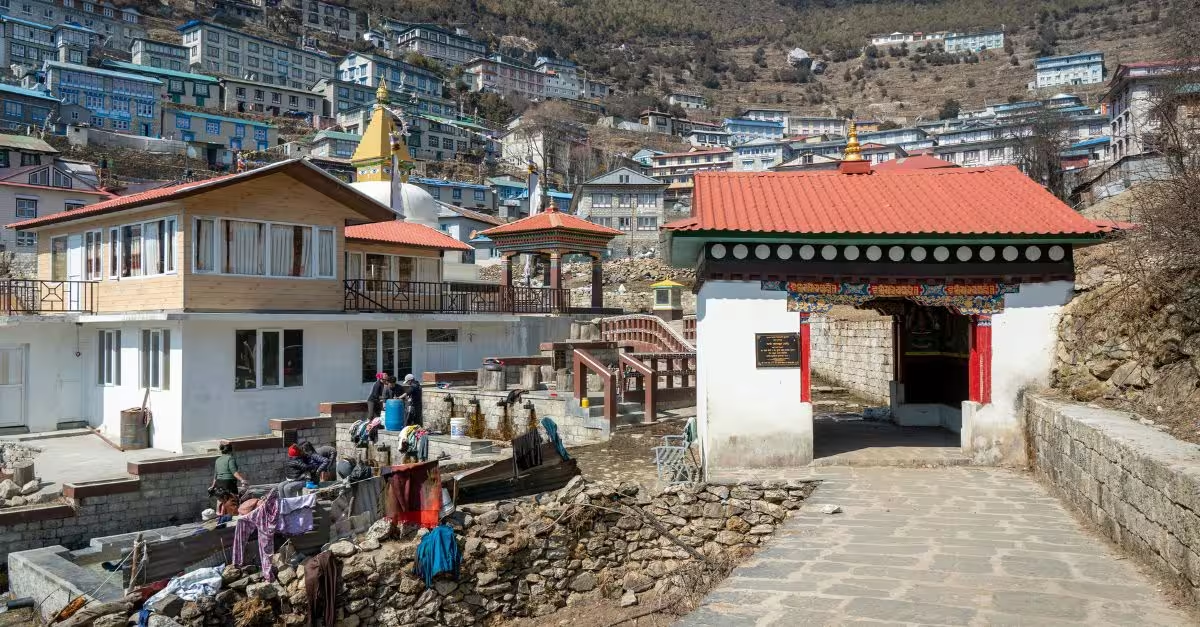
Everest Base Camp Silent Music Festival 2026: Photo by Clinton Weaver on Pexels
The event has been announced by the Green Tara Foundation as what it describes as the world’s first silent music festival at Everest Base Camp. It is planned at an elevation of approximately 5,364 metres (17,598 feet) and is intended to combine adventure tourism, music and environmental initiatives.
But this is not a festival that tourists can simply fly to Lukla, walk to Base Camp and buy a ticket at the entrance.
The announced plan links attendance to a 12-day guided trek through the Khumbu region, with the high-altitude journey forming part of the experience.
So, what exactly is planned, why is it happening at Everest Base Camp, and what should travellers know before considering the event?
Everest Base Camp Silent Music Festival at a Glance
| Event detail | Announced information |
|---|---|
| Event name | The Base Camp Sessions |
| Date | October 17, 2026 |
| Location | Everest Base Camp, Nepal |
| Elevation | Approximately 5,364 metres |
| Organiser | Green Tara Foundation |
| Format | Silent music event using wireless LED headphones |
| Trek requirement | Announced as a 12-day guided Khumbu trek |
| Kathmandu event | Parallel event planned, with capacity of 1,000 |
| Environmental focus | Glacier monitoring, Sherpa community projects and environmental programmes |
| Online access | Organisers announced plans for a global livestream |
| Guinness World Records | Organisers have said they intend to apply; recognition is not confirmed |
These details come from the July 2026 announcement and subsequent information published by the organisers. Operational details can change because the event is being planned in a high-altitude mountain environment.
What Is The Base Camp Sessions?
The Base Camp Sessions is a proposed silent music festival designed specifically for the Everest environment.
The central idea is simple: participants hear the music through wireless headphones instead of loudspeakers.
According to the announcement, the headphones will use LED lighting, giving the audience a visual element while keeping amplified sound away from the surrounding mountain landscape.
The concept is particularly unusual because Everest Base Camp is very different from a conventional festival venue.
There is no permanent concert infrastructure, road access to the site is extremely limited and the event location sits more than 5,000 metres above sea level.
The organisers therefore have to think about transportation, altitude, weather, waste, energy, medical support and environmental impact alongside the music itself.
When Is the Everest Base Camp Silent Festival?
The announced date for The Base Camp Sessions is:
Saturday, October 17, 2026
The proposed event will take place at Everest Base Camp at approximately 5,364 metres above sea level.
Because the event is planned in the high Himalayas, the date should not be treated in the same way as the date of a normal city concert.
Weather, trekking conditions, safety considerations and operational arrangements can affect activities at this elevation.
Travellers interested in attending should check the organiser’s latest information before making non-refundable travel arrangements.
Why Is the Festival Called a “Silent” Festival?
The festival is described as silent because the audience will listen through headphones rather than through traditional external speakers.
This means someone standing nearby without a headset should not experience the same amplified concert sound normally associated with a music festival.
The approach has an obvious appeal at Everest Base Camp.
The Khumbu is a natural environment where trekkers, climbers, local communities and wildlife coexist with an increasingly busy tourism industry. Reducing amplified sound can help limit one potential source of disturbance.
The organisers have therefore positioned the event around the idea of celebrating Everest without turning the mountain into a conventional concert venue.
However, headphones alone do not make an event environmentally neutral.
The environmental footprint also depends on how equipment reaches Base Camp, how much waste is produced, how electricity is generated, how people are transported and how everything is removed afterwards.
How Will the Music Be Heard at Everest Base Camp?
Participants are expected to receive specially designed wireless headphones.
The organiser’s current concept includes different headphone channels, LED lighting and personalised headset designs. The Green Tara Foundation’s website describes the headset as part of a “Summit Box” that would be given to expedition participants and activated at Base Camp.
The organiser’s headset design platform currently allows participants on the expedition waitlist to customise elements such as:
- LED lighting style
- Headphone shell finish
- Headband stitching
- Ear cushion material
- Hardware finish
- Personal engraving
The website says the headset would be assembled and sealed as part of the expedition experience rather than sold as an ordinary product.
This makes the headphone itself part of the event’s identity rather than simply a piece of technical equipment.
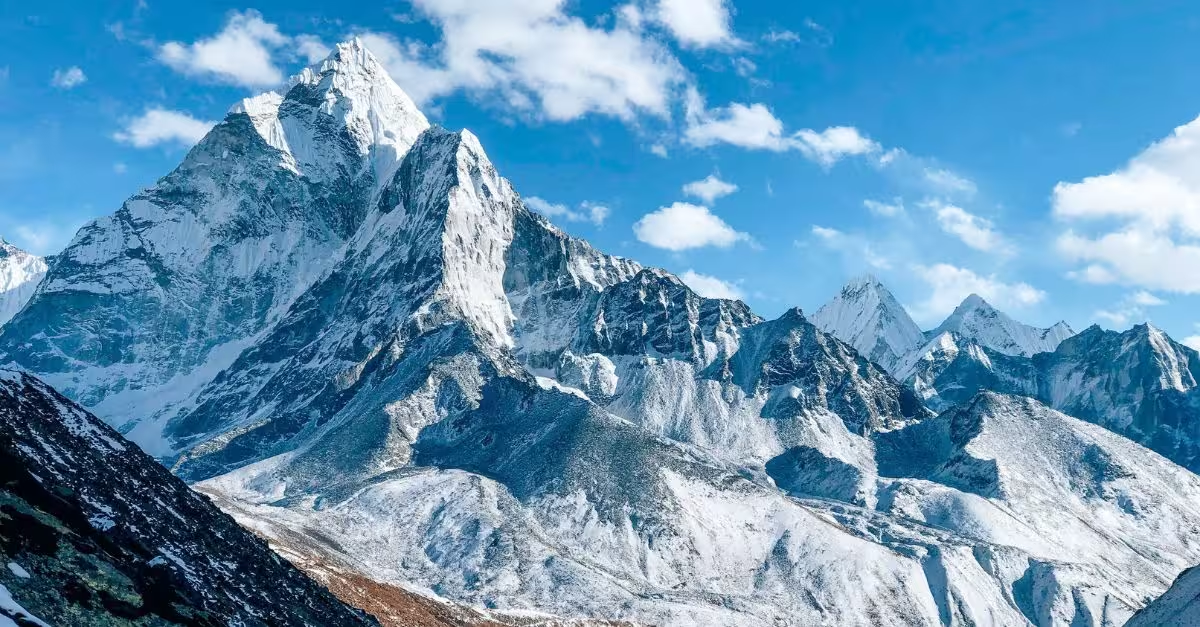
Everest Base Camp music festival:Photo by Clairey Sunshine
Why Hold a Music Festival at Everest Base Camp?
At first glance, a music festival and Everest Base Camp may seem like an unlikely combination.
Everest is primarily associated with mountaineering, trekking, Sherpa culture and Himalayan landscapes. The Base Camp Sessions introduces a different type of experience.
The organisers say the event is intended to promote adventure tourism while supporting environmental and community initiatives.
For Nepal’s tourism industry, an event like this could also generate international attention around the Everest region outside traditional trekking media.
The important question is how the event is managed.
Everest Base Camp is a sensitive, high-altitude environment. Any large-scale activity needs to consider local communities, waste management, transportation and the physical limits of operating at extreme elevation.
How Will People Reach Everest Base Camp for the Festival?
This is one of the most important differences between The Base Camp Sessions and a normal music festival.
According to the announcement, attendance at the Base Camp event is intended for trekkers completing a 12-day guided trek through the Khumbu region.
That means people cannot simply arrive at Base Camp on the afternoon of October 17.
The journey itself forms part of the event.
A typical Everest Base Camp trek passes through mountain settlements such as:
Lukla → Phakding → Namche Bazaar → Tengboche → Dingboche → Lobuche → Gorak Shep → Everest Base Camp
The exact itinerary for festival participants may differ from a standard Everest Base Camp trekking itinerary.
The advantage of a gradual trek is that it gives participants time to acclimatise to increasing elevation. This is particularly important because Everest Base Camp sits above 5,300 metres.
Why Altitude Is a Major Consideration
The biggest challenge is not the music.
It is the altitude.
Everest Base Camp is located at approximately 5,364 metres, where the amount of oxygen available in the air is substantially lower than at sea level.
Even experienced hikers can experience altitude-related problems.
Symptoms associated with acute mountain sickness can include headache, nausea, dizziness, fatigue and difficulty sleeping. More serious altitude illnesses can become medical emergencies.
That is why the proposed 12-day trek is significant. Participants are expected to reach the event location through a gradual journey rather than treating Base Camp as a conventional destination that can be reached quickly.
Anyone considering the event should understand that a music festival ticket does not make the altitude less demanding.
Proper acclimatisation, appropriate clothing, hydration, medical preparation, travel insurance and a qualified trekking team remain essential.
What Happens If the Weather Changes?
Mountain weather can change quickly.
Even during Nepal’s autumn trekking season, conditions at high elevations can include strong winds, cold temperatures, snowfall and reduced visibility.
An event at 5,364 metres therefore needs a different operational approach from a festival in Kathmandu.
The organiser’s reported planning includes weather monitoring and a formal go-or-no-go process before the event.
Travellers should therefore avoid building a tightly connected international itinerary around the assumption that every stage of the expedition will operate exactly according to schedule.
A few additional days of flexibility can be valuable when travelling through the Everest region.
What About the Environmental Impact?
Environmental protection is one of the central themes of The Base Camp Sessions.
The organisers say event equipment will be transported using yaks and limited helicopter support, with operations following leave-no-trace principles. The stated plan also involves dismantling the event infrastructure and removing materials after the festival.
The organisers have also said that proceeds will support:
- Glacier monitoring
- Sherpa community projects
- Environmental programmes
- Other conservation-related initiatives
The Himalayan Times reported that the organisers planned to publish revenue and expenditure information and release audited accounts after the event.
That makes the post-event reporting particularly important.
The real environmental impact will be easier to understand after the event, when information about transport, waste, energy use, local employment and funds directed toward conservation and community programmes can be assessed.
Is This Really the World’s First Silent Music Festival?
This needs a little clarification.
The Green Tara Foundation describes The Base Camp Sessions as the world’s first silent music festival at Everest Base Camp. The event is also being promoted in connection with a potential high-altitude silent-headphone record.
However, the Guinness World Records recognition has not been confirmed.
The organisers have said they intend to apply for recognition as the highest-altitude silent-headphone event. An application is different from an officially verified record.
For that reason, it is more accurate to describe the event as an organiser-described world-first until independent record verification is available.
Will There Also Be a Festival in Kathmandu?
Yes.
The announcement includes a parallel event in Kathmandu, with a reported capacity of up to 1,000 participants.
This creates an alternative for people who are interested in the concept but are not participating in the high-altitude expedition.
The Kathmandu event is also potentially significant because it separates the cultural and musical experience from the physical limitations of Everest Base Camp.
However, travellers should wait for the organiser’s final Kathmandu venue, schedule, ticketing and performer information before making plans.
Can Anyone Join the Everest Silent Festival?
Not necessarily.
The announcement says Base Camp attendance will be restricted to trekkers completing the designated 12-day guided Khumbu trek.
This means ordinary Everest Base Camp trekkers should not assume that reaching Base Camp on October 17 automatically gives them access to the festival.
People interested in attending should look for confirmed information about:
- Expedition registration
- Ticket availability
- Participant limits
- Trek itinerary
- Medical requirements
- Insurance requirements
- Accommodation
- Weather-related cancellation procedures
- Government or local permissions
- Confirmed performers
The organiser’s website currently has an expedition waitlist and describes the headset and trek kit as part of the expedition experience.
Can You Watch the Festival From Home?
The organisers have announced plans for a global livestream, with a proposed online pass costing US$1.
This could allow people around the world to experience the event without physically travelling to Everest Base Camp.
For an event at such a remote location, the livestream could also help keep the physical audience relatively limited while allowing the festival to reach a much larger global audience.
Final livestream details should be checked through the organiser’s official channels closer to the event.
What Should Trekkers Pack for the October Everest Festival?
Anyone considering the expedition needs to pack for an actual high-altitude trek rather than a weekend music festival.
Important items typically include:
- Warm down or insulated jacket
- Waterproof and windproof outer layer
- Thermal base layers
- Warm gloves
- Wool or thermal hat
- Good trekking boots
- Sunglasses with strong UV protection
- Sunscreen and lip balm
- Headlamp and spare batteries
- Reusable water bottles
- Personal medication
- Basic first-aid supplies
- Power bank
- Passport and travel documents
- Comprehensive travel insurance
- Appropriate trekking equipment
The exact equipment list should come from the expedition organiser or trekking agency because requirements can vary according to the final itinerary and support arrangements.
The Festival Is Only One Part of the Everest Experience
For anyone travelling to the Everest region for The Base Camp Sessions, the festival itself would occupy only a small part of the journey.
The Khumbu is home to Sherpa communities, Buddhist monasteries, mountain villages and some of the world’s most recognisable Himalayan landscapes.
The route provides opportunities to experience:
- Namche Bazaar and its mountain viewpoints
- Tengboche Monastery
- Sherpa villages and local culture
- Ama Dablam views
- Dingboche and the surrounding Himalayan landscape
- Khumbu Glacier
- Gorak Shep
- Everest Base Camp
This is why the proposed 12-day format is important. The journey allows participants to experience the region rather than treating Everest Base Camp as a standalone event venue.
What Makes the Event Different From a Normal Music Festival?
The difference is not simply that everyone wears headphones.
The entire setting changes the meaning of the event.
A conventional festival might be built around large stages, powerful sound systems, crowds, lighting rigs and easy road access.
The Base Camp Sessions is being designed around a place where none of those assumptions apply.
At more than 5,000 metres, every kilogram of equipment matters. Weather can change rapidly. There are no conventional roads to Base Camp. Medical support is more complicated. Waste has to be transported in and out. Participants must acclimatise.
That makes the logistics almost as interesting as the music.
What We Know — and What Is Still Unclear
As of October 2, 2026, the publicly announced concept includes the October 17 date, Everest Base Camp location, silent-headphone format, 12-day guided trek and environmental objectives.
However, travellers should distinguish between announced plans and independently confirmed outcomes.
Confirmed in the public announcement
- The Base Camp Sessions is the name of the proposed event.
- October 17, 2026 is the announced date.
- Everest Base Camp is the proposed location.
- The elevation is approximately 5,364 metres.
- Wireless LED headphones are central to the concept.
- Attendance is planned around a 12-day guided Khumbu trek.
- A Kathmandu event has also been announced.
- Organisers have stated environmental and community goals.
Still worth checking before travelling
- Final participant numbers
- Confirmed artist lineup
- Final registration arrangements
- Final government and local permissions
- Weather-related changes
- Final expedition itinerary
- Livestream arrangements
- Guinness World Records verification
The organiser’s own website currently presents the expedition headset and waitlist, so travellers should use the latest official information rather than relying solely on early July announcements.
Frequently Asked Questions
When is the Everest Base Camp Silent Music Festival 2026?
The Base Camp Sessions is planned for October 17, 2026 at Everest Base Camp.
What is the name of the Everest music festival?
The event is called The Base Camp Sessions.
Where will the festival take place?
The main event is planned at Everest Base Camp in Nepal, at approximately 5,364 metres above sea level.
Why is it called a silent music festival?
Instead of conventional loudspeakers, participants will listen to music through wireless headphones fitted with LED lighting.
Can normal Everest Base Camp trekkers attend?
The announced plan says attendance is restricted to trekkers completing a designated 12-day guided Khumbu trek. Reaching Base Camp independently should not be assumed to provide festival access.
Is the event really the world’s first silent festival?
The organisers describe it as the world’s first silent music festival at Everest Base Camp. That description should be treated as an organiser claim until independently verified.
Has Guinness World Records confirmed the event?
No. The organisers have said they intend to apply for recognition related to the highest-altitude silent-headphone event. An official record has not been confirmed.
Will there be a Kathmandu event?
A parallel Kathmandu event with a reported capacity of 1,000 people has been announced.
Can people watch the event online?
The organisers have announced plans for a global livestream with a proposed US$1 online pass. Final streaming details should be checked through official event channels.
Is October a good time to trek to Everest Base Camp?
October is traditionally one of Nepal’s main trekking months because of generally favourable post-monsoon conditions. However, high-altitude weather can change quickly, and anyone joining the festival expedition needs to plan around acclimatisation and mountain safety.
The Bigger Story Behind Everest’s Silent Festival
The Base Camp Sessions is an unusual idea, but its most interesting aspect may not be the music.
It is an experiment in how a modern event can operate in one of the world’s most sensitive and difficult-to-access environments.
The organisers are attempting to bring together music, adventure tourism, technology and environmental fundraising while keeping the physical event relatively controlled.
Whether the concept becomes a recurring event or remains a one-time experiment will depend on how the first edition performs particularly in terms of safety, environmental management, community involvement and logistical execution.
For Nepal, the event also creates another international story around the Everest region at a time when travellers are increasingly interested in experiences that combine adventure with culture and sustainability.
For now, October 17, 2026 is the date to watch.
And if the event goes ahead as planned, the image of trekkers standing at Everest Base Camp with illuminated headphones, listening to music at 5,364 metres, will certainly be unlike anything normally associated with the world’s highest mountain.
