
Nepal is one of the most beautiful and culturally rich travel destinations in the world. From the Himalayan mountains to ancient temples and peaceful villages, millions of travelers visit Nepal every year seeking adventure, spirituality, and unforgettable experiences. However, many first-time visitors unknowingly make travel mistakes that affect their overall journey.
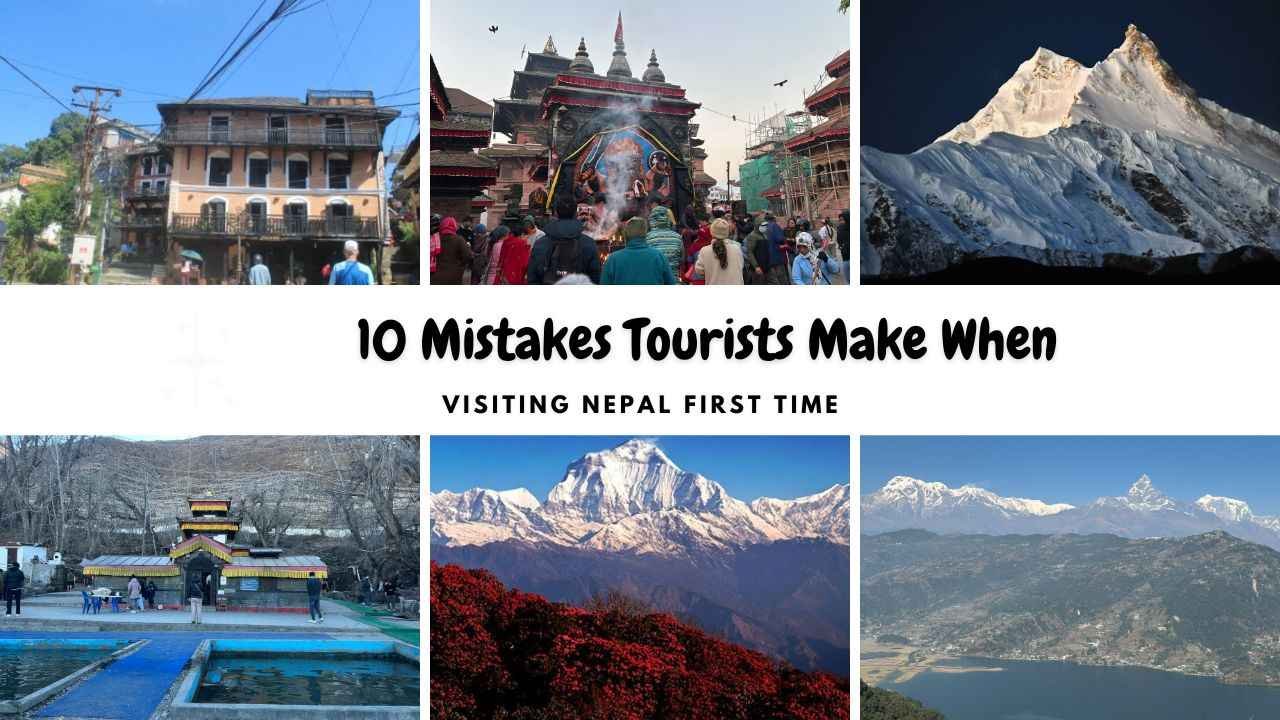
10 Mistakes Tourists Make When Visiting Nepal First Time
Understanding the common Mistakes Tourists Make When Visiting Nepal can help travelers enjoy a safer, smoother, and more rewarding experience. Nepal offers incredible opportunities, but proper preparation, cultural awareness, and realistic expectations are essential. This guide explains the most common travel errors visitors make and how you can avoid them while exploring Nepal.
1. Underestimating Nepal’s Geography and Travel Time
One of the biggest Mistakes Tourists Make When Visiting Nepal is assuming travel distances are short and easy. While Nepal may appear small on a map, its mountainous terrain significantly affects transportation time.
Road journeys often take much longer than expected due to winding mountain roads, weather conditions, and traffic congestion. For example, traveling between Kathmandu and Pokhara may seem like a short distance but can take 7–9 hours by road depending on conditions.
Many tourists plan tight schedules without accounting for delays caused by landslides, domestic flight rescheduling, or seasonal weather changes. This leads to missed treks, rushed sightseeing, and unnecessary stress.
Nepal travel requires flexibility. Instead of planning multiple destinations within a short timeframe, travelers should allow buffer days between activities. Mountain regions especially demand patience and adaptability.
Understanding Nepal’s terrain helps visitors appreciate the journey rather than becoming frustrated by delays. Slow travel often results in richer cultural experiences and safer adventures.
2. Ignoring Altitude Sickness Risks
Another serious issue among the Mistakes Tourists Make When Visiting Nepal is neglecting altitude awareness. Nepal’s famous trekking routes reach elevations above 4,000 meters, where oxygen levels drop significantly.
Trekkers visiting Everest Base Camp or Annapurna regions sometimes ascend too quickly without proper acclimatization. Symptoms such as headaches, dizziness, fatigue, and breathing difficulties may appear if altitude gain happens too fast.
Many travelers mistakenly believe physical fitness alone prevents altitude sickness. In reality, anyone can be affected regardless of age or fitness level. Proper acclimatization days, hydration, gradual ascent, and listening to guides are essential safety measures. Travelers should also learn early warning signs and never ignore symptoms.
Planning rest days and choosing realistic trekking itineraries greatly reduces health risks. Responsible trekking ensures visitors enjoy Nepal’s mountain beauty safely rather than facing emergency evacuations.
3. Not Respecting Local Culture and Traditions
Cultural misunderstanding ranks high among the common Mistakes Tourists Make When Visiting Nepal. Nepalese society is deeply rooted in religious and traditional values influenced by Hinduism and Buddhism.
Some tourists unknowingly behave in ways considered disrespectful, such as entering temples with shoes, touching sacred objects, or dressing inappropriately at religious sites. Visitors should wear modest clothing when visiting temples or monasteries. Removing shoes before entering sacred spaces is standard practice. Photography may also be restricted in certain areas.
Greeting locals with “Namaste” and showing patience in social interactions goes a long way in building positive connections. Respecting traditions enhances cultural exchange and allows travelers to experience authentic Nepalese hospitality. Understanding customs transforms tourism into meaningful cultural appreciation rather than simple sightseeing.
4. Packing Incorrectly for Nepal’s Climate
Packing mistakes are extremely common among international visitors. Nepal’s climate varies dramatically depending on altitude and season, making improper packing one of the major Mistakes Tourists Make When Visiting Nepal.
Many travelers arrive expecting consistent weather conditions. However, Nepal can shift from warm subtropical temperatures to freezing mountain climates within a single trip.
Tourists often forget essentials like layered clothing, waterproof jackets, trekking shoes, sun protection, or reusable water bottles. Overpacking unnecessary items while missing crucial gear is equally common. Smart packing focuses on versatility. Layered clothing allows adaptation to temperature changes, while lightweight equipment improves mobility during travel or trekking.
Preparing for both sunshine and sudden rain helps visitors stay comfortable throughout their journey.
5. Skipping Travel Insurance for Adventure Activities
Adventure travel attracts visitors worldwide, yet skipping insurance remains one of the riskiest Mistakes Tourists Make When Visiting Nepal.
Activities such as trekking, rafting, paragliding, and mountain climbing carry inherent risks. Emergency helicopter evacuation in remote mountain areas can be extremely expensive without insurance coverage.
Some tourists assume standard insurance automatically covers high-altitude trekking, which is often not the case. Policies must specifically include adventure sports and altitude coverage. Comprehensive travel insurance protects travelers from unexpected medical costs, trip cancellations, and evacuation expenses. Responsible travelers view insurance not as an extra cost but as essential protection for safe exploration.
6. Drinking Unsafe Water and Food Mistakes
Health-related issues frequently arise due to food and water choices. Among the common Mistakes Tourists Make When Visiting Nepal, consuming untreated water ranks high. Tap water in Nepal is not safe for drinking. Tourists sometimes overlook this and experience stomach problems during their trip.
Visitors should drink bottled, filtered, or purified water only. Carrying purification tablets or reusable filtration bottles is highly recommended, especially during treks. Trying local cuisine is part of Nepal’s charm, but travelers should choose clean restaurants and freshly cooked meals.
Maintaining hygiene awareness helps tourists avoid illness and continue enjoying their journey without interruption.
7. Overlooking Permit and Documentation Requirements
Many first-time visitors underestimate Nepal’s permit system. Trekking regions require official permits, and ignoring documentation becomes one of the frustrating Mistakes Tourists Make When Visiting Nepal.
Areas like Annapurna, Langtang, and Everest require TIMS cards and conservation permits. Some restricted regions also require licensed guides.
Failing to arrange permits beforehand may result in denied entry or delays at checkpoints. Travelers should confirm requirements through authorized agencies or official tourism offices before starting their journey. Proper documentation ensures smooth travel and supports conservation efforts protecting Nepal’s natural heritage.
8. Bargaining Incorrectly or Misunderstanding Prices
Shopping in Nepal involves bargaining in markets, but excessive negotiation becomes another common example of Mistakes Tourists Make When Visiting Nepal.
While bargaining is acceptable in local markets, pushing prices too aggressively may appear disrespectful toward small business owners. Tourists should negotiate politely while understanding that many sellers rely on tourism income.
Fair pricing creates positive interactions and supports local communities. Balanced bargaining allows visitors to enjoy shopping experiences without cultural misunderstanding.
9. Trying to See Too Much in One Trip
Nepal offers mountains, jungles, heritage cities, and spiritual retreats, tempting tourists to plan overly ambitious itineraries.
Attempting multiple treks, cities, and activities within limited time is one of the most frequent Mistakes Tourists Make When Visiting Nepal. Travel fatigue reduces enjoyment and increases stress. Nepal rewards slow exploration rather than rushed schedules.
Spending extra days in fewer destinations allows deeper cultural immersion and relaxation. Quality experiences always outweigh quantity when traveling in Nepal.
10. Ignoring Sustainable and Responsible Tourism
Modern travelers increasingly value sustainability, yet environmental awareness is sometimes overlooked.
Among growing Mistakes Tourists Make When Visiting Nepal is leaving waste on trekking routes or ignoring eco-friendly practices.
Nepal’s fragile mountain ecosystems depend on responsible tourism behavior. Travelers should minimize plastic use, respect wildlife, and support local businesses and eco-conscious lodges. Sustainable travel protects Nepal’s beauty for future generations while preserving authentic travel experiences.
Nepal remains one of the most rewarding destinations in the world, offering breathtaking landscapes, cultural richness, and life-changing adventures. However, understanding the common Mistakes Tourists Make When Visiting Nepal can dramatically improve the overall travel experience.
Most travel problems arise not from Nepal itself but from lack of preparation, unrealistic expectations, or cultural misunderstanding. Travelers who plan flexible itineraries, respect local traditions, prepare for altitude, and prioritize safety often discover Nepal at its very best.
Avoiding these mistakes allows visitors to fully appreciate Nepal’s natural beauty, warm hospitality, and spiritual atmosphere. Whether trekking in the Himalayas, exploring heritage cities, or enjoying peaceful villages, responsible travel ensures memorable and meaningful experiences.
Nepal rewards patience, curiosity, and respect. By learning from common tourist errors, visitors can transform their journey into a safe, enjoyable, and unforgettable adventure that stays with them long after returning home.
