The Dhorpatan Hunting Reserve hunting season has officially begun for the second period of the year, covering the months of Falgun to Baisakh in the Nepali calendar. Located in western Nepal, Dhorpatan is the country’s only legal hunting reserve, attracting international hunters and wildlife enthusiasts who wish to experience controlled hunting in the Himalayan region.
Established in 1987, the reserve spreads across the districts of Baglung, Myagdi, and Rukum, covering a diverse landscape of alpine meadows, dense forests, and rugged mountains. The reserve was created with the goal of balancing wildlife conservation with regulated hunting activities. By limiting the number of permits and carefully managing animal populations, the government aims to protect wildlife while also generating revenue for conservation efforts.
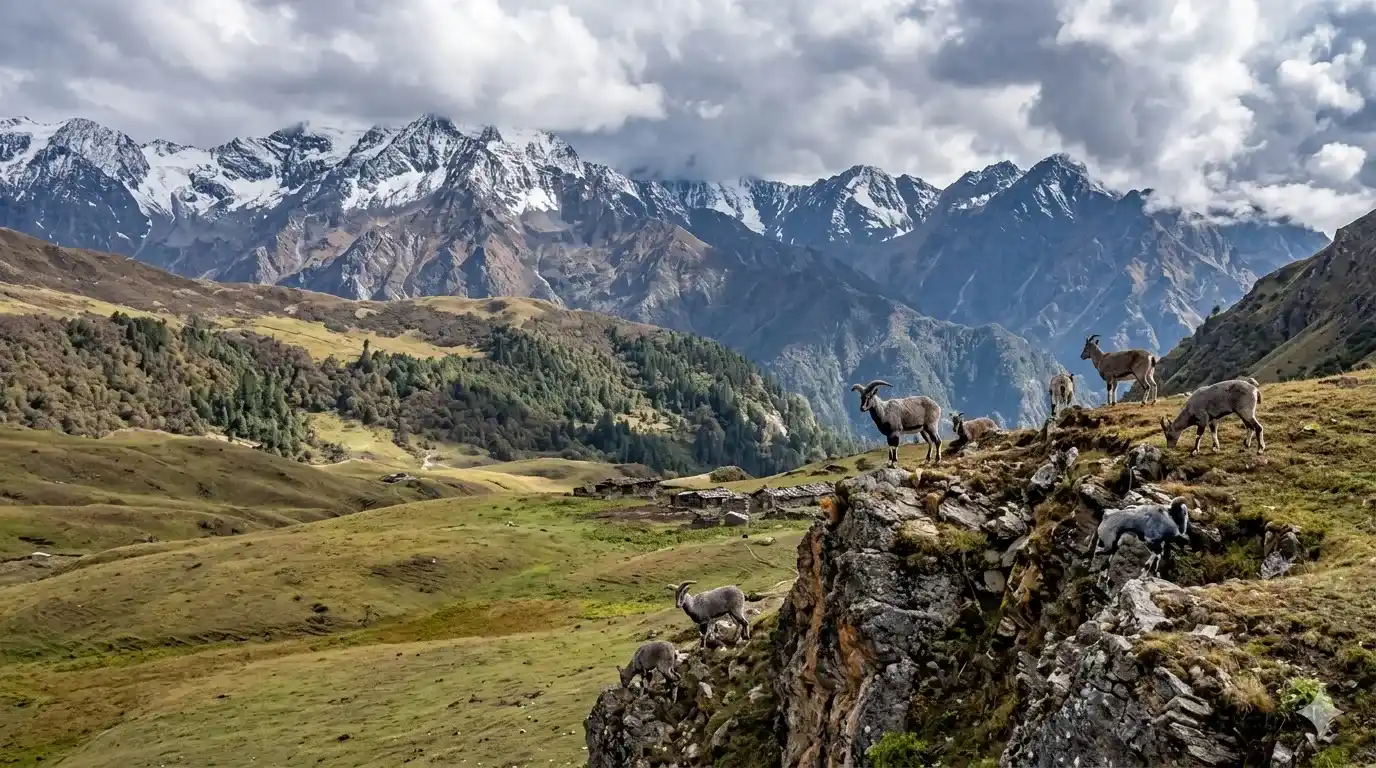
Dhorpatan Hunting Reserve hunting season Nepal
The Dhorpatan Hunting Reserve hunting season is divided into two main periods each year. During these seasons, hunters from different parts of the world travel to Nepal to participate in legal trophy hunting under strict regulations. The hunting process is closely monitored by the Department of National Parks and Wildlife Conservation, ensuring that only approved species and limited numbers of animals are hunted.
This year, several foreign hunters from countries such as the United States, Denmark, Belgium, France, Russia, and African nations have already arrived or are preparing to arrive for the Dhorpatan Hunting Reserve hunting season. Many of them are working with professional safari companies that organize logistics, guides, and hunting arrangements in designated hunting blocks.
The opening of the Dhorpatan Hunting Reserve hunting season once again highlights Nepal’s unique approach to wildlife management combining conservation with regulated hunting tourism.
Animals Allowed for Hunting in Dhorpatan
During the current Dhorpatan Hunting Reserve hunting season, the government has issued permits for three specific species: Naur (Himalayan blue sheep), Jharal (Himalayan tahr), and wild boar. These animals are selected based on scientific population assessments conducted by wildlife experts and conservation authorities.
The Naur, also known as the Himalayan blue sheep, is one of the most sought-after trophy animals during the Dhorpatan Hunting Reserve hunting season. These animals are well adapted to high-altitude environments and are commonly found on rocky slopes and alpine pastures. Their strong horns and impressive physical features make them a prized trophy for international hunters.
Another species permitted during the Dhorpatan Hunting Reserve hunting season is the Jharal, or Himalayan tahr. This mountain goat species is known for its thick reddish coat and curved horns. Jharal typically live in steep mountain terrain, making hunting them both challenging and physically demanding.
The third species allowed for hunting during the Dhorpatan Hunting Reserve hunting season is the wild boar. Unlike Naur and Jharal, wild boars are found in lower forested areas of the reserve. They are known for their strength and adaptability, and hunting them requires careful planning and skilled tracking.
For the current season, authorities have issued permits for 14 Naur, 10 Jharal, and 13 wild boars. These numbers are determined based on wildlife population studies to ensure that hunting does not negatively impact the ecosystem.
By strictly controlling which animals can be hunted and how many permits are issued, the Dhorpatan Hunting Reserve hunting season maintains a balance between wildlife conservation and regulated hunting tourism.
Hunting Permit Process in Dhorpatan
The hunting permit system plays a crucial role in managing the Dhorpatan Hunting Reserve hunting season. The permits are issued through a competitive bidding process organized by the Department of National Parks and Wildlife Conservation (DNPWC).
Safari companies and hunting operators participate in auctions to obtain hunting rights for specific animals and hunting blocks within the reserve. Once a company wins the bid, it can arrange hunting trips for international clients during the Dhorpatan Hunting Reserve hunting season.
Each permit is tied to a specific species and a designated hunting block within the reserve. Dhorpatan is divided into several blocks such as Fagune, Barse, Dogadi, Sundaha, Seng, and Gustung. Hunters must carry out their activities only within the assigned block to ensure proper wildlife management.
Another important rule of the Dhorpatan Hunting Reserve hunting season is the 15-day hunting limit. Once a hunter enters the reserve, they must complete the hunt within this timeframe. This regulation helps control hunting pressure and ensures fair access for other hunters.
Before hunting begins, hunters must follow several procedures including registration, briefing by park authorities, and coordination with trained guides. Government officials and wildlife staff closely monitor the activities throughout the Dhorpatan Hunting Reserve hunting season to ensure compliance with conservation laws.
This structured permit system ensures that hunting remains strictly regulated while generating revenue for conservation programs and local communities.
Cost of Hunting in Nepal
Participating in the Dhorpatan Hunting Reserve hunting season is an expensive activity, which is why most participants are international hunters or wealthy individuals. The total cost of a hunting expedition in Dhorpatan can reach NPR 30 to 35 lakh (approximately USD 22,000–26,000) per hunter.
This cost includes several components such as:
- Government license fees
- Trophy fees for specific animals
- Safari company service charges
- Accommodation and food
- Transportation and logistics
One of the most significant expenses during the Dhorpatan Hunting Reserve hunting season is transportation. Because of the remote and mountainous terrain, hunters often rely on helicopters to reach the hunting blocks.
Additionally, hunters are accompanied by professional guides, trackers, and support staff who help locate animals and ensure safety during the expedition. These services add to the overall cost of participating in the Dhorpatan Hunting Reserve hunting season.
Despite the high cost, many international hunters consider Dhorpatan a unique destination because it offers the rare opportunity to hunt Himalayan species in a legally regulated environment.
The revenue generated from the Dhorpatan Hunting Reserve hunting season contributes significantly to Nepal’s conservation funds and local economic activities.
Foreign Hunters Visiting Nepal
The Dhorpatan Hunting Reserve hunting season attracts hunters from various parts of the world. This year, participants from countries such as the United States, Denmark, Belgium, France, Russia, and several African nations have shown interest in the hunting program.
Some hunters have already arrived in Nepal and completed their hunts under the guidance of licensed safari companies. Others are preparing to travel to the reserve during the ongoing Dhorpatan Hunting Reserve hunting season.
Foreign hunters are particularly drawn to Dhorpatan because it offers a rare opportunity to hunt Himalayan wildlife species that cannot be legally hunted in many other countries. The rugged mountain environment and challenging terrain also add to the appeal of the Dhorpatan Hunting Reserve hunting season.
International hunting tourism also promotes Nepal’s wilderness areas on a global scale. Many hunters share their experiences through travel blogs, wildlife magazines, and hunting communities, helping raise awareness about Nepal’s natural landscapes.
The presence of foreign hunters during the Dhorpatan Hunting Reserve hunting season also benefits local communities. Lodges, guides, transport operators, and supply services all gain economic opportunities from the influx of visitors.
This form of tourism, although limited in scale, plays a role in promoting Nepal as a destination for specialized adventure and wildlife experiences.
Conservation Debate Around Dhorpatan Hunting
While the Dhorpatan Hunting Reserve hunting season generates revenue and international interest, it also raises important discussions about wildlife conservation and ethical hunting practices.
Supporters argue that regulated hunting helps fund conservation programs and encourages the protection of wildlife habitats. The money generated from hunting permits, licenses, and tourism contributes to government conservation efforts and local community development.
Proponents of the Dhorpatan Hunting Reserve hunting season also highlight that hunting quotas are carefully determined based on wildlife population surveys. This ensures that animal populations remain stable while allowing limited hunting activities.
However, critics believe that hunting wildlife for sport raises ethical concerns. Some conservationists argue that animals should be protected rather than hunted, especially in fragile ecosystems like the Himalayas.
Another debate surrounding the Dhorpatan Hunting Reserve hunting season is accessibility. Since the cost is extremely high, hunting is mostly limited to foreign or wealthy hunters, making it inaccessible to the general public.
Despite these debates, Nepal continues to maintain strict regulations and monitoring systems to ensure that hunting remains sustainable. Authorities regularly conduct wildlife surveys and adjust hunting quotas accordingly.
The ongoing discussions surrounding the Dhorpatan Hunting Reserve hunting season highlight the challenge of balancing conservation, tourism, and economic development.
FAQs About Dhorpatan Hunting Reserve Hunting Season
1. What is Dhorpatan Hunting Reserve?
Dhorpatan Hunting Reserve is Nepal’s only legal hunting reserve. It was established in 1987 to allow controlled hunting of certain wildlife species while protecting natural habitats and maintaining ecological balance. The reserve covers parts of Baglung, Myagdi, and Rukum districts in western Nepal. It is managed by the Department of National Parks and Wildlife Conservation (DNPWC) and monitored by the Nepali Army to ensure safety and conservation.
2. When does the Dhorpatan Hunting Reserve hunting season take place?
The Dhorpatan Hunting Reserve hunting season occurs twice a year. The first season usually takes place in Ashwin–Mangsir (September–November), while the second season runs from Falgun–Baisakh (February–April). During these periods, licensed hunters are allowed to enter the reserve and hunt specific animals within designated blocks under strict government regulations.
3. What animals can be hunted in Dhorpatan Hunting Reserve?
Only a few species are allowed for hunting during the Dhorpatan Hunting Reserve hunting season. These typically include:
- Naur (Himalayan Blue Sheep)
- Jharal (Himalayan Tahr)
- Wild Boar
The number of permits for each species is determined through wildlife population studies to ensure sustainable hunting and conservation of the ecosystem.
4. How are hunting permits issued in Dhorpatan?
Hunting permits for the Dhorpatan Hunting Reserve hunting season are issued through a competitive bidding system organized by the Department of National Parks and Wildlife Conservation. Safari companies participate in auctions to obtain hunting rights for specific animals and hunting blocks. Once permits are secured, the companies arrange hunting trips for their international clients.
5. How much does it cost to hunt in Dhorpatan Hunting Reserve?
Hunting in Dhorpatan is considered a luxury wildlife activity. On average, each hunter spends NPR 30–35 lakh (around USD 22,000–26,000) during the Dhorpatan Hunting Reserve hunting season. This cost includes government permit fees, trophy fees, accommodation, guides, transportation, helicopter services, and other logistics.
6. Who can participate in the Dhorpatan hunting season?
The Dhorpatan Hunting Reserve hunting season mainly attracts international hunters and wealthy individuals who can afford the high cost of permits and logistics. Hunters from countries such as the USA, Denmark, Belgium, France, Russia, and several African nations regularly participate. Local participation is limited due to the high expenses involved.
7. How long do hunters stay in the reserve?
Once a hunter enters the reserve, they must complete their hunt within 15 days. This rule ensures that the Dhorpatan Hunting Reserve hunting season remains well managed and that hunting activities do not put excessive pressure on wildlife populations.
8. Why is hunting allowed in Dhorpatan?
Controlled hunting during the Dhorpatan Hunting Reserve hunting season is allowed as part of Nepal’s wildlife management strategy. The revenue generated from permits helps fund conservation programs, wildlife monitoring, and local development projects. By limiting the number of animals hunted each year, authorities aim to maintain ecological balance while generating income for conservation efforts.
9. Where is Dhorpatan Hunting Reserve located?
The reserve is located in western Nepal and spans across Baglung, Myagdi, and Rukum districts. It covers an area of about 1,325 square kilometers and features diverse landscapes ranging from alpine meadows to dense forests and high Himalayan terrain.
10. Can tourists visit Dhorpatan Hunting Reserve without hunting?
Yes. Even if visitors are not participating in the Dhorpatan Hunting Reserve hunting season, they can still visit the area for trekking, wildlife observation, and nature exploration. The reserve is known for its stunning mountain landscapes, rich biodiversity, and unique Himalayan ecosystems.
How many hunting reserves are there in Nepal?
Nepal currently has only one official hunting reserve, the Dhorpatan Hunting Reserve. It was established in 1987 by the Government of Nepal to allow regulated hunting of certain wildlife species while still protecting the natural ecosystem.
The reserve covers around 1,325 square kilometers and lies across the districts of Baglung, Myagdi, and Rukum in western Nepal. Unlike national parks and wildlife reserves where hunting is strictly prohibited, Dhorpatan is designed to balance wildlife conservation and controlled hunting tourism.
The government issues only a limited number of hunting permits each year, based on wildlife population surveys conducted by the Department of National Parks and Wildlife Conservation. This ensures that hunting activities do not harm the overall ecosystem.
Because Nepal focuses strongly on conservation, the country has many national parks and protected areas, but only one legal hunting reserve.
Can Nepalese citizens hunt in the Dhorpatan Hunting Reserve?
Yes, Nepalese citizens are legally allowed to hunt in the Dhorpatan Hunting Reserve, but in practice very few locals participate.
The main reason is cost. Hunting permits in Nepal are expensive and are usually issued through international safari companies. A typical hunting expedition can cost NPR 30–35 lakh (around USD 22,000–26,000), including license fees, guides, accommodation, and logistics.
Because of these high costs, most participants in the hunting season are foreign hunters or wealthy individuals. However, there is no law preventing Nepalese citizens from applying for permits if they can meet the requirements and pay the associated fees.
Hunters must also follow strict regulations, including hunting only in assigned blocks, targeting approved species, and completing the hunt within a limited timeframe.
Which is the only hunting reserve of Nepal?
The only hunting reserve in Nepal is the Dhorpatan Hunting Reserve.
It is located in western Nepal and is the only place in the country where legal hunting is permitted. The reserve is famous for its diverse wildlife, alpine landscapes, and rugged Himalayan terrain.
The reserve is divided into several hunting blocks such as Barse, Seng, Fagune, Dogadi, Sundaha, and Gustung, each with different wildlife populations.
Hunting in Dhorpatan is strictly controlled by the Department of National Parks and Wildlife Conservation. Only specific species such as Himalayan blue sheep (Naur), Himalayan tahr (Jharal), and wild boar are allowed for hunting.
This system allows Nepal to generate revenue from hunting tourism while maintaining strict conservation standards.
What is a hunting reserve?
A hunting reserve is a protected area where regulated hunting of certain wildlife species is legally permitted under government supervision.
Unlike national parks or wildlife reserves where hunting is completely banned, hunting reserves are designed to allow controlled hunting activities based on wildlife population studies. Governments set strict quotas on the number of animals that can be hunted each season to ensure sustainability.
Hunting reserves usually require hunters to obtain official permits, follow specific rules, and work with licensed guides. These areas are often monitored by conservation authorities to prevent illegal hunting and protect endangered species.
In Nepal, the best example of a hunting reserve is the Dhorpatan Hunting Reserve, which combines wildlife conservation with regulated hunting tourism.
Which countries are famous for hunting tourism?
Several countries around the world are well known for hunting tourism due to their large wildlife populations and regulated hunting programs.
Some of the most famous hunting destinations include:
- South Africa – Known for big game hunting such as antelope and buffalo
- Namibia – Popular for safari-style hunting experiences
- United States – Offers hunting for deer, elk, and other wildlife
- Canada – Known for moose and bear hunting
- New Zealand – Famous for red deer and alpine hunting
Nepal also attracts international hunters because of the unique opportunity to hunt Himalayan species such as blue sheep and Himalayan tahr in the Dhorpatan Hunting Reserve.
How many hunting areas are there in Nepal?
Although Nepal has only one hunting reserve, the reserve itself is divided into multiple hunting blocks.
The Dhorpatan Hunting Reserve contains seven main hunting blocks, including:
- Barse
- Seng
- Fagune
- Dogadi
- Sundaha
- Gustung
- Surtibang
Each hunting block has its own terrain and wildlife population. When hunters receive permits, they are assigned to a specific block where they must complete their hunt.
This system helps distribute hunting pressure and protects wildlife populations.
How to reach Dhorpatan Hunting Reserve?
Reaching the Dhorpatan Hunting Reserve can be challenging because it is located in a remote mountainous region of western Nepal.
The journey typically begins in Kathmandu, the capital city of Nepal.
Travelers usually follow one of these routes:
- Flight from Kathmandu to Pokhara, followed by a jeep journey to Baglung and then to Dhorpatan.
- Road travel from Kathmandu to Baglung, which takes around 10–12 hours.
- Helicopter charter, often used by hunters and safari operators to reach remote hunting blocks quickly.
Because of the rugged terrain and limited infrastructure, reaching the reserve requires careful planning and experienced guides.
What is the difference between a hunting reserve and a wildlife reserve?
A hunting reserve and a wildlife reserve serve different purposes in wildlife conservation.
A hunting reserve allows regulated hunting under strict government supervision. Only certain species can be hunted, and the number of animals is limited each season. The goal is to manage wildlife populations and generate conservation funding.
In contrast, a wildlife reserve focuses entirely on protecting animals and their habitats. Hunting and capturing animals are strictly prohibited in these areas. Wildlife reserves are designed to conserve biodiversity and support endangered species.
Nepal has many wildlife reserves and national parks, such as Chitwan National Park and Bardia National Park, where hunting is completely banned.
The Dhorpatan Hunting Reserve remains the only protected area in Nepal where hunting is legally permitted under controlled conditions.
