
The night sky has fascinated humanity for thousands of years. Long before modern technology existed, people used the stars for navigation, storytelling, and understanding the universe. Today, stargazing remains one of the most magical experiences travelers can enjoy. However, in many parts of the world, light pollution from cities has made it increasingly difficult to see the stars clearly.
Because of this, travelers and astronomy enthusiasts are searching for the best stargazing places in the world locations where the skies are dark, the atmosphere is clear, and the Milky Way shines brightly overhead. These destinations allow visitors to escape artificial lighting and experience the true beauty of the universe.
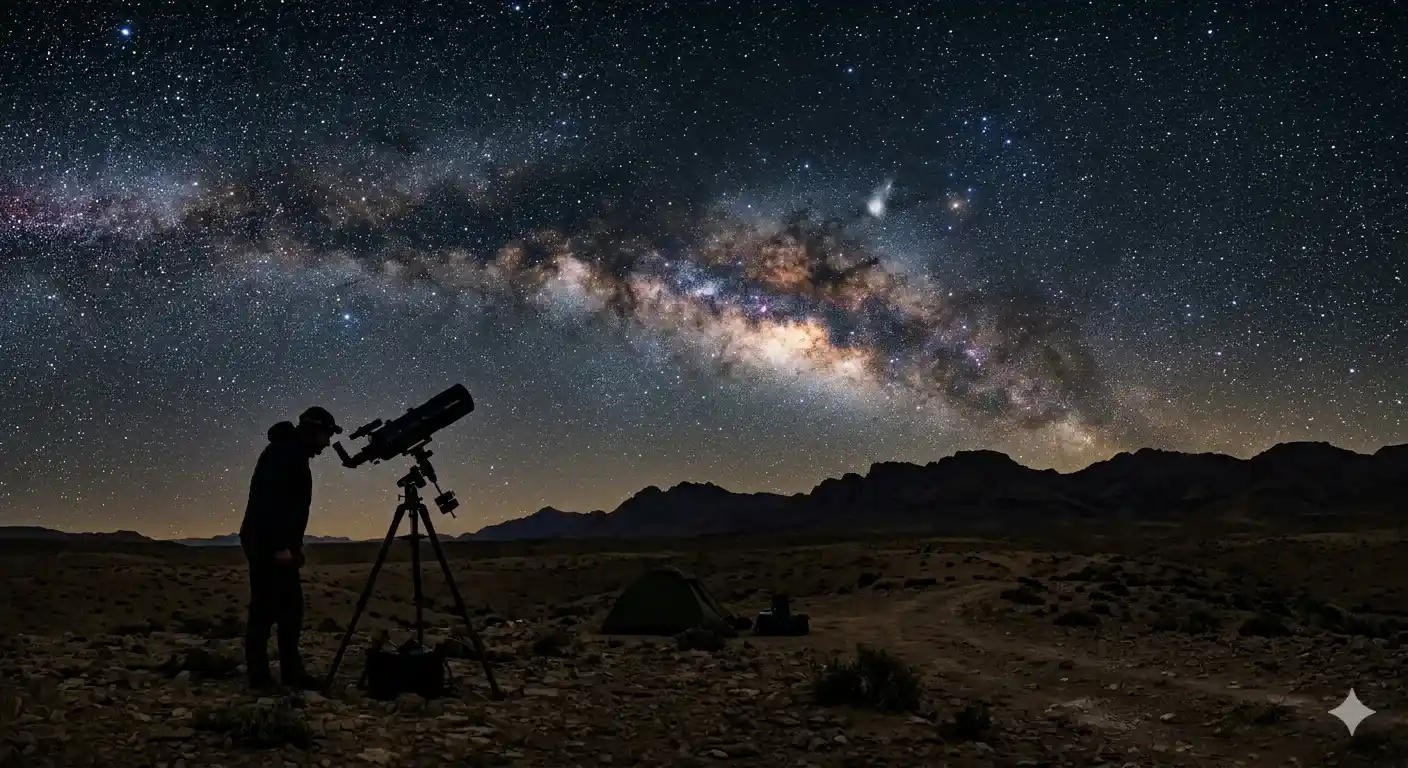
best stargazing places in the world
The best stargazing locations usually share several important characteristics. They are often located far away from large cities, have very low light pollution, and sit at higher elevations where the atmosphere is thinner. Dry climates and clear weather also help create perfect conditions for observing stars, planets, and distant galaxies.
Around the world, several destinations are famous for their extraordinary night skies. From the deserts of South America and Africa to remote mountain regions and protected dark sky reserves, these places offer some of the clearest views of the universe.
In addition to these well-known locations, emerging destinations such as the Himalayan region are gaining popularity among astrophotographers and night sky travelers. Remote lakes and high mountain valleys in Nepal provide incredible opportunities to witness thousands of stars in a peaceful natural environment.
In this guide, we will explore the best stargazing places in the world, explain why these destinations offer such clear skies, and highlight some incredible locations where you can experience the magic of the night sky.
What Makes the Best Stargazing Places in the World?
Not every location is suitable for observing the night sky. Several environmental factors determine whether a destination can provide clear and spectacular stargazing experiences.
The most important factor is light pollution. Artificial lights from cities and towns can dramatically reduce the number of visible stars. In heavily populated areas, it may be possible to see only a few stars in the sky. In contrast, remote regions with little artificial lighting reveal thousands of stars and the bright band of the Milky Way.
Another key factor is altitude. High elevations often provide clearer skies because the atmosphere is thinner and contains fewer pollutants. This allows stargazers to see celestial objects with greater clarity. Mountain regions around the world are therefore excellent locations for astronomy.
Climate also plays an important role. Dry environments such as deserts usually have clearer skies because there is less moisture in the air. Humidity and clouds can scatter light and reduce visibility, making it harder to observe distant stars and galaxies.
Several organizations work to protect natural night skies by designating special dark sky areas. The International Dark-Sky Association promotes dark sky conservation and helps create protected regions where light pollution is minimized.
Finally, geographic isolation helps maintain pristine night skies. Locations far from urban centers—such as deserts, mountains, and national parks often provide the best stargazing conditions on Earth.
When these elements combine, they create the perfect environment for observing the cosmos. The destinations below represent some of the best stargazing places in the world where travelers can witness breathtaking views of the universe.
Atacama Desert, Chile
One of the most famous best stargazing places in the world is the Atacama Desert. Located in northern Chile, this desert is known for its incredibly clear skies and extremely dry climate.
The Atacama Desert is often described as the driest desert on Earth. Some areas receive almost no rainfall, which means the atmosphere contains very little moisture. This dryness allows stars and galaxies to appear brighter and more visible than in many other locations.
Another reason the Atacama Desert is ideal for stargazing is its high altitude. Many parts of the region sit more than 2,000 meters above sea level, reducing atmospheric distortion and providing clearer views of deep space.
Because of these conditions, several of the world’s most advanced astronomical observatories are located here. One of the most famous is the ALMA Observatory, which studies distant galaxies and the formation of stars.
Travelers visiting the town of San Pedro de Atacama can join guided stargazing tours led by professional astronomers. These tours use powerful telescopes to show visitors planets, star clusters, and nebulae in incredible detail.
On moonless nights, the Milky Way becomes especially visible in the Atacama sky. The glowing band of our galaxy stretches across the desert horizon, creating one of the most spectacular stargazing experiences anywhere in the world.
Mauna Kea, Hawaii
Another legendary location among the best stargazing places in the world is Mauna Kea. Rising more than 4,200 meters above sea level, this dormant volcano offers some of the clearest skies on the planet.
Mauna Kea’s high elevation places observers above much of the Earth’s atmosphere. This reduces atmospheric turbulence and cloud cover, making the stars appear sharper and brighter.
The summit of the mountain hosts a collection of international observatories known as the Mauna Kea Observatories. These facilities house some of the most powerful telescopes used for studying distant galaxies and cosmic phenomena.
Visitors can drive to the mountain and witness incredible views of the night sky. On clear nights, the Milky Way, planets, and countless constellations become visible.
The combination of altitude, stable climate, and minimal light pollution makes Mauna Kea one of the most important astronomical observation sites in the world.
Namib Desert, Namibia
The Namib Desert is another best stargazing places in the world. This vast desert stretches along the southwestern coast of Africa and is known for its ancient landscapes and extremely dark skies.
Large portions of the desert remain untouched by development, meaning there is almost no artificial lighting. As a result, the night sky appears incredibly bright and filled with stars.
Within the desert lies the NamibRand Nature Reserve, which has been designated as one of the world’s first International Dark Sky Reserves.
Visitors to the reserve can stay in remote lodges that offer guided astronomy experiences. Professional telescopes allow travelers to observe galaxies, planets, and nebulae while learning about the southern hemisphere’s constellations.
The sight of the Milky Way rising above the towering red dunes of the Namib Desert is truly unforgettable.
Aoraki Mackenzie Dark Sky Reserve, New Zealand
New Zealand’s Aoraki Mackenzie International Dark Sky Reserve is one of the largest protected dark sky regions in the world. Located near Mount Cook National Park, this reserve covers thousands of square kilometers of pristine alpine landscapes.
Strict lighting regulations ensure that artificial light does not interfere with the natural darkness of the sky. Because of this protection, the area offers exceptional conditions for observing stars and galaxies.
The nearby town of Tekapo has become famous for astronomy tourism. Visitors can join guided night sky tours that provide telescopes and expert explanations of celestial objects.
One of the most exciting aspects of stargazing in New Zealand is the opportunity to see constellations unique to the southern hemisphere.
Wadi Rum, Jordan
The desert wilderness of Wadi Rum is another best stargazing places in the world.
This dramatic desert landscape is protected as part of the Wadi Rum Protected Area, helping preserve its natural environment and dark night skies.
Because the area is far from major cities, the skies remain exceptionally clear. Many Bedouin desert camps offer overnight experiences where travelers can observe the stars in complete silence surrounded by towering sandstone cliffs. Astrophotographers often visit Wadi Rum to capture the Milky Way rising above the desert rock formations. this is one of the best stargazing places in the World.
Himalayan Stargazing Destinations
While many famous stargazing locations exist around the world, the Himalayan region is emerging as a hidden gem for astronomy travelers. High-altitude landscapes and remote mountain valleys provide exceptional night sky visibility. For example, Rara Lake offers incredibly dark skies where the stars often reflect beautifully across the lake’s calm waters.
Another spectacular destination is Shey Phoksundo Lake, located in a remote Himalayan valley with minimal light pollution.
Trekkers visiting Annapurna Base Camp can also witness breathtaking night skies surrounded by towering mountain peaks.
Travelers interested in exploring these locations can read our detailed guide on best places to stargaze in Nepal, which highlights some of the most beautiful dark sky destinations in the Himalayas.
Equipment for Stargazing Travelers
Although stargazing can be enjoyed without special equipment, the right tools can greatly enhance the experience.
A mirrorless or DSLR camera allows travelers to capture stunning images of the Milky Way and constellations. Wide-angle lenses with large apertures help collect more light during long exposures.
A sturdy tripod is essential for astrophotography because night sky images require exposure times of 10–20 seconds or longer.
Binoculars can also reveal details such as star clusters and distant planets.
Mobile apps like SkyView and Star Walk 2 help users identify stars, planets, and constellations in real time.
Travelers interested in night photography can also explore guides on choosing the best beginner cameras for astrophotography to capture stunning images of the night sky.
The universe becomes truly breathtaking when viewed from places with dark, clear skies. Across the globe, deserts, mountains, and protected dark sky reserves offer incredible opportunities to witness the stars in their full glory.
Destinations like the Atacama Desert, Mauna Kea, the Namib Desert, and New Zealand’s dark sky reserves represent some of the best stargazing places in the world. These locations provide the ideal combination of low light pollution, high altitude, and clear weather.
At the same time, emerging destinations such as the Himalayan region are gaining recognition among stargazing travelers. Remote locations in Nepal offer extraordinary night skies that rival many famous astronomy destinations.
Whether you visit a desert observatory, a remote mountain lake, or a protected dark sky reserve, the experience of looking up at thousands of stars is unforgettable.
For travelers seeking adventure, photography opportunities, and a deeper connection with the cosmos, exploring the best stargazing places in the world is an experience that should not be missed.
Faqs About Best Stargazing Places in the World
What are the best stargazing places in the world?
Some of the best stargazing places in the world include the Atacama Desert, Mauna Kea, the Namib Desert, the Aoraki Mackenzie Dark Sky Reserve, and the Sahara Desert. These destinations are known for their high altitudes, dry climates, and extremely low light pollution, which create ideal conditions for observing the Milky Way, planets, and distant galaxies.
Why are some places better for stargazing than others?
Certain locations provide better stargazing conditions due to low light pollution, high altitude, dry air, and clear skies. Deserts and remote mountain regions tend to offer the best night sky visibility because they have fewer clouds and minimal artificial lighting.
Which country has the clearest skies for stargazing?
Chile is widely considered one of the best countries for stargazing because of the exceptional sky conditions in the Atacama Desert. The region hosts several world-class observatories and offers more than 300 clear nights per year.
Where can you see the Milky Way most clearly?
You can see the Milky Way most clearly in places with very dark skies, such as the NamibRand Nature Reserve and the Aoraki Mackenzie Dark Sky Reserve. In these locations, the Milky Way appears as a bright band of stars stretching across the night sky.
What is dark sky tourism?
Dark sky tourism is a form of travel that focuses on visiting destinations with minimal light pollution to observe the night sky. These areas are often protected regions such as national parks, deserts, and officially recognized dark sky reserves.
Organizations like the International Dark-Sky Association help identify and protect these locations around the world.
When is the best time for stargazing?
The best time for stargazing is during new moon nights when the sky is darkest. Clear seasons such as autumn and winter also provide excellent viewing conditions because the atmosphere is typically more stable and cloud cover is lower.
Do you need a telescope for stargazing?
No, you do not need a telescope to enjoy stargazing. In places with very dark skies, thousands of stars and the Milky Way can be seen with the naked eye. However, binoculars or telescopes can help reveal additional celestial objects such as nebulae, star clusters, and planets.
How far should you travel from a city for good stargazing?
To escape light pollution, you usually need to travel at least 50 to 100 kilometers away from large cities. Remote deserts, mountain ranges, and protected dark sky reserves offer the best viewing conditions.
Are mountains good places for stargazing?
Yes, mountains are excellent for stargazing because they have higher elevation and thinner atmosphere. This reduces atmospheric distortion and allows stars to appear brighter and clearer.
For example, high-altitude locations such as Mauna Kea provide some of the clearest night sky views in the world.
What equipment is best for stargazing beginners?
Beginners can start with binoculars or entry-level telescopes to observe the moon, planets, and bright star clusters. Many photographers also use mirrorless or DSLR cameras for astrophotography.
If you want to photograph the night sky, you can also check guides on choosing astrophotography cameras and lenses for capturing stars and the Milky Way.
What is the darkest place on Earth for stargazing?
One of the darkest places on Earth for stargazing is the NamibRand Nature Reserve. This protected reserve has extremely low light pollution and very dry air, making it one of the best places to see the Milky Way and thousands of stars with incredible clarity.
Why is the Atacama Desert famous for astronomy?
The Atacama Desert is famous for astronomy because it has some of the driest conditions on Earth and more than 300 clear nights each year. The desert’s high altitude and low humidity create ideal conditions for observing distant galaxies, planets, and nebulae.
Where is the best place in the United States for stargazing?
One of the best stargazing locations in the United States is Mauna Kea. This volcanic mountain rises above much of the atmosphere and offers extremely clear skies, which is why it hosts several world-class astronomical observatories.
What is a Dark Sky Reserve?
A Dark Sky Reserve is a protected area that limits artificial lighting in order to preserve natural night skies. Locations like the Aoraki Mackenzie Dark Sky Reserve are officially recognized for their exceptional stargazing conditions and efforts to reduce light pollution.
Which desert is best for seeing the Milky Way?
Several deserts offer excellent Milky Way views, but the Atacama Desert and the Namib Desert are considered among the best. Their dry climates and remote locations make the stars appear brighter and clearer.
Can tourists visit observatories for stargazing?
Yes, many observatories around the world offer guided night sky tours for visitors. Some facilities located near Mauna Kea provide educational programs where travelers can learn about astronomy and observe stars through powerful telescopes.
What is the best time of night for stargazing?
The best time for stargazing is usually between midnight and early morning, when the sky is darkest and atmospheric conditions are more stable. Avoid nights with a full moon, as moonlight can make faint stars harder to see.
How does light pollution affect stargazing?
Light pollution from cities and artificial lighting brightens the night sky and reduces the number of visible stars. In heavily populated areas, only a few bright stars may be visible, while in dark sky locations thousands of stars can be seen.
What should you bring for a stargazing trip?
For a comfortable stargazing experience, it’s helpful to bring warm clothing, a reclining chair or blanket, binoculars, a red flashlight, and a star map or astronomy app to help identify constellations.
Can you see planets while stargazing?
Yes, several planets are visible to the naked eye under clear skies. Bright planets such as Jupiter, Venus, and Mars can often be seen from dark sky destinations like the Aoraki Mackenzie Dark Sky Reserve.
