
The history of All Prime Ministers of Nepal reflects the political evolution of the country from the early Shah dynasty to the modern Federal Democratic Republic. Over the centuries, Nepal has been governed by many influential leaders who served as prime ministers, mukhtiyars, dewan, or hereditary Rana rulers. Each of these leaders played a significant role in shaping the nation’s political structure, governance system, and national development.
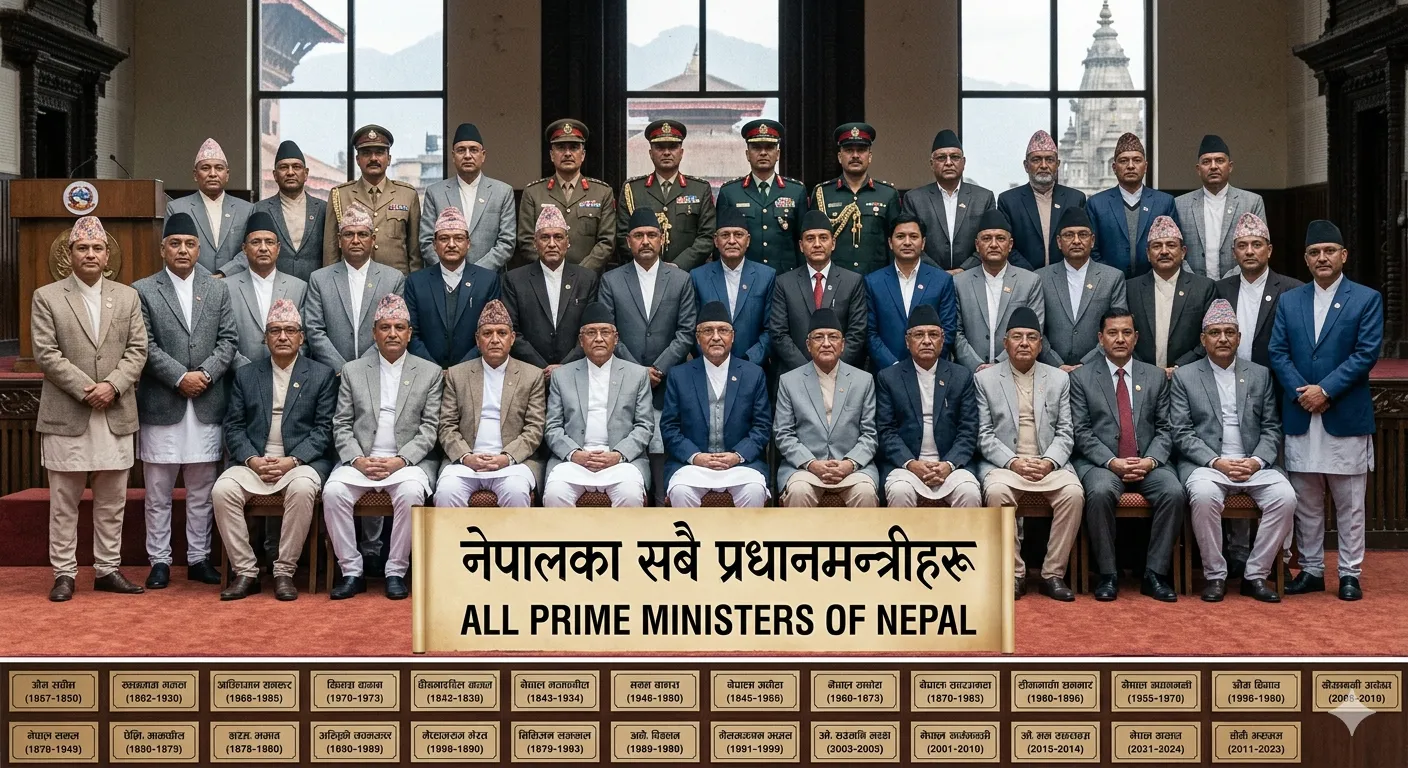
All Prime Ministers of Nepal
The list of All Prime Ministers of Nepal begins in the 18th century during the expansion of the Shah Kingdom. Early leaders such as Vamsharaj Pande and Bhimsen Thapa held powerful administrative roles that laid the foundation for Nepal’s government system. Later, the Rana dynasty established a hereditary prime ministership that ruled the country for more than a century. After the end of Rana rule in 1951, Nepal gradually transitioned toward democratic governance with elected prime ministers.
In the modern era, the leadership of Nepal has changed frequently as the country moved from monarchy to a constitutional monarchy and finally to a federal democratic republic in 2008. Leaders like Girija Prasad Koirala, Pushpa Kamal Dahal, Sher Bahadur Deuba, and KP Sharma Oli have played important roles in shaping contemporary Nepalese politics.
This comprehensive guide explores All Prime Ministers of Nepal from 1739 to 2026, including their tenure dates, length of service, and historical context. The article provides a complete timeline of leadership that highlights how Nepal’s political system has evolved over nearly three centuries.
Whether you are a student, researcher, or simply interested in Nepal’s political history, this guide to All Prime Ministers of Nepal offers valuable insights into the leaders who have shaped the nation’s past and present.
Timeline of Nepal’s Political Eras
| Era | Period | Key Features |
|---|---|---|
| Shah Expansion & Mulkaji | 1776–1846 | Formation of modern Nepal; early ministers like Vamsharaj Pande and Bhimsen Thapa |
| Rana Era | 1846–1951 | Hereditary rule by Ranas; Jung Bahadur Rana as longest-serving PM |
| Transition Era | 1951–1960 | End of Rana rule; rise of parliamentary governance |
| Panchayat Era | 1960–1990 | Partyless monarchy; Tulsi Giri, Surya Bahadur Thapa among key PMs |
| Constitutional Monarchy | 1990–2008 | Restoration of democracy; multiple governments under Birendra and Gyanendra |
| Federal Democratic Republic | 2008–Present | Nepal becomes republic; prime ministers like Pushpa Kamal Dahal, KP Sharma Oli |
Table of All Prime Ministers of Nepal (1739–2026)
Note: This is a simplified overview. Each prime minister’s detailed bio follows below.
| No. | Name | Term | Days | Era |
|---|---|---|---|---|
| 1 | Vamsharaj Pande | c.1776–1779 | ~3 years | Shah Expansion |
| 2 | Swarup Singh Karki | c.1776–1777 | ~1 year | Shah Expansion |
| 3 | Sarbajit Rana Magar | 1777–1778 | ~1 year | Shah Expansion |
| 4 | Vamsharaj Pande | c.1782–1785 | ~3 years | Shah Expansion |
| 5 | Abhiman Singh Basnyat | c.1785–1794 | ~9 years | Shah Expansion |
| 6 | Bahadur Shah | c.1785–1794 | ~9 years | Shah Expansion |
| 7 | Kirtiman Singh Basnyat | c.1794–1801 | ~7 years | Shah Expansion |
| 8 | Bakhtawar Singh Basnyat | c.1801–1803 | ~2 years | Shah Expansion |
| 9 | Damodar Pande | Feb 1803–Mar 1804 | 1 year | Shah Expansion |
| 10 | Bhimsen Thapa | 1806–July 1837 | ~31 years | Shah Expansion |
| 11 | Rana Jang Pande | 1837 | <1 year | Shah Expansion |
| 12 | Ranga Nath Poudyal | Oct 1837–Aug 1838 | ~10 months | Shah Expansion |
| 13 | Chautariya Puskhar Shah | Oct 1838–1839 | ~1 year | Shah Expansion |
| 14 | Rana Jang Pande | Apr 1839–1840 | ~1 year | Shah Expansion |
| 15 | Ranga Nath Poudyal | 1840 | <1 year | Shah Expansion |
| 16 | Fateh Jung Shah | Nov 1840–Jan 1843 | ~2 years | Shah Expansion |
| 17 | Mathabar Singh Thapa | Nov 1843–17 May 1845 | ~1.5 years | Shah Expansion |
| 18 | Fateh Jung Shah | Sep 1845–14 Sep 1846 | ~1 year | Shah Expansion |
| 19 | Jung Bahadur Rana | 15 Sep 1846–1 Aug 1856 | 9 years, 321 days | Rana Era |
| 20 | Bam Bahadur Kunwar | 1 Aug 1856–25 May 1857 | 297 days | Rana Era |
| 21 | Krishna Bahadur Kunwar | 25 May 1857–28 Jun 1857 | 34 days | Rana Era |
| 22 | Jung Bahadur Rana | 28 Jun 1857–25 Feb 1877 | 19 years, 242 days | Rana Era |
| 23 | Ranodip Singh Kunwar | 27 Feb 1877–22 Nov 1885 | 8 years, 270 days | Rana Era |
| 24 | Bir Shumsher Jung Bahadur Rana | 22 Nov 1885–5 Mar 1901 | 15 years, 103 days | Rana Era |
| 25 | Dev Shumsher Jung Bahadur Rana | 5 Mar 1901–27 Jun 1901 | 114 days | Rana Era |
| 26 | Chandra Shumsher Jung Bahadur Rana | 27 Jun 1901–26 Nov 1929 | 28 years, 152 days | Rana Era |
| 27 | Bhim Shumsher Jung Bahadur Rana | 26 Nov 1929–1 Sep 1932 | 2 years, 280 days | Rana Era |
| 28 | Juddha Shumsher Jung Bahadur Rana | 1 Sep 1932–29 Nov 1945 | 13 years, 89 days | Rana Era |
| 29 | Padma Shumsher Jung Bahadur Rana | 29 Nov 1945–30 Apr 1948 | 2 years, 153 days | Rana Era |
| 30 | Mohan Shumsher Jung Bahadur Rana | 30 Apr 1948–12 Nov 1951 | 3 years, 196 days | Rana Era |
| 31 | Matrika Prasad Koirala | 16 Nov 1951–14 Aug 1952 | 272 days | Transition Era |
| 32 | Direct Rule by King | 14 Aug 1952–15 Jun 1953 | 305 days | Transition Era |
| 33 | Matrika Prasad Koirala | 15 Jun 1953–11 Apr 1955 | 1 year, 303 days | Transition Era |
| 34 | Surya Bahadur Thapa (Acting) | 11–14 Apr 1955 | 3 days | Transition Era |
| 35 | Direct Rule by King | 14 Apr 1955–27 Jan 1956 | 288 days | Transition Era |
| 36 | Tanka Prasad Acharya | 27 Jan 1956–26 Jul 1957 | 1 year, 180 days | Transition Era |
| 37 | Kunwar Indrajit Singh | 26 Jul 1957–15 May 1958 | 293 days | Transition Era |
| 38 | Subarna Shamsher Rana | 15 May 1958–27 May 1959 | 1 year, 12 days | Transition Era |
| 39 | Bishweshwar Prasad Koirala | 27 May 1959–15 Dec 1960 | 1 year, 202 days | Transition Era |
| 40 | Direct Rule by King | 15 Dec 1960–2 Apr 1963 | 2 years, 108 days | Panchayat Era |
| 41 | Tulsi Giri | 2 Apr 1963–23 Dec 1963 | 265 days | Panchayat Era |
| 42 | Surya Bahadur Thapa | 23 Dec 1963–26 Feb 1964 | 65 days | Panchayat Era |
| 43 | Tulsi Giri | 26 Feb 1964–26 Jan 1965 | 335 days | Panchayat Era |
| 44 | Surya Bahadur Thapa | 26 Jan 1965–7 Apr 1969 | 4 years, 71 days | Panchayat Era |
| 45 | Kirti Nidhi Bista | 7 Apr 1969–13 Apr 1970 | 1 year, 6 days | Panchayat Era |
| 46 | Gehendra Bahadur Rajbhandari | 13 Apr 1970–14 Apr 1971 | 1 year, 1 day | Panchayat Era |
| 47 | Kirti Nidhi Bista | 14 Apr 1971–16 Jul 1973 | 2 years, 63 days | Panchayat Era |
| 48 | Nagendra Prasad Rijal | 16 Jul 1973–1 Dec 1975 | 2 years, 168 days | Panchayat Era |
| 49 | Tulsi Giri | 1 Dec 1975–12 Sep 1977 | 1 year, 285 days | Panchayat Era |
| 50 | Kirti Nidhi Bista | 12 Sep 1977–30 May 1979 | 1 year, 260 days | Panchayat Era |
| 51 | Surya Bahadur Thapa | 30 May 1979–12 Jul 1983 | 4 years, 43 days | Panchayat Era |
| 52 | Lokendra Bahadur Chand | 12 Jul 1983–21 Mar 1986 | 2 years, 252 days | Panchayat Era |
| 53 | Nagendra Prasad Rijal | 21 Mar 1986–15 Jun 1986 | 86 days | Panchayat Era |
| 54 | Marich Man Singh Shrestha | 15 Jun 1986–6 Apr 1990 | 3 years, 295 days | Panchayat Era |
| 55 | Lokendra Bahadur Chand | 6–19 Apr 1990 | 13 days | Constitutional Monarchy |
| 56 | Krishna Prasad Bhattarai | 19 Apr 1990–26 May 1991 | 1 year, 37 days | Constitutional Monarchy |
| 57 | Girija Prasad Koirala | 26 May 1991–30 Nov 1994 | 3 years, 188 days | Constitutional Monarchy |
| 58 | Man Mohan Adhikari | 30 Nov 1994–12 Sep 1995 | 286 days | Constitutional Monarchy |
| 59 | Sher Bahadur Deuba | 12 Sep 1995–12 Mar 1997 | 1 year, 181 days | Constitutional Monarchy |
| 60 | Lokendra Bahadur Chand | 12 Mar–7 Oct 1997 | 209 days | Constitutional Monarchy |
| 61 | Surya Bahadur Thapa | 7 Oct 1997–15 Apr 1998 | 190 days | Constitutional Monarchy |
| 62 | Girija Prasad Koirala | 15 Apr–23 Dec 1998 | 252 days | Constitutional Monarchy |
| 63 | Girija Prasad Koirala | 23 Dec 1998–31 May 1999 | 159 days | Constitutional Monarchy |
| 64 | Krishna Prasad Bhattarai | 31 May 1999–22 Mar 2000 | 296 days | Constitutional Monarchy |
| 65 | Girija Prasad Koirala | 22 Mar–26 Jul 2001 | 1 year, 126 days | Constitutional Monarchy |
| 66 | Sher Bahadur Deuba | 26 Jul 2001–4 Oct 2002 | 1 year, 70 days | Constitutional Monarchy |
| 67 | Gyanendra Bir Bikram Shah | 4–11 Oct 2002 | 7 days | Constitutional Monarchy |
| 68 | Lokendra Bahadur Chand | 11 Oct 2002–5 Jun 2003 | 237 days | Constitutional Monarchy |
| 69 | Surya Bahadur Thapa | 5 Jun 2003–3 Jun 2004 | 364 days | Constitutional Monarchy |
| 70 | Sher Bahadur Deuba | 3 Jun 2004–1 Feb 2005 | 243 days | Constitutional Monarchy |
| 71 | Gyanendra Bir Bikram Shah | 1 Feb 2005–25 Apr 2006 | 1 year, 83 days | Constitutional Monarchy |
| 72 | Girija Prasad Koirala | 25 Apr 2006–1 Apr 2007 | 341 days | Federal Republic |
| 73 | Girija Prasad Koirala | 1 Apr 2007–18 Aug 2008 | 1 year, 139 days | Federal Republic |
| 74 | Pushpa Kamal Dahal | 18 Aug 2008–25 May 2009 | 280 days | Federal Republic |
| 75 | Madhav Kumar Nepal | 25 May 2009–6 Feb 2011 | 1 year, 257 days | Federal Republic |
| 76 | Jhala Nath Khanal | 6 Feb 2011–29 Aug 2011 | 204 days | Federal Republic |
| 77 | Baburam Bhattarai | 29 Aug 2011–14 Mar 2013 | 1 year, 197 days | Federal Republic |
| 78 | Khil Raj Regmi | 14 Mar 2013–11 Feb 2014 | 334 days | Federal Republic |
| 79 | Sushil Koirala | 11 Feb 2014–12 Oct 2015 | 1 year, 243 days | Federal Republic |
| 80 | KP Sharma Oli | 12 Oct 2015–4 Aug 2016 | 297 days | Federal Republic |
| 81 | Pushpa Kamal Dahal | 4 Aug 2016–7 Jun 2017 | 307 days | Federal Republic |
| 82 | Sher Bahadur Deuba | 7 Jun 2017–15 Feb 2018 | 253 days | Federal Republic |
| 83 | KP Sharma Oli | 15 Feb 2018–14 May 2021 | 3 years, 88 days | Federal Republic |
All Prime Ministers of Nepal (1739–2026)
1. Vamsharaj Pande
Vamsharaj Pande
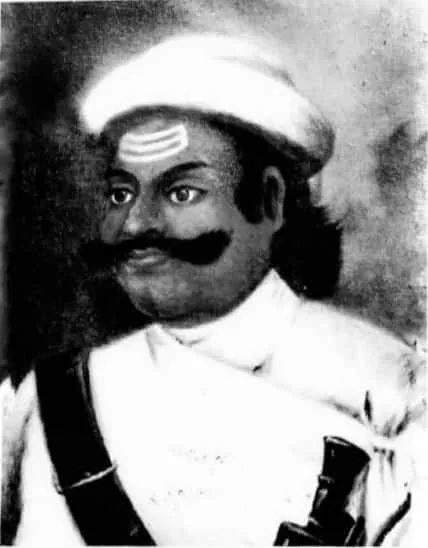
Vamsharaj Pande
Vamsharaj Pande was one of the earliest powerful administrators in the Kingdom of Nepal and served as Dewan during the reign of Pratap Singh Shah. He first assumed office around 1776 and remained in power until approximately 1779. During this time, he helped manage state administration and court affairs during a transitional period following the expansion campaigns of Prithvi Narayan Shah. Pande played an important role in advising the monarchy and stabilizing government institutions. Although historical records from this period are limited, he is remembered as one of the earliest figures to exercise executive authority in Nepal’s royal court.
2. Swarup Singh Karki
Swarup Singh Karki
Swarup Singh Karki served as a Dewan of Nepal during the late 18th century under King Pratap Singh Shah. He took office around 1776 and left his position around 1777, serving for roughly one year. Karki was part of the influential court elite who assisted the Shah monarchy in governing the newly unified kingdom. His role involved supervising administrative matters and advising the royal court. Although his tenure was short, he was one of the early political figures who contributed to the structure of Nepal’s central administration following the unification campaigns of the Shah dynasty.
3. Sarbajit Rana Magar
Sarbajit Rana Magar
Sarbajit Rana Magar served as Kaji or Mulkaji, a powerful executive role in the Nepalese royal court. He took office around 1777 and remained in power until about 1778, serving for approximately one year during the reign of Rana Bahadur Shah. Known primarily as a military commander and court official, he played an important role in the administration of the kingdom during a politically unstable time. The position of Kaji at the time held significant authority in governance, military organization, and royal advisory functions within the Shah monarchy.
4. Vamsharaj Pande (Second Term)
Vamsharaj Pande
Vamsharaj Pande returned to power for a second time around 1782 and continued until approximately 1785. During this period, he served as Dewan or Mantri-Nayak under the reign of Rana Bahadur Shah. His second term lasted roughly three years, during which he helped manage state affairs and political administration within the royal court. Pande was considered one of the influential nobles of the Shah era who shaped early governmental structures in Nepal. His leadership reflected the complex political environment of the time, where powerful court officials shared authority with the monarchy.
5. Abhiman Singh Basnyat
Abhiman Singh Basnyat
Abhiman Singh Basnyat served as Mulkaji of Nepal around 1785 and remained in office until about 1794, giving him a tenure of roughly nine years. He worked during the reign of Rana Bahadur Shah and was part of the powerful Basnyat noble family. As Mulkaji, he had significant influence over administrative and military affairs in the kingdom. His leadership came during a period when Nepal was consolidating power after unification. Basnyat played an important role in supporting the monarchy while helping maintain political stability in the expanding kingdom.
6. Bahadur Shah (Regent)
Bahadur Shah of Nepal
Bahadur Shah, the younger brother of Prithvi Narayan Shah, served as Regent and Mul-Chautariya of Nepal around 1785 to 1794, ruling on behalf of the young King Rana Bahadur Shah. His tenure lasted approximately nine years. During his regency, Bahadur Shah continued the territorial expansion policies of the Shah dynasty and strengthened the administration of the kingdom. He played a key role in extending Nepal’s influence across the Himalayan region. His leadership significantly shaped Nepal’s early political and military history.
7. Kirtiman Singh Basnyat
Kirtiman Singh Basnyat
Kirtiman Singh Basnyat served as Mulkaji of Nepal around 1794 and remained in office until about 1801, serving approximately seven years under King Girvan Yuddha Bikram Shah. He was a member of the influential Basnyat family, which held major political and military positions during the Shah dynasty. As Mulkaji, he helped oversee governance and state administration during a time when Nepal was managing internal political rivalries and external challenges. His leadership contributed to maintaining stability in the royal court and government.
8. Bakhtawar Singh Basnyat
Bakhtawar Singh Basnyat
Bakhtawar Singh Basnyat served as Mulkaji from around 1801 to 1803, giving him a tenure of approximately two years during the reign of Girvan Yuddha Bikram Shah. He was another prominent member of the Basnyat noble family. During his leadership, Nepal faced increasing political tensions within the royal court. Basnyat was responsible for managing government administration and supporting the monarchy during a critical period before the rise of more powerful Mukhtiyars. His tenure represents the final phase of leadership before the Mukhtiyar era began.
9. Damodar Pande
Damodar Pande
Damodar Pande served as Mukhtiyar, the chief executive of Nepal, from February 1803 to March 1804, giving him a tenure of roughly one year under King Girvan Yuddha Bikram Shah. He was an influential political figure who attempted to maintain control of the government during a time of intense factional rivalry within the royal court. Pande opposed the return of former king Rana Bahadur Shah to power. However, his political enemies eventually overthrew him, leading to his execution.
10. Rana Bahadur Shah
Rana Bahadur Shah
Rana Bahadur Shah, a former king of Nepal, returned to power as Mukhtiyar after abdicating the throne earlier. He ruled from 1804 until 25 April 1806, serving approximately two years as the effective head of government. During this time, he exercised significant authority while his young son Girvan Yuddha Bikram Shah remained the official monarch. His rule was marked by political intrigue and conflict among court factions. Rana Bahadur Shah’s career ended dramatically when he was assassinated in 1806 inside the royal palace.
11. Bhimsen Thapa
Bhimsen Thapa was one of the most powerful political figures in Nepal’s early history. He became Mukhtiyar (equivalent to prime minister) in 1806 after the assassination of Rana Bahadur Shah. Thapa served until July 1837, making his tenure about 31 years, one of the longest in Nepalese history. During the reigns of Girvan Yuddha Bikram Shah and Rajendra Bikram Shah, he dominated Nepalese politics and strengthened the military and administration. His leadership shaped Nepal’s governance and foreign relations during the early 19th century. However, political rivals eventually forced him from power, and he later died in prison.
12. Rana Jang Pande
Rana Jang Pande briefly served as Mukhtiyar of Nepal in 1837 after the fall of Bhimsen Thapa. His tenure lasted only a short time during the reign of Rajendra Bikram Shah. Pande belonged to a powerful aristocratic family and was deeply involved in the political struggles that followed the decline of Bhimsen Thapa’s influence. His first period in office was short and marked by political instability within the royal court. The power struggle between rival noble families during this era caused frequent leadership changes and weakened central authority.
13. Ranga Nath Poudyal
Ranga Nath Poudyal served as Mukhtiyar from October 1837 to August 1838, giving him a tenure of about 10 months under King Rajendra Bikram Shah. He was known as a scholar and religious leader who gained influence within the royal court. Poudyal attempted to stabilize governance during a time of political uncertainty after Bhimsen Thapa’s removal from power. Although his leadership was relatively brief, he played a role in maintaining the administrative structure of Nepal during a difficult period of shifting alliances among court factions.
14. Pushkar Shah
Pushkar Shah served as Mukhtiyar of Nepal beginning in October 1838 and remained in office until around 1839, serving for roughly one year. He was a member of the Shah royal family and held an influential position in the royal administration during the reign of Rajendra Bikram Shah. His leadership occurred during a time of political instability when rival factions in the court competed for control of government positions. Though his tenure was short, Pushkar Shah played an important role in continuing the functioning of Nepal’s administrative system during this turbulent era.
15. Rana Jang Pande (Second Term)
Rana Jang Pande returned to power as Mukhtiyar in April 1839 and served until 1840 under King Rajendra Bikram Shah. His second tenure lasted roughly one year. Pande was a central figure in the political rivalries of the Nepalese royal court during the 1830s and 1840s. His return to power reflected the unstable nature of politics during that time, where leadership frequently shifted between influential noble families. Despite his experience and political connections, his government faced strong opposition and continued instability.
16. Ranga Nath Poudyal (Second Term)
Ranga Nath Poudyal briefly returned as Mukhtiyar in 1840 for a short second term during the reign of Rajendra Bikram Shah. His second tenure lasted only a short period but reflected the ongoing political instability of Nepal during this era. Poudyal was respected for his religious knowledge and advisory role within the court. However, constant struggles between political factions made it difficult for any leader to maintain authority for long. His brief return to power highlighted the fragile balance of power within the royal administration.
17. Fateh Jung Shah
Fateh Jung Shah served as Mukhtiyar of Nepal from November 1840 to January 1843, a tenure of about two years and two months during the reign of Rajendra Bikram Shah. He was a member of the royal Shah family and played a key role in government administration. Fateh Jung Shah attempted to stabilize political leadership during a time when the court was divided among rival noble groups. His tenure represented a relatively longer period of stability compared to other leaders of that era.
18. Mathabar Singh Thapa
Mathabar Singh Thapa became Mukhtiyar in November 1843 and served until 17 May 1845, holding power for about 1 year and 6 months. He was the nephew of the former powerful leader Bhimsen Thapa. Mathabar Singh attempted to restore the political influence of the Thapa family during the reign of Rajendra Bikram Shah. However, his leadership ended dramatically when he was assassinated inside the royal palace, reflecting the intense political rivalries of the period.
19. Fateh Jung Shah (Second Term)
Fateh Jung Shah returned to power for a second time in September 1845 and remained in office until 14 September 1846, serving for about one year. His tenure occurred during a time of increasing conflict within Nepal’s ruling elite. The rivalry between noble families eventually led to the famous Kot Massacre, a turning point in Nepalese history that ended the rule of traditional aristocratic families and paved the way for the rise of the Rana dynasty.
20. Jung Bahadur Rana
Jung Bahadur Rana became Prime Minister on 15 September 1846 after the historic Kot Massacre. He served his first term until 1 August 1856, leading Nepal for about 9 years and 321 days. Jung Bahadur established the Rana dynasty, which would dominate Nepal’s government for more than a century. During the reign of Surendra Bikram Shah, he consolidated power and made the prime ministership hereditary within his family, fundamentally transforming Nepal’s political structure.
21. Bam Bahadur Kunwar
Bam Bahadur Kunwar became Prime Minister of Nepal on 1 August 1856, succeeding his elder brother Jung Bahadur Rana. He served until 25 May 1857, giving him a tenure of about 297 days during the reign of Surendra Bikram Shah. Bam Bahadur was a member of the powerful Rana family and helped maintain the political dominance established by Jung Bahadur Rana. Although his time in office was relatively short, he supported the Rana system in which real power was held by the prime minister rather than the monarch. His leadership helped continue the Rana family’s control of Nepal’s government.
22. Krishna Bahadur Kunwar Rana
Krishna Bahadur Kunwar Rana served as Acting Prime Minister of Nepal from 25 May 1857 to 28 June 1857, a tenure of about 34 days. He temporarily assumed leadership following the death of Bam Bahadur Kunwar. During this short period, Nepal was still firmly under the influence of the Rana family, whose political authority dominated the country’s governance. Krishna Bahadur managed administrative affairs while awaiting the return of Jung Bahadur Rana to the position. Although brief, his tenure ensured continuity of government during a transitional moment within the Rana administration.
23. Jung Bahadur Rana (Second Term)
Jung Bahadur Rana returned to power on 28 June 1857 and remained Prime Minister until 25 February 1877, serving for about 19 years and 242 days during his second term. Combined with his first tenure, he became one of the longest-serving leaders in Nepalese history. Under his leadership during the reign of Surendra Bikram Shah, the Rana dynasty firmly established its hereditary rule. Jung Bahadur introduced administrative reforms and strengthened diplomatic relations with British India. His rule shaped Nepal’s governance for decades and ensured the dominance of the Rana prime ministers over the monarchy.
24. Ranodip Singh Kunwar
Ranodip Singh Kunwar became Prime Minister of Nepal on 27 February 1877 following the death of Jung Bahadur Rana. He served until 22 November 1885, giving him a tenure of approximately 8 years and 270 days during the reign of Prithvi Bir Bikram Shah. Ranodip Singh continued the Rana system of hereditary leadership and maintained close relations with British India. However, his rule ended violently when he was assassinated during a palace coup organized by other members of the Rana family, leading to another shift in political leadership.
25. Bir Shumsher Jung Bahadur Rana
Bir Shumsher Jung Bahadur Rana assumed the office of Prime Minister on 22 November 1885 after the coup that removed Ranodip Singh Kunwar. He served until 5 March 1901, giving him a tenure of about 15 years and 103 days. During the reign of Prithvi Bir Bikram Shah, Bir Shumsher strengthened the Rana regime and initiated several modernization projects. His government invested in infrastructure such as roads and water systems in Kathmandu. His leadership helped consolidate the power of the Rana family and maintain stability during a long period of hereditary rule.
26. Dev Shumsher Jung Bahadur Rana
Dev Shumsher Jung Bahadur Rana became Prime Minister on 5 March 1901 and served until 27 June 1901, a tenure of about 114 days. Despite his very short time in office, Dev Shumsher is remembered for attempting progressive reforms. During the reign of Prithvi Bir Bikram Shah, he promoted education and introduced the publication of Nepal’s first newspaper, Gorkhapatra. However, his liberal policies alarmed conservative members of the Rana family, who removed him from power only a few months after he took office.
27. Chandra Shumsher Jung Bahadur Rana
Chandra Shumsher Jung Bahadur Rana became Prime Minister on 27 June 1901 and served until 26 November 1929, making his tenure about 28 years and 152 days, one of the longest in Nepal’s history. During the reign of Tribhuvan Bir Bikram Shah, he implemented several administrative reforms and expanded infrastructure development. Chandra Shumsher also introduced social reforms, including the abolition of slavery in Nepal in 1924. His long rule strengthened the Rana political system and left a significant impact on Nepal’s modernization during the early 20th century.
28. Bhim Shumsher Jung Bahadur Rana
Bhim Shumsher Jung Bahadur Rana became Prime Minister on 26 November 1929, succeeding Chandra Shumsher Rana. He served until 1 September 1932, giving him a tenure of about 2 years and 280 days during the reign of Tribhuvan Bir Bikram Shah. Bhim Shumsher continued many of the policies of the Rana regime while maintaining strict control over Nepal’s political system. Although his tenure was relatively short compared to other Rana leaders, he preserved the authority of the hereditary prime ministership and ensured the continuation of Rana dominance in the country’s governance.
29. Juddha Shumsher Jung Bahadur Rana
Juddha Shumsher Jung Bahadur Rana became Prime Minister on 1 September 1932 and remained in office until 29 November 1945, serving for about 13 years and 89 days. During the reign of Tribhuvan Bir Bikram Shah, his government oversaw reconstruction after the devastating 1934 Nepal–Bihar earthquake. Juddha Shumsher focused on rebuilding infrastructure and strengthening administration. His leadership continued the Rana system but also introduced limited development projects aimed at improving Nepal’s physical infrastructure and governance.
30. Padma Shumsher Jung Bahadur Rana
Padma Shumsher Jung Bahadur Rana became Prime Minister on 29 November 1945 and served until 30 April 1948, giving him a tenure of about 2 years and 153 days during the reign of Tribhuvan Bir Bikram Shah. He attempted to introduce constitutional reforms and proposed a new constitution that would give limited political rights to the people. However, resistance from conservative members of the Rana family limited the impact of his reforms. Despite the challenges, Padma Shumsher’s efforts represented early steps toward political change in Nepal.
31. Mohan Shumsher Jung Bahadur Rana
Mohan Shumsher Jung Bahadur Rana became Prime Minister of Nepal on 30 April 1948 and remained in office until 12 November 1951, serving for about 3 years and 196 days during the reign of Tribhuvan Bir Bikram Shah. He was the last Rana prime minister of Nepal. His leadership came during a time of increasing political pressure from democratic movements and the Nepali Congress. The revolution of 1951 eventually ended the Rana regime that had ruled Nepal for more than a century. Mohan Shumsher’s resignation marked a historic transition toward democratic governance in Nepal.
32. Matrika Prasad Koirala (First Term)
Matrika Prasad Koirala became Prime Minister on 16 November 1951, shortly after the end of the Rana regime. He served until 14 August 1952, completing a tenure of about 272 days under King Tribhuvan Bir Bikram Shah. Koirala was a leading member of the Nepali Congress and played an important role in Nepal’s democratic movement. His government attempted to introduce democratic institutions and administrative reforms after more than a century of Rana rule. However, political instability and disagreements within the government led to his resignation.
33. Matrika Prasad Koirala (Second Term)
Matrika Prasad Koirala returned to office on 15 June 1953 and served until 11 April 1955, giving him a tenure of about 1 year and 303 days. During this time, Nepal was undergoing significant political changes as it attempted to establish a stable democratic system after the Rana era. His government worked to strengthen administrative institutions and improve governance. However, conflicts between political leaders and the monarchy created challenges for his administration. His second tenure ended amid continued political instability in the young democratic state.
34. Surya Bahadur Thapa (Acting)
Surya Bahadur Thapa briefly served as Acting Prime Minister from 11 April 1955 to 14 April 1955, a tenure of 3 days, during the transition of power following Matrika Prasad Koirala’s resignation. Although extremely short, this early role marked the beginning of a long political career for Thapa. He would later become one of Nepal’s most prominent political leaders and serve multiple terms as prime minister during the Panchayat era and later political periods. His leadership reflected the emerging generation of politicians shaping Nepal’s modern political landscape.
35. Tanka Prasad Acharya
Tanka Prasad Acharya became Prime Minister on 27 January 1956 and served until 26 July 1957, giving him a tenure of about 1 year and 180 days during the reign of Mahendra Bir Bikram Shah. Acharya was a founder of the Nepal Praja Parishad and a strong advocate for democratic reforms. During his leadership, Nepal established diplomatic relations with several countries and expanded its presence in international organizations. His government worked to modernize Nepal’s administration and foreign policy during an important period of political development.
36. K. I. Singh
Kunwar Indrajit Singh, commonly known as K. I. Singh, became Prime Minister on 26 July 1957 and served until 15 May 1958, a tenure of about 293 days. Singh was a revolutionary leader who played an important role in Nepal’s anti-Rana movement. His government focused on strengthening national sovereignty and political reforms. However, his leadership faced opposition and political challenges that eventually led to his removal from office. Despite his relatively short tenure, K. I. Singh remains a notable figure in Nepal’s democratic struggle.
37. Subarna Shamsher Rana
Subarna Shamsher Rana served as Prime Minister from 15 May 1958 to 27 May 1959, a tenure of about 1 year and 12 days. Although he came from the Rana aristocratic family, he was a prominent member of the democratic movement and leader of the Nepali Congress. His government helped prepare the country for Nepal’s first democratic parliamentary elections in 1959. Subarna Shamsher played a crucial role in transitioning Nepal from a traditional power structure toward a modern democratic political system.
38. B. P. Koirala
Bishweshwar Prasad Koirala became Prime Minister on 27 May 1959 after Nepal’s first democratic parliamentary election. He served until 15 December 1960, completing a tenure of about 1 year and 202 days. A major leader of the Nepali Congress, he was the first democratically elected prime minister of Nepal. His government introduced several reforms aimed at improving governance and development. However, his leadership ended when King Mahendra Bir Bikram Shah dissolved parliament and established the Panchayat system.
39. Tulsi Giri (First Term)
Tulsi Giri became Prime Minister on 2 April 1963 during the Panchayat political system established by King Mahendra Bir Bikram Shah. He served until 23 December 1963, a tenure of about 265 days. Giri supported the partyless Panchayat system and worked closely with the monarchy to manage Nepal’s administration. His leadership emphasized maintaining political stability under the royal government. Tulsi Giri would later return to power several times and remain a key figure in Nepal’s politics for decades.
40. Surya Bahadur Thapa (First Term)
Surya Bahadur Thapa became Prime Minister on 23 December 1963 and served until 26 February 1964, a tenure of about 65 days under King Mahendra Bir Bikram Shah. Though his first term was brief, Thapa would go on to become one of Nepal’s most experienced political leaders, eventually serving five separate terms as prime minister. During the Panchayat era, he played a major role in government administration and national policy.
41. Tulsi Giri (Second Term)
Tulsi Giri returned as Prime Minister of Nepal on 26 February 1964 and served until 26 January 1965, completing a tenure of about 335 days. His leadership took place during the partyless Panchayat political system introduced by King Mahendra Bir Bikram Shah. Giri was a strong supporter of the monarchy and worked closely with the royal government to maintain political stability. During his tenure, he focused on strengthening administrative institutions and implementing policies that supported the Panchayat system, which emphasized centralized authority and limited political party activity in Nepal.
42. Surya Bahadur Thapa (Second Term)
Surya Bahadur Thapa returned to office on 26 January 1965 and served until 7 April 1969, giving him a tenure of about 4 years and 71 days. Serving under King Mahendra Bir Bikram Shah, Thapa played an important role in administering Nepal during the Panchayat era. His government focused on development planning, improving infrastructure, and strengthening state institutions. Thapa became one of the most experienced political leaders in Nepal’s history and would later serve several more terms as prime minister in different political periods.
43. Kirti Nidhi Bista (First Term)
Kirti Nidhi Bista became Prime Minister on 7 April 1969 and served until 13 April 1970, completing a tenure of about 1 year and 6 days under King Mahendra Bir Bikram Shah. Bista was a prominent figure in the Panchayat system and worked to implement government policies focused on national development and administrative reforms. His leadership emphasized strengthening Nepal’s economic planning and governance structures during a time when political parties were banned and the monarchy held significant power.
44. Gehendra Bahadur Rajbhandari
Gehendra Bahadur Rajbhandari served as Acting Prime Minister from 13 April 1970 to 14 April 1971, completing a tenure of about 1 year and 1 day. During this time, Nepal was transitioning between governments within the Panchayat system. Rajbhandari’s role was primarily administrative, ensuring the continuity of governance and state functions. Although he served in an acting capacity, his leadership helped maintain stability in the government during a period of political transition.
45. Kirti Nidhi Bista (Second Term)
Kirti Nidhi Bista returned to power on 14 April 1971 and served until 16 July 1973, completing a tenure of about 2 years and 63 days during the reign of Birendra Bir Bikram Shah. During this time, Nepal experienced political adjustments following the accession of King Birendra to the throne. Bista’s government worked on development planning and administrative reforms, aiming to strengthen Nepal’s governance within the framework of the Panchayat political system.
46. Nagendra Prasad Rijal (First Term)
Nagendra Prasad Rijal became Prime Minister on 16 July 1973 and served until 1 December 1975, giving him a tenure of about 2 years and 168 days under King Birendra Bir Bikram Shah. Rijal was an experienced politician within the Panchayat system and worked to strengthen government administration and economic planning. His leadership focused on maintaining stability in Nepal’s political system and implementing development programs aimed at improving infrastructure and economic growth.
47. Tulsi Giri (Third Term)
Tulsi Giri returned as Prime Minister for the third time on 1 December 1975 and served until 12 September 1977, completing a tenure of about 1 year and 285 days. During the reign of King Birendra Bir Bikram Shah, Giri continued to support the Panchayat system. His government focused on administrative reforms, development projects, and maintaining political stability under the monarchy.
48. Kirti Nidhi Bista (Third Term)
Kirti Nidhi Bista became Prime Minister for the third time on 12 September 1977 and served until 30 May 1979, giving him a tenure of about 1 year and 260 days. During this period, Nepal faced increasing political pressure for democratic reforms. Bista’s government attempted to address public concerns while maintaining the Panchayat political system under King Birendra Bir Bikram Shah.
49. Surya Bahadur Thapa (Third Term)
Surya Bahadur Thapa returned to office again on 30 May 1979 and served until 12 July 1983, completing a tenure of about 4 years and 43 days. His leadership occurred during a period when Nepal held a national referendum on political reforms. Thapa’s government attempted to modernize the country’s administration and manage growing demands for democratic participation while maintaining the Panchayat system.
50. Lokendra Bahadur Chand (First Term)
Lokendra Bahadur Chand became Prime Minister on 12 July 1983 and served until 21 March 1986, giving him a tenure of about 2 years and 252 days under King Birendra Bir Bikram Shah. Chand was a key political figure during the Panchayat era and worked to maintain political stability while implementing development policies. His leadership was part of the final decade of the Panchayat system before Nepal moved toward multiparty democracy in 1990.
51. Nagendra Prasad Rijal (Second Term)
Nagendra Prasad Rijal returned as Prime Minister of Nepal on 21 March 1986 and served until 18 June 1986, completing a short tenure of about 89 days under King Birendra Bir Bikram Shah. His second term occurred during the final years of the Panchayat political system. Although brief, his leadership focused on maintaining administrative stability while the government prepared for new political appointments. Rijal had already served a longer term earlier in the 1970s and remained an important political figure during the Panchayat era.
52. Marich Man Singh Shrestha
Marich Man Singh Shrestha became Prime Minister on 18 June 1986 and served until 6 April 1990, completing a tenure of about 3 years and 292 days during the reign of King Birendra Bir Bikram Shah. His government ruled during the final phase of the Panchayat system. In 1990, Nepal experienced a massive pro-democracy movement known as the Jana Andolan I, which forced political reforms and the restoration of multiparty democracy. His resignation marked the end of the Panchayat political system.
53. Lokendra Bahadur Chand (Second Term)
Lokendra Bahadur Chand returned to power on 6 April 1990 during the political transition following the 1990 democratic movement. He served until 19 April 1990, completing a short tenure of about 13 days. His government acted as a transitional administration during a critical moment in Nepal’s political history when the monarchy agreed to restore democracy and allow political parties to operate again.
54. Krishna Prasad Bhattarai (First Term)
Krishna Prasad Bhattarai became Prime Minister on 19 April 1990 and served until 26 May 1991, completing a tenure of about 1 year and 37 days. A senior leader of the Nepali Congress, he led the interim government responsible for organizing Nepal’s first democratic parliamentary elections after the restoration of democracy. His leadership helped establish the foundations of Nepal’s multiparty democratic system.
55. Girija Prasad Koirala (First Term)
Girija Prasad Koirala became Prime Minister on 26 May 1991 after the first democratic election following the 1990 movement. He served until 30 November 1994, completing a tenure of about 3 years and 188 days under King Birendra Bir Bikram Shah. As leader of the Nepali Congress, he focused on economic reforms, democratic governance, and development programs.
56. Man Mohan Adhikari
Man Mohan Adhikari became Prime Minister on 30 November 1994 and served until 12 September 1995, completing a tenure of about 286 days. A leader of the Communist Party of Nepal (Unified Marxist–Leninist), he became the first communist prime minister elected through democratic elections in Nepal. His government introduced several social welfare programs, including initiatives aimed at helping senior citizens.
57. Sher Bahadur Deuba (First Term)
Sher Bahadur Deuba first became Prime Minister on 12 September 1995 and served until 12 March 1997, completing a tenure of about 1 year and 181 days. As a member of the Nepali Congress, he focused on democratic governance and development programs. His leadership took place during a period of political instability, with frequent changes in government coalitions.
58. Lokendra Bahadur Chand (Third Term)
Lokendra Bahadur Chand returned as Prime Minister on 12 March 1997 and served until 7 October 1997, completing a tenure of about 209 days. During this time, Nepal’s political system was marked by unstable coalition governments and frequent leadership changes within parliament.
59. Surya Bahadur Thapa (Fourth Term)
Surya Bahadur Thapa returned to office again on 7 October 1997 and served until 15 April 1998, completing a tenure of about 190 days. One of Nepal’s most experienced political leaders, Thapa had already served multiple terms during the Panchayat era. His leadership during the democratic period focused on maintaining political stability and managing coalition governments.
60. Girija Prasad Koirala (Second Term)
Girija Prasad Koirala returned as Prime Minister on 15 April 1998 and served until 31 May 1999, completing a tenure of about 1 year and 46 days. His government focused on economic reforms and strengthening democratic institutions in Nepal. Koirala remained one of the most influential political leaders in the country during the 1990s.
61. Krishna Prasad Bhattarai (Second Term)
Krishna Prasad Bhattarai returned as Prime Minister on 31 May 1999 and served until 22 March 2000, completing a tenure of about 296 days. His second term occurred during a period of coalition governments under Nepal’s constitutional monarchy with King Birendra Bir Bikram Shah. Bhattarai focused on strengthening democratic institutions and promoting stability amid growing political challenges, including internal party disputes and early tensions with insurgent groups. His leadership helped maintain parliamentary governance during a turbulent political environment in Nepal.
62. Girija Prasad Koirala (Fourth Term)
Girija Prasad Koirala became Prime Minister again on 22 March 2000 and served until 26 July 2001, completing a tenure of about 1 year and 126 days. During his fourth term, he faced increasing challenges from the Maoist insurgency, which was escalating in several districts. His government prioritized peace negotiations while implementing development projects. Koirala remained a central figure in Nepalese politics, demonstrating his experience in coalition management and democratic governance during an increasingly unstable period.
63. Sher Bahadur Deuba (Second Term)
Sher Bahadur Deuba returned as Prime Minister on 26 July 2001 and served until 4 October 2002, completing a tenure of about 1 year and 70 days. This period followed the tragic royal massacre in which King Birendra Bir Bikram Shah was killed, leading to the accession of King Gyanendra Bir Bikram Shah. Deuba’s leadership focused on maintaining political stability and addressing the growing Maoist insurgency that threatened national security.
64. Gyanendra Bir Bikram Shah
King Gyanendra assumed direct rule from 4 October 2002 to 11 October 2002, a brief 7-day period following the dismissal of Sher Bahadur Deuba’s government. This marked the beginning of a period of royal intervention in Nepal’s political affairs. The short rule was primarily administrative, managing the transition of power before appointing a new prime minister. It was a precursor to extended royal direct rule later in 2005.
65. Lokendra Bahadur Chand (Fourth Term)
Lokendra Bahadur Chand became Prime Minister on 11 October 2002 and served until 5 June 2003, completing a tenure of about 237 days under King Gyanendra. Chand’s government focused on managing the country during a period of political crisis and increasing insurgent activity by Maoist forces. His administration struggled to maintain order amid limited parliamentary involvement and the king’s growing influence in governance.
66. Surya Bahadur Thapa (Fifth Term)
Surya Bahadur Thapa returned as Prime Minister on 5 June 2003 and served until 3 June 2004, completing a tenure of about 364 days. During this time, Nepal faced intense challenges from the Maoist insurgency. Thapa’s government focused on security measures, peace negotiations, and managing a politically unstable environment under King Gyanendra’s increasing intervention in state affairs.
67. Sher Bahadur Deuba (Third Term)
Sher Bahadur Deuba returned to power on 3 June 2004 and served until 1 February 2005, completing a tenure of about 243 days. His government attempted to manage the Maoist insurgency through peace talks while overseeing normal governance. Political instability and tensions between the king and the parliament characterized this period. Deuba’s leadership was challenged by increasing royal influence over decision-making.
68. Gyanendra Bir Bikram Shah (Second Extended Period)
King Gyanendra assumed full executive powers from 1 February 2005 to 25 April 2006, serving 1 year and 83 days of direct rule. This period bypassed the parliament and prime ministerial office, provoking nationwide protests and the Second People’s Movement (Jana Andolan II). King Gyanendra’s direct rule ended after widespread demonstrations, restoring the democratic process and reinstating political leaders.
69. Girija Prasad Koirala (Fifth Term)
Girija Prasad Koirala became Prime Minister again on 25 April 2006 and served until 1 April 2007, completing a tenure of about 341 days. His government was restored after the fall of King Gyanendra’s direct rule. Koirala oversaw the transitional period that led to the declaration of Nepal as a republic and the drafting of a new constitution. His leadership focused on stability, democracy restoration, and peace negotiations with Maoist insurgents.
70. Girija Prasad Koirala (Interim Term)
Girija Prasad Koirala continued as interim Prime Minister from 1 April 2007 to 18 August 2008, completing a tenure of about 1 year and 139 days. During this period, he acted as both head of government and acting head of state while Nepal transitioned from a constitutional monarchy to a federal democratic republic. His leadership oversaw the drafting of the new republican constitution and the first Constituent Assembly elections, laying the foundation for modern Nepalese democracy.
71. Pushpa Kamal Dahal (First Term)
Pushpa Kamal Dahal, also known as Prachanda, became Prime Minister on 18 August 2008 and served until 25 May 2009, completing a tenure of about 280 days. He led the first elected government after Nepal became a Federal Democratic Republic, ending the monarchy. As leader of the Unified Communist Party of Nepal (Maoist), he focused on post-conflict reconstruction, integrating former Maoist combatants into society, and overseeing the Constituent Assembly tasked with drafting a new constitution. His government worked to stabilize the nascent republic and implement reforms for governance and social inclusion.
72. Madhav Kumar Nepal
Madhav Kumar Nepal took office on 25 May 2009 and served until 6 February 2011, completing a tenure of about 1 year and 257 days. As leader of the Communist Party of Nepal (Unified Marxist–Leninist), he oversaw post-monarchy governance and efforts to draft the new constitution. His tenure focused on economic reforms, political stabilization, and resolving conflicts arising from the transition from monarchy to federal democracy.
73. Jhala Nath Khanal
Jhala Nath Khanal became Prime Minister on 6 February 2011 and served until 29 August 2011, completing a tenure of about 204 days. Representing the Communist Party of Nepal (Unified Marxist–Leninist), Khanal focused on constitution drafting, governance reforms, and development initiatives during a politically fragmented period. His government worked to negotiate between major parties and maintain stability in the fledgling republic.
74. Baburam Bhattarai
Baburam Bhattarai became Prime Minister on 29 August 2011 and served until 14 March 2013, completing a tenure of about 1 year and 197 days. As leader of the Unified Communist Party of Nepal (Maoist), he focused on continuing the post-conflict integration process and drafting the new constitution. His tenure emphasized economic development and reconciliation following the decade-long civil war.
75. Khil Raj Regmi
Khil Raj Regmi served as Chair of the Cabinet of Ministers (Interim Prime Minister) from 14 March 2013 to 11 February 2014, completing a tenure of 334 days. As an independent figure, he oversaw the election of the second Constituent Assembly and managed Nepal’s governance during the transitional period. His government ensured smooth election processes and constitutional progress while maintaining administrative stability.
76. Sushil Koirala
Sushil Koirala took office on 11 February 2014 and served until 12 October 2015, completing a tenure of about 1 year and 243 days. As leader of the Nepali Congress, he oversaw the adoption of Nepal’s new republican constitution in September 2015. Koirala’s leadership focused on political consensus-building, reconstruction after the April 2015 earthquake, and consolidating democratic governance.
77. KP Sharma Oli (First Term)
KP Sharma Oli became Prime Minister on 12 October 2015 and served until 4 August 2016, completing a tenure of about 297 days. As leader of the Communist Party of Nepal (Unified Marxist–Leninist), he focused on post-earthquake reconstruction, federal governance planning, and strengthening Nepal’s international relations. Oli emphasized infrastructure development and the implementation of federalism as outlined in the new constitution.
78. Pushpa Kamal Dahal (Second Term)
Pushpa Kamal Dahal returned on 4 August 2016 and served until 7 June 2017, completing a tenure of 307 days. His second term focused on federal restructuring, peace consolidation, and further integrating former Maoist fighters into society. He worked closely with KP Sharma Oli and other leaders to maintain coalition stability while implementing post-republic reforms.
79. Sher Bahadur Deuba (Fourth Term)
Sher Bahadur Deuba became Prime Minister on 7 June 2017 and served until 15 February 2018, completing a tenure of 253 days. As a senior leader of Nepali Congress, he focused on implementing the new federal constitution, preparing for national elections under federal structures, and strengthening democratic institutions.
80. KP Sharma Oli (Second Term)
KP Sharma Oli returned on 15 February 2018 and served until 14 May 2021, completing a tenure of 3 years and 88 days. His government emphasized infrastructure development, international diplomacy, and the federal governance transition. Oli consolidated power through coalition management and party leadership in Nepal’s evolving political landscape.
81. KP Sharma Oli (Third Term, Minority Government)
Oli continued as minority Prime Minister from 14 May 2021 to 13 July 2021, completing 60 days. This short tenure reflected political instability and disputes with coalition partners. He managed government operations while negotiating party and parliamentary dynamics during the minority government period.
82. Sher Bahadur Deuba (Fifth Term)
Sher Bahadur Deuba returned on 13 July 2021 and served until 26 December 2022, completing a tenure of 1 year and 166 days. His leadership focused on managing federal governance, public health policies during the COVID-19 pandemic, and coalition politics. Deuba worked to maintain stability amid political realignments and economic recovery efforts.
83. Pushpa Kamal Dahal (Third Term)
Pushpa Kamal Dahal returned for his third term on 26 December 2022 and served until 15 July 2024, completing a tenure of 1 year and 202 days under President Ram Chandra Poudel. His government focused on economic reforms, federal administration implementation, and continued peace consolidation. He oversaw governance under Nepal’s federal democratic system, emphasizing political stability, development, and national reconciliation.
84. KP Sharma Oli (Fourth Term)
KP Sharma Oli returned on 15 July 2024 and served until 12 September 2025, completing a tenure of 1 year and 59 days. His fourth term focused on political stability, parliamentary management, and continuing development projects. Oli emphasized strengthening central governance and maintaining coalition support during Nepal’s evolving federal democratic system.
85. Sushila Karki
Sushila Karki served as Interim Prime Minister from 12 September 2025 to 24 March 2026, completing 194 days. She is noted for being an independent leader, maintaining government continuity and administration during a transitional period in Nepal’s federal democratic governance. Karki focused on impartial oversight, administrative efficiency, and supporting ongoing political and constitutional processes.
Balendra Shah, widely known as Balen Shah, is a Nepali engineer, rapper, and politician who gained national attention after becoming the independent Mayor of Kathmandu Metropolitan City in 2022. Known for his outspoken leadership style and strong anti-corruption stance, Balen quickly became a symbol of political change and youth-driven leadership in Nepal.
According to the latest political developments, Balen Shah is set to become the next Prime Minister of Nepal, marking a historic turning point in the country’s political landscape. If confirmed, he would become one of the youngest prime ministers in Nepal’s history, representing a new generation of leadership focused on reform, transparency, and modernization.
Balen’s rise in politics was largely fueled by strong public support, especially among young voters who were frustrated with traditional political parties. His governance approach in Kathmandu emphasized urban reform, anti-corruption measures, improved public services, and strict enforcement of city regulations. These actions helped him build a reputation as a decisive and reform-oriented leader.
Reports indicate that Balen Shah took the oath of office as Prime Minister on 27 March 2026 at the President’s Office in Kathmandu. The ceremony followed constitutional procedures and included traditional religious rituals reflecting Nepal’s Hindu and Buddhist cultural heritage. His party, the Rastriya Swatantra Party, reportedly secured a strong electoral mandate, giving him the political support needed to lead the government.
Balen Shah’s leadership is widely seen as symbolic of a major generational shift in Nepal’s politics. His rise represents the growing influence of independent leaders and reform-oriented movements that aim to transform governance, improve accountability, and address long-standing public concerns.
If his government succeeds, Balen Shah could play a key role in shaping Nepal’s future by promoting good governance, infrastructure development, digital modernization, and youth participation in politics.