
Before anything else, a distinction that catches most people out.
The Mardi Himal Trek ends at a viewpoint at 4,200 metres or a place called base camp at 4,500 metres. It involves no ropes, no crampons and no climbing permit. It is a walk, and it is the trip almost everyone who searches for Mardi Himal actually wants.
Mardi Himal peak climbing means continuing above that base camp to the 5,587-metre summit. It needs a mountaineering permit, an ice axe, crampons and a rope, and it is one of the least-climbed trekking peaks in Nepal.
If you booked something called a Mardi Himal trek, you are not climbing the peak. That is not a criticism of the trek, which is superb. It is just a different trip.
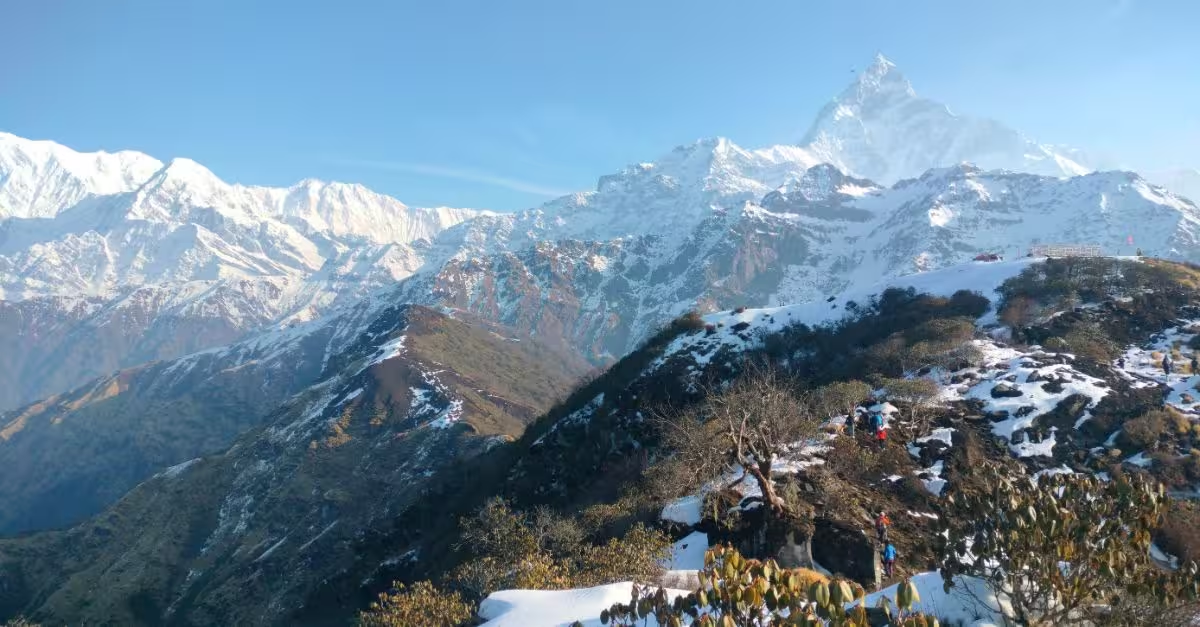
Mardi Himal peak climbing: Photo by shishir baral
This page covers the climb. If you want the walk, our Mardi Himal trek guide is the one you need.
Mardi Himal at a glance
| Height | 5,587 m (18,330 ft) |
| Classification | NMA trekking peak, Group B |
| Grade | PD (Peu Difficile) on the French alpine scale |
| Location | Annapurna Conservation Area, between Annapurna South and Machhapuchhre |
| Nearest city | Pokhara, about 15 miles south |
| First ascent | 1961 |
| Climbers per year | A handful |
| Trip length | 12–16 days from Pokhara |
| Permits | NMA climbing permit, ACAP, plus local fees |
Why almost nobody climbs it
Mardi Himal is the southernmost mountain of the Annapurna range and the lowest of Nepal’s trekking peaks. It sits directly beneath Machhapuchhre, the sacred Fishtail peak that has never been legally climbed, and that neighbour takes all the attention.
The practical reason is different. Climbers heading for something harder later want Island Peak or Lobuche East, which have established infrastructure, fixed lines in season and a queue of operators who run them weekly. Mardi Himal has none of that. You climb it because you want a quiet mountain, not because it is the efficient next step.
That is either the whole appeal or a reason to pick something else, and it is worth being honest with yourself about which.
The climbing route
From base camp at 4,500 metres, there are two recognised lines.
The south ridge is the usual route, a reasonably direct ascent using a snow gully. This is what most guided parties climb.
The east face crosses a col at around 5,200 metres before reaching the summit over snow.
A third option follows the south-southwest ridge, the continuation of the trekking ridge, but it adds rock climbing and is not the standard choice.
PD means moderate snow and ice work, some steep ground, real rope work, but nothing sustained or technical by Himalayan standards. You need to be competent with crampons, an axe and basic glacier travel. If you have climbed Island Peak, you have the skills.
Getting there
The approach runs from Pokhara. Most itineraries follow the trekking ridge up through Kande, Forest Camp, Low Camp at around 2,970 m and High Camp at about 3,580 m, then continue past the Upper Viewpoint to the climbers’ base camp at 4,500 m.
A longer wilderness approach exists through Lwang and Siding, which takes three to five days and is genuinely remote. It costs more days and is the better trip if the quiet is why you came.
Because the first four days are the standard trekking route, acclimatisation is built in, which is one real advantage over peaks reached by a faster approach.
Permits
You need more than the trekkers do.
NMA climbing permit. Mardi Himal is a Group B trekking peak under the Nepal Mountaineering Association. The NMA revised its rates on 1 September 2025, and published figures for Group B peaks currently disagree, so check a current rate rather than an older table. Our Nepal climbing permit fees page carries the dated figures.
Annapurna Conservation Area Permit (ACAP). NPR 3,000 for foreign nationals. Note that older pages still show NPR 2,000, which is out of date.
Local municipality fee. Machhapuchhre Rural Municipality charges its own fee on this route. It is small, and it is missing from most published permit lists.
A licensed guide is mandatory. Solo climbing is not permitted on any peak in Nepal, and for the summit you need a qualified climbing guide rather than a trekking guide. These are different licences, and it is a fair question to ask your operator.
Fees last verified: [2026-09-20].
What it costs
Guided peak climbing packages run roughly $1,500 to $3,000 per person, against $350 to $600 for the trek alone. The gap is the climbing permit, the climbing guide, technical gear, and the extra days.
Because so few operators run this peak, quotes vary more than on popular climbs, and some are simply trek prices with a summit day attached. Ask for the NMA permit as a written line item. If they cannot produce a current figure, they may not have run the climb recently.
Beyond the package: international flights, insurance covering technical climbing at 6,000 metres, personal gear, and tips.
When to go
March to May and October to November. Autumn gives the most stable weather and the clearest views; spring adds rhododendron on the lower ridge.
Winter ascents happen but bring deep snow on the summit pyramid and serious cold at high camp. Skip the monsoon.
Should you climb it, or walk it?
Climb it if you have crampon and axe experience, you want a mountain with nobody else on it, and a summit matters more to you than efficiency.
Walk it if you want the Annapurna views, which are the same from the Upper Viewpoint, at a fifth of the price and without technical skills. Most people asking about Mardi Himal peak climbing want this one, and there is no shame in that the ridge is one of the best short treks in Nepal.
(Next steps for climbers: Island Peak has more infrastructure and better prepares you for bigger objectives.)
FAQs
Is the Mardi Himal Trek the same as climbing Mardi Himal peak?
No. The trek ends at the Upper Viewpoint at 4,200 m or base camp at 4,500 m and needs no climbing permit or technical skill. The peak climb continues to the 5,587 m summit and requires an NMA permit, a climbing guide and mountaineering gear.
How difficult is Mardi Himal peak climbing?
It is graded PD on the French alpine scale moderate snow and ice, some steep ground, real rope work, but nothing sustained. You need competence with crampons, an ice axe and basic glacier travel.
Do I need a permit to climb Mardi Himal?
Yes. An NMA climbing permit for the summit, plus ACAP for the conservation area and a local municipality fee. The trek needs ACAP and TIMS but no climbing permit.
How much does Mardi Himal peak climbing cost?
Guided packages run roughly $1,500 to $3,000 per person, compared with $350 to $600 for the trek. Flights, insurance and gear are extra.
Can I climb Mardi Himal solo?
No. Solo climbing is not permitted on any peak in Nepal, and the summit requires a licensed climbing guide rather than a trekking guide.
How long does the climb take?
Most itineraries run 12 to 16 days from Pokhara, against four to seven days for the trek.
