

Subscribe to our newsletter and never miss our latest news.
Halesi Mahadev is one of the most revered and spiritually powerful pilgrimage destinations in eastern Nepal. Situated in the serene hills of Khotang District, this sacred site is uniquely formed within a natural cave system, making it both a religious landmark and a natural wonder. The temple stands at an elevation of approximately 3,100 feet above sea level, surrounded by forests, hills, and a deeply peaceful environment that enhances its spiritual atmosphere.
What makes Halesi Mahadev truly special is its multi-religious significance. It is a holy shrine for Hindus, Buddhists, and Kirat followers, each of whom holds deep spiritual beliefs connected to this place. For Hindus, it is a manifestation of Lord Shiva (Mahadev), believed to have appeared here to protect divine devotees. Buddhists recognize it as Maratika Cave, a sacred meditation site where Guru Padmasambhava attained immortality. The Kirat community also worships this cave as an ancestral and cultural spiritual center.
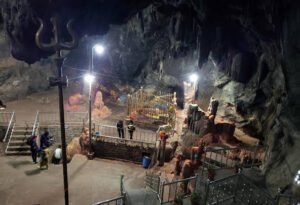
The temple complex consists of an ancient cave with naturally formed stone structures that symbolize the physical form of Lord Shiva. Inside the cave, the sacred Shiva Lingam is worshipped daily, while oil lamps, incense, and prayers fill the air with devotion. Despite being located within a cave, the interior is well-maintained, allowing pilgrims to move comfortably while preserving the natural and historical essence of the site.
Halesi Mahadev is not only a destination for religious rituals but also a place for meditation, reflection, and inner peace. The calm surroundings, rhythmic chants, and centuries-old spiritual energy attract saints, monks, pilgrims, and travelers seeking spiritual awakening. Over time, Halesi Mahadev has grown into a major pilgrimage and cultural heritage site, reflecting Nepal’s deep-rooted faith, religious harmony, and timeless spiritual traditions.
