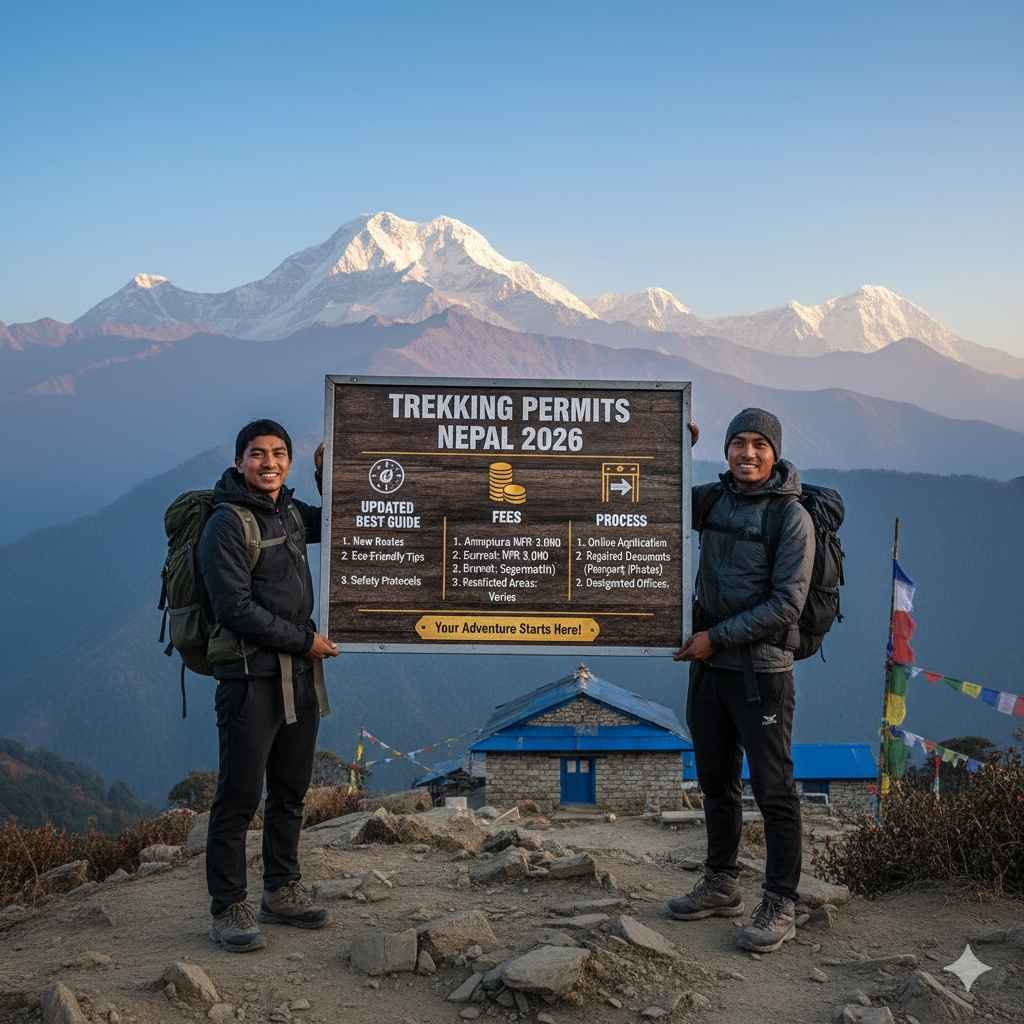
Trekking Permits in Nepal 2026
If you’re planning a trekking adventure in Nepal, understanding Trekking Permits in Nepal 2026 is absolutely essential. Whether you’re heading for the classic Annapurna Circuit, the remote Kanchenjunga Base Camp, or the restricted Manaslu region, every trek requires certain permits issued by the Government of Nepal.
This comprehensive guide covers everything you need to know about Trekking Permits in Nepal 2026 including types of permits, costs, where to apply, new digital updates, and helpful tips to make your trekking experience smooth and legal.
Why Trekking Permits Matter in Nepal
Trekking permits are not just paperwork they are part of Nepal’s effort to manage tourism sustainably and ensure the safety of trekkers. The revenue from these permits supports trail maintenance, local communities, conservation, and rescue operations.
Without the right Trekking Permits in Nepal 2026, you might face:
Heavy fines
Denied entry at checkpoints
Inability to access restricted regions
Legal complications with authorities
So before you lace up your boots, let’s explore the exact permits you’ll need in 2026.
Types of Trekking Permits in Nepal 2026
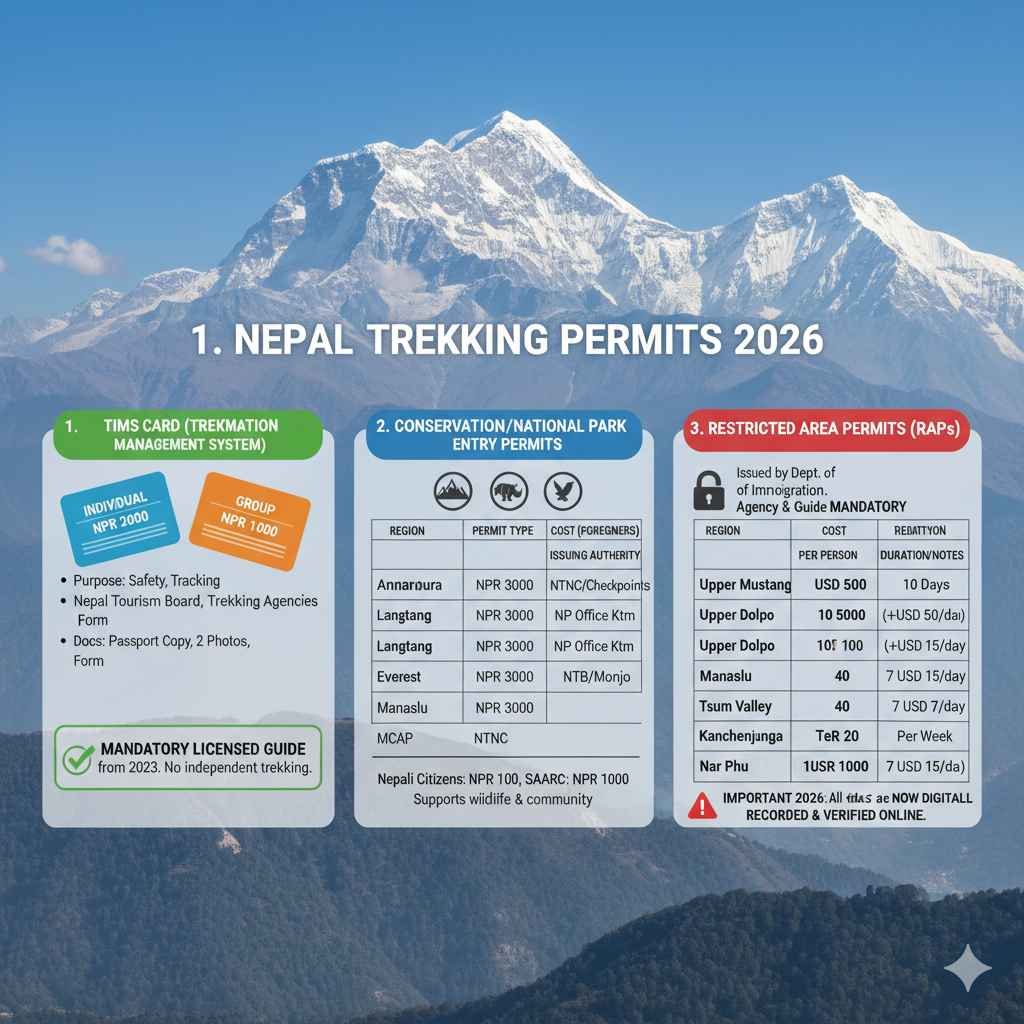
There are three main types of trekking permits used across Nepal. The type you need depends on your destination, trekking route, and whether the area is restricted or not.
Types of Trekking Permits in Nepal 2026
1. TIMS Card (Trekkers’ Information Management System)
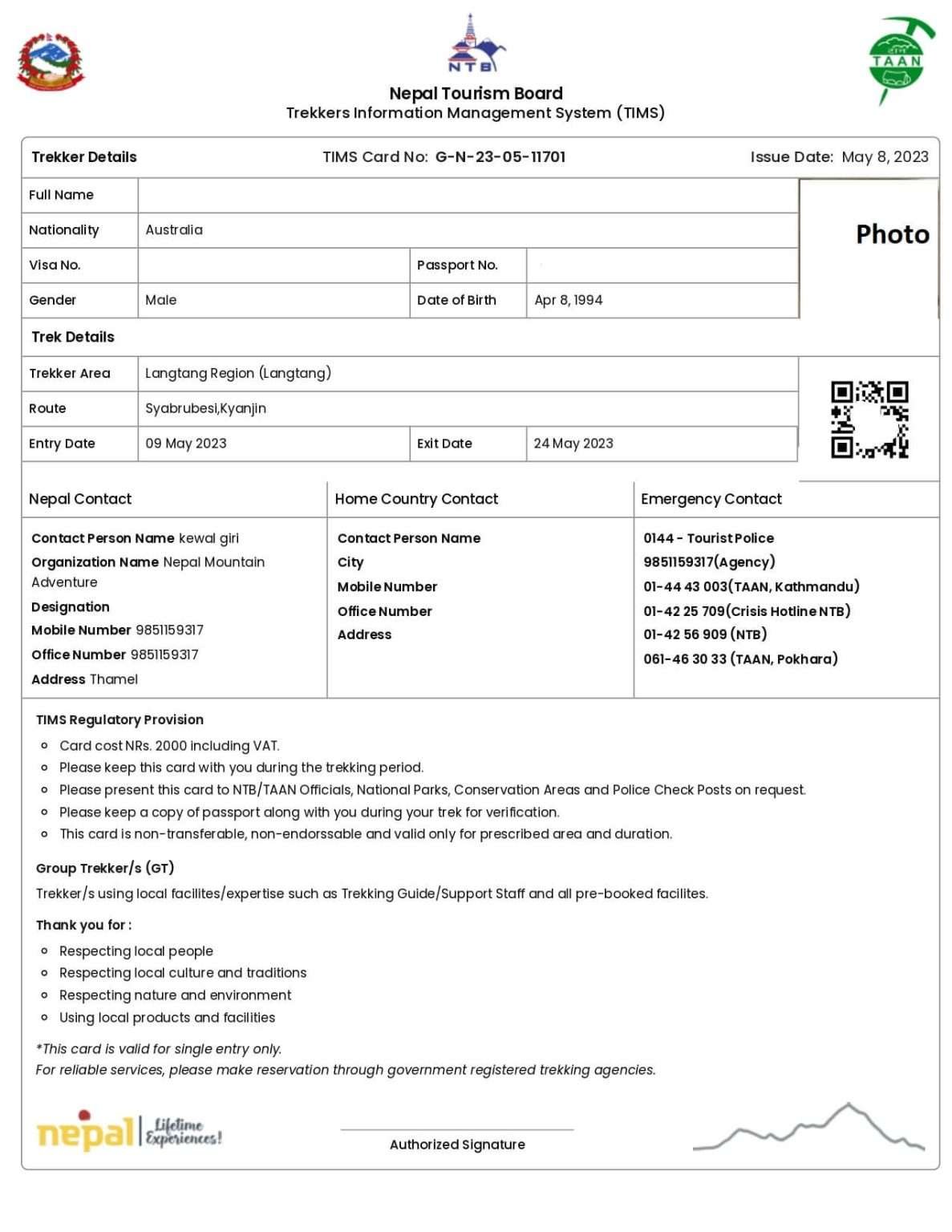
The TIMS Card is the most common and essential permit for most trekking routes in Nepal. It ensures your safety and helps authorities track trekkers in case of emergencies.
There are two categories of TIMS cards:
For individual trekkers (FITs): NPR 2,000 per person
For organized group trekkers: NPR 1,000 per person
Where to get it:
You can obtain your TIMS card from:
Nepal Tourism Board Office in Kathmandu or Pokhara
Registered trekking agencies
Documents required:
Copy of passport
Two passport-sized photos
Filled-out TIMS application form
Note: From 2023 onward, the Nepal Tourism Board made it mandatory for foreign trekkers to hire a licensed guide for safety reasons. This rule continues in 2026, meaning independent trekking without a guide is not allowed in most trekking regions.
2. Conservation Area or National Park Entry Permits
These permits are required for trekking routes inside protected conservation areas and national parks.
Annapurna Conservation Area Permit (ACAP) or Sagarmatha National Park Permit
Popular examples:
| Trekking Region | Permit Type | Cost (Foreigners) | Issuing Authority |
|---|---|---|---|
| Annapurna | ACAP (Annapurna Conservation Area Project) | NPR 3,000 | NTNC Office or checkpoints |
| Langtang | Langtang National Park Entry Permit | NPR 3,000 | National Park Office, Kathmandu |
| Sagarmatha (Everest) | Sagarmatha National Park Entry Permit | NPR 3,000 | Nepal Tourism Board, Monjo Gate |
| Manaslu | MCAP (Manaslu Conservation Area Project) | NPR 3,000 | NTNC Office |
| Gaurishankar | Gaurishankar Conservation Area Permit | NPR 3,000 | NTNC or local checkpoint |
For Nepali citizens, the entry fee is much lower around NPR 100 per person, and for SAARC nationals, it’s NPR 1,000.
These conservation permits contribute directly to wildlife protection, eco-tourism development, and community projects. When talking about Trekking Permits in Nepal 2026, these are the most common you’ll need for regular routes.
3. Restricted Area Permits (RAPs)
Certain trekking routes in Nepal fall under restricted zones, usually because of their proximity to border regions or cultural sensitivity. These areas require special permits issued by the Department of Immigration, Kathmandu.
You cannot obtain these on your own only through a registered trekking agency and with a licensed guide.
Major Restricted Trekking Areas (2026 Rates):
| Trekking Region | Cost (per person) | Duration/Notes |
|---|---|---|
| Upper Mustang | USD 500 for 10 days, USD 50 per extra day | Minimum 2 trekkers |
| Upper Dolpo | USD 500 for 10 days, USD 50 per extra day | Minimum 2 trekkers |
| Lower Dolpo | USD 20 per week | Available through registered agencies |
| Manaslu (Sirdibas–Sama Gaon) | USD 100 for 1st week, USD 15/day after | Minimum 2 trekkers |
| Tsum Valley | USD 40 for 1st week, USD 7/day after | Combine with Manaslu for full circuit |
| Kanchenjunga | USD 20 per week | Restricted entry; agency required |
| Humla (Simikot–Hilsa) | USD 50 per week | Remote area, near Tibet border |
| Nar Phu Valley | USD 100 for 1st week, USD 15/day after | Popular extension of Annapurna |
Important for 2026:
All restricted area permits are now digitally recorded and verified through a central online system. This ensures faster processing and better tracking for trekkers’ safety.
Trekking Permits in Nepal 2026: Step-by-Step Application Process
Applying for trekking permits in Nepal is straightforward if you know the process. Here’s a complete breakdown for 2026:
Decide your trekking route and duration
Identify which areas you’ll enter (e.g., Annapurna, Everest, Manaslu).Choose a registered trekking agency (for restricted routes)
Only agencies can apply for restricted permits from the Department of Immigration.Gather required documents:
Passport and visa copies
Passport-sized photos
Travel insurance copy (recommended)
Trekking itinerary and route details
Pay the required fees in Nepali currency or USD (depending on the permit).
Get your permits verified at entry checkpoints along your route.
By following this system, your Trekking Permits in Nepal 2026 will be valid and recognized at all checkpoints ensuring a smooth and legal trek.
Where to Get Trekking Permits in Nepal (2026 Locations)
1. Nepal Tourism Board (Kathmandu & Pokhara)
Issues TIMS and Conservation Area Permits
Address (Kathmandu): Bhrikutimandap, Kathmandu
Timing: 9:00 AM to 5:00 PM (Sunday–Friday)
2. Department of Immigration (Kalikasthan, Kathmandu)
Issues all Restricted Area Permits
3. Conservation Offices
NTNC Office for ACAP, MCAP, and Gaurishankar permits
National Park entry offices at trailheads like Monjo (Everest) and Dhampus (Annapurna)
Trekking Permit Fees Summary (2026 Update)
Here’s a quick summary table for easy reference:
| Type of Permit | Fee (Foreigners) | Issued By | Notes |
|---|---|---|---|
| TIMS Card | NPR 2,000 | NTB / Trekking Agency | Mandatory for all treks |
| ACAP / MCAP | NPR 3,000 | NTNC | Conservation support |
| National Park Entry | NPR 3,000 | National Park Office | Required for Everest, Langtang |
| Restricted Area Permit | USD 20–500 | Department of Immigration | Agency required |
These rates are expected to remain stable through Trekking Permits in Nepal 2026, though certain regions might see small adjustments depending on government policies.
Digital and Online Permit Updates (2026)
Nepal’s trekking permit system is becoming more modern. In 2026, the Department of Tourism plans to roll out a fully digital permit registration system, allowing agencies to:
Submit applications online
Verify trekker identities
Track trekkers’ safety in real-time via GPS-enabled check-ins
This move will make Trekking Permits in Nepal 2026 more secure, efficient, and eco-friendly reducing paperwork and preventing fraud.
Do You Need a Guide for Trekking Permits in Nepal 2026?
Yes, in 2026, it remains mandatory for all foreign trekkers to have a licensed guide for most trekking areas, including popular routes like Everest Base Camp and Annapurna Circuit.
Reasons:
Safety in high-altitude regions
Easier navigation of checkpoints
Cultural interpretation and local engagement
Support for Nepal’s local tourism economy
Without a guide, obtaining Trekking Permits in Nepal 2026 will not be possible for restricted or high-altitude regions.
Pro Tips for Getting Trekking Permits in Nepal 2026
Carry multiple passport photos useful for multiple permit offices.
Always keep your permits in a waterproof pouch.
Double-check expiry dates overstaying beyond your permit duration can incur fines.
Make photocopies checkpoints sometimes keep a copy for records.
Consult your agency early especially if you plan to visit restricted regions like Upper Mustang or Dolpo.
What Happens If You Trek Without a Permit?
Trekking without valid permits is considered illegal in Nepal. Penalties may include:
Immediate removal from the trail
Heavy fines (up to NPR 10,000–20,000)
Blacklisting for future trekking permits
Legal actions depending on the area
Always ensure you carry your Trekking Permits in Nepal 2026 at all times during your journey.
Why Trekking Permits Are Worth Every Penny
Besides legality, trekking permits play a major role in preserving Nepal’s trails and cultures. The funds are reinvested into:
Conservation projects
Waste management
Local employment and training
Maintaining trekking routes and signage
So, when you purchase Trekking Permits in Nepal 2026, you’re directly contributing to protecting Nepal’s Himalayan ecosystem and supporting the livelihoods of local communities.
Getting the right Trekking Permits in Nepal 2026 is the first step toward an unforgettable adventure. The process may seem detailed, but it’s straightforward once you know where to go and what to bring.
From the mighty Everest Base Camp to the mystical trails of Dolpo, Nepal’s trekking routes are waiting but make sure you have all your permits ready before you set off.
Safe trekking and enjoy your journey through the heart of the Himalayas!
