
In recent years, Dark Sky Tourism has emerged as one of the fastest-growing trends in nature-based travel. As cities become brighter and more urbanized, many people around the world are losing the ability to see a truly dark night sky. Artificial lighting from buildings, roads, and urban development has created widespread light pollution, making it difficult to observe stars, planets, and the Milky Way in most metropolitan areas.
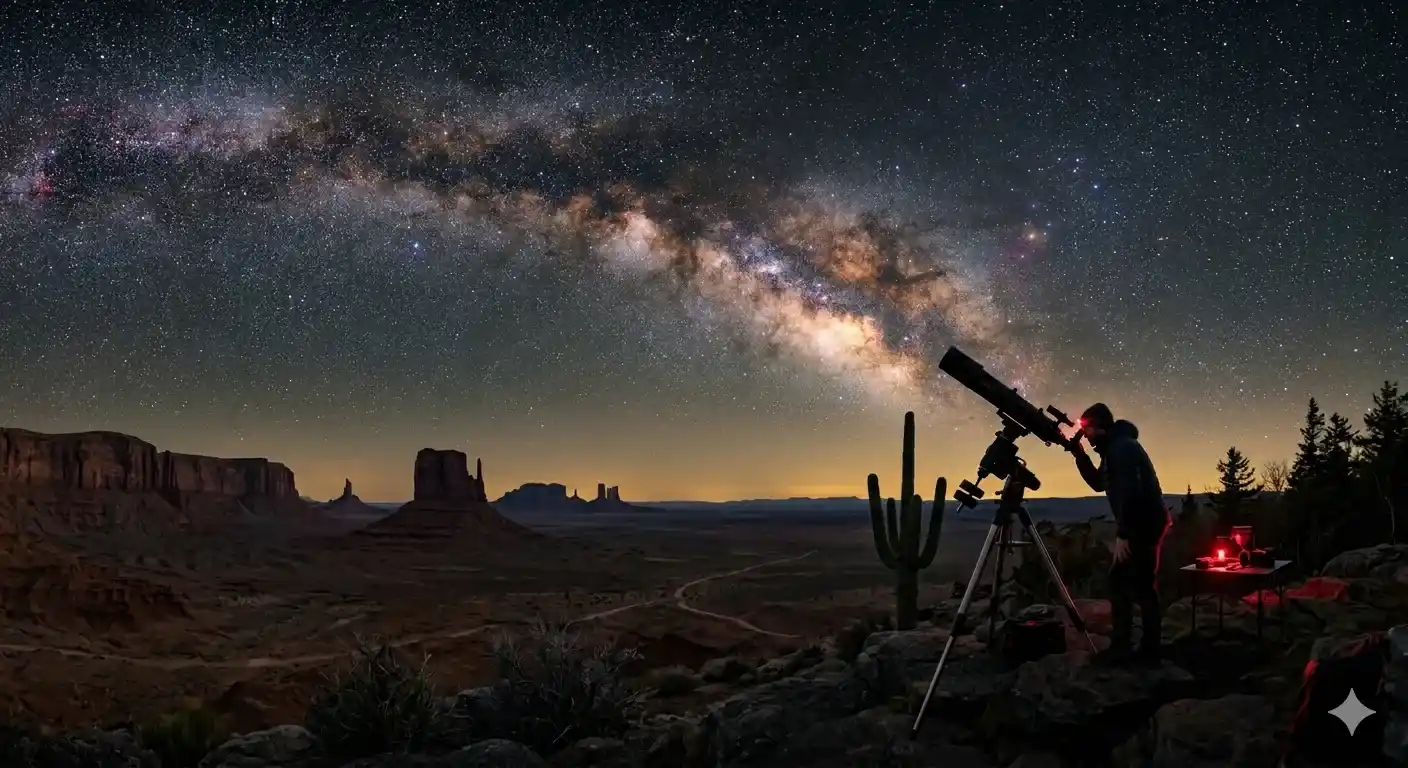
Dark Sky Tourism destination with clear night sky and Milky Way over a remote landscape
This growing problem has inspired travelers to seek destinations where the night sky remains untouched. Dark Sky Tourism focuses on visiting places with minimal light pollution where visitors can experience the beauty of the universe. These destinations often include deserts, remote mountains, national parks, and specially protected dark sky reserves.
For many travelers, this is more than just looking at stars. It offers a chance to reconnect with nature, learn about astronomy, and experience a sense of wonder that modern urban life often hides. Stargazing activities can include guided astronomy tours, telescope observations, astrophotography workshops, and overnight camping under the stars.
Another reason Dark Sky Tourism is gaining popularity is the rise of astrophotography and social media. Stunning images of the Milky Way and star-filled landscapes have inspired many travelers to visit remote locations where these celestial views can be captured.
Around the world, several organizations are working to protect natural night skies and promote tourism as a sustainable travel experience. One of the most influential organizations leading this movement is the International Dark-Sky Association, which helps certify protected dark sky parks and reserves.
As interest in astronomy travel continues to grow, this tourism is becoming an important part of eco-tourism and nature travel around the globe.
What Is Dark Sky Tourism?
Dark Sky Tourism refers to travel experiences focused on observing the night sky in areas with little or no artificial light. These destinations provide ideal conditions for seeing stars, planets, meteor showers, and the Milky Way.
Unlike traditional sightseeing trips, this tourism centers around nighttime activities. Visitors often travel to remote locations specifically to enjoy the natural darkness and observe celestial events that cannot be seen in cities.
The key factor that makes this tourism possible is the absence of light pollution. In large urban areas, excessive lighting from buildings and streets scatters in the atmosphere and brightens the night sky. This phenomenon hides faint stars and galaxies from view. However, in remote deserts, mountains, and protected parks, the sky remains naturally dark, revealing thousands of stars.
Another important aspect of Dark Sky Tourism is education. Many destinations offer astronomy programs where visitors can learn about constellations, planets, and deep-sky objects. These programs are often led by astronomers or experienced guides who help travelers understand what they are seeing in the night sky.
Some of the most famous destinations for Dark Sky Tourism include protected dark sky parks, observatories, and remote landscapes with clear atmospheric conditions. These locations provide excellent visibility for both amateur stargazers and professional astronomers.
As travelers increasingly seek meaningful experiences in nature, this tourism has become a unique way to explore the universe while enjoying some of the world’s most beautiful landscapes.
Why Dark Sky Tourism Is Growing Worldwide
The global rise of this tourism can be linked to several important travel trends. One of the biggest factors is the increasing awareness of light pollution and its impact on both the environment and human health.
According to scientific studies, a large percentage of the world’s population can no longer see the Milky Way because of artificial lighting. This loss has encouraged many travelers to seek destinations where natural night skies are still visible. As a result, Dark Sky Tourism has become an attractive option for people who want to reconnect with the natural world.
Another reason for the growth of this tourism is the popularity of astrophotography. Advances in digital cameras and smartphone technology have made it easier for travelers to capture stunning images of stars and galaxies. Social media platforms are now filled with breathtaking astrophotography that inspires others to visit dark sky destinations.
Adventure travel is also contributing to the popularity of Dark Sky Tourism. Many stargazing destinations are located in remote areas such as deserts, mountains, and national parks. These landscapes offer opportunities for hiking, camping, and wildlife observation in addition to astronomy experiences.
Tourism boards and national parks are also beginning to promote this tourism as part of their eco-tourism strategies. By protecting natural darkness, these destinations attract visitors while also raising awareness about the importance of reducing light pollution.
As more travelers search for peaceful and meaningful travel experiences, Dark Sky Tourism continues to grow as a global trend in sustainable tourism.
Best Places in the World for Dark Sky Tourism
Some regions of the world are particularly famous for Dark Sky Tourism because of their clear skies and minimal light pollution. These destinations attract stargazers, astronomers, and photographers from around the globe.
One of the most famous places for Dark Sky Tourism is the Atacama Desert. This desert has extremely dry air and high elevation, which creates ideal conditions for observing the night sky. Many of the world’s most powerful observatories are located here.
Another remarkable destination is the Namib Desert. The desert’s remote location and low population density make it one of the darkest places on Earth. Visitors can see the Milky Way with incredible clarity.
In the United States, Mauna Kea is internationally recognized for its excellent astronomical conditions. The mountain rises above much of the atmosphere, providing some of the clearest night skies in the world.
New Zealand is also home to one of the most famous dark sky destinations, the Aoraki Mackenzie Dark Sky Reserve. This protected region offers guided stargazing tours and stunning views of the southern hemisphere sky.
These locations represent some of the best opportunities for travelers interested in Dark Sky Tourism.
The Role of Dark Sky Parks and Reserves
Protected areas play an important role in promoting Dark Sky Tourism. These locations are specifically managed to preserve natural night skies by limiting artificial lighting.
The International Dark-Sky Association certifies different types of protected areas, including Dark Sky Parks, Dark Sky Reserves, and Dark Sky Communities. These designations recognize places that actively work to reduce light pollution.
Many national parks around the world are now embracing this tourism by offering nighttime programs and astronomy events. Visitors can attend guided stargazing sessions where experts explain constellations, planets, and deep-sky objects.
Protecting natural darkness not only benefits travelers but also supports wildlife and ecosystems. Many species rely on natural darkness for navigation, reproduction, and hunting. By promoting Dark Sky Tourism, these protected areas encourage conservation efforts that benefit both nature and visitors.
As awareness grows, more regions are seeking official recognition as dark sky destinations.
Activities You Can Experience in Dark Sky Tourism
Travelers interested in this tourism can enjoy a variety of unique activities centered around the night sky. One of the most popular experiences is guided stargazing tours, where astronomy experts help visitors identify constellations, planets, and galaxies.
Astrophotography is another major attraction in Dark Sky Tourism. Many travelers bring cameras and tripods to capture long-exposure photographs of the Milky Way and star trails. Remote landscapes with clear skies provide perfect conditions for these images.
Camping under the stars is also a memorable part of Dark Sky Tourism. Spending the night in a remote desert or mountain location allows visitors to fully experience the beauty of a dark sky environment.
Some destinations also offer telescope observation sessions where travelers can view celestial objects such as Saturn’s rings, Jupiter’s moons, and distant nebulae. These experiences provide a deeper appreciation for astronomy and the vastness of the universe.
Meteor shower viewing is another exciting activity associated with Dark Sky Tourism. During events such as the Perseid Meteor Shower, visitors can see dozens of shooting stars each hour.
These activities make Dark Sky Tourism an unforgettable travel experience.
How to Plan a Dark Sky Tourism Trip
Planning a trip focused on Dark Sky Tourism requires some preparation to ensure the best possible stargazing experience. One of the most important factors to consider is the location. Choosing a remote area with minimal light pollution will greatly improve night sky visibility.
Travelers should also check the lunar calendar before planning their trip. The best time for Dark Sky Tourism is during a new moon, when the sky is darkest and faint stars are easier to see.
Weather conditions also play a major role in successful this tourism. Clear skies, low humidity, and stable atmospheric conditions provide the best viewing opportunities.
Packing the right equipment can enhance the experience. Binoculars, telescopes, and star maps can help travelers identify celestial objects more easily. Many visitors also bring cameras and tripods for astrophotography.
Finally, travelers should allow time for their eyes to adjust to the darkness. It usually takes about 20 minutes for human eyes to fully adapt to a dark environment, making stars appear much brighter.
With proper planning, Dark Sky Tourism can become one of the most memorable travel experiences for nature and astronomy enthusiasts.
The Future of Dark Sky Tourism
The future of Dark Sky Tourism looks promising as more people become aware of the importance of preserving natural night skies. Tourism organizations and governments are increasingly recognizing the value of protecting dark environments for both ecological and economic reasons.
As awareness of light pollution continues to grow, more destinations are likely to adopt policies that reduce artificial lighting and promote Dark Sky Tourism. National parks, rural communities, and conservation areas are beginning to see the benefits of attracting visitors interested in astronomy and nature.
Technology is also helping to expand Dark Sky Tourism. Improved cameras, mobile astronomy apps, and digital telescopes are making stargazing more accessible to beginners.
Educational programs are another important part of the future of this tourism. Many observatories and parks now offer workshops and guided tours that teach visitors about the universe and the importance of preserving dark skies.
As travelers seek unique and meaningful experiences, Dark Sky Tourism is expected to become an increasingly important part of sustainable travel worldwide.
Dark Sky Tourism offers travelers a rare opportunity to experience the natural beauty of the night sky in a world that is becoming increasingly illuminated. By visiting remote destinations with minimal light pollution, travelers can observe thousands of stars, the Milky Way, and other celestial wonders that are often hidden in urban environments.
The growing popularity of Dark Sky Tourism reflects a broader desire among travelers to reconnect with nature and explore meaningful experiences beyond traditional sightseeing. From remote deserts and mountain ranges to protected dark sky parks, these destinations provide unforgettable opportunities to witness the universe in its most natural form.
Organizations such as the International Dark-Sky Association play a crucial role in protecting these environments and raising awareness about the importance of reducing light pollution. Their efforts ensure that future generations will continue to enjoy clear night skies.
For travelers interested in astronomy, photography, or simply enjoying peaceful moments under the stars, Dark Sky Tourism represents one of the most inspiring ways to explore our planet.
As more regions recognize the value of preserving natural darkness, Dark Sky Tourism will continue to grow as a sustainable travel movement that connects people with the beauty of the universe.
What is Dark Sky Tourism?
Dark Sky Tourism refers to travel experiences focused on visiting destinations with minimal light pollution where travelers can observe stars, planets, and the Milky Way. These locations often include deserts, remote mountains, and protected dark sky parks.
Organizations such as the International Dark-Sky Association help promote and protect these destinations.
Why is Sky Tourism becoming popular?
Sky Tourism is growing because many people living in cities can no longer see the natural night sky due to light pollution. Travelers are increasingly seeking remote destinations where they can enjoy clear skies and stargazing experiences.
What are the best destinations for Dark Sky Tourism?
Some of the best destinations include the Atacama Desert, the Namib Desert, Mauna Kea, and the Aoraki Mackenzie Dark Sky Reserve. These places offer exceptionally dark skies and ideal conditions for stargazing.
What is a dark sky park?
A dark sky park is a protected area that limits artificial lighting to preserve natural night skies. These parks are often recognized by the International Dark-Sky Association and provide excellent opportunities for astronomy tourism.
When is the best time for Dark Sky Tourism?
The best time for Dark Sky Tourism is during new moon nights with clear skies. During this time, the sky is darkest and celestial objects such as the Milky Way are easier to see.
Do you need special equipment for Dark Sky Tourism?
No special equipment is required to enjoy this. In very dark locations, thousands of stars can be seen with the naked eye. However, binoculars, telescopes, and cameras can enhance the stargazing experience.
How does light pollution affect stargazing?
Light pollution from cities brightens the night sky and reduces the number of visible stars. In urban areas, only a few bright stars may be visible, while dark sky locations reveal thousands of stars.
Can beginners enjoy Dark Sky Tourism?
Yes, this is perfect for beginners. Many destinations offer guided astronomy tours where visitors can learn about constellations, planets, and galaxies from experienced guides.