

The 4 Narayan temples in Kathmandu nestled in the valley, representing Nepal’s rich spiritual heritage and architecture.
Are you looking for a profound spiritual experience in the heart of the Himalayas? The 4 Narayan temples in Kathmandu represent a sacred protective shield established centuries ago to safeguard the valley. These four temples,Changu Narayan, Ichangu Narayan, Bishankhu Narayan, and Shesh Narayan—are strategically located at the four cardinal directions, each dedicated to Lord Vishnu, the preserver of the universe.
In this comprehensive guide, we will explore the history, legends, and architectural beauty of the 4 Narayan temples in Kathmandu, providing you with everything you need to know for a fulfilling pilgrimage or cultural tour.
The Kathmandu Valley is often referred to as the “City of Temples,” and among its most significant religious circuits is the Char Narayan (Four Narayan) tour. For centuries, the 4 Narayan temples in Kathmandu have served as the spiritual guardians of the region.
According to ancient tradition, visiting all 4 Narayan temples in Kathmandu in a single day, especially during the auspicious month of Kartik (October/November), brings immense spiritual merit, cleanses sins, and ensures the protection of the divine. These temples are not just places of worship; they are living museums of the Licchavi period ($4^{th}$–$9^{th}$ century AD), showcasing some of the finest stone carvings and woodcraft in South Asia.
The tradition of the 4 Narayan temples in Kathmandu was established by the Licchavi kings, most notably King Haridutta Varma and King Vishnugupta. By placing these shrines at the outskirts of the valley—Changu in the East, Ichangu in the West, Bishankhu in the South, and Shesh Narayan in the Southwest—they created a “spiritual defense system.”
1. Changu Narayan Temple: The Crown Jewel of History
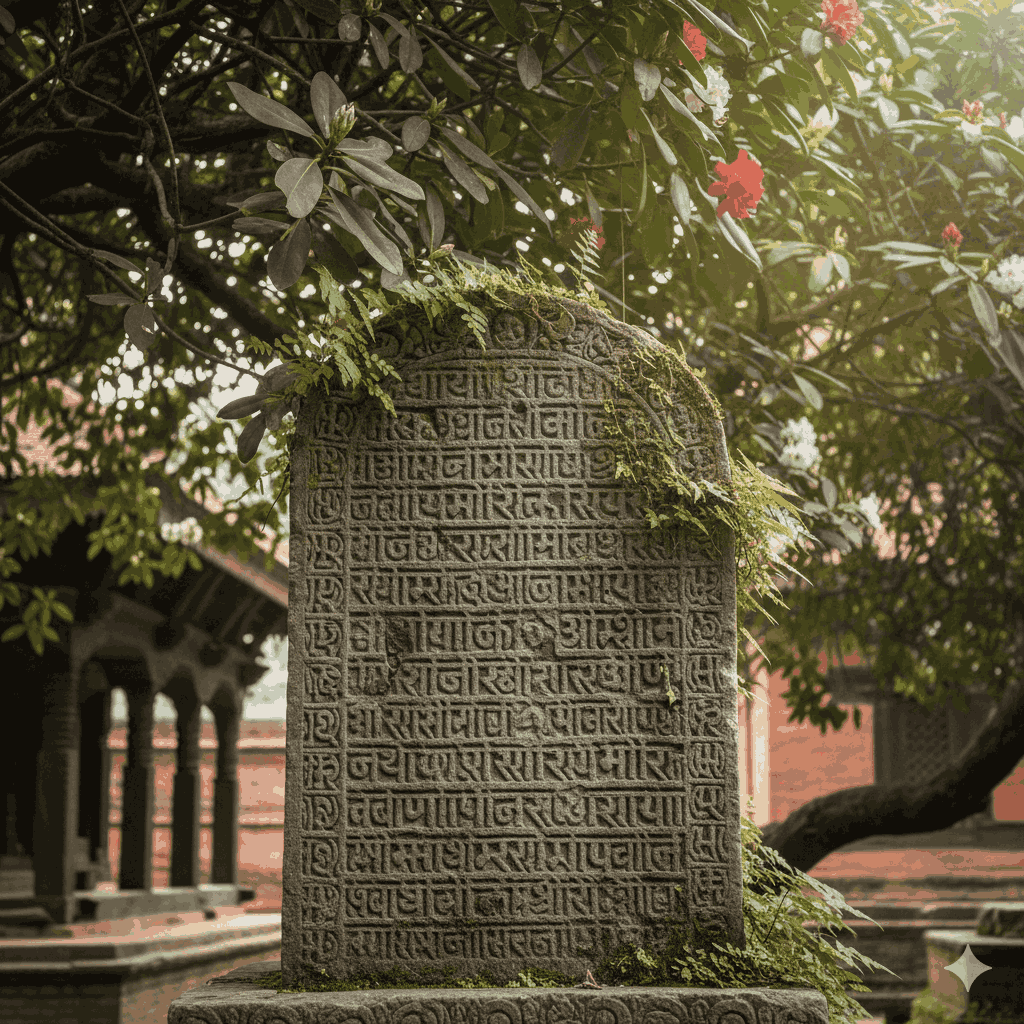
Ancient inscriptions at the Changu Narayan Temple, one of the 4 Narayan temples in Kathmandu, highlighting Nepal’s historical spirituality
Located on a high hilltop in the Bhaktapur district, Changu Narayan is the oldest of the 4 Narayan temples in Kathmandu. It is a UNESCO World Heritage Site and is considered a milestone in Nepali architecture.
History and Legends
The temple’s origins date back to the $4^{th}$ century. One popular legend tells of a Brahmin named Sudarshan and a cow herder who noticed their cow was being milked by a mysterious boy hidden in a Champak tree. When they cut the tree in anger, fresh human blood poured out. Lord Vishnu emerged, explaining that he had been cursed and was living in the tree. By cutting it, they had inadvertently freed him. In gratitude, a small shrine was established, making it the most historically significant of the 4 Narayan temples in Kathmandu.
Architectural Highlights
The Stone Inscription: It houses the oldest stone inscription in Nepal, dated 464 AD, erected by King Manadeva.
Statue of Garuda: A $5^{th}$-century kneeling Garuda (the mount of Vishnu) greets visitors at the entrance.
Vishworup Sculpture: A $7^{th}$-century stone carving depicting the universal form of Lord Vishnu as described in the Bhagawat Gita.
2. Ichangu Narayan Temple: The Western Guardian
Situated about 3 km northwest of the famous Swayambhunath Stupa, Ichangu Narayan is the western pillar of the 4 Narayan temples in Kathmandu.
Peaceful Atmosphere
Unlike the bustling streets of central Kathmandu, Ichangu Narayan offers a serene, village-like atmosphere. The current two-story pagoda was rebuilt in the $18^{th}$ century, but the site itself dates back to the $5^{th}$ century. Among the 4 Narayan temples in Kathmandu, this one is often associated with victory and mental clarity.
Religious Significance
The temple is dedicated to the “Jalasayana” (sleeping) form of Vishnu. It is particularly famous for the marigold fields that surround it during the Tihar festival. Devotees often visit here first when completing the circuit of the 4 Narayan temples in Kathmandu to seek mental rejuvenation. For more information on temple etiquette, check out our guide on Cultural Heritage Sites in Nepal.
3. Bishankhu Narayan Temple: The Cave of Testing
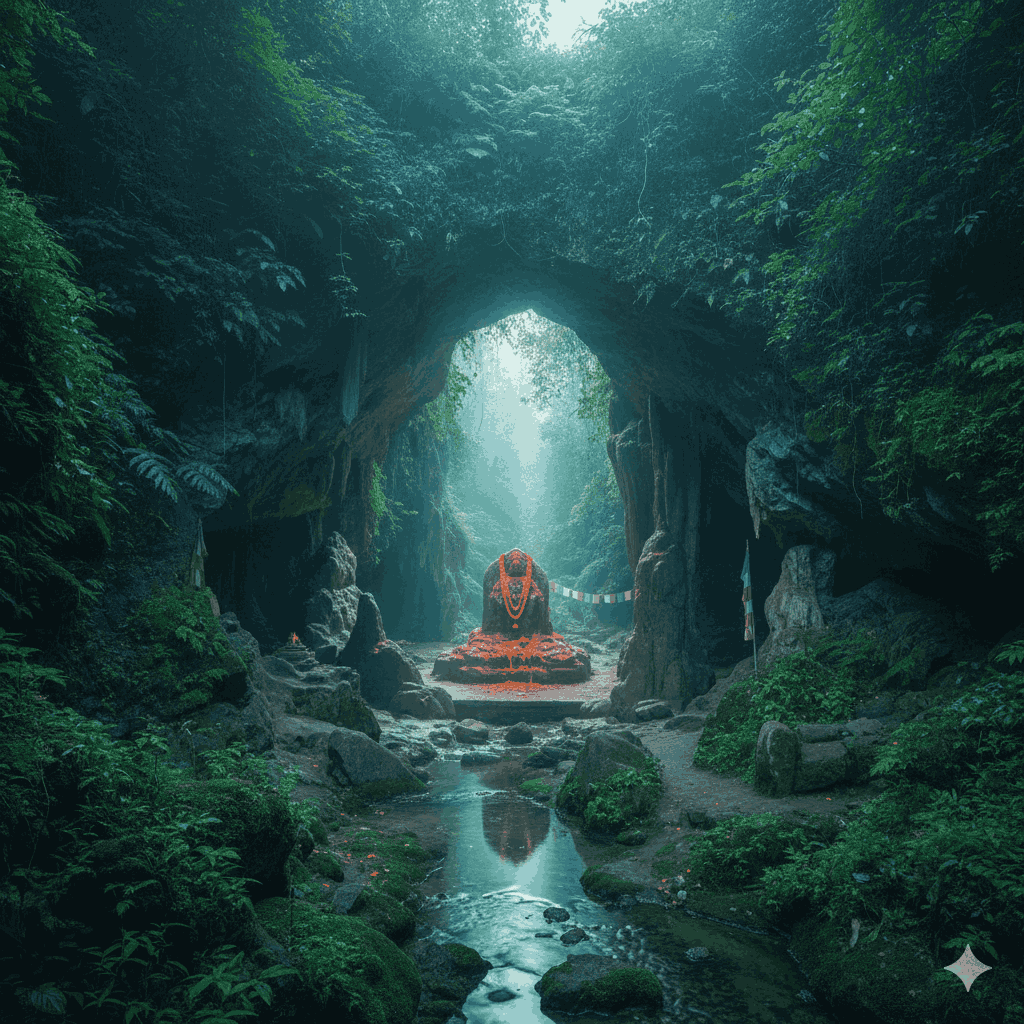
The mystical caves of Bishankhu Narayan, part of the 4 Narayan temples in Kathmandu, showcasing natural beauty and spiritual significance
The southern guardian of the valley is Bishankhu Narayan, located near Godawari in Lalitpur. This temple is unique among the 4 Narayan temples in Kathmandu because it is not a traditional pagoda but a natural cave shrine.
The Legend of Bhasmasura
Legend has it that the demon Bhasmasura received a boon from Lord Shiva that allowed him to turn anyone he touched into ashes. When he tried to test this on Shiva himself, Lord Vishnu intervened. Vishnu assumed the form of the enchantress Mohini and tricked the demon into a dance where Bhasmasura eventually touched his own head and was destroyed. The hills of Bishankhu Narayan are said to be the remains of that event.
The Sin Test
Pilgrims visiting this member of the 4 Narayan temples in Kathmandu often try to squeeze through a narrow fissure in the rock. Local belief suggests that only those free of great sins (specifically pride) can pass through easily. This makes it one of the most interactive of the 4 Narayan temples in Kathmandu.
4. Shesh Narayan Temple: The Southwest Protector
The final stop in the circuit of the 4 Narayan temples in Kathmandu is Shesh Narayan, located near the ancient town of Pharping.
Natural Beauty and Ponds
Shesh Narayan is famous for its crystal-clear ponds filled with fish and its location beneath a dramatic rocky cliff. The name “Shesh” refers to the divine serpent Shesha, upon whom Lord Vishnu rests. It is a unique entry among the 4 Narayan temples in Kathmandu as it is highly revered by both Hindus and Buddhists.
Spiritual Detachment
In Vedic astrology, Shesh Narayan is associated with Ketu. Completing the pilgrimage of the 4 Narayan temples in Kathmandu here is believed to harmonize spiritual energies and provide divine wisdom. The site also features stalactites resembling a cow’s udder, which legends say once dripped milk.
The Importance of Visiting the 4 Narayan Temples in Kathmandu
Why do thousands of people undertake the journey to the 4 Narayan temples in Kathmandu every year? The reasons are deeply rooted in the cultural fabric of Nepal:
Divine Protection: The 4 Narayan temples in Kathmandu were built to act as a “spiritual shield” for the valley against evil forces.
Historical Legacy: Each of the 4 Narayan temples in Kathmandu represents a different era of Nepali craftsmanship, from Licchavi stone carvings to Malla-era woodworks.
Auspicious Merit: Visiting all 4 Narayan temples in Kathmandu on Haribodhini Ekadashi (the day Vishnu wakes from his cosmic sleep) is considered one of the most meritorious acts a devotee can perform.
Cultural Continuity: The rituals practiced at the 4 Narayan temples in Kathmandu have remained largely unchanged for over a millennium.
Planning Your Visit to the 4 Narayan Temples in Kathmandu
| Temple | Location | Significance |
| Changu Narayan | Bhaktapur | Oldest temple, UNESCO Site |
| Ichangu Narayan | West of Swayambhu | Known for peace and marigolds |
| Bishankhu Narayan | Godawari, Lalitpur | Cave shrine, “Sin test” fissure |
| Shesh Narayan | Pharping | Sacred ponds, cliffside location |
For a detailed logistics guide, visit our Shesh Narayan Temple Tour Guide to see how to reach these remote areas using public transport.
Resources for Travelers
Learn more about the UNESCO World Heritage status of Changu Narayan.
Check out Lonely Planet’s guide to Pharping for Shesh Narayan visits.
Frequently Asked Questions (FAQs)
1. Can I visit all 4 Narayan temples in Kathmandu in one day?
Yes, it is a common pilgrimage to visit all 4 Narayan temples in Kathmandu in a single day. It is best to hire a private vehicle to navigate the outskirts of the valley efficiently.
2. Which is the most famous of the 4 Narayan temples in Kathmandu?
Changu Narayan is the most famous due to its UNESCO World Heritage status and its status as the oldest known temple in the Kathmandu Valley.
3. Is there an entry fee for the 4 Narayan temples in Kathmandu?
Changu Narayan has an entry fee for foreign tourists (approx. 300-500 NPR). The other members of the 4 Narayan temples in Kathmandu usually do not have a formal fee, though donations are expected for temple maintenance.
4. When is the best time to visit the 4 Narayan temples in Kathmandu?
The most auspicious time is during the month of Kartik (October/November), particularly on Haribodhini Ekadashi.
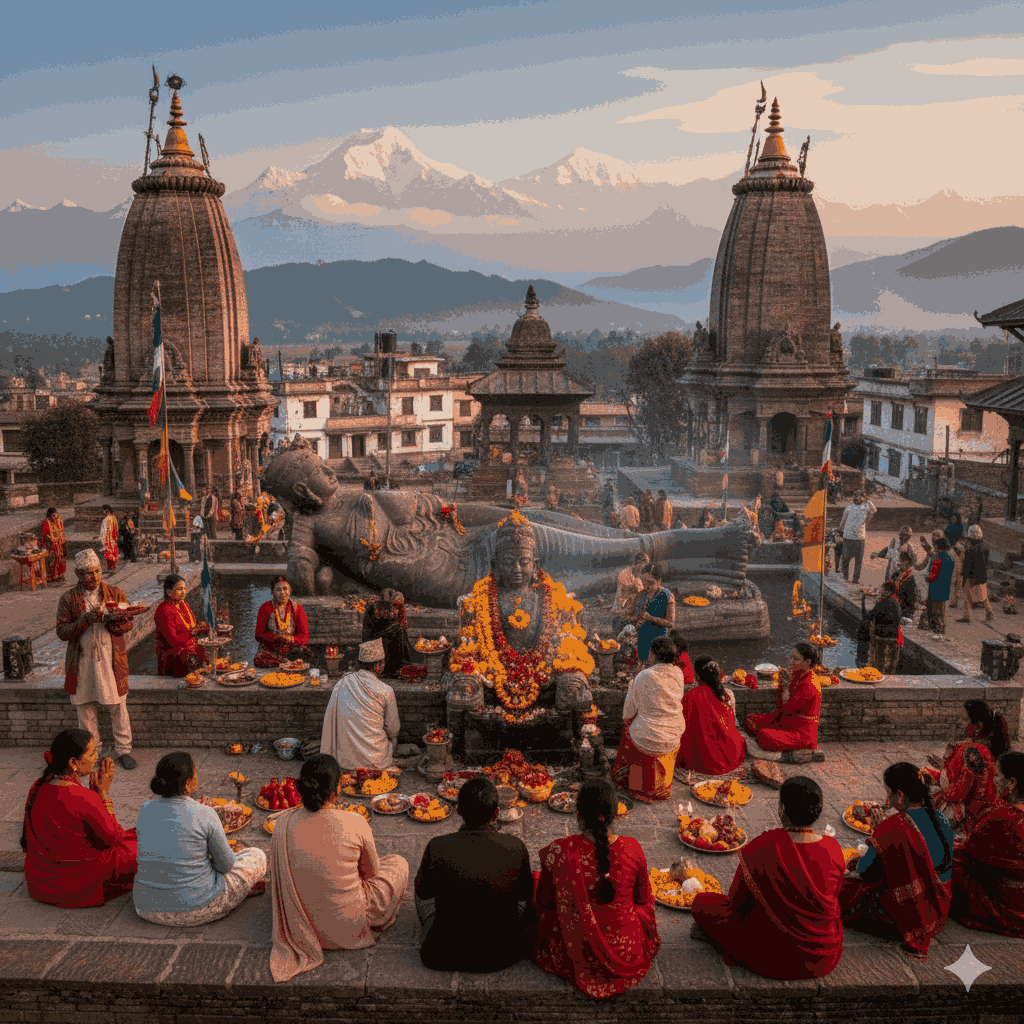
Pilgrims at the 4 Narayan temples in Kathmandu, experiencing spiritual devotion amidst historic surroundings
The 4 Narayan temples in Kathmandu are more than just religious landmarks; they are the pillars of the valley’s identity. From the ancient inscriptions of Changu to the mystical caves of Bishankhu, each temple offers a unique glimpse into the soul of Nepal. Whether you are a devout pilgrim or a curious traveler, a journey to the 4 Narayan temples in Kathmandu is an experience that resonates with history, spirituality, and natural beauty.
